17 Things I Love About Living With Less
Living with less means you’ll finally use everything you own, clean your home in twenty minutes instead of hours, and shop with intention rather than impulse. You’ll have more money for experiences, face fewer daily decisions, and genuinely appreciate your belongings. Your space will feel breathable, maintenance becomes manageable, and you’ll experience an unexpected lightness—both mentally and emotionally. From spontaneous hosting to stress-free moving, minimalism transforms your relationship with possessions and, honestly, with life itself—and there’s so much more to discover about this freedom.
Key Takeaways
- Minimalist living dramatically reduces cleaning time to about twenty minutes, freeing weekends for leisure activities instead of household chores.
- Intentional shopping and a 72-hour waiting period eliminate impulse purchases, creating more available cash for meaningful experiences and adventures.
- Fewer possessions simplify daily decision-making, from choosing outfits to organizing spaces, protecting mental energy for important relationships and goals.
- Physical decluttering creates mental clarity by reducing visual noise and background anxiety, leading to enhanced focus and emotional freedom.
- Unexpected visitors no longer cause panic since quick tidying takes only minutes, boosting confidence in hosting spontaneous gatherings.
I Actually Use Everything I Own
You know that drawer in your kitchen—the one stuffed with three pizza cutters, five wooden spoons you never reach for, and a gadget you got as a wedding gift but still can’t identify?
Yeah, that’s gone now.
Living with less means I actually *use* everything I own. No more guilt-inducing clutter taking up space (and mental energy).
When you adopt a minimalist mindset, each item earns its place—not through sentimentality or “just in case” thinking, but through regular use.
Purposeful ownership changes everything. I reach for the same favorite spatula every single day, and honestly? It feels weirdly satisfying.
No more digging through chaos to find what I need. No more buying duplicates because I forgot I already owned something.
Just the good stuff. The things that actually serve my life.
This shift from accumulation to intentional living has freed up not just physical space, but mental bandwidth I didn’t even know I was losing.
My Home Stays Clean in Minutes, Not Hours
I used to spend entire Saturday mornings scrubbing, organizing, decluttering, and somehow still feeling behind.
Now? My cleaning routine takes maybe twenty minutes—and that’s if I’m being really thorough (or stopping to pet the cat three times).
Here’s the thing about a minimalist lifestyle: less stuff literally means less surface area to dust, fewer knick-knacks to move around, and way fewer “junk drawers” hiding embarrassing amounts of old receipts and mystery keys.
Less stuff equals less cleaning—fewer surfaces to wipe down, no clutter to shuffle around, and finally, actual free time on weekends.
When you only own what you actually use, everything has a home—and putting things back takes seconds instead of “I’ll deal with this pile later” (which we both know means never).
My weekends are mine again.
That’s honestly worth more than any decorative thing I’ve donated.
Without the constant decision fatigue that comes from managing too many possessions, I actually have energy left for things I care about.
Shopping Has Become Intentional Instead of Impulsive

Before minimalism, every trip to Target felt like a blackout moment—walk in for laundry detergent, walk out with decorative pillows, a candle that smells like “mountain rain” (whatever that means), and somehow three things from the dollar section.
Now? You actually pause before buying.
Mindful purchasing becomes your superpower. You ask yourself: Do I need this, or does the cute packaging just make me feel things? Will I actually use it, or will it join the graveyard of impulse buys under my bathroom sink?
Budget awareness stops being scary and starts feeling empowering—because you’re not bleeding money on stuff you forget about by Tuesday.
Shopping transforms from therapy into strategy.
Implementing a 72-hour waiting period for non-essential purchases helps you distinguish between genuine need and fleeting desire.
And honestly? Your bank account has never looked better.
I Have More Money for Experiences That Matter
When the clutter clears out, something wild happens—suddenly there’s actual money sitting in your account that used to vanish into HomeGoods and Amazon’s “recommended for you” section.
Less clutter means more cash—money that used to disappear into online shopping carts now actually stays in your account.
You’re not spending $40 here and $65 there on stuff that’ll end up in a donation bag next year.
Instead, you’ve got an actual experience budget for meaningful adventures that stick with you. Weekend trips with friends. Concert tickets. That pottery class you’ve been eyeing forever.
Here’s the thing: experiences don’t require dusting, organizing, or storage bins (thank goodness). They just become part of your story.
And honestly? Years from now, you’ll remember that spontaneous road trip way better than whatever decorative pillow seemed absolutely essential at Target last Tuesday.
The shift feels incredible—you’re essentially creating a structural surplus that buys you time and flexibility instead of more things to manage.
Decision Fatigue Has Practically Disappeared
Your brain has only so much decision-making juice each day, and living with less stuff means you’re not wasting it on ridiculous questions that absolutely don’t matter.
Should I wear the black shirt or the navy shirt that looks exactly like the black shirt? Who cares!
When you’ve got a closet with ten items instead of a hundred, getting dressed takes thirty seconds—not thirty minutes of trying things on and hating everything.
The minimalist mindset cuts through all that noise. You’ve already made the big decisions about what stays and what goes, so now your mornings (and evenings, and weekends) feel ridiculously easy.
Simplified choices mean your mental energy goes toward stuff that actually matters—your work, your relationships, your goals.
Not whether you need seventeen different coffee mugs.
By reducing everyday decisions, you’re protecting your prefrontal cortex from burning through glucose and neurotransmitters on things that don’t deserve that mental fuel.
Moving Houses Is No Longer a Nightmare
Anyone who’s ever moved knows that packing up your entire life feels like some sort of cruel punishment invented specifically to make you question every choice you’ve ever made.
But here’s the beautiful truth: when you’ve already done the decluttering process, moving logistics become laughably simple.
You’re not making last minute decisions about whether to keep that bread maker anymore—you’ve already released your emotional attachment to stuff you don’t use.
Packing strategies? You barely need them when everything fits in a few boxes.
The stress reduction is real.
Home staging takes minutes, not days.
Efficient downsizing has already happened.
Organization tips become unnecessary when simplified transitions are your new normal.
You’ll handle every item with confidence because you’ve already confronted those delayed decisions during your decluttering journey.
Moving transforms from nightmare to—dare I say it—almost enjoyable.
I Know Exactly Where Everything Is
That panicked Sunday morning search for your keys? Gone. When you own less stuff, everything has its spot—and you actually remember where that spot is.
No more tearing apart drawers or checking coat pockets from three winters ago.
Here’s the thing: organizational systems work better when there’s less to organize. Revolutionary, right? Your home inventory becomes manageable—maybe even memorizable—instead of feeling like you need a warehouse catalog just to find your phone charger.
You’ll know exactly which drawer holds your scissors (because you only have one pair now, not seven random ones scattered everywhere). Your sunglasses live in one place, not four different “safe spots” you promptly forget about.
It’s weirdly empowering.
Less stuff means less mental clutter, fewer hiding places, and zero archaeological digs through junk drawers. By keeping only items that support your current daily routines, you naturally create a space where everything has a clear purpose and location.
My Mental Space Feels as Clear as My Physical Space
Knowing where your stuff is turns out to be just the beginning—the real shift happens inside your head.
When you’re not constantly managing piles of things, your brain gets a break. You’ll notice mental clarity creeping in where clutter used to live (and honestly, it’s kind of wild).
Here’s what changes:
- You stop feeling overwhelmed by visual noise everywhere you look.
- Decision-making gets easier because you’re not drowning in choices.
- You actually have energy left for things that matter to you.
This is emotional freedom in action—and it feels incredible.
Your mind mirrors your space. Less physical mess means less mental mess, and suddenly you can think clearly again.
No more background anxiety about the disaster lurking in your closet.
Every object you own demands space, maintenance, and emotional energy—releasing what you don’t need frees up mental resources you didn’t even know you were spending.
It’s refreshing.
I’m No Longer Comparing Myself to Others

When you own less stuff, something unexpected happens—you stop caring what everyone else has.
Your self acceptance journey gets a lot easier when you’re not mentally keeping score of who’s the nicer car, bigger TV, or fancier kitchen gadgets.
It’s wild, honestly.
You realize that comparing yourself to others was exhausting—like running a race that never actually ends, where the finish line keeps moving further away.
Now? You’re focused on your own personal growth instead of their highlight reel.
You’re not scrolling through social media feeling jealous or inadequate.
You’re just… content. Present. Genuinely happy for people without that little twinge of “why don’t I’ve that?”
Consumer culture has conditioned us to believe that acquiring more will lead to happiness, but minimalism breaks that cycle.
Less stuff means less comparison.
And that’s incredibly freeing.
Guests Can Drop By Without Me Panicking
Before I simplified my life, an unexpected doorbell ring would send me into full-blown panic mode.
An unexpected visitor used to trigger instant anxiety and a frantic race to hide the chaos everywhere.
I’d frantically shove clutter into closets, apologize profusely, and feel completely mortified about the mess.
Now? Spontaneous gatherings don’t phase me one bit.
Here’s what stress free hosting looks like with less stuff:
- Five-minute pickup—because there’s simply less to put away
- No embarrassing clutter—you’re not hiding shopping bags or random junk piles
- Actually enjoying your guests—instead of obsessing over what they’re thinking about your home
You’ll feel confident opening your door (even when you weren’t expecting anyone).
Your space stays relatively tidy without constant effort, and that’s honestly freeing.
Orderly surroundings help lower cortisol levels, which means less stress when people show up unannounced.
Who knew less stuff meant more connection?
I Spend Weekends Living Instead of Organizing

How many Saturdays have you lost to the endless cycle of reorganizing the same stuff over and over again?
When you own less, those marathon organizing sessions just—disappear.
No more spending your precious weekend rearranging closets or playing Tetris with overflowing storage bins (honestly, was that ever fun?).
Instead, you’re free for weekend adventures.
That spontaneous coffee date? You can actually say yes.
A last-minute hike? Why not!
Your weekends become about experiences instead of maintenance mode, which is exactly how it should be.
Living with less means your home stays manageable without constant effort.
Sure, you’ll still tidy up—we’re not living in fantasy land here—but it takes minutes, not hours.
Spontaneous outings become your new normal.
And that’s worth everything.
My Belongings Reflect Who I Actually Am Today
Look around your space right now—do your belongings tell the story of who you were five years ago, or who you actually are today?
Living with less means your stuff finally matches your actual life. It’s identity expression without the clutter of past versions of yourself.
When you keep only what serves you now, something shifts. Your belongings become a mirror reflecting genuine personal growth—not a storage unit for who you used to be.
Here’s what stays:
- Items that match your current hobbies and interests (not the guitar you haven’t touched since 2019)
- Clothes that fit your actual lifestyle—yes, including those comfy pants
- Tools and supplies you genuinely use this month
No more pretending. No more “aspirational clutter.”
Just you, clearly defined.
The Guilt of Wasted Purchases Is Gone

You know what happens when you finally let go of that bread maker collecting dust in the cabinet? The guilt disappears with it—and that’s actually amazing.
Every unused item in your home whispers, “You wasted money on me.” It’s exhausting.
But here’s the thing: once you donate or sell those impulse buys, you’re not just clearing physical space. You’re clearing emotional space too, which honestly feels better than any purchase ever did.
Living with less teaches you mindful consumption without even trying. You start asking, “Will I actually use this?” before buying anything (because you remember that panini press incident).
This is guilt free living in action.
You stop beating yourself up about past mistakes. You make better choices going forward.
Freedom, basically.
I Appreciate What I Have So Much More
Gratitude sneaks up on you when you’re not drowning in stuff—and suddenly that favorite mug means everything.
When you own less, you actually *see* what’s around you. That cozy blanket becomes your sanctuary, not just another thing tossed on the couch.
You’ll notice yourself developing real mindful appreciation for items you’d previously ignored.
Here’s what changes:
- You remember where things are (no more frantic searching through junk drawers)
- Each item has a purpose that you can actually explain
- Your gratitude practices become natural instead of forced journaling exercises
It’s wild how trimming down your possessions makes everything feel more precious.
You’re not taking inventory—you’re building relationships with the things that truly enhance your life.
Pretty revolutionary for a coffee mug, right?
There’s Room to Breathe in Every Space
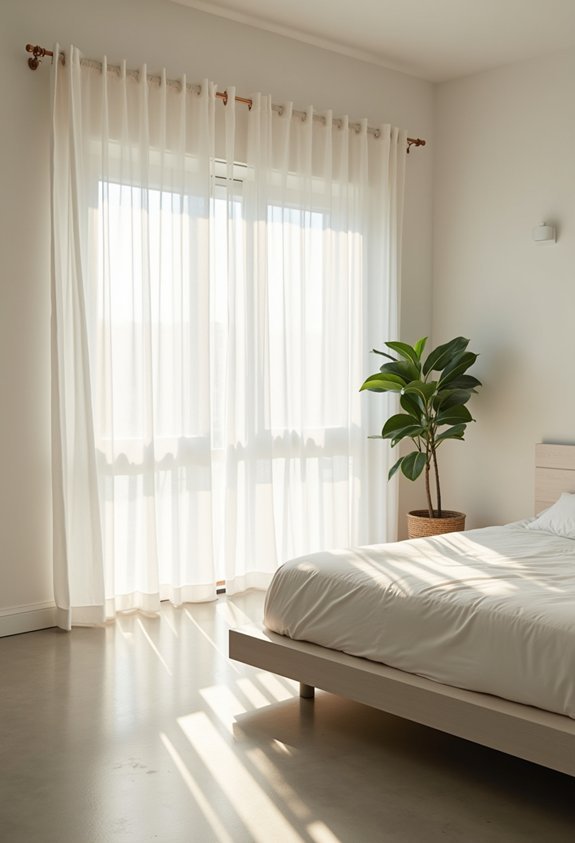
When minimalism clears out the clutter, physical space transforms into something almost magical—actual breathing room.
You’ll notice it first thing in the morning—that peaceful ambiance when you’re not dodging piles of stuff (or yesterday’s “organized chaos” that never got organized). Your home becomes a serene environment where visual clarity replaces that overwhelming feeling of too much everywhere.
Decluttered living gives you space freedom to actually move around, think clearly, and yes—practice mindful breathing without staring at seventeen things you meant to deal with last Tuesday.
Open layouts emerge naturally.
This isn’t about perfection—it’s about intentional simplicity that lets you breathe. The minimalist mindset creates rooms that serve you, not stress you out.
And honestly? That’s worth celebrating every single day.
Maintenance and Upkeep Takes Minimal Effort
Fewer possessions mean—surprise!—way less time spent cleaning, organizing, and maintaining your stuff. When you embrace minimalist living, you’re not constantly shuffling things around or wondering where everything goes.
It’s effortless organization because, well, there’s simply less to organize.
Here’s what changes:
- Cleaning takes minutes, not hours — dusting three shelves beats dusting thirty
- You stop buying storage solutions — no more bins, baskets, or “organizing systems”
- Repairs are manageable — fewer things breaking down means less stress (and fewer repair bills!)
You’ll actually have energy left for things you enjoy. No more weekend-long decluttering marathons or panic-cleaning before guests arrive.
It’s honestly freeing—and your future self will thank you.
I Feel Lighter in Ways I Never Expected
But here’s what nobody tells you about minimalism—the real magic happens inside your head, not just in your closet.
The real transformation of minimalism isn’t visible on your shelves—it’s the quiet revolution happening in your mind.
That freedom gained? It’s not just about having less stuff to dust.
It’s waking up without that weird guilt about the treadmill you never use (we’ve all been there). It’s the unexpected joy of making decisions faster because you’re not drowning in options anymore.
Your brain actually has space to breathe.
I used to carry around mental clutter—worrying about things I owned, things I should want, things everyone else had.
Now? That weight’s gone.
And honestly, it feels like someone turned down the volume on life’s background noise.
You mightn’t believe it until you experience it yourself, but this lightness—it changes everything.
You may also like:

In case you were wondering
How Do I Start Decluttering When Everything Feels Overwhelming?
Start with one small drawer today. Choose items you’re not emotionally attached to first—expired coupons, old receipts, duplicate pens. These beginner decluttering tips build momentum. You’ll gain confidence tackling harder spaces once you’ve experienced quick wins.
What if I Regret Getting Rid of Something I Might Need Later?
Don’t let the “what if” monster paralyze you. You’ll rarely regret letting go when you adopt a minimalist mindset. Most future needs can be met differently, and you’re stronger at problem-solving than you think you are.
How Do I Convince My Family to Embrace Minimalist Living With Me?
Start with family discussions about what truly matters to everyone. Focus on shared goals like more time together, less stress, or financial freedom. Lead by example with your own spaces, and let benefits speak for themselves naturally.
What’s the Difference Between Minimalism and Just Being Cheap or Frugal?
frugality pinches pennies wherever possible, while minimalism opens your wallet for what truly matters. You’re making intentional spending decisions and lifestyle choices based on your values, not your fear of an empty bank account.
How Many Items Should I Own to Be Considered a Minimalist?
There’s no magic number—you’re a minimalist when you’ve adopted a minimalist mindset. Focus on keeping only essential items that serve your life’s purpose and bring genuine value. It’s about intentionality, not hitting a specific count.
Conclusion
You might think living with less means giving up the things you love—but here’s the truth: it actually makes room for them.
You’re not losing anything real. You’re just clearing out the clutter that’s been blocking your view of what matters.
Start small. Pick one drawer, one shelf, one corner.
Because the life you want? It’s already waiting underneath all that stuff you don’t need.