The Dopamine Hit Behind Every Purchase
Your brain releases dopamine—the feel-good chemical—every time you shop, even before you buy anything. That’s why browsing feels so amazing and why you suddenly *need* those shoes you didn’t know existed five minutes ago. Retailers design everything from store layouts to countdown timers to trigger this response, turning your brain into their personal slot machine. The dopamine hit happens during anticipation, not ownership, which explains why purchases often disappoint while shopping feels thrilling—and why understanding this brain chemistry can help you spot manipulation before your wallet does.
Key Takeaways
- The brain releases dopamine during shopping, treating potential purchases as rewards even before buying occurs.
- Browsing activates dopamine without purchasing, creating joy through visualization and endless options exploration.
- Impulse control weakens when dopamine is active, creating urgent buying urges that override rational decision-making.
- Retailers strategically use store layouts, lighting, music, and sensory stimulation to trigger dopamine-driven impulse purchases.
- Online shopping amplifies dopamine hits through instant confirmation, personalized recommendations, and frictionless 24/7 accessibility.
What Happens in Your Brain When You Shop
shopping psychology shows your brain treats potential purchases like actual rewards—even before you buy anything. Just browsing can trigger that rush.
The tricky part? Your impulse control takes a backseat when dopamine’s driving. It’s like your brain’s saying, “We need this NOW” (spoiler: you probably don’t).
When dopamine takes control, impulse becomes instinct—your brain screams urgency for things you don’t actually need.
Research shows that nearly half of adults engage in impulse buying specifically to improve their mood, using purchases as an immediate emotional fix.
But understanding this isn’t about feeling guilty.
It’s about recognizing when your brain’s running the show so you can make choices that actually serve you.
The Anticipation Effect: Why Browsing Feels So Good
You know that feeling when you’re scrolling through your favorite store’s website at 11 PM, adding things to your cart you have zero intention of buying?
That’s the anticipation effect at work—and honestly, it’s kind of genius how your brain tricks you.
Your browsing behavior triggers dopamine *before* you even purchase anything. The shopping joy comes from imagining possibilities, not necessarily owning the stuff.
Here’s what makes browsing so addictive:
- Fantasy mode activates — you picture your best life with that new jacket
- No consequences yet — your wallet stays safe while you daydream
- Endless options — every click promises something better
- Control feels good — you’re the boss of this digital shopping spree
It’s basically window-shopping on steroids.
Online platforms amplify this effect through endless scroll features and personalized recommendations that keep the dopamine flowing without any natural stopping point.
How Retailers Design Stores to Trigger Dopamine Release

Every single thing in a store—from the lighting to where they put the gum—is carefully planned to make your brain light up like a Christmas tree.
Store layout isn’t random. Those twisting paths force you past a hundred things you didn’t need (but suddenly want). Ambient lighting makes everything look softer, more appealing—like Instagram filters for merchandise.
Here’s where it gets wild: color psychology dictates which shades trigger urgency versus calm, while music impact controls how fast you walk through aisles. Fast beats? You speed up. Slow jazz? You linger and spend more.
Product placement at eye level, emotional triggers through sensory stimulation, checkout design packed with impulse buys—it’s all working together.
These design elements tap into automatic responses that bypass logical thinking, making you more susceptible to purchasing decisions you didn’t plan to make.
Your dopamine doesn’t stand a chance.
Online Shopping and the Instant Gratification Loop
While physical stores had decades to perfect their dopamine tricks, online shopping cracked the code in fast-forward—and honestly, it’s even more dangerous.
Your phone makes impulse buys ridiculously easy. One-click ordering? That’s basically a dopamine vending machine in your pocket.
Here’s how the instant gratification loop keeps you hooked:
- Constant accessibility — Shopping’s available 24/7, so there’s never a cooling-off period.
- Personalized recommendations — Algorithms know exactly what’ll tempt you (creepy, but effective).
- Progress bars and countdowns — “Only 2 left!” creates fake urgency that triggers panic-buying.
- Instant confirmation emails — You get that dopamine hit *immediately*, before the package even ships.
This cycle can fuel shopping addiction faster than traditional retail ever could. The friction that once protected your wallet? Gone. Engineering friction by disabling one-click checkout and requiring passwords for purchases can help you insert the pause your brain needs to make more deliberate choices.
Why Sales and Discounts Are So Irresistible
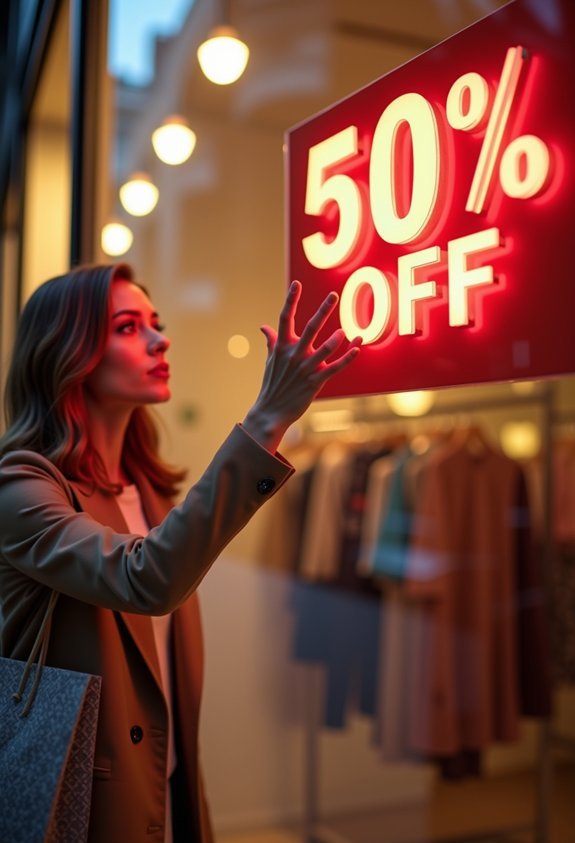
The discount literally changes how you perceive value—and retail stores have weaponized this quirk against your wallet.
Here’s the thing about sales psychology: your brain doesn’t see “spend $30″—it sees “save $20!” That mental shift triggers a dopamine release, making you feel clever and rewarded.
The original price becomes an anchor (even if it’s inflated), and suddenly the discount perception makes everything feel like a victory.
You’re literally getting a chemical high from “saving” money you weren’t planning to spend.
It’s why you’ll buy three shirts you don’t need during a BOGO sale. Your brain celebrates the deal, not the dent in your bank account.
Retailers know this—they’ve studied it, perfected it, and they’re counting on that dopamine hit overriding your budget every single time.
This is the same reason loss aversion makes you feel worse about missing a sale than spending money you didn’t budget for.
The Dark Side: When Shopping Becomes Compulsive
For some people, that dopamine rush doesn’t just fade after checkout—it becomes the whole point of shopping.
You’re not buying things you need—you’re chasing that feeling. And honestly? That’s when compulsive buying sneaks in.
When the high of buying matters more than what you actually bought, you’ve shifted from shopping to something else entirely.
Here’s what might signal you’ve crossed that line:
- You hide purchases from family or friends (because you know they’d question why you need another pair of shoes)
- Shopping becomes your go-to stress relief—had a bad day? Time to browse online stores
- You feel guilty or anxious after buying, but you keep doing it anyway
- Your bank account’s screaming for mercy while your closet’s overflowing
The truth is, emotional triggers drive these habits. When you’re lonely, bored, or stressed, your brain remembers that shopping equals instant relief.
Research shows that frequent spending correlates with higher stress and relationship conflicts, creating a cycle that’s hard to break.
It’s not about willpower—it’s about recognizing the pattern.
Social Media’s Role in Amplifying Purchase Impulses
How many times have you scrolled past an ad, told yourself you don’t need it—and then somehow it’s in your cart fifteen minutes later?
Social media has perfected the art of triggering impulse buying, and it’s honestly sneaky how well it works.
Influencer marketing makes it feel personal—like your favorite creator is genuinely recommending something just for you. (They’re not, but it sure feels that way.)
The “swipe up to shop” feature removes every possible barrier between wanting and buying, which is kind of the whole point.
And those targeted ads? They know what you’ve been thinking about. It’s equal parts impressive and creepy.
Here’s the thing: platforms profit when you purchase impulsively, so they’ve engineered the experience to make it almost irresistible.
These environments are designed by neuromarketers to trigger dopamine responses, creating cravings that linger long after you’ve closed the app.
Almost.
Breaking Free From Dopamine-Driven Spending
Knowing all this doesn’t automatically make you immune to it—trust me, I’ve still caught myself checking out with things I saw on Instagram at 11 PM.
Awareness doesn’t equal immunity—I still impulse-buy from Instagram late at night, even knowing better.
But developing mindful spending habits can really help you take back control from those dopamine-hunting impulses.
Here’s what actually works:
- Wait 24 hours before buying anything non-essential (it’s harder than it sounds, but that dopamine craving usually fades)
- Unfollow accounts that make you feel like you need stuff—your wallet will thank you
- Track your purchases for one week to build financial awareness about your patterns
- Ask yourself: am I buying this, or buying a feeling?
- Tag your spending with emotional triggers like boredom, stress, or social media to identify patterns and interrupt the dopamine-seeking cycle before it starts.
The goal isn’t perfection—it’s progress.
Small changes add up.
Harnessing Your Brain Chemistry for Smarter Shopping Decisions

Start by identifying your emotional triggers—are you shopping when you’re bored, stressed, or feeling left out?
Once you know what sets you off, you can interrupt the pattern before your credit card comes out.
Try this: give yourself a mandatory 24-hour waiting period before any non-essential purchase.
Your brain will still get its dopamine hit from *planning* the buy, but you’ll often realize you don’t actually want it anymore.
You may also like:



That’s mindful spending in action.
You can take this further by creating a structured waiting period where you log each potential purchase and track the emotional context behind it.
You’re essentially rewiring your reward system to celebrate smart decisions instead of impulsive ones—and your future self will thank you.
In case you were wondering
Does Dopamine Release Differ Between Buying Necessities Versus Luxury Items?
Yes, luxury spending triggers stronger dopamine releases than necessity purchases. You’ll experience more intense pleasure buying that designer handbag than groceries because your brain’s reward system responds more powerfully to indulgent, non-essential items that feel special.
Can Medication for Dopamine-Related Conditions Affect Shopping Behavior?
You bet—medication effects can dramatically alter your shopping habits. Drugs treating ADHD, depression, or Parkinson’s modify dopamine levels, potentially reducing impulsive purchases or, conversely, increasing them depending on dosage and individual brain chemistry. Monitor your spending patterns carefully.
Do Children Experience the Same Dopamine Response When Shopping?
Yes, you’ll find that children experience dopamine responses during shopping, though their dopamine sensitivity differs from adults. Their developing brains react strongly to novel purchases, making children’s shopping behavior more impulsive and reward-driven than mature consumers.
Are Certain Personality Types More Susceptible to Dopamine-Driven Shopping?
Yes, you’re more susceptible if you possess certain personality traits. Impulsive buyers, extroverts, and those with low self-control experience stronger dopamine responses when shopping. You’ll find novelty-seekers and reward-sensitive individuals particularly vulnerable to purchase-triggered dopamine releases.
How Long Does the Dopamine High From a Purchase Typically Last?
Your shopping high crashes fast—typically within hours or days. The dopamine peak hits during purchase anticipation, not after buying. That’s why you’re already eyeing your next cart, trapped in emotional spending’s cruel cycle of diminishing returns.
Conclusion
And maybe your sanity too.