Why I Shop From a List (And Never Browse)
Shopping from a list keeps you focused on what you actually need—no wandering, no impulse grabs, no regret later. When you browse, stores are designed to trigger those “just one more thing” moments that drain your wallet and clutter your space. A list acts like a financial guardrail, helping you skip the marketing traps and get in and out fast. It’s not about restriction—it’s about intention, and there’s real freedom in knowing exactly why each item matters to your life right now.
Key Takeaways
- Shopping lists prevent impulse purchases by keeping focus on planned items, protecting against retail strategies designed to trigger unplanned spending.
- Lists save significant time by eliminating aimless wandering, reducing decision fatigue, and streamlining the entire shopping experience.
- Planning purchases in advance helps maintain budget control and transforms spending from reactive impulses into intentional financial decisions.
- Avoiding browsing reduces clutter by ensuring only needed, purposeful items enter the home, creating a more organized living space.
- List-based shopping builds mindful consumption habits, emphasizing quality over quantity and aligning purchases with personal values and genuine needs.
The Hidden Cost of “Just Looking”

Why does wandering through Target “just to browse” always end with a cart full of things you didn’t know you needed five minutes ago?
Because retailers are *really* good at their jobs.
Retailers have mastered the art of making you buy things you never intended to purchase when you walked in.
Those hidden expenses aren’t accidents—they’re carefully orchestrated shopping triggers designed to make you spend. The strategically placed candy bars at checkout, the “seasonal” aisle you have to walk past, the “just $3!” bins near the entrance.
It all adds up.
And here’s the thing: browsing feels harmless. Fun, even! You’re just looking, after all.
But “just looking” is how that decorative pillow (that doesn’t match anything you own) ends up in your living room. It’s how those impulse purchases—individually small, collectively devastating—drain your bank account month after month.
Your brain is wired for quick rewards, which is why those low-cost items feel so satisfying in the moment but add up to real financial damage over time.
The cost isn’t just money.
It’s time, stress, and clutter too.
How Lists Became My Financial Safety Net
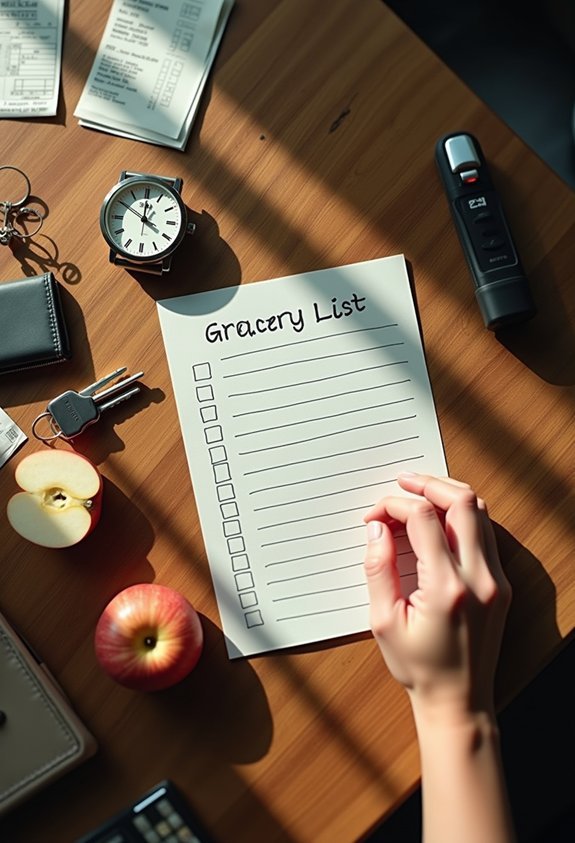
After years of “accidentally” spending an extra $50 every grocery trip, I finally admitted I needed backup—and that backup was a simple shopping list.
Turns out, writing things down before I left home became my secret weapon for financial discipline.
Here’s what changed: I started checking my pantry first, planning meals for the week, and—this is key—I only bought what I wrote down. No exceptions (okay, maybe for birthday cake, but that’s different).
The list became my shield against impulse buys and those sneaky “oh, this looks good” moments.
Budget management suddenly felt less like restriction and more like having a game plan.
I’m not saying lists are magic, but they’re pretty close—especially when you’re trying to keep your checking account happy.
I also started estimating prices and totaling costs before checkout, which helped me stay within my spending cap and avoid those awkward moments at the register.
Reclaiming Hours Lost to Aimless Wandering
Shopping with a list didn’t just save me money—it gave me back something even more valuable: my time.
Before lists, I’d wander Target for two hours (yes, two!) picking up random stuff, comparing prices, and battling serious decision fatigue.
Now? I’m in and out in twenty minutes.
Here’s what I reclaimed:
- Weekend mornings – no more aimless grocery store loops
- Mental energy – fewer “should I buy this?” debates
- Evening hours – quick trips instead of shopping marathons
Time management became effortless once I stopped treating every store visit like a treasure hunt.
You’ll find that knowing exactly what you need—and skipping everything else—transforms shopping from an exhausting expedition into a simple errand.
Just like separating urgent from important helps prevent overwhelm in daily life, having a clear list prevents the chaos of reactive shopping decisions.
And honestly? That extra time feels better than any impulse purchase ever did.
The Psychology Behind My Cart: Intention vs. Impulse
The psychology here isn’t complicated—but it’s powerful. When you walk into a store (or open an app) without a plan, your brain switches into browsing mode—and that’s when impulse control goes out the window.
Every shiny display, every “limited time” sign, every product you didn’t know existed suddenly feels essential. It’s exhausting.
Intentional purchasing flips the script entirely.
You’re not resisting temptation anymore—you’re just ignoring it. Your list becomes your shield, protecting you from the constant barrage of “maybe I need this?” thoughts that drain your wallet and your mental energy.
Here’s the thing: impulse buying isn’t a character flaw. Stores literally design their layouts to trigger it.
But intentional purchasing? That’s you taking back control.
Research shows that logging your urges to buy—noting the time, mood, and what you were doing beforehand—reveals patterns linked to impulse purchases that you can then actively disrupt.
What Actually Makes It Into My Home Now

Since I started shopping with intention, my home has become so much more… breathable.
Everything here serves a purpose—or brings genuine joy (not the “oh that’s cute” kind, but the real kind). Mindful consumption sounds fancy, but it just means I’m picky now.
Mindful consumption isn’t complicated—it’s just being picky about what deserves space in your life.
What actually crosses my threshold these days:
- Items from my running list that I’ve wanted for at least two weeks
- Replacements for things that died (RIP, my favorite coffee mug)
- Essential purchases that solve actual problems, not imaginary ones
The difference? I don’t have buyer’s remorse anymore. No more hiding shopping bags from myself—which, honestly, was getting weird.
My closets aren’t bursting. My counters stay clear. And somehow, I own exactly what I need.
That simple 24-48 hour pause before buying non-essentials has cut my impulse purchases by nearly a third.
Wild concept, right?
The Freedom in Knowing Exactly What I Need
When you know exactly what you need, decision fatigue just… disappears.
No more standing in the store aisle, staring at seventeen different spatula options like you’re solving a calculus problem. The list benefits are immediate—you walk in, grab what’s written down, and leave. Done.
This mental clarity feels almost revolutionary after years of browsing-induced brain fog.
You’re not second-guessing yourself anymore (wait, do I actually need this candle that smells like “autumn nostalgia”?). You’re not comparing prices on things you didn’t plan to buy. You’re just… free.
Free to use that brain space for things that actually matter—like remembering your best friend’s birthday or finally learning how to fold a fitted sheet.
The list decides. You execute.
And you’re immune to those environmental cues—the strategic lighting, the background music, the carefully designed layouts—that stores use to keep you wandering and spending longer than you planned.
Breaking Free From Retail Marketing Tactics

Armed with your list, you’re basically wearing marketing kryptonite.
Stores spend millions studying consumer behavior—trying to predict what’ll make you impulse-buy that candle you absolutely don’t need.
But here’s the thing: retail strategies lose their power when you’ve got a mission.
Your list helps you sidestep:
A shopping list is your shield against retail psychology designed to empty your wallet on impulse purchases.
- End-cap displays (those “deals” strategically placed where you can’t miss them)
- The maze layout designed to make you wander past everything before finding milk
- Buy-one-get-one offers on stuff you weren’t planning to buy anyway
You walk in focused, grab what’s written down, and leave.
No guilt, no buyer’s remorse, no wondering why you own seventeen lip balms.
Studies show that implementing a simple 24-hour delay before making unplanned purchases can reduce discretionary spending by 20-30%.
It’s honestly liberating—like having a superpower that protects your wallet and your sanity.
Building a Life Around Purpose, Not Products
Because shopping lists aren’t just about groceries or self-control—they’re training wheels for something way bigger.
They’re helping you build intentional living, one “no thanks” at a time.
When you stop letting products define your days, something wild happens—you start asking what actually matters to you. Not what Instagram says should matter. Not what your neighbors think is cool.
You.
Purpose driven shopping means your wallet backs your values, not Target’s endcap strategy.
You’re buying ingredients for Friday pizza night (building family traditions), not random kitchen gadgets that’ll collect dust.
You’re funding experiences—concert tickets, pottery classes, that weird historical tour you’ve been eyeing—instead of stuff that promises fulfillment but delivers clutter.
You may also like:




Products are tools now, not the point.
And when you do buy those tools, you’re thinking cost per use instead of sticker price—choosing the $60 chef’s knife you’ll reach for daily over three $20 versions that’ll end up in a drawer.
In case you were wondering
What if I Need Something Urgently and Don’t Have Time to Make a List?
You can still jot down that one urgent item before heading out. Quick solutions don’t require abandoning your system—a simple note prevents impulse buys while you’re grabbing what you need. It’ll take just seconds.
How Do You Handle Gift Shopping Without Browsing for Ideas?
You’ll find gift inspiration through Pinterest boards, wishlists, or asking friends directly what they want. These shopping strategies create a focused list before you shop, eliminating mindless browsing while still discovering thoughtful, personalized gift options efficiently.
Don’t You Miss Discovering New Products You Didn’t Know Existed?
I don’t miss serendipitous finds because I’m not tempted by things I don’t need. You’ll discover product discovery happens naturally through friends’ recommendations and targeted research when you actually need something.
What Happens When the Specific Item on Your List Is Unavailable?
You’ll quickly evaluate alternative options that meet the same need, then make list adjustments on the spot. If no suitable substitute exists, you’ll simply skip it and order from another store or wait until it’s restocked.
How Do You Create Your Shopping List in the First Place?
You’ll create your list through meal planning first. Review what you’ll cook this week, then organize items by grocery categories like produce, dairy, and proteins. This method ensures you’re buying ingredients you’ll actually use.
Conclusion
You’ve got this—your purposeful purchasing power is perfectly within reach. Shopping from lists liberates you from the lurking traps of targeted tactics and tempting displays. You’ll protect your precious pennies, preserve your priceless time, and populate your space with stuff that serves you. Not some marketer’s quota.
Start small. Make one mindful list this week, then watch your wallet—and your wellbeing—thank you for finally choosing clarity over chaos.