19 Things to Declutter From Your Bedroom Tonight
Your bedroom’s probably hiding clothes you haven’t touched in a year, expired medications on your nightstand, and broken electronics you’ve been ignoring. Toss dried-up cosmetics, duplicates of things you only need one of (yes, three phone chargers is excessive), and those guilt-inducing sentimental items that just make you feel bad. Don’t forget the magazine piles, old shopping bags, and childhood stuffed animals you’ve outgrown—your space deserves better than being a storage unit, and tonight’s the perfect time to discover exactly how to tackle each category.
Key Takeaways
- Remove clothes and shoes unworn in over a year; donate to shelters or thrift stores to improve closet space.
- Discard expired medications, vitamins, dried-up cosmetics, and skincare products that are ineffective or unsanitary.
- Recycle old magazines, newspapers, and unnecessary receipts; scan important documents digitally to clear surfaces.
- Dispose of broken electronics and old charging cables through local recycling programs to free valuable space.
- Let go of duplicate items like extra bedding sets, phone chargers, and kitchenware cluttering your bedroom sanctuary.
Clothes You Haven’t Worn in Over a Year
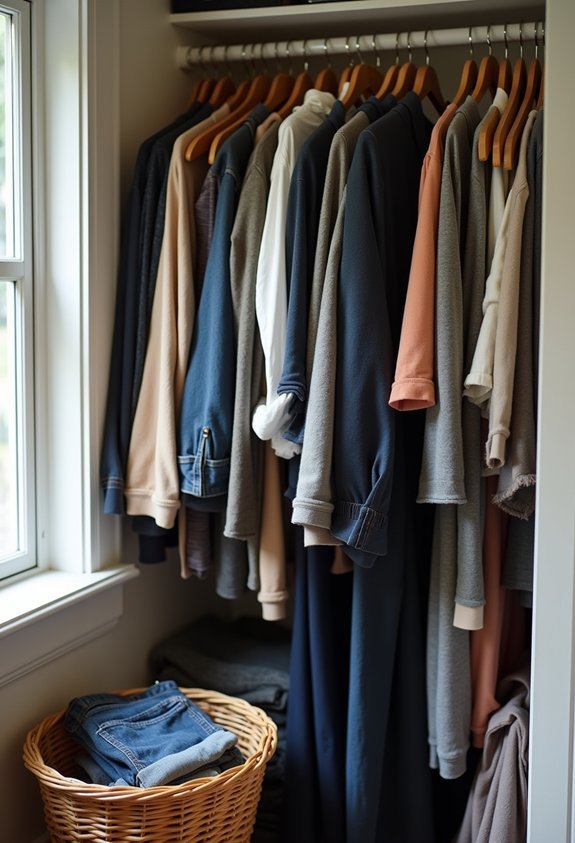
if you haven’t touched it in over a year, you won’t miss it.
Be honest about your seasonal wardrobe—yes, even that winter coat taking up valuable space.
Sort everything into keeps, maybes, and definite nos. (Spoiler: those maybes are usually nos in disguise.)
The good news? Donation options are everywhere.
Local shelters, thrift stores, even those clothing bins in parking lots—they all want your stuff.
Your closet will thank you, and honestly, so will your morning routine.
If you’re struggling with guilt about letting go, practice self-forgiveness and kindness as you reflect on why certain pieces stayed unworn for so long.
Old Magazines and Newspapers Piled on Surfaces
Unless you’re actively building a time capsule, those stacks of magazines from 2019 aren’t doing you any favors.
They’re collecting dust, taking up precious nightstand real estate, and—let’s be honest—you’re never reading that article about organizing your closet (ironic, right?).
Here’s the truth: if it’s been sitting there for months, it’s clutter.
Set up a simple newspaper organization system—a basket or bin works great—and commit to magazine recycling once you’ve finished reading.
Take ten minutes tonight to sort through those piles. Rip out the one recipe or article you actually want, and recycle the rest.
Your surfaces will thank you, and you’ll finally stop feeling guilty every time you see them.
Remember, every forgotten item in that pile represents mental energy leaks that keep you from focusing on what matters now.
Expired Medications and Vitamins From Your Nightstand

When you’re fumbling around your nightstand at 2 AM looking for pain relief, the last thing you need is a pharmacy’s worth of mystery bottles from three years ago.
Check those dates—vitamins lose potency, and expired meds can actually be harmful (yes, even over-the-counter stuff).
Health impact awareness matters here because that old ibuprofen mightn’t work when you desperately need it, or worse, it could make you sick.
Toss anything past its prime tonight.
Your local pharmacy usually offers safe disposal methods—no flushing down toilets, please, because that water treatment thing is real.
Most places have drop-off boxes specifically for old medications.
Keep only what you’re currently taking, and suddenly your nightstand becomes less “questionable laboratory” and more “peaceful sleep space.”
Clearing this clutter from a frequently used surface can lower cortisol levels and help your bedroom better support restful sleep.
Much better for midnight emergencies.
Broken or Outdated Electronics
That drawer full of ancient charging cables—you know, the ones for phones you haven’t owned since 2015—is basically a museum exhibit at this point.
Those tangled wires, broken headphones, and that mysterious adapter nobody can identify? They’re not coming back to life.
That graveyard of tangled cables and mystery adapters in your drawer isn’t waiting for a resurrection—it’s just taking up space.
Outdated technology takes up valuable space without serving any purpose (except maybe making you feel vaguely guilty).
Old alarm clocks, dead remote controls, and phones with cracked screens deserve better than rotting in your nightstand.
Here’s the move: gather everything that’s broken or obsolete into one pile.
Then find your local electronic recycling program—most cities offer free drop-off locations.
You’ll breathe easier knowing your outdated electronics are being disposed of responsibly instead of cluttering your personal space.
Letting go of these items is part of embracing mindful consumption—choosing to keep only what you actually use rather than holding onto things out of obligation or guilt.
Dried Up Cosmetics and Skincare Products

Your nightstand isn’t the only spot hoarding things that should’ve been tossed years ago—check out that basket of beauty products you’ve been avoiding.
That crusty mascara from 2019? Gone. The face cream that’s separated into weird layers? Bye.
Expired makeup isn’t just ineffective—it’s actually gross. Those skincare ingredients lose potency over time, and bacteria love setting up camp in old products (yum, right?).
Here’s the thing: if you can’t remember when you bought it, or it smells funky, or the texture’s changed—it’s done.
Toss anything that’s dried up, discolored, or makes you go “hmm, is this still good?”
Because if you’re questioning it, you already know the answer.
Your skin deserves better than questionable goop from the Obama administration.
While you’re at it, gather all those half-used products you secretly hate but keep using out of obligation—if it’s not enjoyable or effective, it doesn’t deserve counter space.
Mismatched or Worn Out Socks and Underwear
Listen, we’ve all got that one drawer where socks go to die—you know the one, where single socks wait hopelessly for their missing partners who are definitely never coming back.
Tonight’s the night to face it.
Stop avoiding that chaos drawer—your future self will thank you for dealing with it now instead of tomorrow.
Here’s what needs to go immediately:
- Any sock that’s been solo for more than three months (if its partner hasn’t shown up by now, it won’t)
- Underwear with stretched elastic, holes, or permanent stains (nobody—including you—deserves to see those)
- Socks with holes in the toes or heels (wearing them just feels sad)
Toss the damaged stuff guilt-free, and consider underwear donation for anything still decent.
Your sock organization will finally make sense, and getting dressed won’t feel like an archaeological dig anymore.
Set a five-minute timer and make decisions within ten seconds per item to avoid decision fatigue from taking over what should be a simple task.
Empty Water Bottles and Coffee Mugs
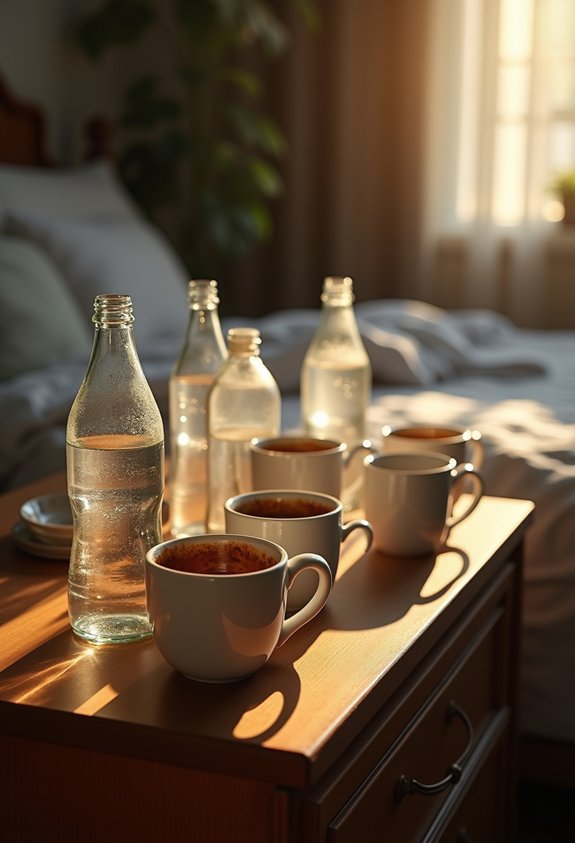
The bedside table collection of half-empty water bottles is practically a rite of passage—some from last night, some from last week, and honestly, at least one you’re a little scared to identify.
Coffee mugs have probably staged a full takeover too, complete with questionable science experiments growing inside.
Time for a sweep.
Gather them all—yes, even that crusty one hiding behind your lamp—and march them straight to the kitchen.
Check your recycling tips for proper bottle disposal (caps off, usually), and get those mugs into the dishwasher before things get weird.
Here’s the fix: invest in eco friendly alternatives like a reusable water bottle you actually love.
One good bottle by your bed beats a plastic graveyard any day.
To prevent the collection from rebuilding, implement a “one in, one out” rule by returning each glass or bottle to the kitchen before bringing a fresh one to your bedroom.
Old Receipts, Bills, and Paper Clutter
Unless you’ve achieved peak adulting (spoiler: nobody has), there’s probably a small forest’s worth of paper chaos lurking on your dresser, nightstand, or that chair where clothes go to die.
Time to tackle those receipts from three months ago and mysterious bills you’re afraid to open.
Those mystery envelopes aren’t going to magically disappear — face the paper chaos before it breeds more anxiety.
Here’s your paper organization tips game plan:
- Toss receipts you don’t need for returns or taxes — that coffee receipt from January isn’t doing anything except collecting dust and judgment.
- Scan important documents to your phone — because managing financial documents doesn’t require physical hoarding anymore (hello, technology).
- Create one designated spot for papers that need attention — not seven random piles.
If you’re feeling stuck on what to keep, try a simple rule: if you haven’t referenced a document in a year and it’s not legally required, it’s ready to go—this kind of if-then statement makes decisions automatic and eliminates the mental back-and-forth.
You’ll sleep better knowing exactly where everything is, and your bedroom won’t look like a paper tornado hit it.
Shoes You Never Actually Wear
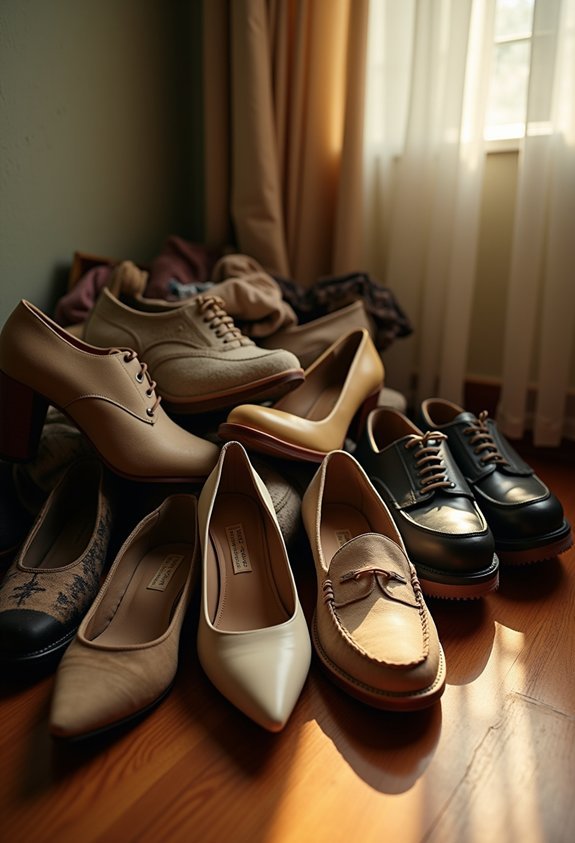
Everyone has at least three pairs of shoes hiding in their bedroom that haven’t touched actual pavement since 2019 — those cute heels that destroy your feet, the running shoes from your “I’m totally gonna get fit” phase, or those boots that seemed like a good idea until you realized they matched nothing you own.
Here’s the truth: if you haven’t worn them in a year, you’re not suddenly going to start.
Clear out your shoe storage and be honest about what actually serves you. Those uncomfortable shoes aren’t going to magically become comfortable, and keeping them only creates visual chaos.
Bag them up for footwear donation — someone else will love what you’re forcing yourself to keep.
You’ll breathe easier when you can actually see (and access) the shoes you genuinely wear. The good news is that practicing letting go with small decisions like this trains your brain to release attachments more easily over time.
Dusty Books You’ll Never Read Again
Look, we all have that stack of books gathering dust on the nightstand — the self-help book your aunt gave you three Christmases ago, the classic novel you swore you’d finally read to seem more cultured, or that dense biography you abandoned on page forty-seven because (let’s be real) you’d rather scroll through your phone before bed.
Here’s your permission slip to let them go:
- Keep only books you’ll actually reread — if you haven’t touched it in a year, it’s taking up valuable space.
- Research local book donation options like libraries, schools, or Little Free Libraries in your neighborhood.
- Use the one-in-one-out rule as one of the smartest decluttering tips — buy a new book, donate an old one.
Your bedroom isn’t a library. It’s your sanctuary. Removing these nonessential items isn’t just about physical space—it reduces the micro-decisions your brain makes each time you glance at that pile, creating genuine mental clarity.
Excess Pillows and Throw Blankets

How many pillows does one person actually need to sleep comfortably?
Probably not the seventeen decorative ones currently staging a coup on your bed—seriously, where do you even put them all at night?
Keep your favorites (the ones you actually use), then explore pillow storage solutions for the rest.
That vintage trunk or ottoman with hidden storage? Perfect homes for extras you’re keeping for guests.
Same goes for throw blankets.
If you’re drowning in cozy knits but only reach for two, it’s time to donate.
Check out blanket organization tips like basket storage or vacuum-sealed bags—they’ll help you rotate seasonal favorites without creating bedroom chaos.
You deserve a space that feels restful, not like a home goods store exploded.
Jewelry You No Longer Use or That’s Broken
That tangled drawer of jewelry—broken chains, single earrings, and pieces from past versions of yourself—deserves some honest attention.
You’re not going to fix those broken necklaces (let’s be real), and those unused bracelets aren’t magically becoming your style again.
Here’s what to toss tonight:
- Anything broken you’ve kept for over six months — if you haven’t repaired it by now, you won’t
- Jewelry from relationships or phases that no longer serve you — that chunky 2010 statement necklace can go
- Single earrings without matches — unless you’re committed to the asymmetrical look, they’re just taking up space
Keep what you actually wear, donate what’s still good, and recycle broken pieces at jewelry stores.
Your jewelry box should spark joy—not guilt.
Old Phone Cases and Chargers for Devices You Don’t Own
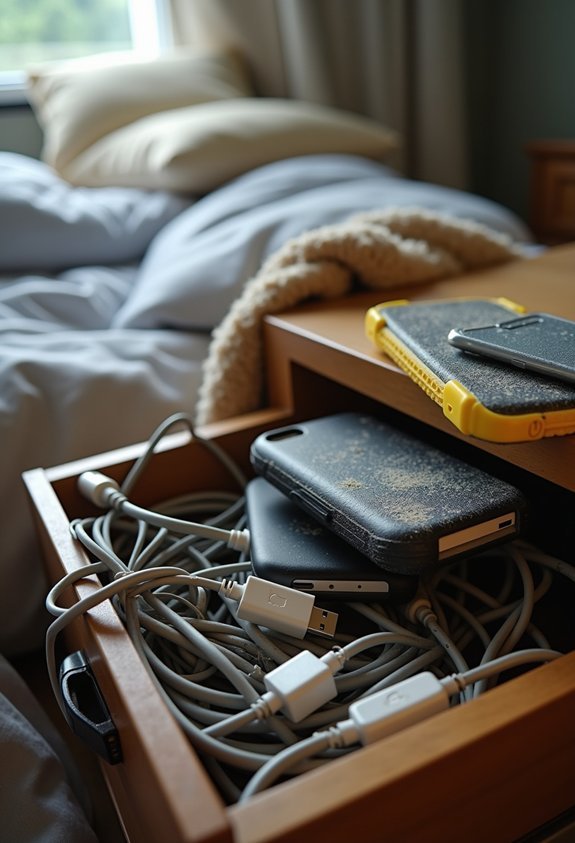
Unless you’re running a museum of obsolete technology, those ancient charging cables and phone cases have got to go.
That iPhone 6 case isn’t making a comeback—trust me on this one.
Start with phone case recycling programs at electronics stores (Best Buy and Target often take them).
Your drawer space will thank you.
Next, tackle charger organization by keeping only what you actually use.
One cable per current device, maybe one spare. That’s it.
Those mystery cords that *might* fit something? They won’t.
And that Nokia charger from 2009? Yeah, it’s time.
Toss broken cables, donate working ones to electronics recycling, and reclaim that nightstand drawer for something you’ll actually need—like your current phone’s charger, which you can finally find now.
Candles That Are Nearly Gone or Never Lit
Speaking of drawers full of things you’re definitely not using—let’s talk about your candle collection.
You know the ones: nearly burned-out stubs you’re “saving” and brand-new candles you bought because the scent seemed amazing but never actually matched your scent preferences.
Time to be honest about your candle storage situation:
- Toss candles with less than half an inch of wax left (you’ll never light them again—admit it)
- Donate unopened candles you’ve ignored for six months (if you haven’t lit it by now, you won’t)
- Repurpose pretty jars from finished candles for organizing instead of hoarding them
Keep three favorites you actually burn regularly.
Everything else? It’s just taking up valuable drawer space and collecting dust.
Exercise Equipment You’re Not Using
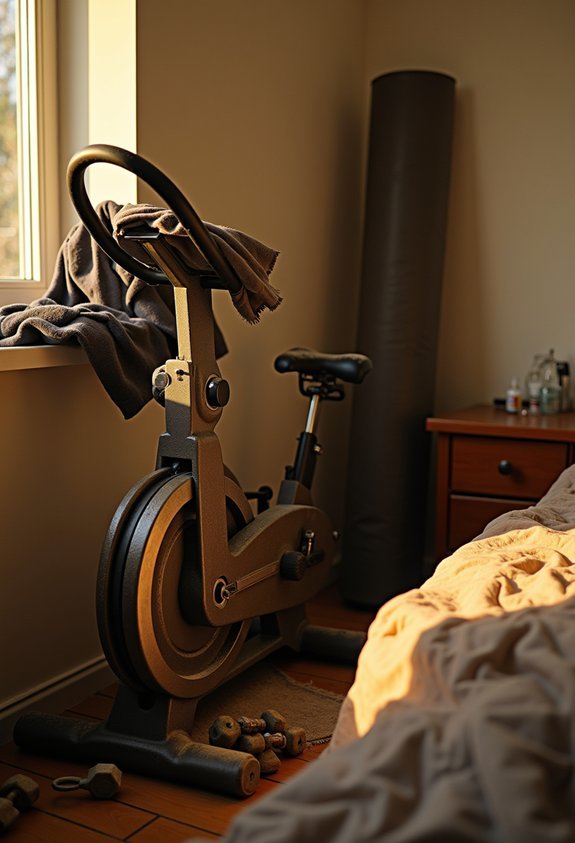
While you’re clearing out those candles, let’s address the resistance bands draped over your closet door handle and that yoga mat rolled up in the corner—you know, the equipment you swore would transform your fitness routine.
Here’s the truth: if you haven’t touched those unused weights in six months, they’re just expensive dust collectors taking up precious floor space.
Unused equipment gathering dust for months isn’t fitness gear—it’s just clutter pretending to be motivation.
And those yoga mats? If you’re not actually doing yoga, they’re just guilt trips you have to step over every morning.
Be honest with yourself.
If the equipment makes you feel bad every time you see it—donate it to someone who’ll actually use it. Your bedroom should inspire rest, not remind you of abandoned New Year’s resolutions.
You can always restart your fitness journey later (maybe at an actual gym).
Duplicates of Items You Only Need One Of
Now let’s talk about something that sneaks up on everyone—the mysterious multiplication of items that should exist solo in your bedroom.
You know what I mean: those duplicate things that somehow appear (like gremlins, but less cute).
Here’s what to tackle:
- Extra bedding beyond one backup set — three sets of sheets per bed is honestly overkill, and you know it.
- Duplicate kitchenware that migrated upstairs — those coffee mugs and water bottles breeding on your nightstand need to return to the kitchen where they belong.
- Multiple phone chargers — keep one by your bed, send the rest to their proper homes throughout your house.
Keep one spare, ditch the rest.
Your bedroom isn’t a storage unit—it’s your sanctuary.
Sentimental Items That Just Create Guilt
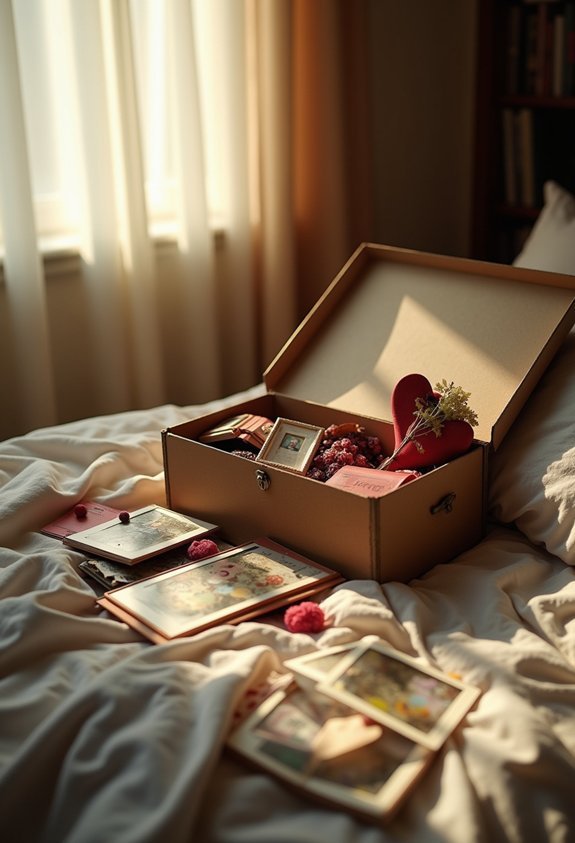
Let’s address the elephant in the room—or rather, the stuffed elephant your aunt gave you fifteen years ago that you’ve never liked but can’t seem to donate.
Here’s the truth: keeping things out of obligation isn’t honoring the gift-giver—it’s just cluttering your space and weighing on your conscience.
That emotional attachment you’re feeling? It’s actually guilt in disguise, and guilt management starts with permission to let go.
The person who gave you that item wanted you to be happy, not burdened by a dust-collecting reminder of their generosity.
They’d probably be mortified knowing you kept something you don’t love just because they picked it out.
Take a photo if you want the memory without the mess.
Then donate it, guilt-free.
Someone else will actually enjoy it.
Shopping Bags and Packaging Materials
You know those shopping bags stuffed inside other shopping bags that you’re saving “just in case”?
That mountain of crinkly plastic and fancy boutique bags needs to go—tonight.
Here’s what to do:
- Keep only 3-5 reusable bags for actual shopping trips (the sturdy ones you’ll genuinely use)
- Toss all ratty plastic bags immediately—your grocery store recycles these anyway
- Donate fancy shopping bags to thrift stores for their customers or use them as gift bags this month
The truth? You don’t need eco friendly storage made from storage itself.
Those bags aren’t “might need someday” items—they’re clutter wearing a practical disguise.
Keep what serves you now, ditch the rest, and reclaim that precious closet space.
Stuffed Animals and Childhood Items You’ve Outgrown
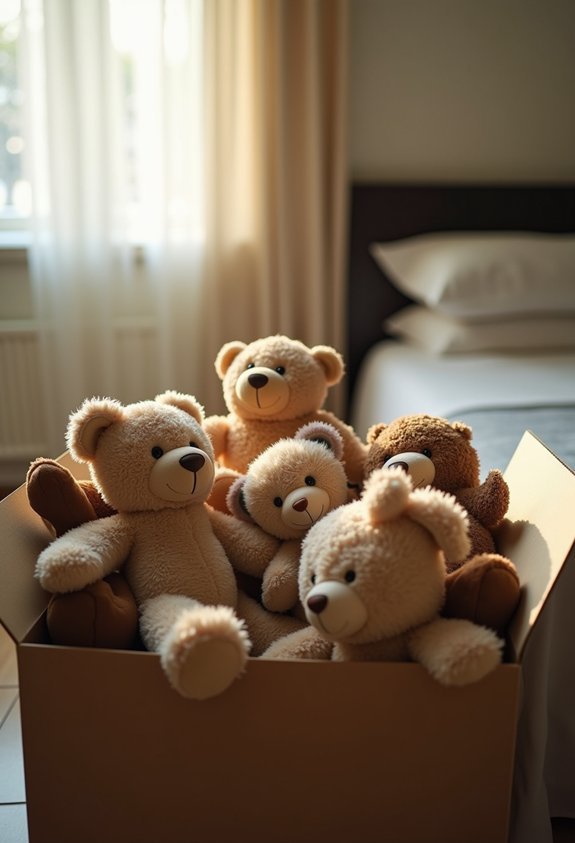
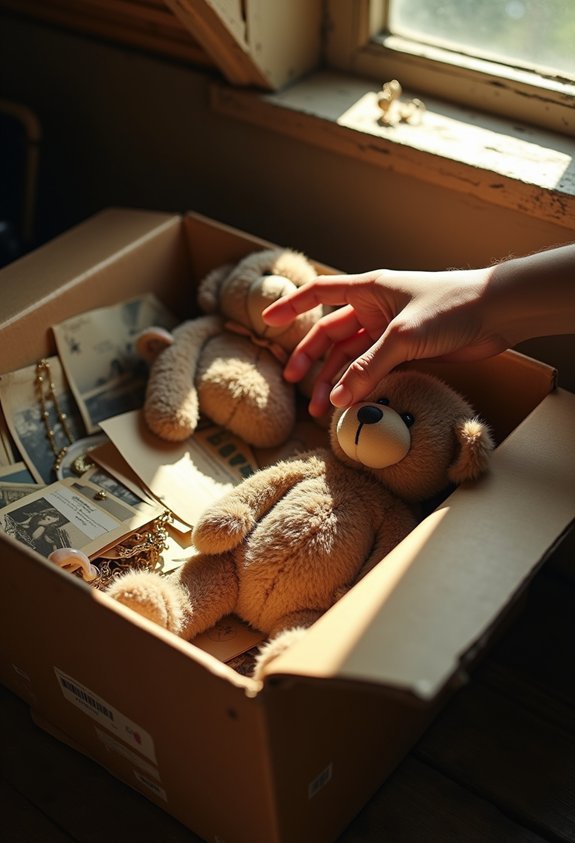
That collection of stuffed animals piled on your bed—the ones you haven’t actually hugged in five years but can’t seem to donate because of *the guilt*?
Yeah, those need to go.
Look, nostalgic memories are precious, but you don’t need seventeen ratty bears to remember your childhood.
Keep your absolute favorites—maybe two or three that spark genuine joy—and let the rest find new homes with kids who’ll actually play with them.
You may also like:



Your emotional attachment is valid, but here’s the thing: memories live in your heart, not in that purple unicorn missing an eye.
Take a photo if you need to (totally acceptable coping mechanism), then pass them along.
You’re not betraying your inner child. You’re just making room for your actual life.
In case you were wondering
How Do I Stop Feeling Guilty About Decluttering Gifts From Loved Ones?
Remember that guilt management starts with honoring the giver’s intention, not keeping unwanted items. You’re managing emotional attachment by cherishing memories, not objects. The gift’s purpose was making you happy—keeping something you don’t use doesn’t honor that.
What Should I Do if My Partner Resists Decluttering Shared Bedroom Spaces?
Focus on communication strategies that emphasize shared benefits rather than criticism. Use compromise techniques like starting with neutral spaces, setting boundaries around personal items, and creating designated areas where you’ll each respect the other’s organizational preferences.
How Often Should I Declutter My Bedroom to Maintain Organization?
Studies show organized spaces reduce stress by 40%. You should incorporate weekly routines for quick tidying and schedule seasonal refreshes every three months for deeper decluttering. This combination keeps your bedroom consistently organized without feeling overwhelming or time-consuming.
Where Can I Donate Items That Are Still Usable but Unwanted?
You can donate usable items to local charities like Goodwill or Salvation Army, donation centers at thrift stores, homeless shelters, women’s shelters, or churches. Many organizations offer free pickup services for larger items you’re decluttering.
How Do I Prevent Clutter From Accumulating Again After Decluttering?
You’ll prevent clutter by implementing consistent decluttering strategies like the “one in, one out” rule and weekly tidying sessions. Focus on maintaining organization through designated storage spaces and immediately putting items away after use.
Conclusion
Sweet dreams.