15 Simple Rituals That Ground Me Daily
You don’t need a two-hour yoga retreat to feel grounded—just small, intentional moments that bring you back to yourself. Try morning pages before your phone steals your attention, three deep breaths between tasks, or standing barefoot on grass (yes, really). Sip tea slowly without multitasking, stretch while your coffee brews, or light a candle to signal work mode. The real magic happens when you stack these tiny rituals throughout your day, creating anchors that calm your nervous system and remind you that you’re allowed to pause—and the practices below will show you exactly how to build this into your routine.
Key Takeaways
- Morning pages and journaling capture unfiltered thoughts before self-criticism begins, serving as a therapeutic warm-up for creativity.
- Three deep breaths between tasks reset the nervous system, reduce cortisol, and create mindful transitions throughout the day.
- Standing barefoot outdoors or touching soil grounds the mind through tactile connection, interrupting anxious thought patterns naturally.
- Mindful tea sipping transforms hydration into a calming ritual by focusing on warmth, flavor, and aroma without multitasking.
- Evening gratitude journaling shifts focus from anxiety to appreciation, creating a mental buffer before sleep and calming chaos.
Morning Pages Before the World Wakes Up

Why does everyone rave about morning pages like they’re some kind of magic cure-all for life’s chaos?
Here’s the thing—writing three pages before your brain fully wakes up actually works because you’re catching thoughts before your inner critic shows up to ruin everything.
You don’t need fancy prompts or perfect sentences. Just dump whatever’s bouncing around in your head onto paper (or screen, no judgment here).
This daily journaling becomes your morning creativity warm-up, like stretching before a run but for your brain.
The magic happens when you’re still half-asleep and honest. You’ll write stuff you didn’t even know was bothering you—weird dreams, random worries, that thing your coworker said three weeks ago.
Morning pages catch your unfiltered thoughts before your inner critic wakes up and starts editing everything.
It’s basically therapy you don’t have to pay for.
This practice of morning mindfulness reduces rumination and improves emotional regulation by giving your thoughts somewhere to go before they spiral.
Three Deep Breaths at Every Transition
Before you spiral into your next task—wait, just stop for a second and take three deep breaths.
Seriously, that’s it.
Between meetings, before checking your phone, after closing your laptop—pause and breathe. This simple breath awareness practice transforms frantic rushing into mindful transitions (and honestly, it’s saved me from so many stress meltdowns).
You don’t need a meditation cushion or whale sounds playing in the background. Just three intentional breaths wherever you are—your car, the bathroom, standing at the coffee maker looking like a zombie.
It tells your nervous system: “Hey, we’re okay. We’re not being chased by anything scary.”
These short breaks reduce cortisol and give your overworked prefrontal cortex a chance to reset.
This micro-ritual creates tiny pockets of calm throughout your day, turning autopilot chaos into something manageable.
Barefoot Connection to the Earth

Something magical happens when your bare feet touch actual ground—and no, I’m not about to go full crystal-healing-energy-vortex on you (though honestly, no judgment if that’s your thing).
This earth meditation practice is ridiculously simple: just take off your shoes and stand on grass, dirt, or sand for five minutes.
The sensory awareness hits immediately—you’ll notice temperature, texture, maybe some nature sounds around you. It’s like a factory reset for your overstimulated brain.
Barefoot walking transforms basic grounding exercises into genuine nature immersion, giving you tactile experiences that screen time can’t replicate.
Your soil connection creates outdoor mindfulness without fancy apps or equipment.
Even standing still becomes elemental presence.
Try it during your morning coffee—your nervous system will thank you.
This practice of noticing simple details—the coolness of morning dew, the give of soft earth beneath your weight—trains your mind to exist in the moment rather than racing ahead to the next task.
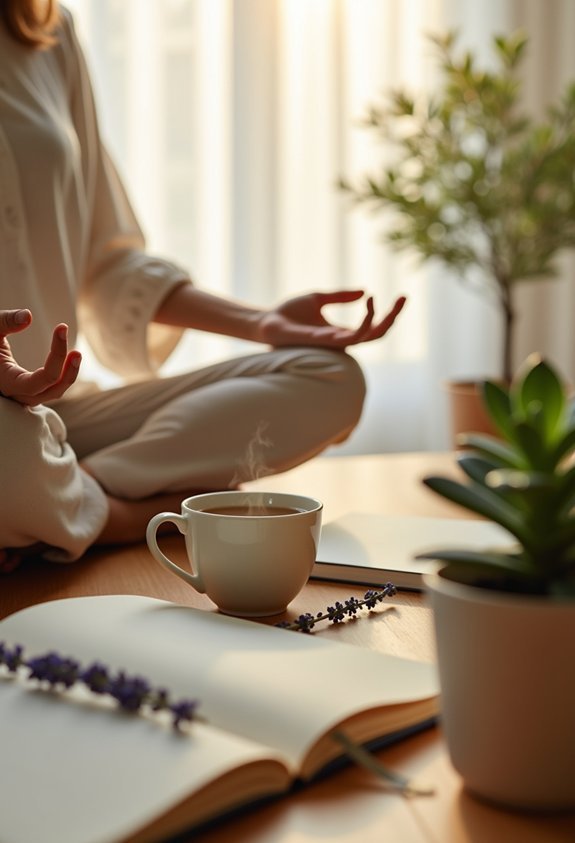
A Single Cup of Tea, Sipped Slowly
If you’re anything like me, you’ve probably chugged entire beverages without actually tasting them—scrolling through your phone, answering emails, basically treating hydration like a checkbox on your to-do list.
But here’s what changed things for me: turning one cup of tea into an actual tea ritual.
I’m talking mindful sipping—where you actually notice the warmth spreading through your hands, the steam rising, how the flavor shifts from the first sip to the last.
No multitasking allowed.
Just you and your tea, having a moment together like old friends catching up after years apart (okay, maybe that’s dramatic, but you get it).
It sounds almost too simple to matter, but this tiny pause—this deliberate slowness—somehow resets my entire nervous system.
Five minutes. That’s all it takes.
And beyond the tea itself, I’ve noticed that keeping the space around me clear—just the mug, maybe a small plate—helps my mind settle even more, since visual clutter actually competes for our attention and raises stress hormones.
Phone-Free First Hour After Waking

Honestly, the moment my alarm goes off, my hand used to shoot toward my phone like it was on autopilot—checking texts, scrolling news headlines, diving straight into everyone else’s chaos before I’d even processed my own name.
Now? I’ve created this screen-free sanctuary for my morning routine, and it’s honestly changed everything about my mindful awakening.
That phone-free first hour gives me morning clarity I didn’t know I needed—a tiny digital detox that feels like a daily reset for my brain.
I stretch, make coffee, maybe journal a bit (badly, but still).
These phone free moments let me ease into the day with intentional silence instead of anxiety.
It’s about technology boundaries that actually feel doable.
A peaceful start that’s entirely mine.
I’ve learned that heavy screen use correlates directly with higher stress levels, which explains why those immediate morning scrolls always left me frazzled before the day even began.
Gratitude List Before Bed
Why is it that my brain reserves its finest anxiety spirals exclusively for bedtime—that magical moment when I’m finally horizontal and my mind decides to replay every awkward thing I’ve said since 2007?
Enter: gratitude journaling.
You don’t need anything fancy—just a notebook and three things you’re grateful for today. That’s it. The coffee that didn’t suck, your dog’s ridiculous face, surviving that meeting.
This simple practice rewires your nighttime reflections from “everything I ruined” to “things that didn’t completely fall apart.”
It’s not about toxic positivity or pretending hard days weren’t hard. It’s about giving your brain something better to chew on than that cringey email from Tuesday.
Your mind needs a redirect, not a lecture.
Gratitude lists deliver exactly that.
When your environment feels chaotic, this ritual becomes even more essential—because visual noise and mental clutter feed each other, keeping your nervous system on high alert long after you’ve climbed into bed.
Midday Movement Break, No Matter How Brief

Ever notice how sitting still for six straight hours makes you feel like a sentient potato—except somehow more tired and way more irritable?
Your body wasn’t designed to stay frozen all day. It needs movement—even just a little.
Your body craves movement like a plant craves sunlight—deny it too long and everything starts wilting.
Here’s what works:
- Set a phone alarm for 2 PM (or whenever your energy crashes hardest)
- Stand up and do a midday stretch—reach high, touch your toes, roll your shoulders
- Take a quick dance break to one favorite song (kitchen dance parties count)
- Walk around the block or just pace your hallway for five minutes
You don’t need a full workout routine. You just need to remind your body it’s alive.
Five minutes can completely reset your afternoon mood.
Movement also helps calm your nervous system, making it easier to focus when you return to work.
Lighting a Candle as a Mindfulness Anchor
When you light a candle at the start of your morning—or right before you begin work, or whenever you need to shift gears—you’re not just making your space smell like “vanilla bean dream” or whatever the label promised.
You’re creating an actual mindfulness anchor.
Candle selection matters less than you think (though color meanings and scent significance can boost your intention setting if you’re into that).
The real magic happens through flame focus and mindful observation—watching that tiny light dance while practicing breath awareness.
Ritual timing becomes your cue: candle lit equals work mode, creative time, or whatever you decide.
The calming effects kick in fast, partly because light symbolism runs deep in our brains.
It’s surprisingly grounding, this one small flame.
By automating this simple routine, you preserve mental bandwidth for decisions that actually matter, treating your mind like the rechargeable battery it is.
Evening Walk Without a Destination

If morning candles ground you at the start of your day, evening walks do the opposite work—they help you let go of whatever the day dumped on you.
No route planned. No fitness tracker buzzing. Just unplanned exploration that lets your mind wander as freely as your feet.
Here’s what makes these walks work:
- Sensory awareness kicks in naturally — you’ll notice moonlit reflections on puddles, evening solitude wrapping around you like a blanket.
- Mindful pacing happens without trying — your body finds its rhythm, slowing down from the day’s chaos.
- Urban tranquility emerges (yes, even in cities) — parks, quiet streets, those forgotten corners become spontaneous adventure spots.
- Environmental connection deepens — nature appreciation blooms when you’re not rushing toward something.
It’s quiet contemplation disguised as movement.
Research shows that present-moment awareness during these walks reduces stress and improves your overall mood.
Setting One Intention Each Morning
Why do most morning intention-setting practices fail? They’re too complicated—like trying to solve a math problem before coffee.
Here’s what actually works: pick one simple thing that’ll shape your morning mindset. Not five goals, not a vision board, just one clear daily purpose.
Maybe it’s “I’ll listen more than I talk today” or “I’m choosing patience over perfection.” Something you can remember without checking your phone seventeen times.
The magic happens when your intention feels like a gentle compass, not a strict rulebook. You’re not aiming for perfection (that ship sailed when you hit snooze twice).
You’re simply giving your day a direction.
This kind of morning structure actually lowers cortisol levels, helping your nervous system start the day from a place of calm rather than chaos.
And honestly? Some mornings your intention might just be “survive with grace.”
That counts too.
Hands in Soil, Even for Five Minutes

Something shifts in your nervous system the moment your fingers touch actual dirt—even if it’s just the potted basil on your windowsill.
This isn’t woo-woo nonsense—soil therapy is real, and your body knows it.
Here’s what five minutes of mindful gardening gives you:
- Instant nature connection through tactile meditation (no forest required, just one plant)
- Sensory experience that interrupts anxious thought spirals better than scrolling
- Seasonal awareness as you notice growth, changes, or—let’s be honest—which plants you’ve accidentally murdered
- Root grounding that reminds you earth energy doesn’t need to be complicated
This grounding practice works because your hands remember what screens make you forget.
Plant care counts. Touching soil counts.
It all counts.
Digital Sunset at the Same Time Daily
Your hands remember the earth, but your brain? It’s still scrolling through fifteen browser tabs from this morning.
That’s why a digital sunset—picking one time daily for your technology boundaries—changes everything.
Think of it as your evening ritual, a daily disconnect that actually sticks. Choose your moment (mine’s 8 PM, yours might be 7:30), then screens go dark, no exceptions.
This sunset routine isn’t punishment, it’s permission to stop. The evening calm that follows? Almost instant.
You’ll notice how mindful transitions replace doomscrolling, how daily reflection becomes possible again.
Call it digital detox or sunset mindfulness—whatever works. Your brain needs that buffer between screen time and sleep, that chance to remember it’s human.
Stretching While Water Boils

While the kettle hisses toward a boil, most of us just… stand there, staring at our phones or zoning out.
But here’s your invitation to kitchen yoga instead.
Those three minutes of mindful boiling? They’re perfect for stretching out the day’s tension:
- Roll your shoulders back — because you’ve been hunched over your desk like a question mark
- Touch your toes (or at least try) — nobody’s judging your form here
- Twist your spine gently — wring out that stress like a dishrag
- Stretch your neck side to side — release all that text-neck drama
Transform waiting time into movement time.
Your body craves these micro-moments of attention, and the water doesn’t boil faster when you’re anxious anyway.
Monthly Solo Date With Myself
When’s the last time you took yourself out on a proper date — no plus-one, no agenda, just you being intentionally good to you?
I block off one day each month for a solo adventure — coffee shop writing sessions, museum wandering, or just driving somewhere new.
No guilt allowed.
These dates aren’t about productivity (though my Type A brain fights this).
They’re about self discovery, figuring out what lights you up when nobody’s watching.
Sometimes I’ll grab fancy pastries and eat them in the park.
Other times I’ll catch a matinee movie, sitting dead center with popcorn I don’t have to share.
The point? You’re worth your own undivided attention.
Mark it on your calendar.
Treat it like you’d any important appointment.
Because you are.
Weekly Tech-Free Meal With Loved Ones

Solo time fills your cup, but here’s the thing — connection empties it back out in the best possible way.
Weekly device-free dining becomes your anchor for family bonding, and honestly? It’s harder than you’d think (but totally worth it). Meal planning together sparks culinary creativity, while mindful eating — actually tasting your food instead of scrolling — feels revolutionary.
You may also like:




Here’s what makes it work:
- Conversation starters keep awkward silence at bay
- Shared recipes from grandma’s cookbook create laughter moments
- Gratitude sharing before eating shifts everyone’s mood
- Tech detox rules apply to adults too (yes, even you)
Your phone will survive an hour without you.
The magic happens when someone tells that embarrassing story again, and you’re present enough to catch the new details.
In case you were wondering
What if I Miss a Ritual or Can’t Maintain Daily Consistency?
Missing rituals doesn’t derail your progress—you’ll simply resume tomorrow. Daily flexibility matters more than perfection. You’re building sustainable habits, not rigid rules. One skipped day won’t erase your routine’s benefits. Just return when you can.
How Long Before These Rituals Feel Natural Rather Than Forced?
Most rituals feel natural after 3-4 weeks of daily commitment, though some take longer. You’ll notice the natural progression when you stop thinking about doing them—they’ll simply become automatic parts of your routine.
Can I Combine Multiple Rituals or Must Each Be Separate?
You can blend, you can merge, you can stack—ritual combinations work beautifully together. Daily flexibility matters most here. Try pairing morning gratitude with stretching, or breathwork with journaling. You’ll discover what flows naturally for your unique rhythm.
What if My Living Situation Doesn’t Allow for Certain Rituals?
You’ll adapt rituals to fit your space. Choose alternative practices that work within your constraints—adaptable routines like breathwork, visualization, or journaling don’t require special settings. Focus on what’s possible rather than what’s restricted in your situation.
How Do I Handle Skepticism From Family About These Practices?
You’ll handle family skepticism by practicing privately first, then sharing results rather than intentions. Focus on overcoming doubt through your own consistency. You don’t need family support initially—let your positive changes speak for themselves over time.
Conclusion
You don’t need all fifteen rituals at once—honestly, that’d be exhausting. Pick one that makes you think, “Yeah, I could actually do that.” My friend Sarah started with just the barefoot-in-grass thing every morning while her coffee brewed. Thirty seconds, tops. But here’s what happened: that tiny moment became her anchor when everything else felt chaotic. One ritual. That’s your starting point.