15 Minimalist Living Lessons I Learned the Hard Way
Minimalism isn’t about owning the least stuff or achieving Pinterest-perfect spaces—it’s about keeping what genuinely matters to you. You’ll make mistakes (like tossing those backup chargers), realize expensive doesn’t always mean better quality, and learn that your version of “enough” looks different from everyone else’s. The goal isn’t deprivation or aesthetic perfection—it’s less stress and more mental clarity. Sentimental items deserve thoughtful consideration, not snap judgments, and nobody needs your justification for what you keep. Stick around to discover the honest lessons that’ll help you avoid common pitfalls.
Key Takeaways
- Minimalism is personal and flexible; avoid perfectionism and rigid rules that create stress rather than simplify life.
- Keep practical backup items like chargers or glasses; functionality and convenience can coexist with minimalist principles.
- The “one in, one out” rule doesn’t suit everyone; adapt minimalism to life changes like new hobbies or growing families.
- Rebuying donated items isn’t failure but valuable learning about your genuine needs and priorities over time.
- Decluttering alone won’t resolve mental health issues; seek professional support for deeper emotional healing and well-being.
Purging Everything at Once Creates More Problems Than It Solves

When you’re first bitten by the minimalist bug, there’s this wild urge to Marie Kondo your entire life in a single weekend.
That initial minimalist enthusiasm hits hard—suddenly everything feels like clutter that needs to go immediately.
Trust me—I’ve been there, trash bags in hand, ready to conquer Mount Clutter like some sort of decluttering superhero.
But here’s what nobody tells you: aggressive purging mistakes happen when you move too fast. You’ll toss things you actually need (goodbye, phone charger), keep stuff you don’t (hello, broken blender), and feel completely overwhelmed by the chaos you’ve created.
The better approach? Gradual decluttering.
Start with one drawer—just one. Get comfortable with letting go slowly, and you’ll make smarter decisions about what truly deserves space in your life.
Instead, implement short, repeatable tasks that become part of your daily rhythm, making maintenance feel effortless rather than overwhelming.
Think marathon, not sprint. Your future self will thank you.
“Quality Over Quantity” Doesn’t Mean Expensive Always Equals Better
As you dive deeper into minimalism, you’ll hit this tempting trap: buying “investment pieces” that cost a small fortune because, well, quality matters, right?
Here’s the plot twist—expensive doesn’t automatically mean better.
That $200 knife might feel special, but a $30 one from a restaurant supply store often works just as well (sometimes better, honestly).
Your value perception gets twisted when marketing convinces you that price equals worth.
Conscious spending means researching what actually matters for each item.
Sometimes you need the pricey version; sometimes you’re just paying for a logo.
The real quality test? Does it serve you well over time, regardless of cost?
Focus on durability, functionality, and how it fits your actual life—not impressive price tags or brand prestige.
Instead of fixating on price alone, consider the cost per use to determine if something truly delivers long-term value.
Minimalism Looks Different for Everyone—And That’s Okay
Why does everyone’s minimalist Instagram feed show exactly 37 items in a white room while you’re over here perfectly happy with your collection of coffee mugs?
Here’s the truth: minimalism isn’t a one-size-fits-all uniform you have to squeeze into.
Your minimalist journey might mean keeping twenty books while someone else keeps two hundred—and both are valid.
These are personal definitions shaped by what matters to *you*, not some influencer’s aesthetic.
Maybe you need backup chargers in every room (tech person problems), or perhaps you can’t let go of your grandmother’s teacup collection.
That’s okay.
The point isn’t matching someone else’s version of “enough.”
It’s about intentionally choosing what serves your unique journey—whether that’s ten shirts or fifty.
Your cultural background influences how you define security and success, which naturally affects what you choose to keep or release.
Stop comparing.
Start customizing.
You’ll Probably Re-Buy Some Things You Donated (And That’s a Learning Experience)
Remember that pasta maker you confidently donated because you’d “never use it again”—only to buy another one six months later because suddenly you’re really into homemade ravioli?
Yeah, re buying regrets happen to everyone.
Here’s the thing—those donation dilemmas teach you what actually matters to you. Maybe you discover you really do need that specialty kitchen tool, or that you genuinely miss having extra blankets for guests.
It’s not failure. It’s data collection.
Each time you rebuy something, you’re getting clearer about your real needs versus what minimalist Instagram told you to get rid of.
Rebuying isn’t failure—it’s figuring out what you actually need instead of what decluttering trends said you should want.
And honestly? Spending $20 to replace something is a small price for that self-knowledge.
The key is treating each decluttering decision as information about personal needs rather than a permanent, irreversible commitment.
You’re learning—and that’s completely worth it.
Sentimental Items Deserve More Consideration Than a 30-Second Decision

When decluttering experts tell you to make quick decisions about everything, they’re missing something crucial—your grandmother’s recipe box isn’t the same as a random coffee mug from 2015.
Items with sentimental value deserve a thoughtful decision, not a rushed judgment call while you’re already exhausted from sorting through your closet.
Here’s what actually helps:
- Set sentimental items aside first—don’t force yourself to decide when you’re in “purge mode”
- Take photos before letting go—sometimes that’s enough to preserve the memory without keeping the physical object
- Give yourself a specific timeline—revisit these items in two weeks when emotions aren’t running high
You’re not being “bad at minimalism” if you keep things that genuinely matter to you.
Try viewing your belongings as a personal archive where each object represents a document of your history, relationships, or risks you’ve taken—this shift in perspective transforms decluttering from elimination into thoughtful curation.
Digital Clutter Is Still Clutter
Digital clutter doesn’t announce itself with overflowing drawers or messy countertops, but it’s quietly draining your mental energy every single day.
Those 47,000 unread emails? They’re weighing on you. The 12 apps you haven’t opened since 2019—the ones sending notifications like needy toddlers—they’re exhausting too.
Here’s the thing: your decluttering mindset needs to extend beyond your physical space, because digital chaos creates the same mental drain as a messy bedroom.
Start small with a digital detox. Delete screenshots you’ll never reference again (yes, that funny meme from three years ago).
Unsubscribe from newsletters you don’t actually read—it’s not rude, it’s self-care.
Your phone should simplify your life, not complicate it.
Clean devices mean clearer thinking.
Organizing your digital files and regularly cleaning up digital spaces reduces cognitive load and helps you focus on what actually matters.
Forcing Minimalism on Your Family or Roommates Will Backfire

Instead, try these *communication strategies*:
- Lead by example (don’t preach) and let your peaceful space speak for itself.
- Respect their belongings—even that collection of coffee mugs you find excessive.
- Create shared solutions like organizing common areas together, compromising on what stays.
Your partner’s hobby supplies aren’t “junk” just because you’ve gone minimal. Their attachment to things is valid, even if you don’t share it anymore.
Your minimalism doesn’t invalidate their meaningful possessions—different values around belongings can coexist in the same home.
Focus on your own spaces first.
When they see how calm you’ve become, they might just ask for tips themselves.
Remember that each item may symbolize deeper emotional connections or personal histories, so approach conversations with curiosity rather than criticism about their attachment to stuff.
Sometimes Keeping a Backup Really Does Make Sense
Although minimalism gurus love to preach “one is enough,” real life has a funny way of proving otherwise—usually at the worst possible moment.
You’ll discover backup benefits when your only phone charger dies during an important work call, or your single pair of glasses breaks right before a road trip.
Here’s the thing—practical considerations matter more than aesthetic ideals.
Keeping a spare charging cable, an extra pair of contacts, or backup keys isn’t hoarding. It’s smart planning.
The key is being selective. You don’t need five winter coats, but having two (one for daily wear, one backup) actually makes sense.
Ask yourself: would replacing this immediately be expensive, difficult, or disruptive?
If yes, keep the spare.
No guilt required.
The goal is reducing decision fatigue in your daily life, not creating new problems by being overly rigid with your minimalist rules.
The “One In, One Out” Rule Isn’t Universal
Why do minimalist communities treat this rule like it’s carved in stone, handed down from the decluttering gods themselves?
Here’s the truth—it doesn’t work for everyone’s personal preferences or lifestyle choices.
When the “one in, one out” rule actually hurts:
- Building a new hobby – You can’t learn guitar with just one pick (trust me, I tried).
- Growing families – Kids need stuff, and that stuff multiplies faster than you can donate it.
- Career changes – Sometimes you need tools, books, or equipment without ditching something unrelated.
The rule works great for maintaining wardrobes or kitchen gadgets.
But applying it universally? That’s like wearing winter boots in summer—technically footwear, completely wrong situation.
Your minimalism journey should flex with your actual life, not some internet stranger’s rules.
Real minimalism means alignment with personal values, not rigid adherence to arbitrary formulas that ignore your circumstances.
Your Minimalist Journey Will Evolve as Your Life Changes
When I first started my minimalist journey, I thought I’d found the ultimate life formula—downsize everything, keep it that way forever, done.
Spoiler alert: life had other plans.
Here’s what nobody tells you—your minimalism needs to breathe and shift as you do. When you change careers, have kids, or pick up pottery (or whatever), your stuff requirements change too.
And that’s completely okay.
The goal isn’t maintaining some rigid standard you set five years ago. It’s about adapting lifestyle choices to match your evolving priorities, not forcing yourself into a box that doesn’t fit anymore.
Maybe you need more kitchen tools now because you’ve discovered cooking.
Maybe fewer books because you’ve gone digital.
Your minimalism should serve you—not the other way around.
That’s why scheduling regular check-ins to reassess what adds value to your current life—not your past life—keeps minimalism flexible and functional.
Getting Rid of Stuff Doesn’t Automatically Fix Emotional Issues

So you’re adapting your minimalism to fit your life—great.
But here’s the tough truth: decluttering won’t magically heal your emotional attachment issues or fix your mental health struggles.
I learned this the hard way when I cleared out my entire closet—only to feel just as anxious afterward.
Here’s what actually happens:
- The stuff was never the real problem—it was just easier to blame than addressing what’s underneath.
- You might feel temporarily lighter, but old patterns (and feelings) tend to resurface pretty quickly.
- Real healing requires actual work—therapy, self-reflection, building healthy coping mechanisms that don’t involve shopping or purging.
Minimalism can support your mental health journey, sure.
But it’s a tool, not a cure-all.
You’ve still gotta do the hard work.
Obsessing Over Perfect Aesthetics Misses the Point Entirely
If you’ve scrolled through minimalist Instagram accounts lately, you’ve probably noticed they all look suspiciously similar—white walls, three perfectly placed objects, maybe a single plant that’s never been overwatered.
Here’s the thing: chasing that aesthetic balance can become its own weird form of clutter.
You’re not trying to create a museum exhibit—you’re creating a home that works for *you*.
Real minimalism isn’t about making your space Instagram-worthy; it’s about personal expression and actual function. Maybe your version includes colorful throw pillows (gasp!) or books stacked horizontally because that’s how they fit.
The goal isn’t perfection.
It’s reducing what doesn’t serve you and keeping what genuinely matters.
That might look messy to someone else, and honestly? That’s completely fine.
Free or Cheap Isn’t Always Worth Taking “Just Because”
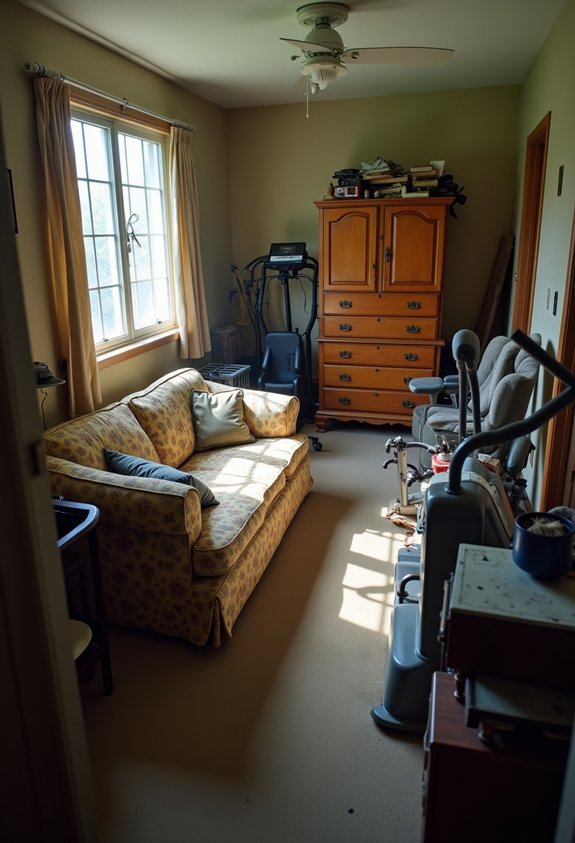
Your neighbor’s getting rid of a coffee table? Great—but do you actually need it, or does “free” just mess with your value perception?
Here’s the thing: grabbing stuff just because it’s cheap (or free!) creates its own problems.
You’ll end up with:
- Clutter you didn’t want filling your space with things that don’t serve you
- Decision fatigue from constantly managing, moving, or eventually disposing of these “deals”
- Guilt when you finally admit you never needed it in the first place
Before you say yes to anything—even if it’s free—ask yourself: would I buy this at full price if I loved it?
If the answer’s no, that coffee table isn’t a steal.
It’s just another thing you’ll trip over.
You Don’t Need to Justify Your Belongings to Anyone
Maybe your mom thinks you need more furniture, or your friend can’t understand why you still have that worn-out hoodie you’ve had since college.
Here’s the truth: you don’t owe anyone a personal justification for what you keep.
Minimalism isn’t about impressing others with how little you own—or defending why you’ve kept certain things.
The belonging value of an item is determined by *you*, not by someone else’s opinion about whether it’s “nice enough” or “necessary.”
That ratty hoodie? If it brings you comfort, keep it.
Your empty dining room? Totally fine if you prefer eating at the kitchen counter.
The only person who needs to understand your choices is you.
Your space, your rules, your life—and that’s beautifully freeing once you accept it.
Minimalism Should Reduce Stress, Not Create More of It

When minimalism starts feeling like a full-time job—complete with anxiety about whether you own too much or not enough—something’s gone off the rails.
Minimalism shouldn’t keep you up at night wondering if you’ve achieved the right level of emptiness.
Here’s the thing: a minimalist mindset should make life easier, not turn you into someone who counts spoons obsessively at 2 AM.
Real stress management looks like this:
You may also like:

- Keep what makes your life genuinely function better (even if minimalist influencers wouldn’t approve)
- Stop decluttering things you’ll just rebuy next month (that’s expensive stress, not freedom)
- Remember that owning a backup phone charger isn’t a moral failing
If you’re more stressed *after* embracing minimalism than before, you’re doing it wrong.
The goal? Less mental clutter, fewer decisions, more peace.
Not perfection.
In case you were wondering
How Do I Start Minimalism if I Live in a Small Apartment?
Start by implementing decluttering strategies room by room, removing items you don’t use regularly. Focus on space optimization through vertical storage and multi-functional furniture. You’ll quickly notice how minimalism actually makes your small apartment feel more spacious and organized.
Can Minimalism Work With Children’s Toys and School Supplies?
Yes, you’ll find minimalism works beautifully with kids’ items through smart toy organization. Keep educational essentials while rotating other toys seasonally. You’ll maintain educational balance by prioritizing quality learning materials over quantity, making cleanup easier for everyone.
What’s the Ideal Number of Items to Own as a Minimalist?
There’s no ideal item count—that’s like asking everyone to wear the same shoe size. You’ll develop your minimalist mindset by keeping what adds value to *your* life, not following arbitrary numbers.
Should I Go Minimalist if I Have Hobbies Requiring Lots of Equipment?
Yes, you can embrace minimalism with equipment-heavy hobbies. Focus on keeping only equipment essentials you regularly use, and organize efficient hobby storage systems. Minimalism doesn’t mean eliminating joy—it means removing excess that doesn’t serve your passions.
How Long Does It Take to Become a True Minimalist?
You’ll need weeks to declutter your space, yet years to complete the mindset shift. There’s no finish line—minimalism isn’t about time commitment to perfection, but your ongoing choice to embrace intentional living daily.
Conclusion
Your minimalist journey won’t look like Instagram perfection—and honestly, that’s the whole point. You’ll stumble, second-guess yourself, maybe even rebuy that waffle maker you donated in a moment of purging glory. But here’s the thing: minimalism isn’t about becoming a monk who owns three spoons. It’s about creating space (physical and mental) for what truly matters to *you*, imperfections and all.