How to Declutter Without Making a Bigger Mess
The key to mess-free decluttering? Start with one small area—like a single drawer—and set up three labeled boxes (Keep, Donate, Trash) before touching anything. Work in focused 15-20 minute sessions, handle each item only once, and immediately remove donations and trash from your space instead of creating a “deal with later” pile. This approach prevents the classic decluttering disaster where your whole room explodes and you end up sleeping on the couch surrounded by your life’s possessions—and there’s a whole system that makes it even easier.
Key Takeaways
- Start with one small area like a drawer to avoid pulling everything out and creating chaos.
- Use labeled boxes for Keep, Donate, and Trash to sort items immediately without creating piles.
- Work in 15-20 minute timed sessions to maintain focus and prevent spreading clutter throughout the space.
- Remove sorted items immediately by taking donations to the car and trash to the curb.
- Put items away right after deciding their fate to avoid creating a “deal with later” pile.
Start With One Small, Contained Area
Look, I know what you’re thinking—you need to tackle that entire chaotic house, and you need to do it *now*.
But here’s the truth: that’s how you end up with everything dumped on your bed at 9 PM, wondering where you’ll sleep tonight.
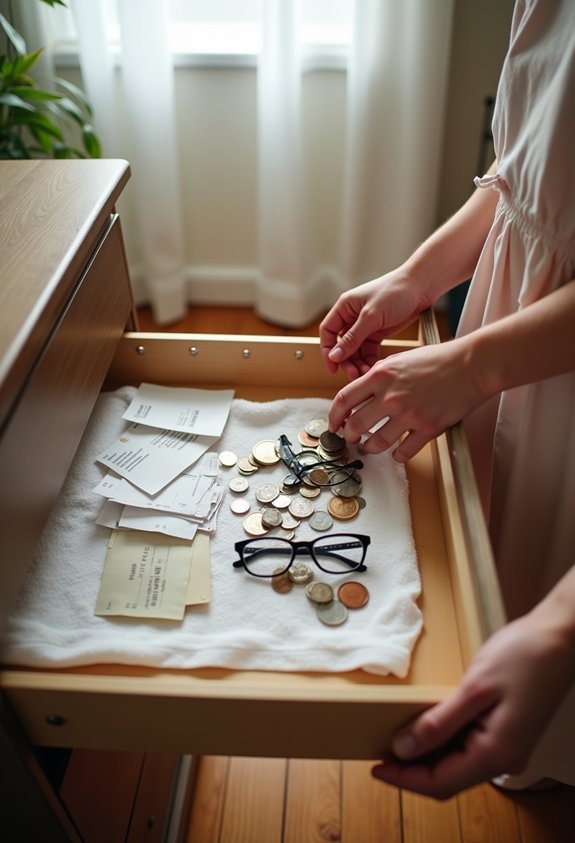
Instead, pick one drawer. One shelf. One corner of your counter.
Small spaces are your secret weapon here.
Start with something you can finish in fifteen minutes—like that junk drawer (we all have one, don’t lie).
When you complete these manageable tasks, you’ll actually *feel* accomplished instead of overwhelmed.
And that feeling? It’s addictive.
You’ll want to tackle another small space tomorrow.
Then another.
Before you know it, you’ve decluttered without creating that tornado effect we’re trying to avoid.
Try setting a ten-minute timer for your first declutter session—it keeps the process stress-free and prevents you from spiraling into an all-day project that leaves your home looking worse than when you started.
Set Up Your Sorting Stations Before You Begin
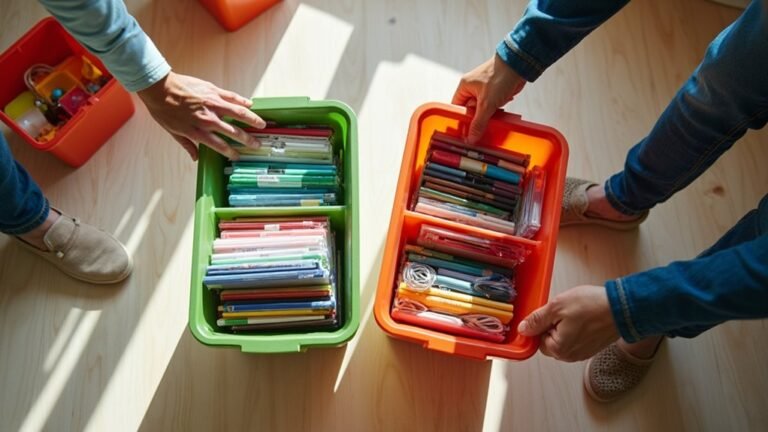
Before you pull a single item out of that closet, you need three boxes (or bags, or laundry baskets—whatever you’ve got). Label them: Keep, Donate, and Trash.
This prevents the classic decluttering disaster—you know, when your bedroom floor looks like a tornado hit and you can’t remember what goes where.
Set up your sorting materials in designated areas around the room. Keep the “Keep” box closest to you (because let’s be honest, that one fills up fastest).
Put “Donate” and “Trash” within arm’s reach but slightly farther away—making it just a tiny bit easier to let things go.
Trust me, having these stations ready before you start will save you from decision fatigue and keep things moving forward.
Consider adding a fourth container for items you’ll replace as you bring new things into your home, which supports intentional choices and prevents future clutter from building up again.
Use the Four-Box Method to Make Quick Decisions

While the three-box system works great for most people, some of us need that extra nudge to actually make decisions—which is where the four-box method comes in.
Here’s the deal: you’ll use four boxes labeled Keep, Donate, Trash, and Maybe.
That “Maybe” box? It’s your safety net for when you’re paralyzed by indecision (we’ve all been there, staring at that questionable vase for twenty minutes).
The four box benefits include reducing decision fatigue and preventing those “I can’t choose!” meltdowns that derail your progress.
The four-box method saves your sanity by giving indecision a temporary home instead of derailing your entire decluttering session.
Think of it as decision making strategies for recovering over-thinkers.
You’re not avoiding choices—you’re just giving yourself permission to postpone the really tough ones.
Circle back to your Maybe box later when you’ve built some decluttering confidence.
This approach helps reduce cognitive load so your brain isn’t overwhelmed by tracking too many decisions at once.
Remove Items Immediately—Don’t Let Them Linger
Once you’ve sorted through your stuff and made those tough decisions, here’s the truth bomb: those boxes need to leave your house *today*.
Seriously—no “I’ll deal with it this weekend” nonsense.
Here’s your immediate action plan for item disposal:
- Donations: Load them straight into your car (right now, not after lunch). Drop them off at your nearest donation center before you reconsider keeping that sweater.
- Trash: Haul those bags to the curb immediately—because clutter has a sneaky way of unpacking itself when you’re not looking.
- Sell items: List them online tonight or schedule a pickup service within 48 hours maximum.
The longer stuff sits around, the more your brain starts second-guessing everything.
Don’t give yourself that chance.
Letting discarded items linger in your space only triggers fear of regret and tempts you to rescue things you’ve already decided to release.
Work in Timed Sessions to Maintain Focus

Let’s talk about why you’re probably reading this article at 11 PM after abandoning your decluttering project three hours ago—marathon sessions are exhausting and your brain literally taps out.
Here’s the fix: set a timer for 15-20 minutes and work in bursts. This simple time management trick keeps your energy high and prevents that “I’m drowning in my own stuff” meltdown.
Work in 15-20 minute bursts to keep your energy high and avoid the decluttering meltdown.
Between sessions, take actual breaks—scroll your phone guilt-free, grab a snack, whatever. These focus techniques work because your brain needs recovery time, just like your muscles do after exercise.
You’re not lazy for needing breaks. You’re human.
Start with three timed sessions tomorrow (that’s less than an hour total), and you’ll accomplish more than you did during yesterday’s four-hour disaster. Research shows that focus improves when your nervous system feels calm, which is why these short bursts with breaks actually help you make better decisions about what to keep or toss.
Keep Your “Keep” Pile in Its Designated Space
That “keep” pile you’ve been shuffling around the room? It needs to stay put—seriously.
When your keep pile starts migrating across the floor (or onto the couch, then the chair, then somehow back to the floor), you’re creating the exact chaos you’re trying to eliminate.
Here’s how to maintain control:
- Choose one designated space at the start—maybe a laundry basket or corner of your bed.
- Resist the urge to relocate it mid-project, even when it feels in the way.
- Stack items neatly instead of tossing them haphazardly into the pile.
Think of your keep pile like a well-behaved pet: it stays where you put it.
Moving it around just confuses everyone—especially you.
A contained keep pile helps you avoid decision fatigue by keeping your decluttering session focused and manageable.
Handle Each Item Only Once

Now that your keep pile has a permanent address, you’re ready to tackle the habit that’ll actually save your sanity: touching things exactly one time.
Here’s the deal—every time you pick up that random cord (again), put it down, and revisit it later, you’re draining your brain battery. That’s decision fatigue in action, and it’s why decluttering feels exhausting.
The fix? Commit to item evaluation the moment something’s in your hand.
Pick it up. Decide: keep, donate, or trash. Put it in the right spot immediately—no “I’ll figure this out later” piles allowed.
Yes, this feels intense at first. But making quick decisions beats the mental torture of handling the same stuff seventeen times.
Before you decide, try naming the emotion tied to each object—it helps you separate your feelings from the item itself, making it easier to let go without guilt.
One touch. One decision. Done.
Prepare Your Donation and Disposal Plan in Advance
Your donation box is overflowing, you’re pumped about your progress—and then everything grinds to a halt because you have no clue where this stuff is actually supposed to go.
Don’t let donation logistics derail your momentum!
Before you even touch that first cluttered drawer, spend fifteen minutes researching your disposal options:
- Find your nearest donation centers (Goodwill, Salvation Army, local shelters) and check their drop-off hours—some even offer pickup for large items.
- Locate specialized recycling spots for electronics, batteries, and paint that can’t go in regular trash.
- Download your city’s bulk pickup schedule or hazardous waste collection dates.
Having this info ready means you’ll actually follow through instead of letting those “donation” bags live in your garage for six months.
(We’ve all been there.)
Before sorting items for donation, take time to separate sentimental value from everyday clutter so you’re not accidentally giving away something that holds genuine meaning.
Clean and Organize as You Go, Not After

With your disposal plan locked in, you’re ready to start the actual decluttering—but here’s where most people sabotage themselves. They pull everything out, create Mount Chaos in the middle of the room, and then panic.
Don’t be that person.
Instead, develop cleaning habits that include putting items away *as* you decide their fate. Found something to keep? Put it where it belongs immediately—not in a “deal with later” pile.
This organizing mindset saves you from that overwhelming “I’ve made everything worse” moment that makes you want to quit. You’ll actually *see* progress happening, which keeps your motivation alive.
Think of it like doing dishes while you cook instead of facing a destroyed kitchen afterward.
Way less soul-crushing.
You may also like:





Building these small, repeatable habits into your decluttering process helps prevent the relapse that comes from backsliding into old patterns.
In case you were wondering
What Should I Do With Sentimental Items I Can’t Decide About?
Create a “maybe box” for undecided sentimental items and store it separately. You can revisit these pieces later when you’re emotionally ready. Meanwhile, explore memory preservation techniques like photographing items before potentially letting them go, ensuring proper sentimental item storage.
How Do I Declutter When Family Members Resist Throwing Things Away?
Start with compromise strategies: designate personal spaces they control, focus on shared areas first, and use communication techniques like asking questions rather than demanding change. You’ll respect boundaries while making progress together through patient, collaborative decluttering.
Can I Declutter Successfully if I Have Limited Storage Space?
Yes, you’ll succeed by prioritizing what you keep and using creative storage solutions. Limited organization space actually helps you make better decisions about what’s essential. Maximize vertical space, use multipurpose furniture, and embrace minimalism.
What if I Feel Overwhelmed and Want to Quit Halfway Through?
Take a break and practice self care strategies like deep breathing or stretching. Use motivation techniques such as setting smaller goals, rewarding yourself after completing sections, or asking a friend to help you stay accountable and energized.
How Often Should I Declutter to Prevent Future Mess Buildup?
You’ll magically become a perfect minimalist overnight—just kidding! Reality check: declutter frequency matters. You should tackle routine maintenance weekly for high-traffic areas and monthly deep-dives elsewhere. Consistent small efforts prevent chaos from creeping back into your space.
Conclusion
You’ve got this—and you’ve got a plan that actually works. No tornado aftermath, no boxes sitting around for weeks, no “I’ll deal with this later” piles haunting your hallway. Just one small area at a time, getting lighter and clearer.
Here’s the truth: decluttering doesn’t have to mean chaos.
It just means being strategic—maybe a little stubborn—and trusting the process enough to follow through.