How I Finally Decluttered My Closet (For Good)
You finally hit that point where your closet isn’t “cute messy” anymore—it’s just chaos, stress, and lost socks. So you pull *everything* out, face how much you own, and only keep what fits, feels good, and actually gets worn (no more “maybe when I lose five pounds” pile). You build around your real MVP pieces, add simple storage, and use a 10‑minute reset habit so the mess doesn’t sneak back—and that’s where it really starts to change.
What you will leave with
- Did a full wardrobe audit, pulling everything out to see exactly what I owned and how much I actually wore.
- Used strict rules: it must fit now, be in good condition, be worn recently, and genuinely feel like “me.”
- Capped duplicates (like jeans, black tops, sneakers) to a set number so my closet reflected my real lifestyle, not “someday.”
- Built my wardrobe around my 10–20 “MVP” pieces, using them to guide future shopping and avoid impulse clutter.
- Created an easy-to-maintain system—clear zones, good lighting, donation bag always ready—so small, regular declutters keep the closet tidy for good.
The Breaking Point: Why My Closet Had to Change
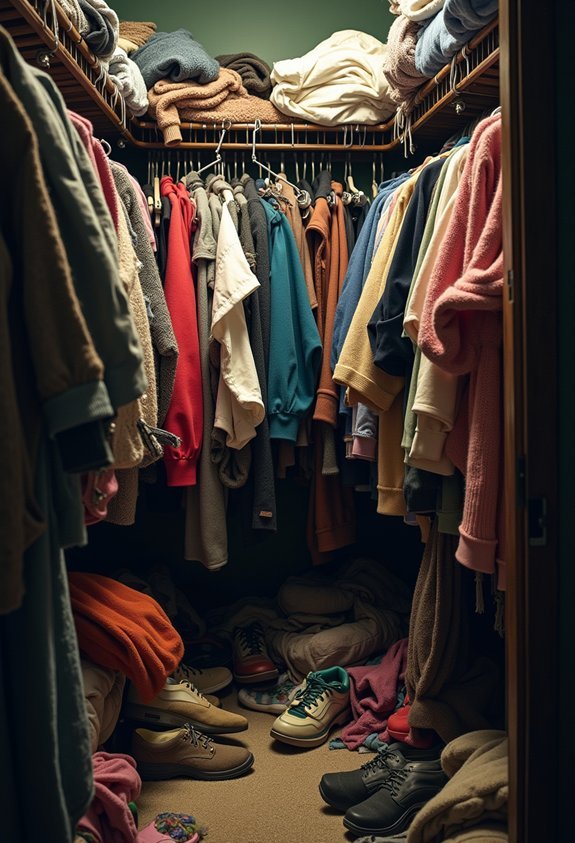
At some point, a messy closet stops being “a little cluttered” and starts feeling like a personal enemy. You’re just trying to grab shoes, and suddenly you’re wrestling an avalanche, muttering things you’d never say in public.
Those little moments are clutter triggers—running late, can’t find the black tee, stepping on that one evil heel. Each tiny hassle piles on, and before you know it, your closet’s causing full emotional chaos, not just “ugh, it’s messy,” but stress, anxiety, and that tight feeling in your chest that follows you through the day. Research shows that this kind of everyday clutter can spike stress hormones and leave your nervous system in a constant state of low-level alert.
You start wondering why you’re exhausted before breakfast, why you snap at people, why your mood sinks—then realize, awkwardly, it all starts at that door.
Taking Stock: Facing the True Size of My Wardrobe
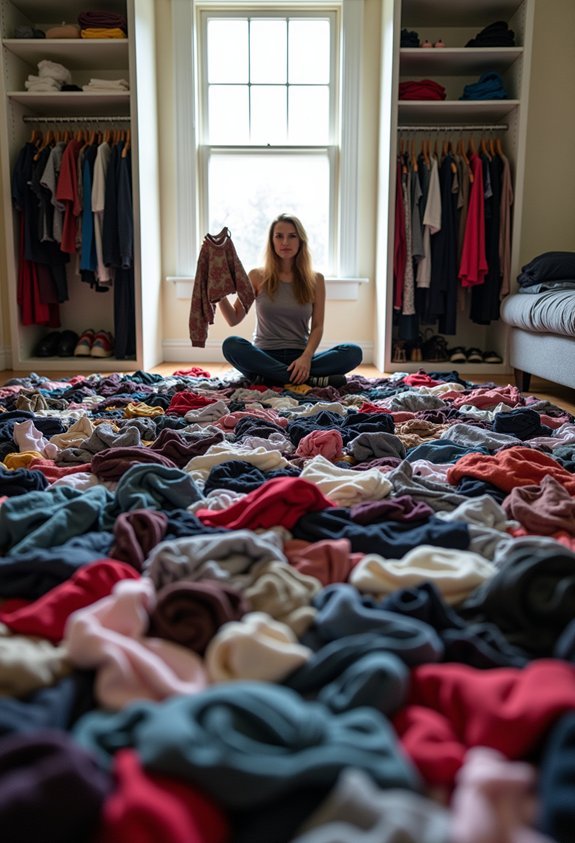
Even though it’s tempting to slam the door and pretend it’s fine, there’s a moment you have to look—really look—at how much stuff is actually in your closet.
Facing your closet is less about clothes, more about finally seeing what you’ve been avoiding
You start a wardrobe audit, and it feels wild—because the average person has around 148 items, but as you pull things out (tops, dresses, shoes, random Halloween capes), you realize you might be way past that.
- Write a simple clothing inventory—tops, bottoms, dresses, outerwear, shoes, accessories—don’t overthink it, just count honestly.
- Notice how only 20–30% is what you actually wear, and how much just… sits there.
- Let the numbers sink in, not to shame you, but to finally see the truth.
As you see the pile grow, you may also notice how this excess mirrors the mental clutter and distractions that have been quietly draining your energy in the rest of your life.
Setting Rules: The Simple Criteria I Used to Let Go
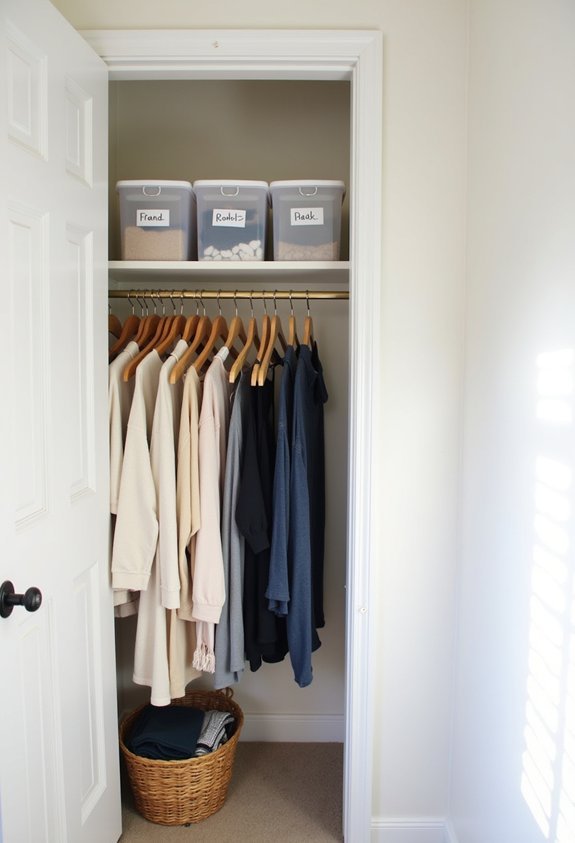
Once you’ve faced the mountain of clothes on your bed, the next step is simple: you make rules.
You grab a criteria checklist—fit, condition, joy, and actual use—and let it do the decision making, so you don’t spiral.
Ask: Does it fit right now, no sucking in, no “once I lose five pounds” story?
Is it stain‑free and hole‑free, and have you worn it in the last 3–6 months, not just tried it on, sighed, and tossed it back?
Then the tough love: no more than five similar pieces, no guilt‑keepers from exes, relatives, or past jobs.
By using these rules to quickly decide what truly serves your future self, you sidestep decision fatigue and stop blaming yourself for clutter that belonged to an old version of you.
If it’s not a clear “yes”—boosts your confidence, fills a real need—it’s a kind, honest no.
The 20% Rule: Building a Closet Around What I Actually Wear
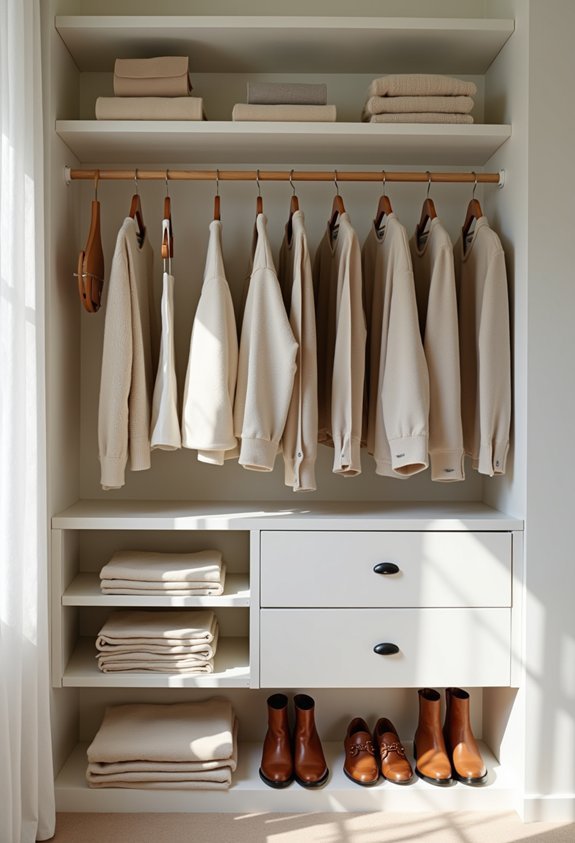
Here’s the wild truth: you probably wear the same 10–20 pieces on repeat, while the rest just… lives there.
That’s the 20% rule in action, and once you see it, you can’t unsee it—your real wardrobe essentials are already doing all the work.
So build around them. Letting go of what you don’t wear clears not just hangers, but also the emotional weight of clutter that quietly drains your mental energy.
- Pull your MVPs. Grab what you reach for every week—jeans, black leggings, that soft hoodie, the one good blazer.
- Match the pattern. Ask why you love them (fit, fabric, color), then look for repeats, not random “maybe someday” pieces.
- Shop with receipts in mind. Before buying, picture three outfits with things you already wear, turning impulse buys into mindful shopping that actually serves your life, not your fantasy self.
Sentimental Pieces: How I Handled Emotional Attachments
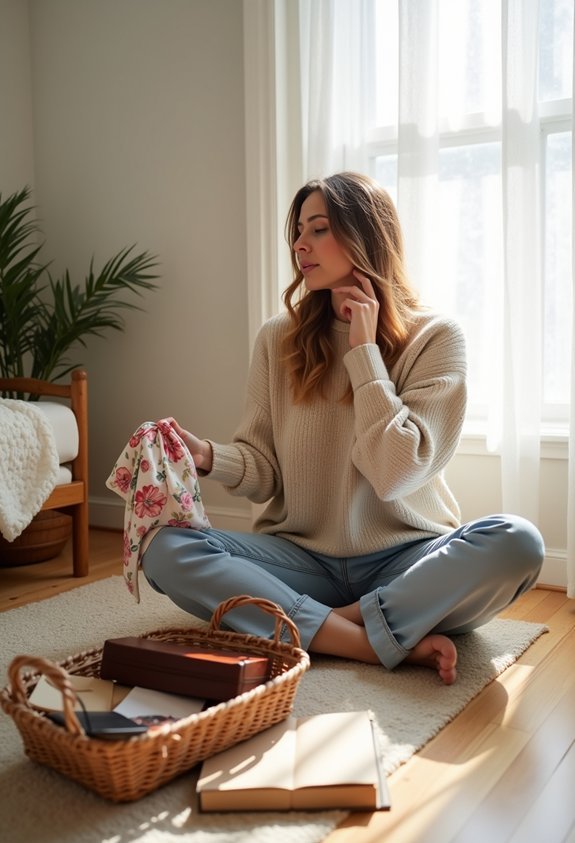
Your 20% MVPs are the easy part—it’s the “but this reminds me of…” stuff that really messes with you.
Those jeans from college, the dress you wore once, your grandma’s sweater—sentimental value hits hard, and emotional attachment makes your brain say, “Absolutely not, we’re keeping everything forever.” When you understand that these items often represent emotional ownership—things like safety, identity, or unfinished goals—it gets easier to see the object and the feeling as two separate choices.
Start by naming the memory out loud—what moment, person, or version of you lives in that item, and why.
Sometimes you’ll realize you love the story, not the shirt, and that lets you release it (with less guilt, fewer tears, and only mild dramatic sighing).
Ask, “Does this still support who I’m now—or just who I was?”
Then keep a small, edited “heart collection,” instead of letting every emotional T‑shirt run your closet.
Smart Storage: Systems That Made Staying Tidy Easier
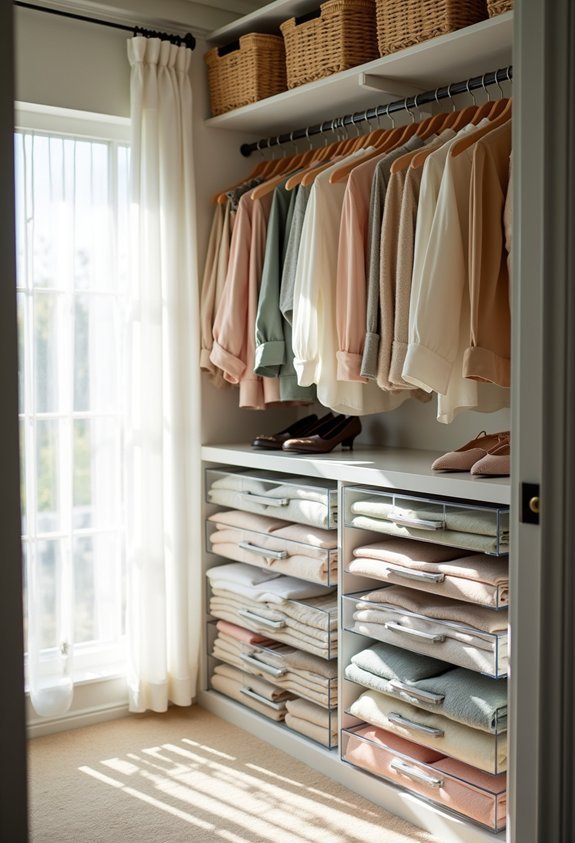
Even after you’ve done the big purge, staying tidy can feel like a full‑time job you didn’t apply for.
That’s where storage systems save you from the 6 a.m. “where’s my other shoe?” meltdown. Think less willpower, more autopilot. Creating simple systems that support daily resets turns staying organized into a quick habit instead of a draining project.
1. Modular shelving
You can move shelves up and down, add extra pieces, and fit weird corners—customizable solutions that shift as your life (and shopping habits) change.
2. Smart features
Sensor lights click on when you open the door, pull‑out drawers glide forward, and suddenly you’re not digging in the dark like a raccoon.
3. Eco friendly materials
Bamboo racks, recycled bins, and simple hanging bags make your closet feel calm, look pulled together—and not secretly guilt‑powered.
Tracking Progress: Donations, Trash, and What I Kept
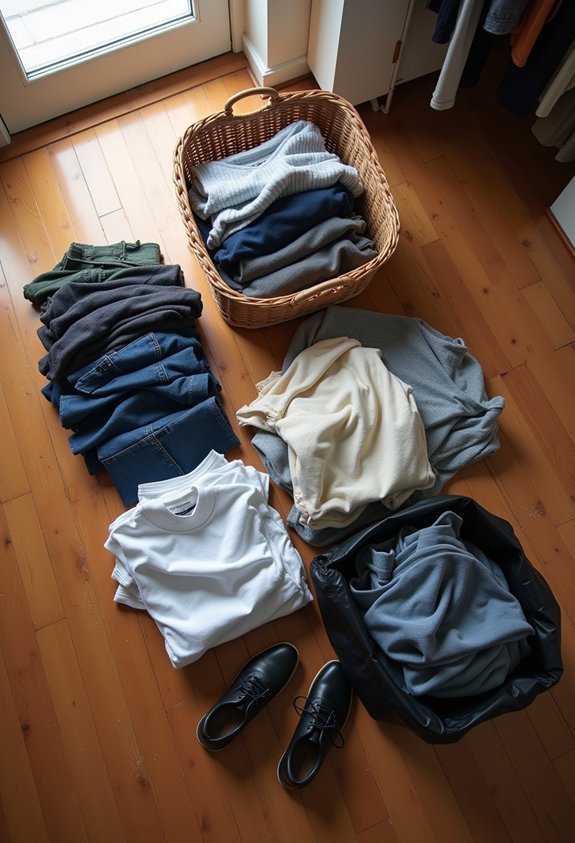
That fancy shelving and those motion lights are great, but what really keeps your closet under control is knowing what actually left—and what stubbornly stayed. So you track it. Bag by bag, box by box, you write it down—three trash bags out, two donation boxes gone, ten pairs of “someday” jeans finally released. You’re not just guessing at your donation impact, you’re seeing it, which makes those hard choices feel worth it, even when you learn most clothes are sold or recycled instead of handed straight to someone in need. You also list what you keep—how many black tops, how many shoes—because tracking progress isn’t only about outflow, it’s about spotting patterns, catching sneaky duplicates, and stopping future clutter before it walks in. Over time, those numbers become a quiet log of your personal archive, a record of what you’ve chosen to honor, release, and carry forward into the next chapter of your life.
New Habits: The 10-Minute Routine That Keeps Clutter Away
You may also like:


Some days it feels like your closet explodes on its own, right when you finally sit down to relax.
That’s why a tiny 10‑minute daily routine can save your sanity—it’s small, but it actually sticks.
You set a timer, pick one zone, and go, no drama, no “weekend project” dread. This tiny routine also protects you from exhausting decision fatigue by turning decluttering into simple, automatic choices.
- Pick your moment. Tie it to something you already do—after dinner, after the kids’ bedtime, or before your shower—so it becomes automatic, not a big decision.
- Pick your target. One night it’s socks, another it’s tank tops, another it’s purses—small categories keep your declutter mindset sharp and focused.
- Pick your tools. Keep “donate,” “trash,” and “keep” bags handy, add quick dusting or a vacuum swipe, and enjoy the fast before‑and‑after.
What Changed: Stress, Time, and How I Feel Getting Dressed Now
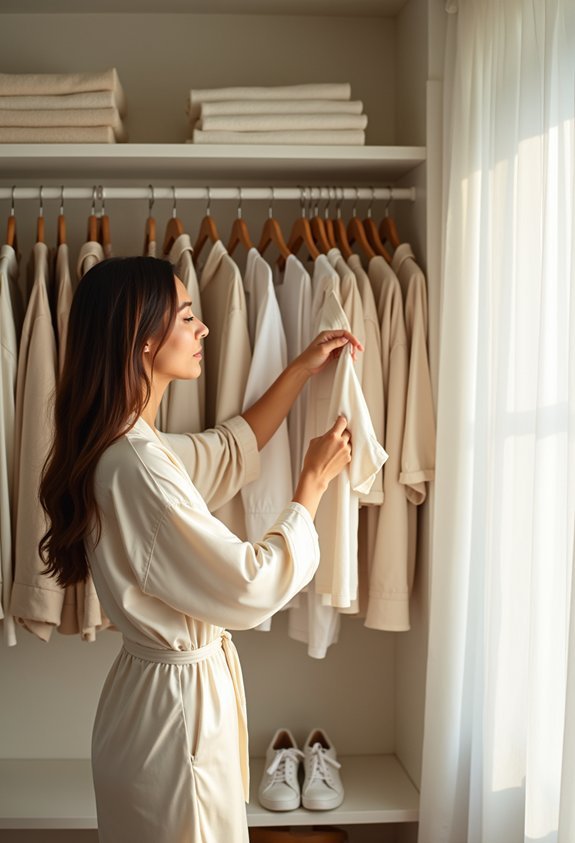
When your closet finally calms down, your brain does too—it’s wild how connected those two are. You feel real stress relief—less buzzing in your head, fewer “I have nothing to wear” meltdowns. Your space looks simple, so your thoughts do too, and that heavy, guilty feeling when you see old clothes just… lifts. Now, getting dressed feels like grabbing an answer key. You see only what fits, what you like, and what actually matches—instant wardrobe efficiency. No more digging under three sad sweaters to find clean jeans, no more mystery sock piles judging your life choices. You get ready faster, eat better, even sleep deeper, because you’re not falling asleep staring at chaos. As your closet becomes a tool instead of a storage unit, you start to feel how owning less actually lowers stress and makes everyday life run smoother. You feel capable. And it shows.
In case you were wondering
How Do I Declutter When I Share a Closet With a Partner or Roommate?
Start by agreeing on closet rules and zones; use these shared space strategies to prevent conflict. Apply the 80/20 rule together, label sections clearly, schedule check-ins, and use communication tips before adding, discarding, or reorganizing items.
What Should I Do With Expensive Items I Regret Buying but Rarely Wear?
Turn regret into runway: first explore resale options on authenticated luxury platforms, then consider donation strategies like upscale charity boutiques or gifting to friends, or upcycle and carefully store select pieces for future use or value.
How Can I Prevent Closet Clutter When My Weight or Size Frequently Changes?
Rotate size-based capsules, not seasons. Store other sizes in labeled bins, purge extremes regularly, and favor stretchy fabrics for size flexibility. Build wardrobe versatility with mix‑and‑match staples, a core “middle” size, and compassionate rules for “someday” pieces.
What’s the Best Way to Handle Seasonal Clothes in a Small Space?
You handle seasonal clothes best by rotating ruthlessly, labeling clearly, and storing vertically. Use under-bed bins, over-door organizers, and vacuum bags for seasonal storage; cap closet use at 80% for real space optimization and easy swaps.
How Do I Stop Emotional or Impulse Shopping From Re-Cluttering My Closet?
You stop re-cluttering by practicing mindful shopping: pause when emotional triggers hit, name the feeling, wait 24 hours, check a list and budget, and buy only intentional, needed pieces that fit your existing wardrobe.
Conclusion
You’re not broken because your closet is messy—most people wear only about 20% of their clothes, on repeat.
So start small, one shelf or one “why do I own this?” shirt at a time, and notice how every bag you donate, every stretched-out tee you finally toss, makes getting dressed faster, calmer, and way less dramatic—like, fewer “I hate everything I own” meltdowns, more “wow, this actually fits my life” mornings.