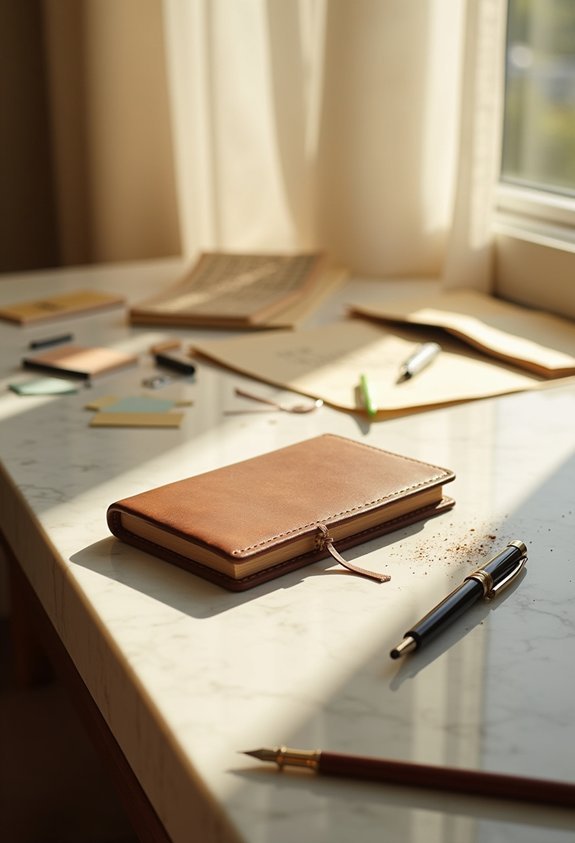
The Truth About What to Do With Old Journals
You don’t have to keep every angsty notebook you’ve ever written—start by skimming each one and notice how you feel. If a journal brings warmth, insight, or funny stories (like your dramatic middle-school crush saga), keep or scan it. If it’s only heavy, repetitive pain, it’s okay to let it go—rip, shred, or burn safely as a goodbye ritual. Store the special ones in a dry box, because the next few ideas might surprise you.
What you will leave with
- Skim each journal and notice your emotions; keep ones that spark insight, joy, or meaningful memories, and reconsider those that feel draining or obsessive.
- Let go of notebooks filled mostly with trauma, rumination, or anxiety—shredding, recycling, or ritual “goodbye” can support closure and healing.
- Digitize important pages by scanning or photographing them to preserve key memories while reducing physical clutter.
- Protect cherished journals with acid-free boxes, cool/dry storage, and gentle handling, and check them annually for damage.
- Reuse old entries creatively—turn excerpts into art, essays, or collages, or selectively share with trusted people or future generations.
Why Old Journals Matter More Than You Think

Even if your old journals look like clutter you should probably toss, they actually matter way more than you think. They hold your real‑time reactions to life, giving future you priceless historical context—what you worried about, hoped for, and believed. Those messy pages are like tiny time capsules, packed with cultural significance, too, because they quietly record trends you followed, news you cared about, and how people around you talked and acted. Think about it: your notes on school, family drama, friendships, or big events could someday show how ideas, values, even slang changed over the years—just like old academic journals reveal shifting knowledge and debates. In a way, keeping old journals is a form of mindful consumption, because you’re intentionally choosing to preserve what genuinely supports your understanding of who you are and how you’ve changed. In other words, your “cringe” phase? Surprisingly valuable data.
How to Decide Which Journals to Keep or Let Go

So how do you actually decide which journals get a spot on the shelf and which go to the great recycling bin in the sky? Start with simple journal evaluation: read a few pages, notice your body’s reaction, then listen to it.
If you smile, feel lighter, or remember a big moment—graduation, moving cities, falling in love—that’s a keeper, because that emotional attachment means there’s real value, either joy or clear growth.
If a notebook is mostly rage rants about your college roommate’s dishes—or endless heartbreak loops—you can bless it, maybe save one honest page, and let the rest go.
Also check content and condition: moldy, boring, or totally random? Out.
Torn but meaningful? Digitize, protect favorite pages, and keep only what honestly matters.
As you sort, remember that choosing which journals stay and which go is also a way of lowering mental overload and turning your space into one that actively supports your well-being.
When Holding On Heals: Preserving Meaningful Pages

When a journal really matters to you—like the notebook from your first big move, or the one where you finally told the truth about a breakup—you don’t just “store” it, you protect it like a tiny paper time machine. Giving your most meaningful notebooks a safe, intentional place also helps prevent the kind of mental energy leaks that come from piles of forgotten pages weighing on your space and attention.
You use mindful handling—clean, dry hands, no food crumbs, no bending the spine like it’s a gym workout gone wrong.
Try this simple plan for page preservation:
Try this simple plan for page preservation: gentle handling, smart protection, and backups that keep your stories safe forever
- Open it gently, use bookmarks instead of folding corners, and keep it away from sun, heat, and humidity.
- Attach tickets, photos, and notes with soft tape or glue, so memories stay put without tearing pages.
- Slip truly special pages into archival sleeves, and add a sturdy cover or case.
- Digitize important entries, save backups, and relax—your story’s safe.
When Letting Go Helps: Safely Disposing of Painful Records

Not every journal earns a forever home on your shelf—some feel more like emotional landmines than “dear diary” treasures.
When you keep books filled with shame, panic, or cruel self-talk, you don’t just “remember”—you relive, and those pages quietly train your brain to stay stuck in old pain instead of building new patterns.
Letting them go can bring emotional release and real therapeutic closure, like telling your past self, “Thank you, but I’m done rereading this chapter now.”
You might be ready if certain notebooks always get skipped, spike anxiety, or drag you back into abuse, addiction, or crisis memories—especially ones you’ve already processed in therapy or other healing work, and no longer need as proof of what you survived.
Paying attention to which journals feel like high‑load zones in your emotional landscape can clarify what’s still supporting your recovery and what’s quietly keeping you stuck.
Secure and Environmentally Friendly Ways to Destroy Journals

Even though it can feel a bit dramatic—like you’re starring in a spy movie—destroying old journals can be both really secure and surprisingly kind to the planet. You’re not “erasing your past,” you’re just choosing who gets to read it—basically, only you and your shredder. When you’re done, be sure to recycle or compost paper scraps wherever possible so your responsible recycling efforts match the care you put into protecting your privacy.
- Shred with intention. Cross-cut shredders give huge shredding benefits, turning pages into tiny confetti; split bagfuls into different trash cans.
- Try pulping methods. Soak shredded pages in water (and a bit of bleach), stir into mush, then dry and toss.
- Burn carefully. Use a fire pit or burn cage, add pages in small batches, check, then re-burn any stubborn bits.
- Don’t forget digital. Wipe drives, then physically destroy old USBs or disks holding backup journal files.
Donating, Digitizing, and Sharing Your Written History

Although it can feel weirdly vulnerable to let other eyes near your private pages, your old journals don’t have to live forever in a dusty box under your bed.
You can turn them into journal donations—supporting literacy programs, schools, even researchers who crave real-life voices, not just dusty statistics.
Digitizing your pages through simple digital archiving (a scanner, good lighting, a free app) keeps the stories safe, searchable, and shareable—while the paper originals stay tucked away, ketchup stains and all.
You can also share pieces in family groups, community storytelling nights, or local history projects, choosing only the parts that feel right.
Just pause for ethical considerations—privacy, consent, copyrights—so your brave, honest past self doesn’t sue your present one.
If parting with your notebooks feels emotional, try reframing them as memory preservation tools that can be honored through selective keeping, digitizing, or transforming, rather than storing every single page.
You may also like:




Simple Storage Strategies to Protect What You Keep
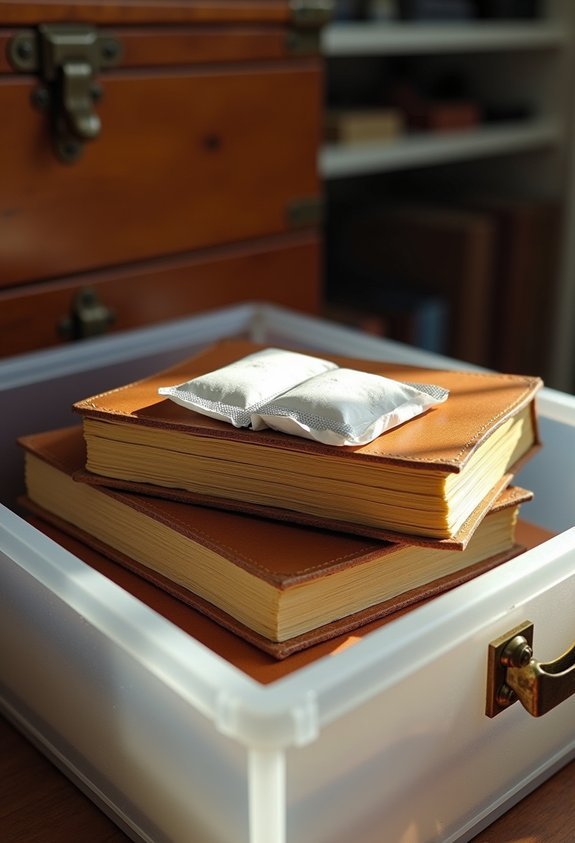
Three simple choices—where you store your journals, what you store them in, and how you tuck them away—can decide if they age like a fine wine…or like a soggy cardboard box in your damp basement.
Treat your journals like heirlooms, not leftovers—where and how you store them shapes their entire future
You don’t need a museum vault, just solid storage materials and steady environmental conditions that don’t roast, freeze, or soak your pages.
- Pick a cool, dry spot—no basements, attics, or garages—aim for under 70°F and roughly 50% humidity.
- Use acid‑free, lignin‑free boxes, folders, and tissue paper, skipping regular cardboard that quietly eats your paper.
- Store journals flat, with tissue around them, and avoid rubber bands, tape, or tight straps.
- Once a year, do a quick “journal checkup,” dust, peek for mold or pests, then re‑seal.
In case you were wondering
How Do I Emotionally Prepare Before Revisiting Decades-Old Journals?
You emotionally prepare by setting intentions, acknowledging possible journal nostalgia, and practicing self-compassion. Ground yourself with breathing, limit reading time, have soothing activities ready, and seek support if memories overwhelm your emotional readiness or uncover unresolved pain.
Should I Tell Family Members Before Destroying Journals That Mention Them?
You don’t have to tell them, but “better safe than sorry” can apply. Weigh privacy against potential family conversations, their emotional readiness, and your journal boundaries. If disclosure protects relationships, briefly explain your decision without oversharing.
Can I Turn Old Journals Into Creative Projects or Artwork?
Yes, you can absolutely turn old journals into artwork. You’ll paint over pages, collage covers, fold entries into origami, and bind scraps into junk journals—transforming memories into expressive journal art and deeply personal creative journaling.
What Legal Issues Arise if My Journals Mention Other People’s Private Information?
You face privacy concerns and legal implications if you publish journals revealing identifiable people’s intimate, non‑public details. Don’t include medical, sexual, or financial information without consent; anonymize individuals and consult a lawyer before sharing or selling such content.
How Do I Decide if My Handwriting Is Too Messy to Be Worth Preserving?
You decide by doing a handwriting assessment: can strangers easily read words without guessing? If not, your journal value shifts to sentiment and artifact; prioritize transcription, digitization, or summaries instead of preserving only messy originals.
Conclusion
So here you are—standing over a stack of old journals, like a tiny paper mountain of past you.
You don’t have to keep everything (no one needs 47 pages about that one middle-school crush), but you also don’t have to toss it all—save the pages that still teach you, let go of the ones that only stab, and trust yourself to choose what stays, what goes, and what finally gets to rest.