17 Things to Do Instead of Buying Something When the Urge Hits
When the urge hits, wait 48 hours—most things lose their grip by then, revealing wants disguised as needs. Take a walk to reset your nervous system, or shop your own closet like it’s new again; you’ll rediscover forgotten pieces that satisfy the same itch. Check your budget, text a friend before checkout, or start a 30-day no-spend challenge to recalibrate what shopping actually means. Window-shop without your wallet, photograph beautiful displays instead of owning them, and keep a running list of regretted purchases to remind yourself how often buyer’s remorse shows up uninvited—and what happens when you pause long enough to notice the pattern.
What you will leave with
- Wait 48 hours before purchasing to distinguish impulsive wants from genuine needs; most items lose urgency within this cooling period.
- Take a walk or practice mindful breathing to reset your nervous system and interrupt the dopamine loop driving shopping urges.
- Calculate the item’s cost in hours worked using your after-tax wage to reveal its true expense and value.
- Shop your home by organizing closets or rediscovering forgotten items to satisfy novelty-seeking without spending money.
- Text a friend before checkout to identify underlying triggers like boredom or loneliness and gain accountability against impulse buying.
Wait 24-48 Hours Before Making the Purchase

When I started forcing myself to wait two full days before buying anything I hadn’t planned for, I expected to feel deprived, like I was punishing myself for wanting things. Instead, something shifted.
That cooling period became a filter, not a prison.
Most items I’d screenshot and obsess over at midnight looked absurd by Wednesday morning. The decision pause revealed how much of my wanting was just boredom wearing a credit card.
I’d click through my cart, realize I didn’t even remember adding half of it, and feel relieved instead of tempted.
Turns out, desire has a shelf life. Two days is usually enough for it to expire, and what remains after that wait is either genuinely needed or quietly forgotten.
This window works because it gives your rational brain the time it needs to catch up with the emotional impulse that sparked the initial craving.
Take a Walk or Exercise
The hardest part about waiting wasn’t the waiting itself—it was what I did with my hands and my head during those two days.
I started taking walks, not for exercise exactly, but because my body needed somewhere to put the restlessness. Mindful breathing helped reset whatever was firing wrong in my brain. I’d count four in, hold, six out. Nature immersion—even just twenty minutes around trees or sky—pulled me out of the dopamine loop that online browsing creates.
These small interruptions signaled safety to my nervous system, helping it shift out of the threat mode that shopping urges can trigger.
The urge didn’t vanish completely, but it shifted from urgent to manageable. By the time I came back inside, I’d forgotten half of what I thought I needed, and remembered what actually mattered.
Check Your Budget and Financial Goals

Before I opened my banking app, I’d already convinced myself the dress was fine, the gadget was useful, maybe even necessary.
Then I actually looked at my sinking fund—the one I started for emergencies, not “emergency” cute things.
Suddenly, the numbers made it real. My cash buffer wasn’t growing like I’d planned, and that travel goal I scribbled down three months ago? Still sitting there, waiting.
It’s funny how quickly want turns into whatever when you see what you’re trading away. I didn’t need a lecture from anyone else. The math was enough. I closed the app, closed the shopping tab, and honestly felt relieved.
Sometimes all you need is to remember what you actually want. Households with at least $500 in savings are less likely to miss bill payments, which makes protecting that buffer one of the smartest financial moves you can make.
Shop Your Own Closet or Home

How many times have I clicked “add to cart” looking for something new, only to find basically the same thing folded in my drawer two weeks later?
That moment stings, but it taught me something.
When the urge hits now, I give myself an Outfit Remix challenge instead—pulling pieces I forgot I owned, matching them in ways I haven’t tried.
It’s honestly wild how many Hidden Finds live in my own closet, just waiting to feel new again.
That same dopamine rush shows up when I rediscover a scarf or pair earrings with the “wrong” shirt.
No shipping delay, no buyer’s remorse, just the quiet satisfaction of using what I already chose once, back when it mattered enough to bring home.
This simple pause before buying can reduce impulse spending by up to 30%, turning what feels like restriction into a game of rediscovery.
Call or Text a Friend

Why does reaching for my phone to scroll feel easier than reaching for my phone to call someone who actually knows me?
I’ve noticed that when I’m hovering over checkout, I’m usually avoiding something—boredom, loneliness, that restless feeling. A quick mood check reveals I don’t actually want the thing; I want connection, distraction, belonging.
Texting a friend creates impulse accountability without shame. It’s not about confessing every urge like some financial intervention. It’s simpler: “Hey, I’m about to buy something I don’t need.”
Sometimes they talk me down. Sometimes they don’t. But that brief pause, that moment of being seen by someone who gets it, recalibrates the dopamine chase.
Simply labeling shopping triggers like loneliness or restlessness helps engage the rational part of your brain, making it easier to resist the impulse.
The chat becomes the support I was trying to buy.
Start a Wish List Instead of Buying Immediately

When the cart’s full but I haven’t clicked buy yet, there’s this split second where I know—actually know—I’m performing a ritual, not solving a problem.
That’s when I move everything to a wishlist instead, and suddenly I’m not saying no, just not yet.
The shift changes everything:
- Priority ranking happens naturally—what stays at the top after two weeks actually matters
- Shared wishlist with my partner stops duplicate purchases and starts real conversations about what we need
- Watching items sit there untouched reveals patterns I’d miss mid-checkout
Most things lose their urgency within forty-eight hours.
The wanting fades, the dopamine quiets, and I’m left with proof that the urge wasn’t actually about the object at all.
Logging the item with its price and the date creates just enough friction between desire and purchase to let the moment pass without regret.
Calculate How Many Hours You’d Need to Work for That Item
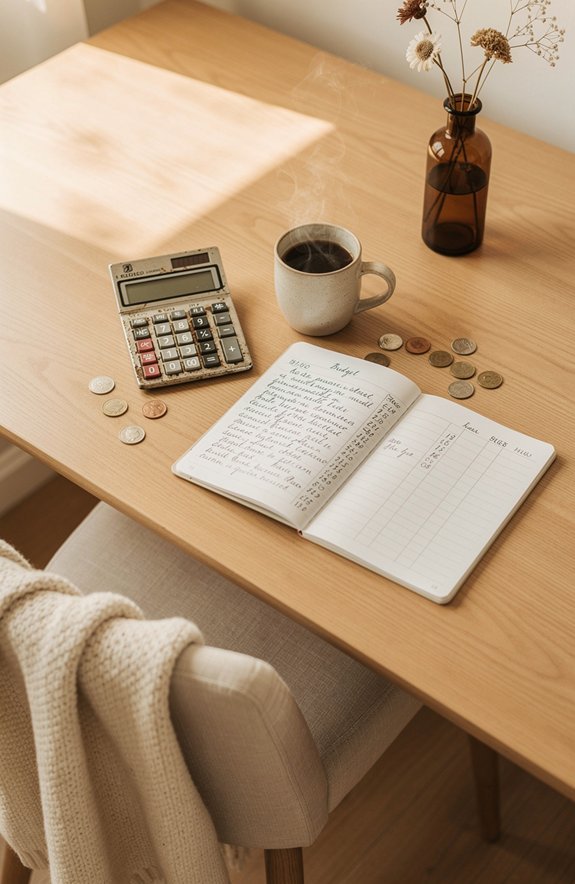
I kept telling myself the jacket was only sixty dollars—until I translated it into hours at my desk, and suddenly it became eight hours of spreadsheets, meetings I’d rather skip, and emails that could’ve waited.
The jacket wasn’t sixty dollars—it was eight hours of my life I’d never get back.
That shift in Paycheck Perspective changes everything. When you calculate your real after-tax hourly wage and see that “cheap” purchase as actual time traded, the math gets uncomfortable in the most useful way.
Time Valuation turns prices into something tangible, something you’ve already lived through. I started doing this automatically, and now when I hover over “buy now,” I don’t see a number—I see Tuesday afternoon, Wednesday morning, half of Thursday.
The same way cost-per-use reveals that a cheaper subscription can actually be more expensive when you divide the price by how often you actually use it, translating purchases into work hours exposes the real cost of things you might use only once or twice.
And most days, I’d rather keep my Thursdays than own another thing I’ll forget about by next month.
Declutter or Organize a Space in Your Home
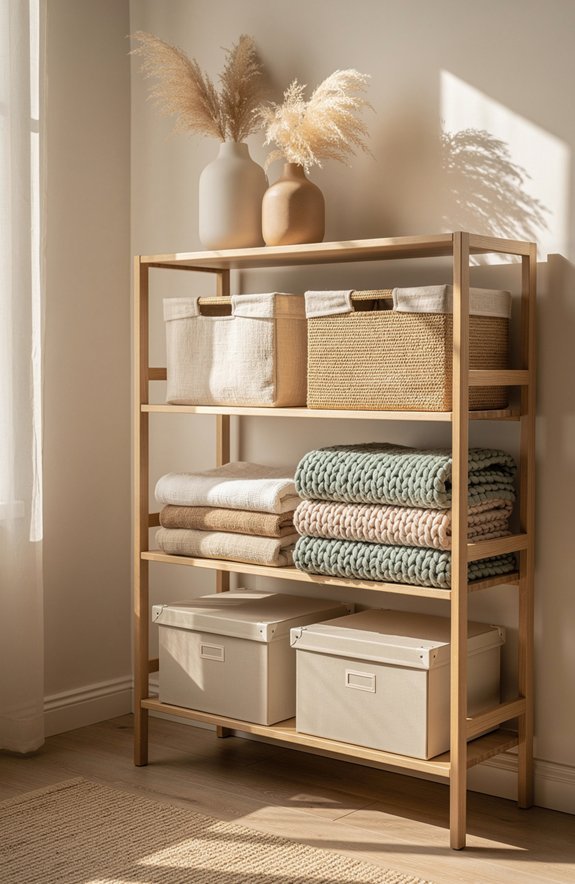
Sometimes the best defense against buying more is remembering what you already own, buried under layers of things you forgot about.
I’ve stood there, cart loaded online, only to find that exact item three days later while cleaning a drawer.
The irony stings, honestly.
When the urge hits, try organizing instead:
- Donation Prep: Pull items you haven’t touched in months—it feels like shopping your own space, rediscovering forgotten pieces.
- Label System: Creating order with simple labels satisfies that same need for newness and control.
- One-shelf reset: Just clearing and reorganizing a single surface gives you visible progress without the credit card guilt.
As you sort through items, ask yourself whether each one supports your current daily routines or if you’re holding onto it out of guilt or obligation.
You’re not depriving yourself.
You’re just recalibrating what actually fills the gap.
Practice a Hobby or Creative Activity You Already Own Supplies For
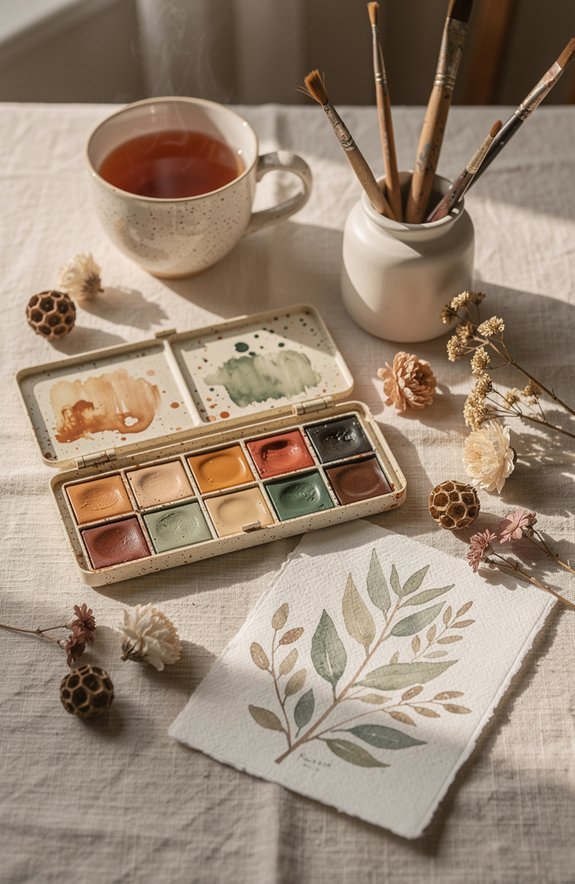
Reaching for your phone to buy something new while your craft drawer sits untouched—yeah, I’ve done that more times than I’ll admit in polite company.
There’s something about scrolling that feels productive until you realize you’ve been avoiding the watercolors gathering dust.
Technique practice isn’t about becoming perfect; it’s about remembering why you bought those supplies in the first place.
Material exploration with what you already own creates that same dopamine hit without the receipt.
I’ve found that ten minutes with forgotten embroidery floss or that half-empty sketchbook redirects the urge entirely.
Your hands need something to do, and Instagram can’t provide that.
The creative impulse and the buying impulse live surprisingly close together—one just costs nothing.
Before clicking “buy now,” pause to evaluate whether you’re responding to a durable need or just filling a momentary void with another transaction.
Write in a Journal About Why You Want to Buy

Why does a $40 candle feel like the solution to a Tuesday afternoon slump when you haven’t even burned through the three on your dresser?
We mistake novelty for necessity when what we’re really shopping for is a feeling we can’t name.
Writing down the Purchase Narrative—the story you’re telling yourself—makes the whole thing fall apart, honestly.
When I ask myself what I actually want, it’s rarely the object.
Try Desire Mapping with these prompts:
- What feeling am I chasing right now—comfort, excitement, control?
- What happened in the last hour that triggered this specific want?
- If I couldn’t buy anything for six months, what would I do instead?
The answers get uncomfortable fast.
You’ll see patterns: boredom disguised as need, stress asking for a quick fix.
Journaling doesn’t kill the urge immediately, but it weakens the automatic reach for your wallet.
That pause? That’s progress.
Research shows that nearly half of adults report impulse buying specifically to improve their mood, which is why identifying the emotion behind the purchase matters more than the item itself.
Browse Your Library App or Visit the Library
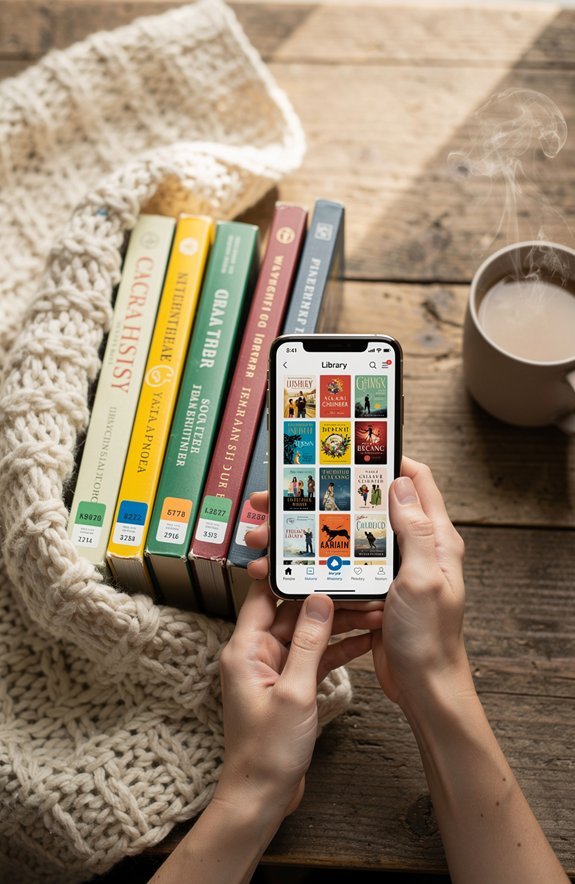
When the urge to buy something hits hard, I’ve started walking to my library instead—or at least opening the app while I’m still holding my phone like a loaded weapon.
The digital discovery there feels surprisingly similar to scrolling online stores, except nothing costs money and I’m not recalibrating my budget afterward.
I browse new releases, queue up audiobooks, reserve things I’ll actually use.
Some libraries offer community workshops on cooking, investing, or crafts—the exact activities I pretend I’ll start once I buy the right supplies.
Turns out, I can just learn without purchasing anything first.
The impulse doesn’t vanish completely, but it redirects.
I’m still seeking newness, still wanting something, but now that something is free, accessible, and doesn’t require explaining another package to myself.
Cook or Bake Something With Ingredients You Already Have

Opening the fridge with the intention to cook instead of order redirects the same hunting impulse I usually take to online checkout pages.
The same impulse that drives online shopping can fuel something better when aimed at what you already own.
Except now I’m scanning shelves I’ve already paid for, assembling something from what’s already mine.
There’s something grounding about turning random ingredients into dinner.
I’ve noticed three things that make this work:
- Pantry recipes become a treasure hunt, not a limitation
- Ingredient swaps feel creative instead of restrictive
- The 20 minutes I spend chopping onions replace the 20 I’d spend scrolling
The dopamine hit still arrives when I plate something decent, but it costs nothing new.
I’m recalibrating what counts as reward—making do transforms from scarcity into resourcefulness, and honestly, that shift matters more than the meal itself.
Unsubscribe From Marketing Emails and Unfollow Shopping Accounts

Every morning I used to open my inbox to seventeen new reasons to spend money—flash sales ending at midnight.
Items “waiting in my cart,” early access codes that made me feel special until I realized ten thousand other people got the same subject line.
I started hitting unsubscribe like I was decluttering my life, which I was. Email filters helped me catch what slipped through, redirecting promotions straight to trash before they could whisper.
Unfollowing shopping accounts felt harder—I’d followed some for years. But influencer fatigue is real, and watching curated hauls stopped feeling inspirational and started feeling like a daily assignment to want more.
Now my feed shows recipes, hiking trails, people I actually know. The urge to buy doesn’t vanish, but it’s quieter without constant reminders.
Review Items You’ve Already Purchased and Regretted
Looking back through old credit card statements used to feel like archaeology, except every layer revealed something I didn’t need and barely remembered buying.
I started keeping a running note on my phone—things I regretted within a month.
The patterns surprised me.
Overnight shipping charges on items still in boxes, duplicates of gadgets I already owned, clothes bought for an imagined version of my life.
Now when the urge hits, I pull up that list:
- The air fryer I used twice before checking resale options
- Subscription boxes I forgot to cancel, three months running
- Electronics past warranty checks, gathering dust in drawers
It’s not about shame.
It’s about recalibrating what “wanting” actually means, separating dopamine from lasting satisfaction.
Take Before and After Photos of Spaces You’ve Improved Without Spending

How often do I scroll through someone’s perfectly styled shelf or reorganized pantry, feeling like I need to buy my way into that same sense of control?
Here’s what shifted for me: I started photographing spaces I’d actually fixed, just by moving things around or clearing surfaces. No purchases, just effort.
I documented the spaces I transformed through rearranging alone, proving change doesn’t require a credit card.
The before photo always looks worse than I remember, which helps. The after, honestly, feels like proof I’m not stuck.
I’ve learned basic Lighting Techniques matter—natural light near a window changes everything. Same with Composition Tips, like angling the shot to show depth.
These photos become evidence that I can create change without spending, that my hands and attention are enough tools.
Window Shop Without Your Wallet or Payment Methods

Sometimes the photos of what I’ve already fixed aren’t enough when I’m out in the world, surrounded by stores that feel like they’re designed to pull me in. I’ve learned to window shop without anything that lets me buy.
It sounds obvious, but leaving my wallet at home changed everything. I can still browse, still touch the textures, still enjoy the experience without the exit option of swiping a card.
What I do instead:
- Take shelf photography of displays I find beautiful
- Practice detail noting—observing colors, arrangements, patterns
- Treat it like a free museum visit, absorbing ideas without acquiring things
The dopamine still comes, just from noticing instead of owning. I’m recalibrating what shopping means to me.
Create a 30-Day No-Spend Challenge
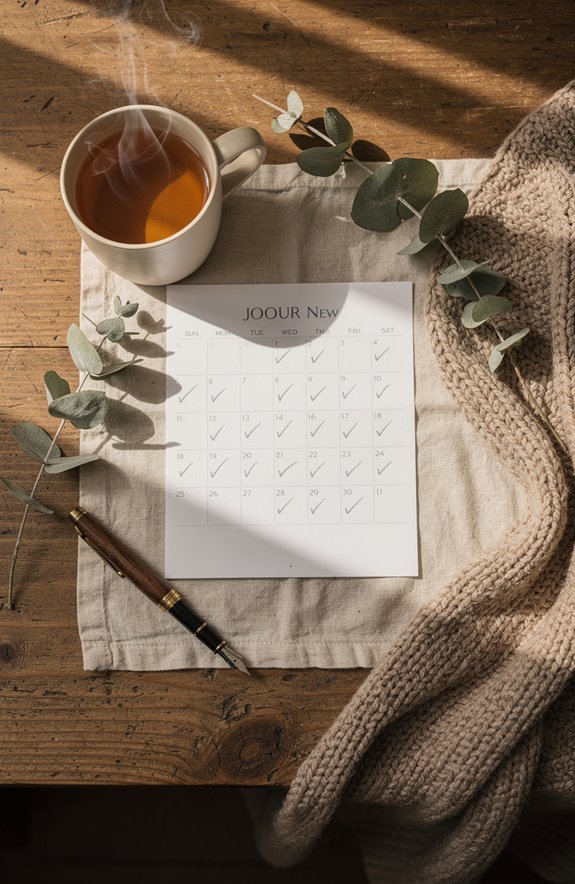
When I committed to a full month of buying nothing beyond absolute essentials, I didn’t realize I was signing up for the emotional equivalent of withdrawing from a low-grade addiction.
You may also like:
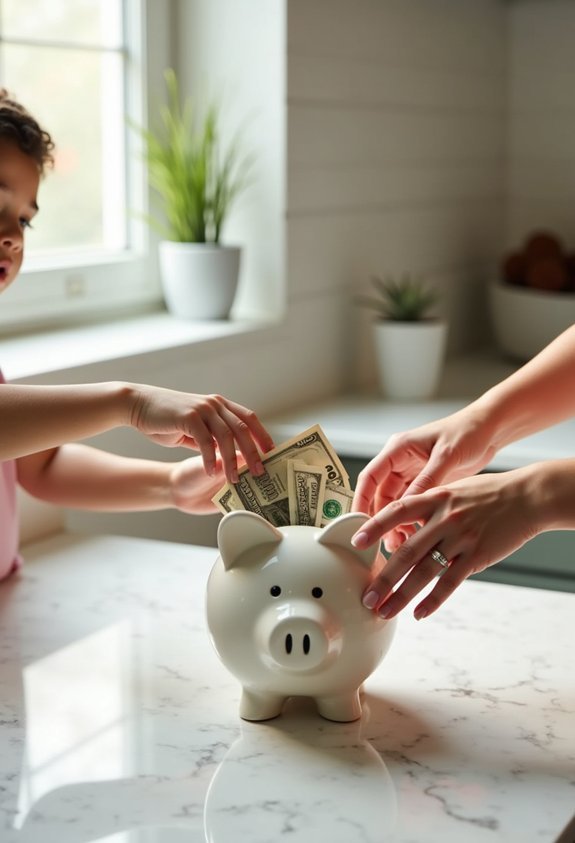


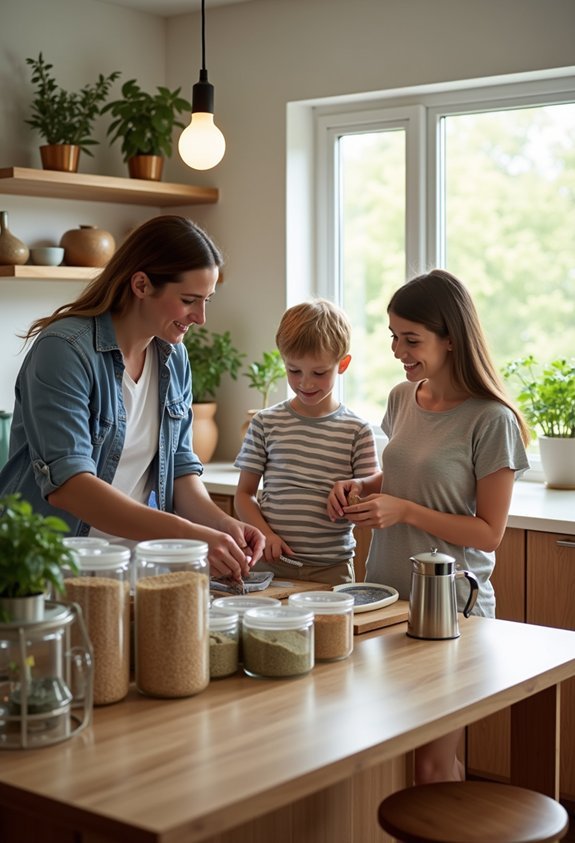

The first week felt like walking past a dessert table while hungry. Every targeted ad, every “limited time” email, every scroll through a shopping app revealed how often I’d been reaching for my wallet to solve boredom, not actual need.
I recruited an accountability partner who texted me when she felt the urge, which somehow made my own cravings less isolating. We set milestone rewards—a fancy coffee at day 15, a thrift store visit at day 30—that gave us something to anticipate beyond deprivation.
The challenge wasn’t about punishing yourself. It was about recalibrating what “essential” actually means.
In case you were wondering
What Percentage of Shoppers Have Made an Impulse Purchase?
Around 89% of shoppers have made an impulse purchase, according to global statistics. You’ll find retail variations exist across demographics and shopping channels, with younger buyers and online platforms showing particularly high rates of impulsive spending.
How Does One-Click Ordering Affect Impulse Buying Behavior?
Ironically, one-click ordering “helps” you by making impulse buying effortless. It offers instant gratification with reduced friction, eliminating checkout steps that might’ve given you time to reconsider spending money you hadn’t planned to use.
Which Age Group Is Most Prone to Impulse Purchases?
You’re most vulnerable to impulse purchases if you’re between 18-24 years old. Young adults and teen shoppers face the highest risk, making them more likely to develop long-term overspending patterns throughout their lives.
What Percentage of Impulse Buys Are Influenced by Others?
Around 39% of your impulse purchases are influenced by others’ behaviors. Social influence and peer pressure from friends, family, and online influencers significantly impact your buying decisions, making you more susceptible to unplanned spending.
How Do Free Samples Lead to Unplanned Purchases?
Free samples trigger sensory priming—tasting or touching creates a sense of ownership. You then overestimate the product’s perceived value, feeling obligated to buy something you hadn’t planned to purchase.
Conclusion
You’ve got seventeen ways now to pause, recalibrate, redirect that familiar itch to buy. I’ve been there too—clicking “buy now” like it’ll fill something it never does. The truth is, we’re both rewiring decades of dopamine fatigue, one small redirect at a time. Some days you’ll nail it, some days you won’t. That’s the whole point—progress over perfection, always. You’re not depriving yourself; you’re choosing what actually matters.