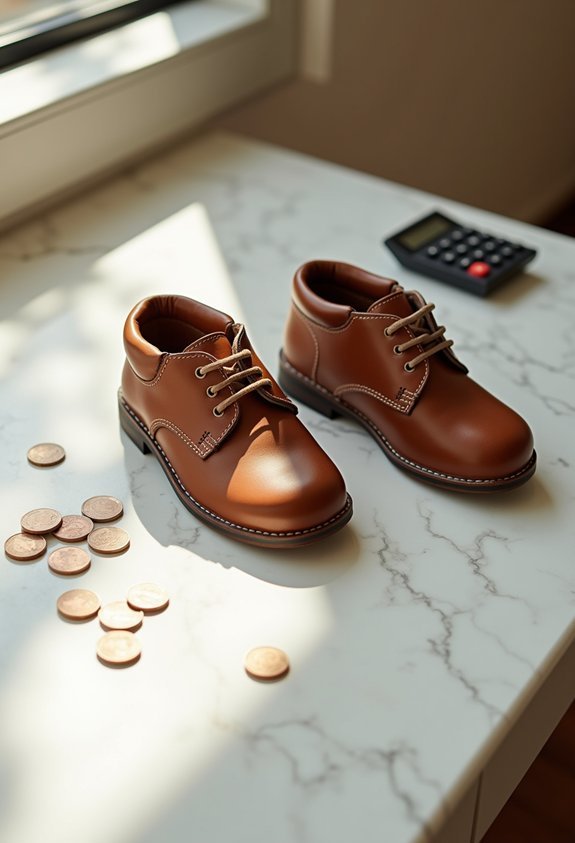
What to Say to Yourself When You Want to Buy Something You Don’t Need
Ask yourself, “Will I still want this in 30 days?” and watch how many cravings fade when you’re honest. Then dig deeper: “What problem am I actually solving—boredom, loneliness, or just Tuesday?” Convert that price tag into hours worked, meetings endured, deadlines survived. Check if you already own three similar things collecting dust. Question whether you’re buying the item or chasing a feeling that evaporates at checkout. Consider what else that money could do for your future self, the one who’ll thank you for pausing. These questions create space between impulse and regret, and there’s more to uncover about protecting both your wallet and peace of mind.
What you will leave with
- Ask yourself if you’ll still want this item in 30 days, then start a cooling countdown before purchasing.
- Identify the real emotion driving the urge—boredom, stress, loneliness—and name it to reduce the impulse.
- Convert the price into hours worked to earn that amount, making the true cost feel more real.
- Check if you already own something similar that serves the same function before adding redundancy.
- Ask if you’d buy this at full price without the sale or if it has genuine resale value.
Will I Still Want This in 30 Days?

When you’re staring at that “Add to Cart” button, everything feels urgent, like the thing you’re about to buy holds the answer to some vague restlessness you can’t quite name.
But here’s what I’ve learned: that urgency is engineered, designed to short-circuit the part of your brain that knows better.
Try this instead—ask yourself if you’ll still want it in 30 days.
Future visualization sounds fancy, but it’s just picturing yourself a month from now, probably having forgotten this item existed.
Start a cooling countdown in your phone’s notes app.
Write down what you want and the date.
If it still matters weeks later, it might actually be worth it.
Most times, though, the craving just fades.
That friction between desire and purchase is exactly what makes the 30-day rule work—it turns automatic spending into deliberate spending, giving you space to see whether you’re chasing a real need or just a feeling.
What Problem Am I Actually Trying to Solve?

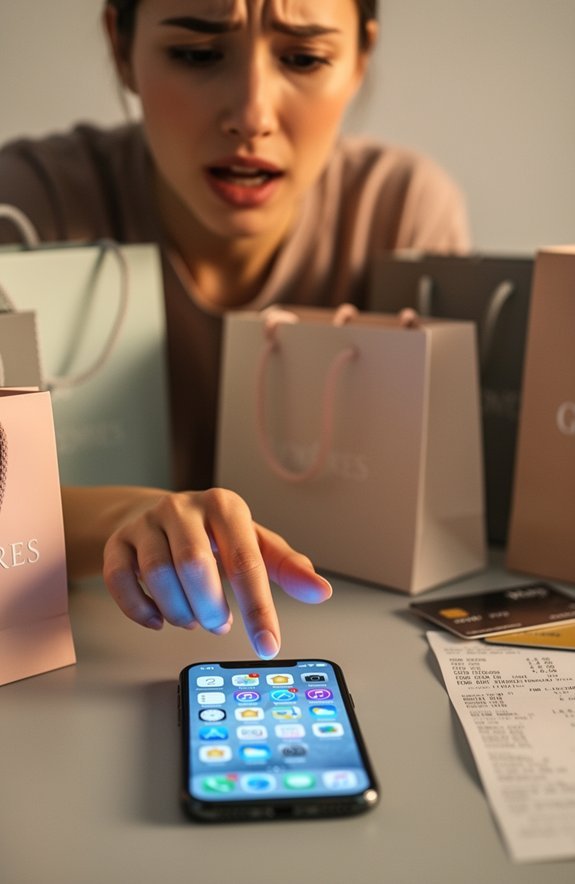
Sometimes I catch myself mid-scroll, cart loaded with things I don’t need, and I realize I’m not actually shopping for the item—I’m shopping for a feeling.
That’s when I ask: what problem am I actually trying to solve? Because if I’m honest, the root cause is rarely “I need new shoes.”
It’s more like boredom, restlessness, or that hollow feeling after a long day. The situational trigger might be a flash sale or comparison scrolling, but underneath, I’m trying to fix something a purchase can’t address.
When I pause and name the real emotion—stress, loneliness, burnout—the urge often loses its grip.
I’m not broken for feeling this way. I just need a solution that actually works, and buying rarely does.
Research shows that nearly half of adults report impulse buying to improve their mood, but emotional spending is a coping strategy, not a character flaw.
How Many Hours Did I Work to Earn This Amount?

Once I’ve figured out what I’m really trying to fix, I force myself to do the math that makes my stomach drop a little. I convert the price tag into time currency, calculating exactly how many hours I worked to earn this amount.
That $90 sweater? Six hours of meetings, emails, and deadline stress. The hourly cost suddenly feels heavier than money alone.
It’s not about deprivation, it’s about seeing clearly. When I frame purchases this way, something shifts inside me.
The dopamine rush fades when I remember sitting at my desk, watching the clock, earning those specific hours. Time feels more real than numbers in an account. This perspective doesn’t make me feel poor, it makes me feel protective of what I’ve already traded away.
This kind of cost-per-use calculation works for everything I already own too, helping me see which purchases actually earned their place in my life and which ones just seemed like a good idea at the time.
Do I Own Something Similar Already?

How many times have I stood in a store, holding something I absolutely loved, only to bring it home and realize I already own three versions of basically the same thing?
It’s that moment when you open the closet and see five black cardigans staring back at you. This question cuts through the dopamine rush.
When you pause to mentally catalog what’s already taking up space in your drawers, cabinets, and shelves, you’re forcing your brain past the “new and shiny” trap. Item overlap happens because we forget what we have, and function redundancy sneaks in when we convince ourselves this version is somehow different.
Before buying, ask yourself:
- Does this solve a problem I don’t already have a solution for?
- Am I replacing something worn out, or just chasing novelty?
- Will I actually use this more than what I currently own?
- Is this filling an emotional gap instead of a real need?
Sometimes exploring repurposing existing tools can solve the same problem without adding another item to your collection.
Am I Buying This or Buying Into a Feeling?

Even when you’re certain nothing in your closet matches what’s in your cart, there’s another layer to peel back. Most of us aren’t actually buying the thing—we’re buying the feeling we think comes with it.
That rush? Emotional triggers disguised as genuine need. The click, the confirmation email, the tracking updates—it’s all reward anticipation feeding a cycle that leaves us emptier than before.
I’ve learned my brain lights up the same whether I’m solving a real problem or just soothing Tuesday’s boredom. The dress won’t fix the bad day.
The gadget won’t make you more organized. You’re reaching for dopamine, not utility, and recognizing that distinction changes everything about what actually ends up in your space.
This is the predictable psychological script that emotional spending follows—your brain has learned to associate shopping with relief, creating an expectation of reward that has nothing to do with what you’re actually buying.
What Else Could This Money Do for My Future?
You may also like:


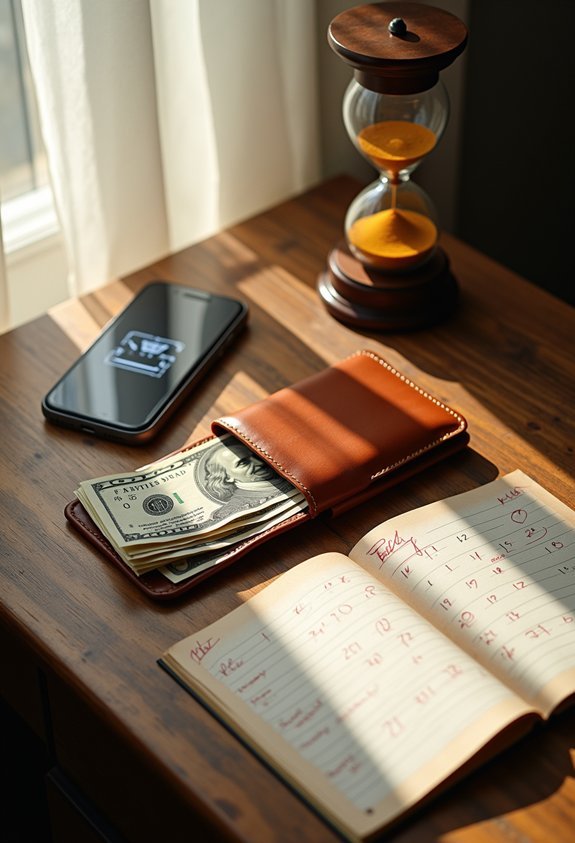
What happens if you pause right there, cart loaded, finger hovering, and ask yourself what that $47—or $147, or $12—could become six months from now?
Not in some preachy, deprivation way, but genuinely.
That money doesn’t vanish into virtue—it morphs into options you don’t have right now.
- Debt reduction that shaves months off what you owe, freeing up breathing room you’ve forgotten exists
- Skill investment in a course, certification, or tool that shifts what you’re capable of earning or creating
- An emergency fund thick enough that the next car repair doesn’t trigger panic
- The ability to say yes to something that actually matters without checking your balance first
Future-you isn’t a saint. She’s just someone with fewer regrets and more choices.
Every dollar you redirect toward your freedom fund increases your savings rate—the single most powerful lever for cutting years off the path to financial independence.
Would I Buy This at Full Price?

There’s this trick retailers have perfected, and once you see it, you can’t unsee it. They mark something up ridiculously high, then slash it down so you feel like you’ve won. Reference pricing messes with your brain, making you value the discount more than the actual item.
Here’s what helped me: I started asking if I’d hand over full price for this thing, no sale sticker attached. Most times? Absolutely not. The resale value question works too—would someone pay good money for this at a yard sale in two years? If the answer makes me wince, that’s my cue. The deal isn’t what makes something worth owning. The item itself has to earn that. To cut through the noise, I started using price trackers to check if those “limited time” markdowns were actually better than last month’s regular price.
In case you were wondering
How Can I Resist Buying When I’m Feeling Stressed or Bored?
Practice mindful breathing for two minutes when you feel the urge. Try urge surfing—observe your impulse without acting on it. The craving will peak and fade, revealing it’s stress talking, not genuine need.
What if Everyone Around Me Is Buying Similar Things?
Social comparison drives up to 78% of online impulse buys. When peer pressure kicks in, remember: you’re buying identity signaling, not value. Your self-worth isn’t defined by mimicking others’ spending habits or material choices.
How Do I Stop Impulse Buying During Flash Sales Online?
Enforce a 24-hour purchase pause before checkout, even during flash sales. Use a comparison checklist: Do I need this? Does it fit my budget? Will I regret it tomorrow? Urgency’s engineered—you’re not missing out.
Why Do I Feel Guilty After Making Unplanned Purchases?
You feel guilty because unplanned purchases create cognitive dissonance—your actions clash with your values. Each impulse buy erodes your sense of control and financial integrity, triggering regret when short-term pleasure fades into long-term cost.
Can Setting a Budget Actually Help Me Control Impulse Spending?
Yes, budgets work by creating allocation rules that precommit your money before emotions strike. Use sinking funds for predictable wants—you’ll satisfy cravings guilt-free while protecting essential spending from impulsive raids on your account.
Conclusion
Your next purchase works like a mirror—it’ll show you whether you’re solving a problem or dodging one. You’ve caught yourself before clicking “buy,” and honestly, that’s the hardest part. These questions aren’t about deprivation, they’re about recalibrating what actually fills you up. The money you don’t spend today? It’s already working for the version of yourself you’re becoming.