19 Simple Habits for a Less Stressful Home
You’re not lazy or disorganized—you’re just busy, and your home has to keep up with your life. A few small habits, like five-minute tidies, clear homes for your stuff, and tech-free corners, can quietly lower your stress without demanding huge changes. When your space supports you instead of draining you, everything from mornings to bedtime feels lighter. Start with just one or two shifts, and you’ll quickly see why the rest are worth trying.
Start and End Your Day With a Five-Minute Tidy

Even on days when life feels nonstop, a simple five-minute tidy at the beginning and end of your day can lower stress and make your space feel more supportive.
A five-minute tidy, morning and night, gently resets your space and calms your mind.
In the morning, you quickly reset surfaces, toss trash, and straighten cushions. This tiny burst of action creates morning motivation and signals that you’re starting fresh, even if the rest of your day feels unpredictable.
At night, you repeat the same short routine. You put dishes in the sink or dishwasher, fold a blanket, and gather scattered papers into one neat stack.
This gentle order supports evening reflection, helping your brain wind down. If you miss a session, you simply try again next time, without guilt or all-or-nothing thinking. Progress counts more than perfection daily.
Give Every Item in Your Home a Clear “Home
When every item in your home has a clear “home,” daily life feels calmer and decisions get easier. You don’t have to organize everything at once; start by choosing one area that frustrates you most.
Look at each object and ask where you’d naturally look for it later. That spot becomes its home. Keep item placement as obvious and convenient as possible, especially for things you reach for every day.
Use designated spaces near where you actually use items: mail by the door, measuring cups by the stove, chargers by your bed. When you know where things belong, tidying takes seconds, not mental debate.
You simply return each thing to its place, and your home starts to feel easier to maintain every day.
Use Baskets and Bins to Contain Everyday Clutter
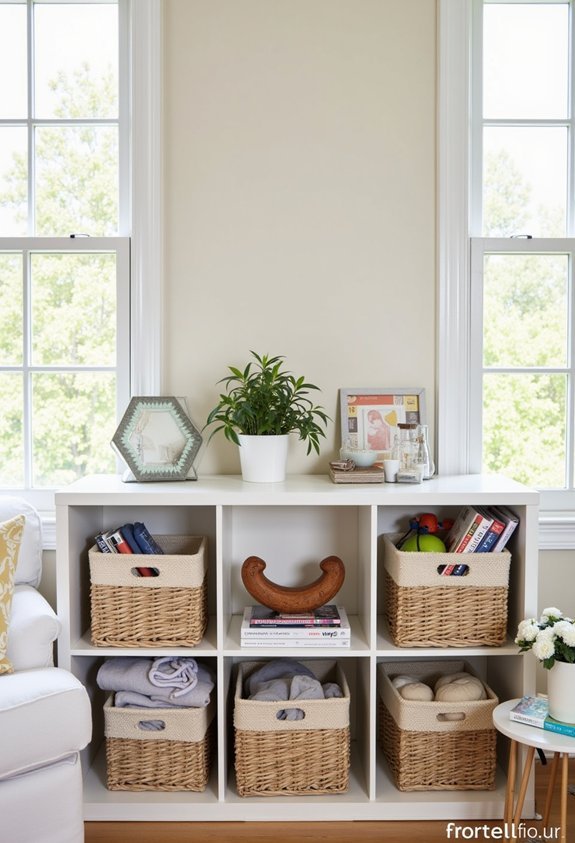
Once each item has a clear home, baskets and bins make it much easier to keep those homes tidy in real life. You don’t have to fold every toy or cable perfectly; you just drop things into their container and move on.
Basket organization works well for soft, grab-and-go items like blankets, toys, or workout gear. Use bin storage for categories that easily spread out—cords, cleaning supplies, craft materials, or travel-size toiletries.
Label each container so your brain doesn’t work overtime remembering what goes where. If a basket overflows, that’s helpful feedback, not failure. You can declutter a bit, resize the category, or add another container so your home supports you, not the other way around.
Over time, these small systems feel wonderfully calming.
Create a Simple Drop Zone by the Door
A simple drop zone by your door turns daily chaos into a quick, repeatable routine.
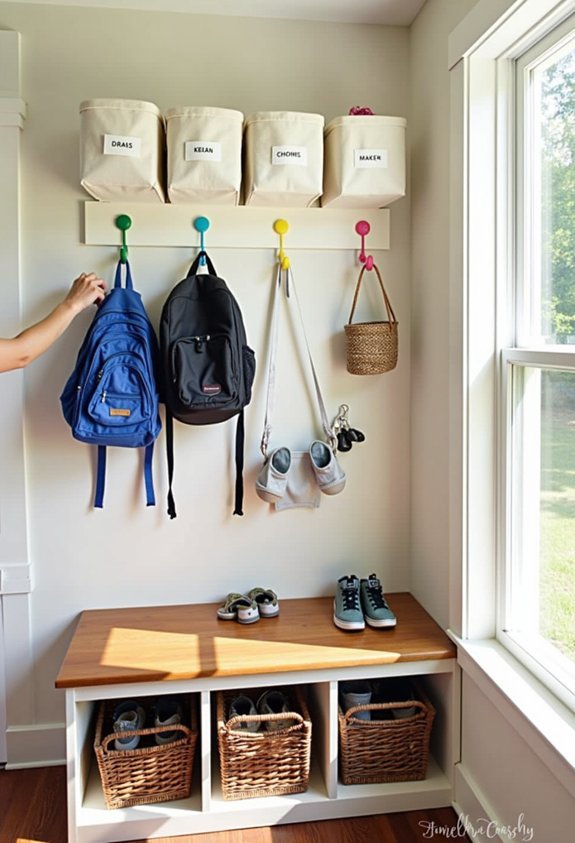
Start by noticing where you naturally toss keys, bags, and mail, then claim that spot on purpose. Use a small bench, shelf, or wall hooks—whatever fits—to anchor your entryway organization.
Add a tray or shallow basket for keys and wallets, a hook for each person’s bag, and a spot for shoes you use most. Keep it simple so your brain recognizes it as the place for your daily drop off, not another project to maintain.
If it stops working, adjust: move a hook, add a basket, or clear out extras. You’re creating support, not perfection, for your comings and goings.
Over time, this tiny habit steadily lowers household stress.
Keep Countertops as Clear as Possible
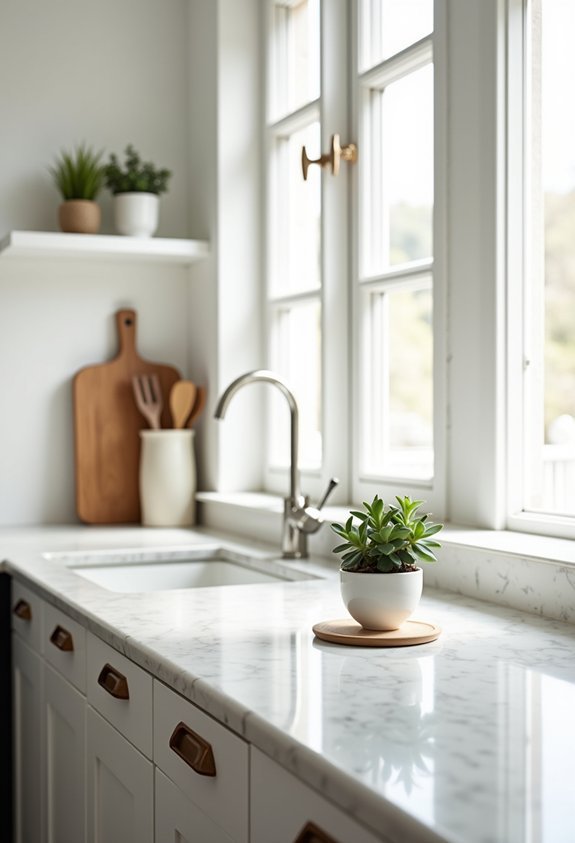
Even if the rest of the room feels busy, clear countertops instantly calm your brain and make daily tasks easier.
Start by choosing one main surface, like the kitchen counter, and remove everything that doesn’t stay there daily. Use simple decluttering techniques: group items by purpose, decide what truly earns a spot, and give everything else a cabinet, drawer, or basket home.
Choose one main surface, clear the extras, and let only daily essentials earn a visible spot
For countertop organization, keep only a few hardworking items visible—perhaps a utensil crock, cutting board, and a small tray for salt, oil, or coffee gear.
Build a quick reset ritual after meals or before bed, returning stray mail, snacks, or gadgets. You’re not aiming for perfection, just a surface that supports you instead of overwhelming you.
Small, consistent resets create lasting calm.
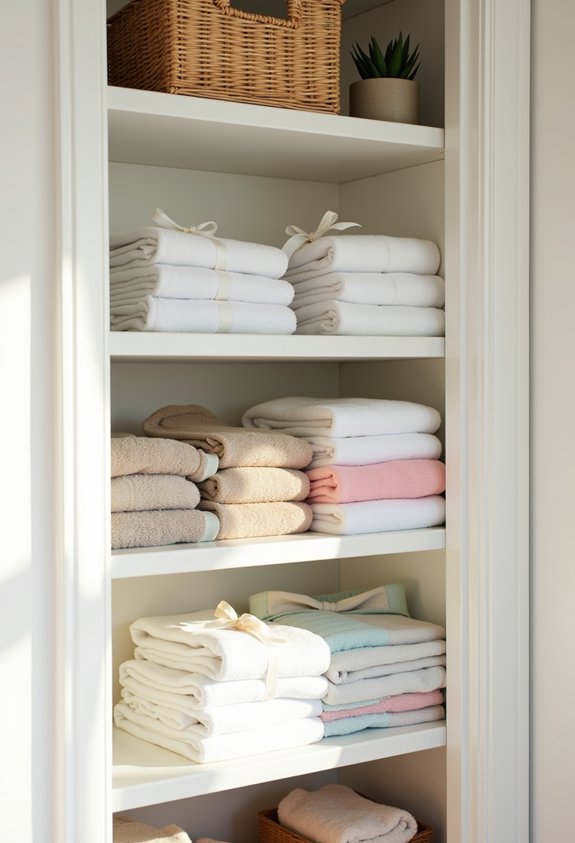
Do a One-Load-a-Day Laundry Routine
When laundry doesn’t end in a giant weekend mountain, it feels a lot less exhausting and a lot more manageable. A one-load-a-day routine gives you steady progress without marathon folding sessions. You’re not behind; you’re just choosing consistency.
- Start by deciding what time fits your natural rhythm—morning, after work, or before bed—for better time management.
- Sort hampers by colors, towels, and delicates so laundry organization happens automatically.
- Run one load, then fold and put it away as soon as it’s dry, even if it’s not perfect.
- Keep a backup plan—like skipping a day and doing two smaller loads tomorrow—so the routine serves you, not the other way around.
Over time, this gentle rhythm shrinks clutter, calms your mind, and supports peaceful evenings at home.
Reset the Kitchen After Every Meal
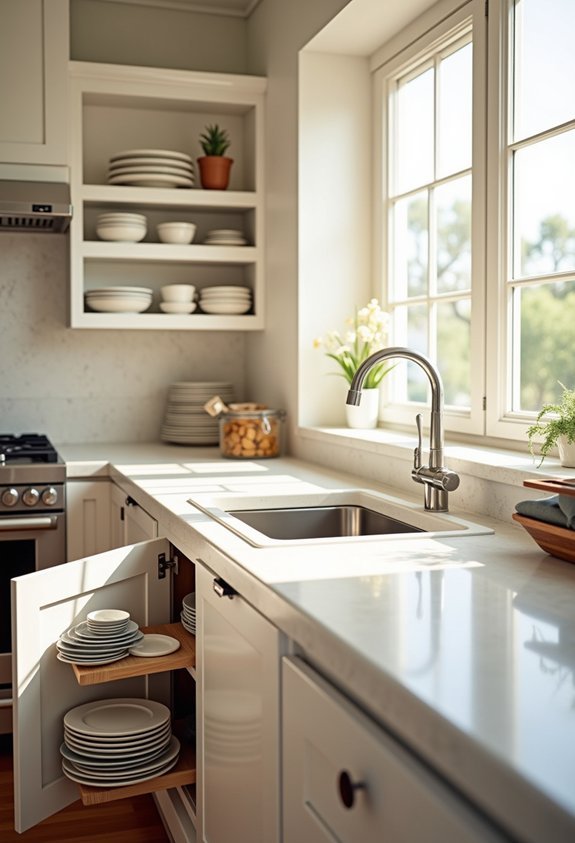
Just like a steady laundry rhythm keeps clothes under control, a quick reset after each meal keeps your kitchen from ever reaching that overwhelming, “Where do I start?” stage.
Instead of aiming for perfection, aim for done. Clear the table, load the dishwasher, and wash any must-do pans. Wipe the counters, give the sink a quick rinse, and put food away.
These tiny steps add up to real kitchen organization without marathon cleaning sessions. When you reset right after eating, you protect your future self: tomorrow’s breakfast, today’s meal prep, and even late-night snacks all start in a clear space.
If you miss a meal, just begin again at the next one—no guilt required. Consistency matters more than speed; every reset builds calmer rhythm.
Simplify Your Cleaning Supplies
Although it can feel like more products will solve more problems, an overflowing stash of sprays, powders, and gadgets usually creates visual noise and decision fatigue.
When you streamline what you use, cleaning feels lighter and faster.
- Start by gathering everything in one place and tossing what’s expired, broken, or irritating to your senses.
- Choose a few multi purpose products that work on most surfaces, so you’re not hunting for a specific bottle every time.
- Explore eco friendly alternatives like concentrated refills, microfiber cloths, and reusable bottles to cut clutter and waste.
- Designate one small bin or caddy for daily supplies; store backups elsewhere so your most-used items stay visible, simple, and easy to grab whenever you clean any room.
Build a Weekly Home Reset Ritual

Even if your weeks rarely go as planned, a simple home reset ritual can give you a steady, calming rhythm to return to. Choose one predictable time—Sunday afternoon, weeknight evenings, or whatever truly fits your life—and protect it as your reset hour.
During this time, you’ll handle light weekly cleaning: wiping counters, refreshing bathrooms, changing sheets, emptying trash, and clearing surfaces. Keep it realistic; it’s a reset, not perfection.
Use this hour for light reset tasks—wipe surfaces, refresh bathrooms, change sheets, clear clutter, not chase perfection.
Build family involvement by assigning everyone a small, age-appropriate task and turning on music or a podcast. When the reset ends, pause to notice what feels easier: lunches ready, laundry contained, floors visible.
Over time, this gentle routine shrinks weekday stress because you’re never starting from chaos. You finish grounded, prepared, and kinder to yourself.
Declutter One Small Area at a Time
When clutter feels overwhelming, you make real progress by shrinking your focus to one tiny, clearly defined spot—a single drawer, one shelf, a nightstand surface.
Instead of attacking the whole room, you give yourself a quick, winnable challenge that builds momentum and lowers stress.
Try this approach:
- Set a five‑to‑ten‑minute timer and choose a specific area you can finish.
- Remove everything, group like with like, and notice what actually serves you.
- Toss the true trash, set aside donations, and keep only what fits comfortably.
- Wipe the space, return the essentials, and pause to appreciate the calmer view.
As you repeat this, you’ll discover small space solutions and quietly strengthen a minimalism mindset without pressuring yourself over time, day by day.
Adopt a One-In, One-Out Rule for New Items
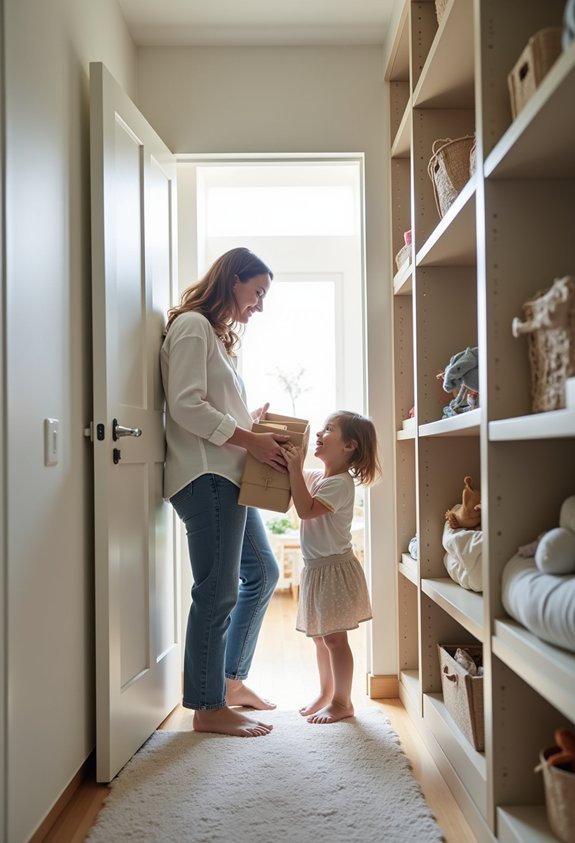
Instead of letting new things quietly pile up, you can create calm by following a simple rule: for every item that comes in, one item goes out.
This guideline protects the spaces you’ve already cleared and nudges you toward a gentle minimalist mindset. When you buy new clothes, choose something worn-out, ill‑fitting, or unloved to donate. When a gadget arrives, release a duplicate or outdated one.
You’re not punishing yourself; you’re protecting your energy and attention. The rule quickly exposes impulse purchases, making it easier to pause and ask, “Do I truly need this?”
Over time, you’ll notice drawers closing easily, shelves breathing, and surfaces staying open. That steady sense of control is the foundation of clutter free living that keeps your home peaceful.
Streamline Paper and Mail the Same Day It Arrives
Although paper seems small and harmless, it can quietly become one of the biggest sources of visual stress in a home.
When you deal with paper and mail the day it arrives, you prevent piles from forming and decisions from lingering in the back of your mind.
Try this simple same-day routine:
- Stand by your recycling bin and complete quick mail sorting: toss junk, flatten boxes, and discard extra envelopes immediately.
- Pull out action items—bills, forms, invitations—and place them in one visible “to-handle” spot.
- File reference papers right away in a minimal, clearly defined system that you can maintain.
- Schedule a short daily check-in, even five minutes, to review your “to-handle” spot and keep paper management calm and current daily.
Use Labels to Make Organization Effortless

Even if your home still feels a bit chaotic, simple labels can quietly turn confusion into clarity. When you label shelves, bins, and drawers, you remove guesswork and future arguments about where things belong.
Start by choosing one or two labeling systems: maybe a label maker, painter’s tape, or chalk markers on jars and baskets. Keep words simple—“batteries,” “pet supplies,” “art tools”—so everyone in your home understands them instantly.
Choose one or two simple label styles and clear words so everyone knows exactly where things belong.
Pair labels with your existing organization methods. If you already sort items by person, room, or activity, name each container to match.
Over time, you’ll put things away faster, and others will too. Each clear label becomes a tiny instruction that supports you on busy days, when decisions feel harder and protects your energy.
Create Calm in the Bedroom With Less Visual Noise
When your bedroom feels visually busy, your mind rarely gets a chance to fully power down. Visual clutter keeps your brain scanning, even when you’re exhausted. Instead of aiming for perfection, focus on small, realistic shifts toward decorative minimalism.
- Start with surfaces. Clear nightstands and dressers, leaving only what you use nightly and one calming object, like a candle or plant.
- Choose soothing color schemes. Soft neutrals, muted blues, or gentle greens quiet the space and reduce mental chatter.
- Simplify textiles. Limit patterns, keep bedding layers intentional, and store extras elsewhere.
- Contain the “daily dump.” Use one attractive basket or tray for phones, books, and glasses so they feel gathered, not scattered.
Each change lightens what your eyes process, helping your body finally exhale.
Set Up Easy Systems for Kids’ Stuff
A calmer bedroom helps your mind rest, but it’s hard to stay relaxed if the rest of the house keeps shouting “Pick me up!”—especially kids’ things.
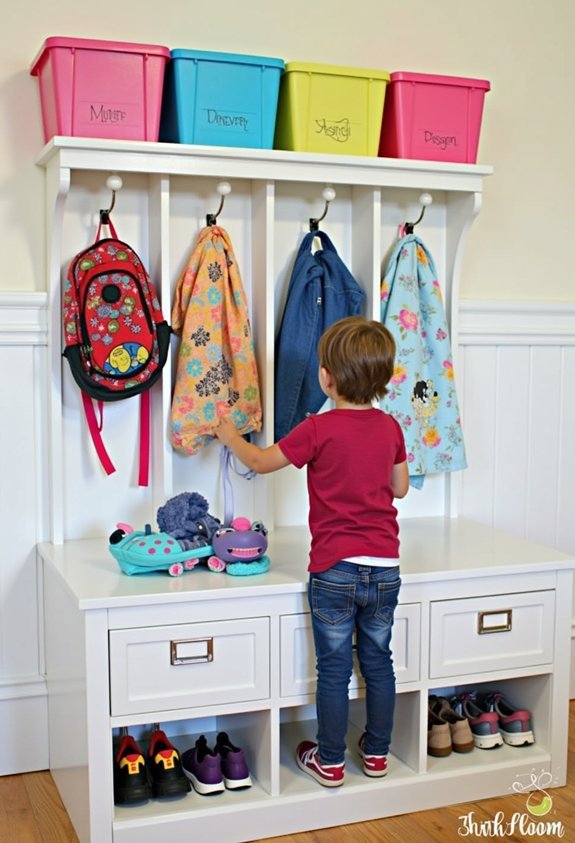
Start by lowering the bar: you’re not aiming for picture-perfect, just findable. Create one toy zone per room—basket by the couch, bin by the table, hook by the door. Label containers with words or pictures so kids can match items to homes. Keep only what fits; extras can rotate out.
Lower the bar: not perfect, just findable. One toy zone per room, clearly labeled and limited.
Give kids simple responsibility assignments: “Lego manager,” “book helper,” “shoe captain.” Pair these with visual chore charts so expectations stay clear without nagging.
Practice the routine with them, praise effort, and adjust often. You’re building skills, not chasing instant order. Small, steady steps make your home feel lighter.
Use Timers to Make Cleaning Feel More Doable
One simple timer can turn cleaning from an overwhelming project into a quick, contained task. When everything feels like too much, shrink the job instead of pushing yourself harder. A short timer gives you a clear start and finish, which boosts cleaning motivation without demanding perfection.
- Set a 5–15 minute timer and choose one zone: counters, floor, or just dishes.
- Work steadily until it rings, then stop, even if the space isn’t perfect.
- Repeat once later in the day if you’ve got energy; if not, trust that tomorrow’s timer will help.
- Notice timer benefits: less dread, more momentum, and a growing sense that your home is manageable.
Over time, these sessions add up to calmer routines and lighter mental load.
Designate Tech-Free Zones for More Mental Space
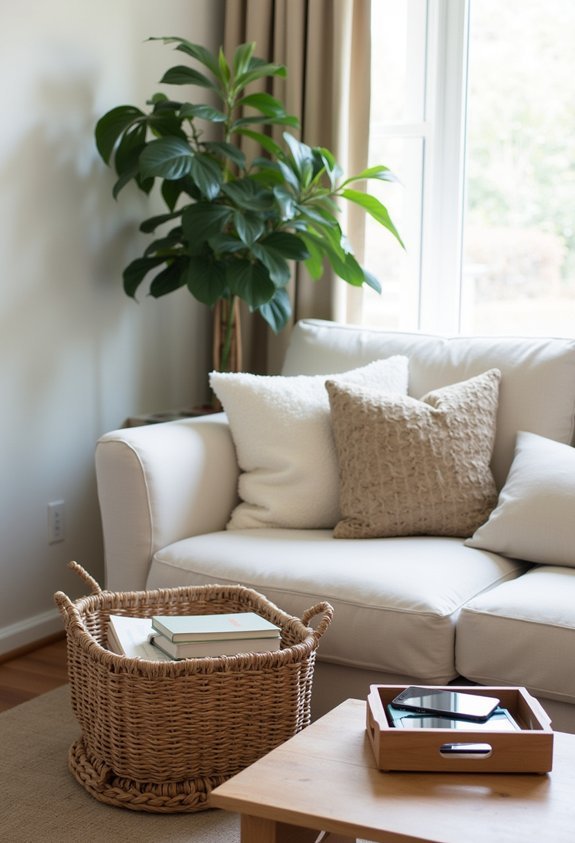
Quiet corners in your home can give your mind a break in a way constant scrolling never will. Choose one or two small areas—a chair by a window, a spot at the table—and declare them tech-free.
You’re not banning devices from your life; you’re creating a gentle digital detox zone where your brain can finally exhale. Keep books, a plant, or a cozy blanket there so the space invites you in.
When you sit down, silence your phone and place it in another room. Notice your breath, the light, or the sounds around you; these simple mindfulness practices calm your nervous system.
Start with ten minutes a day and adjust as it feels helpful for you. Over time, you’ll crave this quiet, restorative pause.
Prepare for Tomorrow the Night Before
Even when your days feel unpredictable, a simple evening reset can make tomorrow less stressful. Instead of pushing through until you collapse, you pause and gently close out the day.
You may also like:
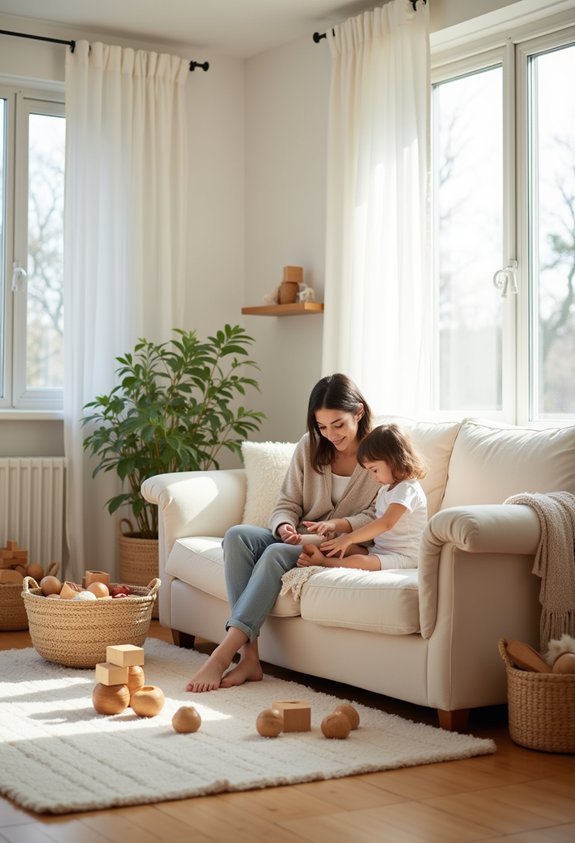




An evening reset is a gentle pause that makes tomorrow softer, calmer, and less chaotic.
Think of evening rituals as small anchors, not strict rules. Choose actions that feel realistic, then repeat them consistently. For example:
- Review tomorrow’s schedule and note any time-sensitive tasks.
- Set out clothes, bags, and essentials in one visible spot.
- Tidy key surfaces for five minutes to reduce visual noise.
- Decide simple meals or snacks to avoid rushed choices.
This kind of next day planning doesn’t have to take long. You’re creating a softer landing for tomorrow’s self, so the morning starts with direction, not decision fatigue.
That’s enough for now.
Involve the Whole Household in Simple Routines
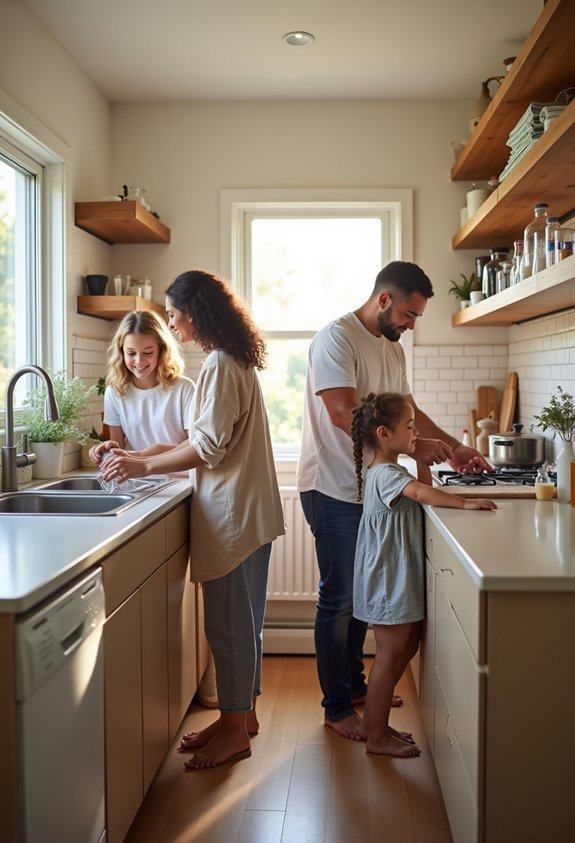
When the whole household shares a few simple routines, daily life stops resting on your shoulders alone.
Start by listing small tasks that drain you most: dishes, laundry, clutter hotspots. Then invite family participation instead of assigning blame. Ask, “What could each of us do in ten minutes to make evenings easier?”
Together, turn answers into clear routine responsibilities: kids put toys in bins, partner handles trash, you reset the kitchen sink. Keep tasks age-appropriate and specific, maybe posted on the fridge.
Expect some reminders at first; consistency matters more than perfection. Celebrate follow-through with quick appreciation, not rewards.
Over time, shared routines become normal, your mental load lightens, and home feels more cooperative, not demanding. You finally breathe easier in your own space.
Conclusion
You’re not just tidying; you’re quietly rebuilding the universe inside your four walls. Each five‑minute reset, each basket, each clear countertop turns your home from a buzzing beehive of stress into a spa-like command center of calm. You’ll misplace less, argue less, and maybe even hear angels sing when you walk through the door. Start with one tiny habit today, and let your home exhale right along with you at the end of every day.