How to Be a Minimalist When Your Partner Isn’t
If you could happily live with a mattress on the floor and three plates, but your partner treats every item like a rescued treasure, conflict can feel inevitable. You don’t have to choose between your values and your relationship, though. By getting clear on what minimalism really means to you, and shifting how you both handle stuff at home, you can create surprising peace—starting with one simple conversation.
Understand Your Own Minimalist Motivation

Clarity about why you’re drawn to minimalism makes everything else easier, especially when your partner isn’t on the same page.
Start by naming your personal motivations. Do you want more calm, more time, less debt, or a home that’s simpler to maintain? Write your reasons down and refine them until they feel honest and specific.
Begin with your real reasons. Name what you want less of—and what you want more of.
Then connect them to a minimalist philosophy that actually fits you—maybe intentional spending, owning fewer but better things, or protecting your attention from constant noise.
When you know what minimalism means for you, you’re less likely to sound rigid or moralistic. You can say, “I’m doing this because…” instead of “We should…,” which keeps conversations grounded, respectful, and centered on your own choices.
That clarity also guides everyday decisions.
Get Curious About Your Partner’s Attachment to Stuff
Sometimes the best way to move forward is to pause and ask why your partner’s things matter so much to them. Instead of pushing for fewer belongings, get gently curious. Ask open questions and listen for the stories, memories, and fears tied to certain items. You’re not prying; you’re learning their inner map.
- Notice patterns: Do specific categories—books, tools, clothes—feel non‑negotiable? This hints at deeper emotional connections.
- Explore attachment styles together: Do objects provide security, identity, or comfort when life feels uncertain?
- Reflect what you hear: “It sounds like this gift reminds you you’re loved.” This builds trust and lowers defensiveness.
When you understand the meaning behind stuff, compromise becomes kinder and more realistic. You both feel heard, not controlled anymore.
Define Shared Values Before Decluttering Anything

Before you touch a single box or bookshelf, step back and decide what you’re actually building a life around together.
Start by asking each other simple questions: What makes a good day? What do you want more of in your home—rest, creativity, connection, flexibility? As you talk, listen for shared priorities. Maybe you both care about having time for friends, room for hobbies, or a calm place to decompress after work.
Ask each other what makes a good day—and let your home reflect those answers.
Name those values out loud. This creates value alignment, so decluttering isn’t about “your stuff versus my standards,” but about supporting what matters most to both of you.
When decisions get tense later, you can return to these agreed values and ask, “Does this item support the life we described?” earlier, together, intentionally.
Establish Clear “Mine, Yours, Ours” Zones at Home
One simple way to avoid constant friction is to literally map out what belongs to whom: “mine,” “yours,” and “ours.”
Instead of treating the whole home as shared territory, decide together which areas each person can control and which you’ll manage jointly. When you protect personal space, your partner feels safer keeping things you’d prefer to release, and you feel freer to keep your own zones lighter.
Try this simple process:
- Walk through each room together and label surfaces and storage as personal space or shared areas.
- Give each of you at least one zone the other doesn’t edit, question, or rearrange.
- Choose a few calm, visible shared areas where you’ll both prioritize clarity, easy cleaning, and breathing room and calm.
Create Gentle Ground Rules for New Purchases

When you and your partner keep bringing new things into the home without a plan, clutter and resentment can quietly build.
Gentle ground rules help you protect your space without policing theirs. Start by agreeing on shared purchase priorities: what truly deserves room in your life right now—comfort, hobbies, experiences, or future goals.
Then outline budget boundaries that feel fair to both of you, such as a monthly spending cap or a “check-in” amount for larger items. You might also decide that every new shared item replaces or upgrades something you already own.
Keep the focus on what supports your values and daily ease, not on restricting your partner. Revisit the guidelines regularly and adjust together. That way, decisions feel collaborative, not controlling overall.
Lead by Example Instead of Lecturing or Nagging
Instead of trying to convince your partner with speeches about clutter, you’ll make a bigger impact by quietly modeling the changes you want to see.
Focus on your own belongings and habits first. This shifts leadership dynamics from control to example, which feels safer and more respectful.
1. Start with small, visible spaces you own—your nightstand, desk, or side of the closet.
Let your partner notice the calm and ease these areas create.
2. Mention genuine benefits you experience: faster mornings, less stress, more focus.
Keep it short and matter-of-fact, not a sales pitch.
3. Offer positive reinforcement when your partner naturally makes lighter choices, however minor.
A simple “That really opened up the room” reinforces change without pressure or criticism or tension building.
Use Collaborative Decluttering Sessions Strategically

After you’ve modeled minimalism in your own spaces, it’s time to involve your partner in careful, low-pressure ways.
Suggest short, focused sessions with clear collaborative goals, like freeing a shelf or making room on a desk. Emphasize that you’ll decide together what stays, what goes, and what gets stored elsewhere.
Begin with neutral, low-sentiment areas: junk drawers, expired toiletries, cords, duplicates.
Use simple decluttering techniques such as grouping like items, setting limits, and creating “maybes” piles they can revisit later.
Ask curious questions: “Do you still use this?” “How many feels comfortable to keep?”
Stop before either of you feels drained.
Celebrate the progress you’ve made together and pause to notice how the cleared space feels easier to use and more peaceful overall inside.
You may also like:



Design Storage and Displays That Respect Both Styles
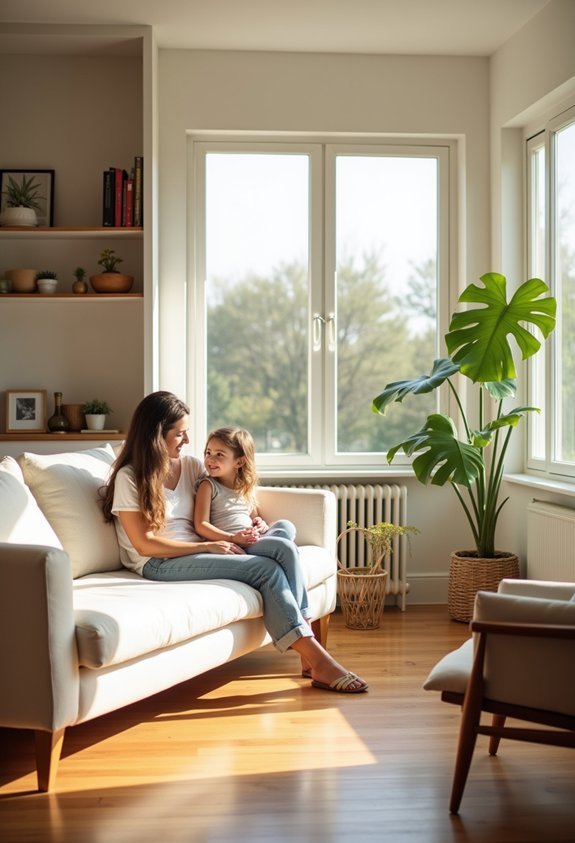
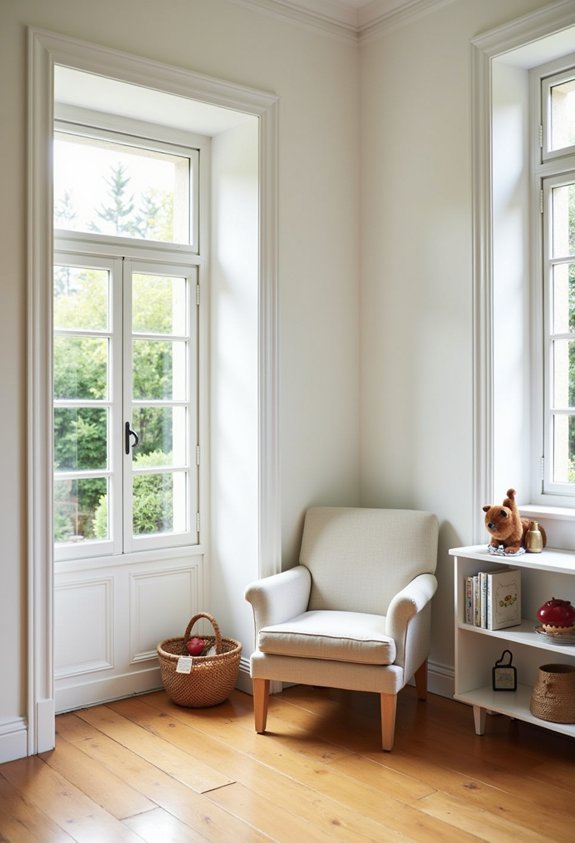
Although your instincts might be to hide everything away, designing storage and displays that respect both styles means giving your partner’s belongings a thoughtful place, not banishing them.
Start by separating what truly needs to be seen from what’s better tucked away, then match storage solutions to each category.
- Choose closed storage for visual rest—cabinets, drawers, and baskets that let you maintain clean lines while still honoring your partner’s volume of stuff.
- Curate shared surfaces. Agree on how many items live on a coffee table or dresser so your display aesthetics feel intentional, not crowded.
- Create focused display zones, like a shelf or wall, where your partner can showcase collections freely, while adjacent areas stay minimal and calm for you both.
Protect Your Peace With Routines and Mindset Shifts
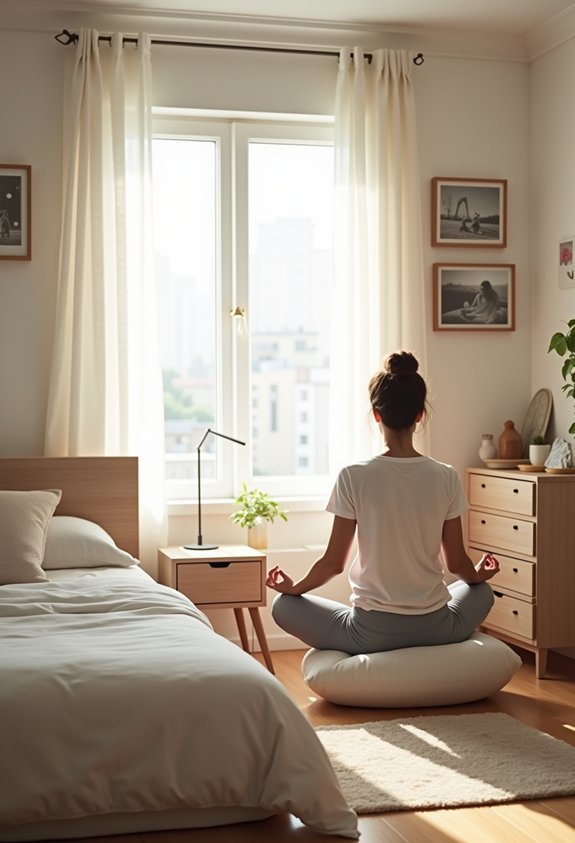
Design choices can only carry you so far; your real sense of calm comes from how you move through your home and how you think about it.
Start by creating mindful routines that anchor your day: a five-minute reset after meals, a quick tidy before bed, a weekly sweep of shared surfaces.
Focus on what you can control instead of tracking every item your partner brings in.
Protect your attention, too. Decide which areas are your calm zones and maintain them consistently.
When clutter appears elsewhere, practice a peaceful mindset: acknowledge it, choose a small helpful action, then let the rest go.
Remind yourself that shared life means shared trade-offs, and your minimalism can still thrive, even without perfect surroundings, most of the time.
Conclusion
You won’t turn your home into a minimalist magazine spread overnight, and you don’t have to. When you honor your values, respect your partner’s pace, and keep talking, you build a home that fits both of you. Step by step, you clear the noise so what really matters can rise to the surface, like stones visible through calm water. Minimalism becomes less a fight over stuff and more a shared practice of intention each day.