The Minimalist’s Guide to Living With Roommates
When you share a home, minimalism isn’t just about owning less, it’s about agreeing on how you live together day to day. You need clear intentions, simple ground rules, and systems that prevent clutter, noise, and resentment from piling up. From defining what’s “yours,” what’s “ours,” and what’s “off-limits,” to deciding how much stuff belongs in each room, the way you set things up now will quietly determine whether your household actually works.
Setting Shared Intentions Before You Move In

Before you sign a lease together, you and your future roommates should set clear, shared intentions for how you’ll live in the space.
Begin by stating why you’re living together: saving money, simplifying, or supporting each other’s routines. Next, discuss core priorities—noise levels, cleanliness standards, guest expectations, substances, overnight partners, and quiet hours.
Begin with your shared purpose, then define clear norms around noise, cleanliness, guests, substances, and quiet hours
Use these topics as a framework for setting boundaries and sharing values. Turn each agreement into something specific and measurable: “dishes washed by end of day,” “no loud calls after 10 p.m.,” “guests stay fewer than three nights a week.”
Decide how you’ll communicate issues: weekly check-ins, group chat, or both. Finally, agree on what happens when someone repeatedly ignores agreements.
Document everything in writing so expectations stay visible and concrete.
Defining Personal vs. Common Spaces
One of the most practical steps in living with roommates is drawing a clear line between what’s personal and what’s shared. Start by mapping your home: bedrooms, closets, bathroom shelves, kitchen cabinets, fridge sections, and digital spaces like streaming accounts.
Decide which areas are strictly yours, which are common, and which are flexible. Document agreements in writing so everyone sees the same layout of space allocation. Label shelves, drawers, and containers to reduce ambiguity.
Clarify access rules: Can roommates enter your room? Borrow your desk? Use your monitor or cookware? State expectations early to protect personal boundaries and prevent resentment.
Revisit the layout monthly, especially after schedule changes or new purchases, so your physical setup keeps matching how you actually live together each day.
Decluttering Your Belongings With Roommates in Mind
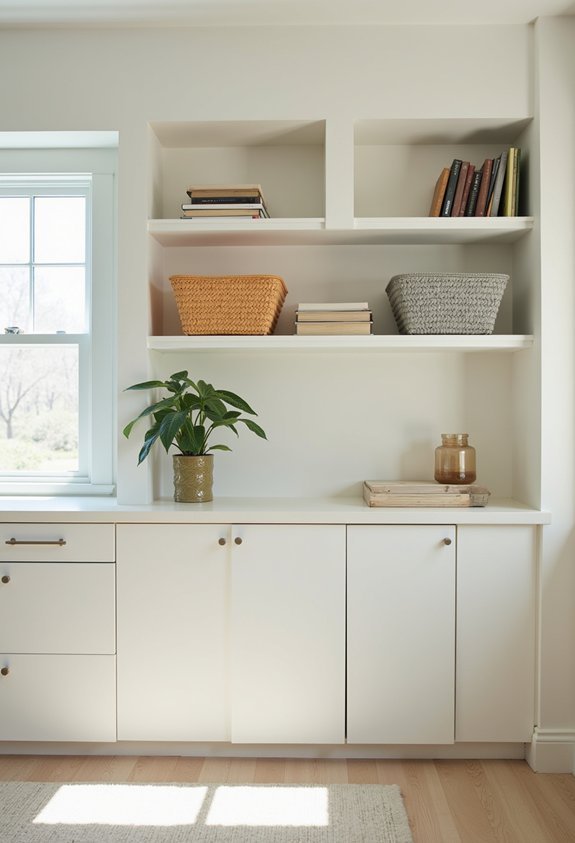
Although it can feel tedious, decluttering with roommates in mind means assessing what you own not just for personal use, but for how it affects shared space, storage, and traffic flow.
Decluttering with roommates means weighing every belonging against shared space, storage limits, and everyday movement paths
Start by listing belongings by zone: bedroom, bathroom, kitchen, living room. For each item, ask: Do I use it weekly? Does it live in my room or in common areas?
- Group duplicates and keep the highest‑quality version; donate or sell extras.
- Flag items under shared ownership and label them clearly to prevent confusion.
- Remove anything blocking doors, walkways, or shared surfaces like counters.
- Contain kept items in stackable bins or slim shelving that respects agreed boundaries.
Revisit these decluttering strategies monthly so clutter doesn’t quietly migrate into communal space for you and everyone.
Creating Minimalist Systems for Shared Essentials
Instead of treating every shared item as an exception, you can build simple, minimalist systems that handle most of your household’s daily needs on autopilot.
Start by listing all shared supplies: cleaning products, paper goods, basic cooking staples, toiletries. Decide what’s truly essential, then standardize brands and sizes to avoid clutter and decision fatigue.
Create a communal budget for these items, with a fixed monthly contribution from each roommate. Use a shared spreadsheet or app to track balances, purchase dates, and who’s responsible for restocking each category.
Post a concise checklist near the main exit so whoever’s shopping can quickly see what’s low. Review the list monthly, adjust quantities, and remove rarely used items to keep the system lean, clear, predictable, and conflict-free operations.
Smart Storage Solutions for Small Shared Homes
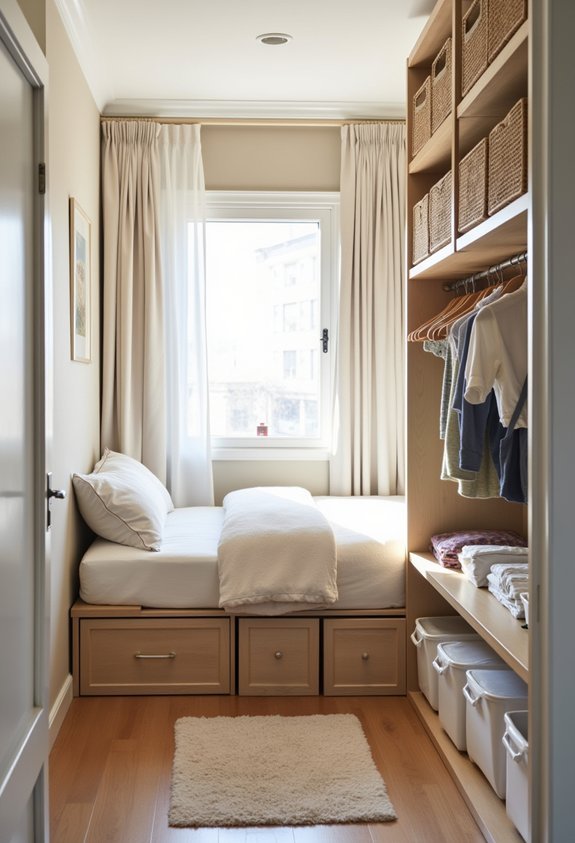
Once you’ve set up streamlined systems for shared essentials, the next lever for a calm household is how you store everything in a tight space.
Think vertically first. Use tall bookcases and wall-mounted racks as vertical storage, reserving floor area for walking and seating. Choose multifunctional furniture that hides items: ottomans with bins, beds with drawers, nesting side tables.
- Assign each roommate a bay on shared shelving for daily-use items.
- Install hooks behind doors for bags, coats, and compact appliances you don’t display.
- Use under bed storage boxes with clear labels for off-season clothes or spare linens.
- Keep surfaces mostly bare to maintain minimalist decor and make clever organization and other space saving solutions obvious for everyone, every single day.
Setting Ground Rules for Cleanliness and Chores
When you share a home, clear ground rules for cleanliness and chores prevent simmering resentment and last-minute scrambles. Start by defining what “clean” means in each area: counters wiped daily, dishes cleared within 12 hours, bathroom surfaces sanitized weekly, trash taken out when full.
Put this into a visible cleaning schedule, using a shared app or printed calendar.
Next, design a fair chore rotation. List recurring tasks, estimate time for each, and balance them so no one gets only unpleasant jobs. Rotate weekly or biweekly, and mark completions in the same system.
Agree on standards for guests, shared supplies, and what happens if someone falls behind—make-up tasks, swaps, or reminders—so expectations stay objective, not personal.
Review rules together monthly and adjust before conflicts build.
Managing Noise, Work, and Rest in Tight Quarters

Clear chore systems keep shared spaces livable; the next challenge is protecting everyone’s ability to work, relax, and sleep in close quarters.
Start with a written quiet-hours window and specific expectations for calls, meetings, and media volume. Treat noise management like any other shared resource: limited, scheduled, and negotiated in advance.
Use a simple chart to map each roommate’s rhythms:
- Early-morning workers need silent kitchens and dim lights.
- Night-shift sleepers require headphones and soft-close doors.
- Remote workers block video-call hours and backup locations.
- Rest-focused roommates log preferred nap times and bedtime routines.
Review the chart weekly, adjust when jobs or classes change, and document decisions.
You’ll protect work life balance while keeping tension low and small spaces calm and quiet.
Handling Guests, Parties, and Shared Social Spaces
Although guests and parties can make a shared place feel like home, they also strain privacy, noise limits, and space if you don’t manage them deliberately.
Start by defining clear guest etiquette together: days allowed, maximum numbers, sleepovers, and quiet hours. Agree on which areas remain private and which function as shared social space.
> Set guest norms together—when, how many, sleepovers, and quiet hours—to protect both privacy and shared social space.
For party planning, set simple criteria: purpose, duration, noise expectations, and cleanup responsibilities. Use a shared calendar so everyone sees upcoming visits and can block important nights.
During gatherings, keep common areas tidy, contain belongings, and check in with roommates about volume and guests’ departure times.
Afterward, return furniture, dishes, and supplies to their minimalist baseline so the apartment resets quickly and doesn’t feel permanently taken over for anyone else.
Navigating Conflicts Around Stuff and Space

Shared social time runs smoother once everyone understands how physical space and belongings work day to day. You prevent tension by defining zones: personal, shared, and flexible. Use simple diagrams or labels so no one guesses.
You may also like:



Treat conflict resolution like a recurring checklist. When stuff or space feels unfair, call a short meeting, state the issue, then propose concrete options. Think of space negotiations as trading limited resources, not personal attacks.
You might:
- Reassign cabinet shelves by height, frequency of use, and cooking habits.
- Divide cleaning tools and supplies by room, with clear responsibility.
- Set rotation rules for prime spots: bathroom time, balcony chairs, best lighting.
- Create a shared “overflow” bin for items still in decision limbo.
Review these agreements together whenever circumstances shift.
Maintaining a Calm, Minimalist Home Over Time
Once you’ve set up basic systems for stuff and space, the real work is keeping your home calm and minimalist as life changes.
Start by scheduling quick weekly resets: clear shared surfaces, return items to zones, empty the sink, take out trash and recycling. Rotate small tasks—dusting, sweeping, wiping handles—so maintenance stays fair and light.
Protect a calm environment by limiting new things. Before any shared purchase, ask: Where will it live? What does it replace? Use a one-in, one-out rule for decor, kitchen tools, and hobby gear.
Build mindful routines around entry points: shoes on a rack, bags on hooks, mail sorted immediately.
Review systems monthly with roommates, adjust for new schedules, and remove anything consistently unused to keep clutter from slowly returning.
Conclusion
When you live minimally with roommates, you don’t leave things to chance—you set intentions, define spaces, and document agreements. You declutter with shared comfort in mind, you design systems for essentials, and you store smart so nothing spills into chaos. You manage noise, guests, and conflicts with clear, repeatable processes. By reviewing monthly and adjusting together, you don’t just share a home; you build a calm, efficient environment that supports everyone’s best daily life.