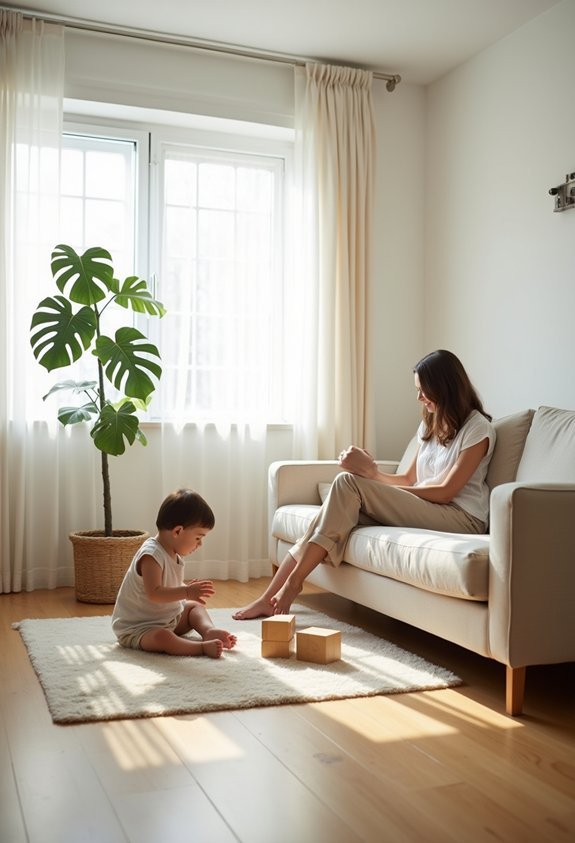
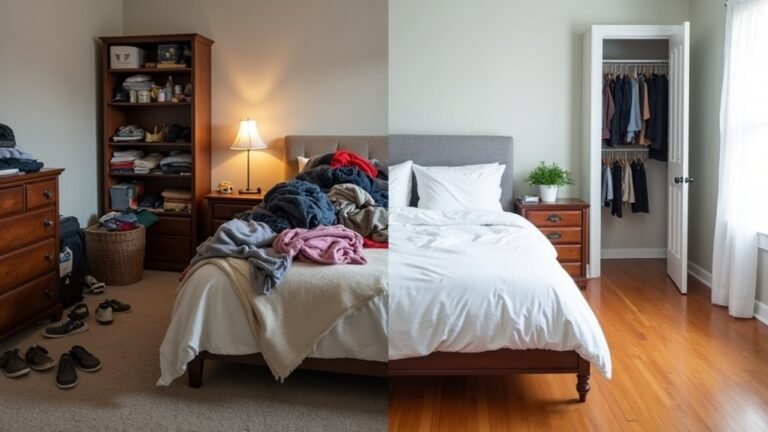
The One-In-One-Out Rule That Changed My Relationship With Stuff
It’s no coincidence you’re thinking about decluttering just as your space starts feeling tighter than ever. You don’t need more bins or better labels—you need a simple system that quietly reshapes how you live with your belongings. The one-in-one-out rule does exactly that, changing what you buy, what you keep, and how you feel at home. But it starts in a place you might not expect.
When “More Storage” Stopped Working
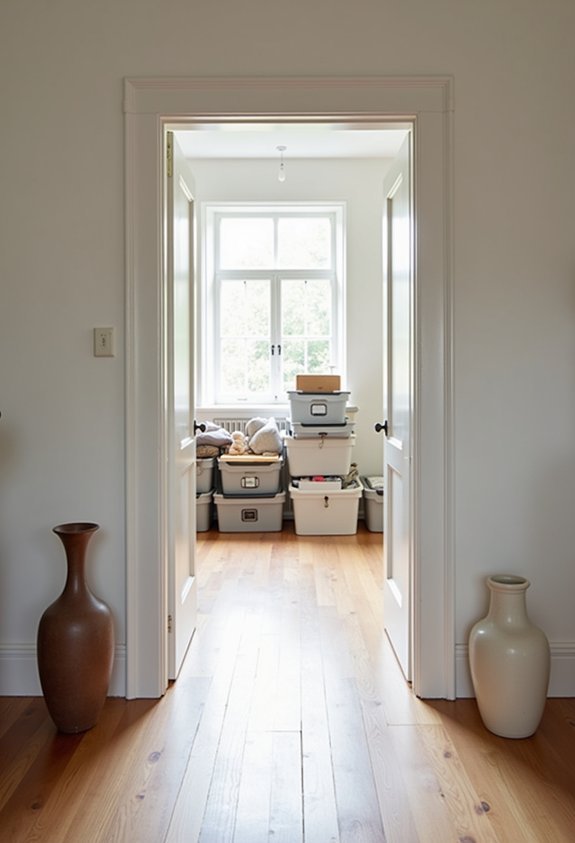
When “just add another box” stopped solving your clutter, it was a turning point you mightn’t have recognized at first. You kept buying storage solutions—bins, baskets, shelves—yet every surface still filled up. Instead of feeling organized, you felt managed by your stuff. That tension is useful data, not failure. It shows your belongings are outgrowing your space and attention.
You can respond systematically. First, notice where overflow appears fastest: entryway, closet, kitchen, desk.
Next, ask what keeps reappearing there and why you keep it. Then decide what purpose that area should serve, and remove anything that doesn’t support it.
As you repeat this process, you naturally move toward a minimalism mindset: enough, not extra; chosen, not accidental. You see clutter as solvable information.
Discovering the One-In-One-Out Rule
After you’ve tried more shelves and bins, the next useful shift is discovering the one-in-one-out rule: for every new item you bring into your space, one existing item must leave.
You stop asking, “Where can I store this?” and start asking, “What will this replace?” That simple switch turns random tidying into a clear, repeatable system. It supports a minimalist mindset without forcing you to own almost nothing.
Instead, every choice becomes intentional. Before buying, you already know something must go, so impulse clutter shrinks. When something new enters, you scan for low‑value items to release, steadily upgrading what you own and how your home feels.
- Clarifies decluttering strategies
- Keeps surfaces consistently clear
- Prevents “just in case” hoarding
- Makes donating feel routine
- Builds discipline
Setting Ground Rules I Could Actually Follow
Before the one‑in‑one‑out rule could work long‑term, I’d to set ground rules that matched real life, not an ideal version of myself. You need the same honesty.
Start by setting priorities: which areas of your home frustrate you most, and which items genuinely support your daily routines? Tackle those first.
Declutter where it hurts most first—then protect the items that truly make daily life easier
Then define what “one in” and “one out” actually mean for you. Is it one shirt for one shirt, or any clothing item for another? You’re creating limits that feel firm but fair.
Write your rules down, keep them visible, and adjust only when you notice consistent friction, not passing inconvenience. That way, the rule becomes a supportive habit, not punishment, and you build trust with yourself every time you follow it consistently.
The First Week: Small Swaps, Big Realizations
Although your new rules might look simple on paper, the first week of actually living with one‑in‑one‑out is where things start to feel real. You begin with tiny swaps, not dramatic purges. Each new item forces a decision: what leaves so your space stays honest and contained?
You notice patterns:
- You replace a chipped mug instead of adding a seventh “favorite.”
- You trade an unread book for one you’re excited to start.
- You let a duplicate kitchen gadget go when a better one arrives.
- You upgrade bedding while donating the old set the same day.
- You swap a sentimental trinket for one that truly reflects you now.
These small changes reveal how limits create focus, and how consistency compounds into surprisingly big impact daily.
How the Rule Changed My Shopping Habits
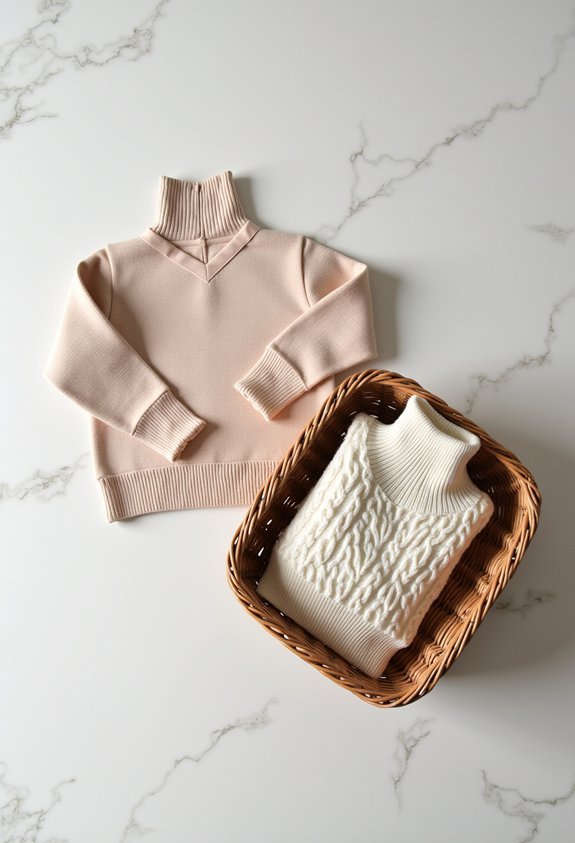
Those early swaps don’t just clear space; they quietly retrain how you approach every purchase.
You stop asking, “Do I want this?” and start asking, “What will this replace?” That single question turns impulse browsing into mindful shopping. Before buying, you mentally scan your home, identify a candidate to let go, and decide if the trade feels worthwhile.
Ask less “Do I want this?” and more “What will I release to make room?”
Over time, you build a simple system: pause, identify the outgoing item, compare quality, then choose.
You favor durable, versatile things because replacing them demands a real sacrifice. Sales lose their grip, because every discount now carries a cost in space and attention.
This is conscious consumerism in action: you buy less, choose better, and keep your belongings intentionally limited, manageable, calm, and aligned with you.
Emotional Clutter and Letting Go Gracefully
Even when you’ve mastered swapping items in and out, emotional clutter can still anchor objects in place long past their usefulness.
You’re not just organizing; you’re renegotiating emotional attachment. To apply one-in-one-out here, name the feeling, honor it, then release the object.
Try this simple process:
- Pause before each decision and ask what specific memory the item holds.
- Notice whether that memory actually needs a physical placeholder.
- Take a photo or write a quick note so the story survives without the stuff.
- Thank the item for how it served you, then choose its replacement deliberately.
- Set a tiny quota: one emotionally hard thing released each week.
You’ll practice letting go gradually, building confidence instead of guilt, with each choice.
Adapting the Rule for Family, Gifts, and Special Cases

When you start applying the one-in-one-out rule to real life, the tricky parts usually show up around other people’s stuff, well‑meant gifts, and the “special” items that feel untouchable.
You may also like:





Begin with family agreements: explain your rule, set shared limits for toys, kitchen gear, or hobby supplies, and decide together what “one out” looks like—donate, sell, or pass along.
For kids, use simple choices: “If this new puzzle comes in, which old one goes out?”
For gift management, quietly maintain a donation box; you can receive with gratitude and still release what doesn’t fit your space or lifestyle.
Treat sentimental or heirloom items as a separate category, with a smaller, clearly defined container that forces you to prioritize, based on use, joy, reflection today only.
The Unexpected Calm of Owning Just Enough
As you keep practicing one‑in‑one‑out—with family buy‑in, clearer limits on gifts, and boundaries around sentimental things—you start to notice a quieter result: your space stops arguing with you.
Surfaces stay clear, drawers close easily, and you know where everything lives. You’re not chasing an empty house; you’re aiming for “just enough.”
To reinforce this minimalist mindset, you can track calm in concrete ways:
Track calm like a habit: measure resets, finding things, surprise visits, and how often “enough” feels true
- Notice how quickly you reset rooms after daily use.
- Time how long it takes to find routine items.
- Watch your stress level when unexpected guests arrive.
- Review purchases weekly to confirm mindful consumption.
- Check how often you feel satisfied instead of wanting more.
The rule doesn’t shrink your life; it frees attention for what matters. Calm becomes your home’s default setting.
Conclusion
You don’t need a perfect system; you just need one small rule you’ll actually use. Think of a crowded bookshelf. A librarian once told me, “When a new book comes in, an old one must earn its space again.” Your home works the same way. Start with one drawer, one closet, one category. Trade in, trade out. You’ll build a calmer space—and a clearer mind—one intentional choice at a time today, and keep showing up.