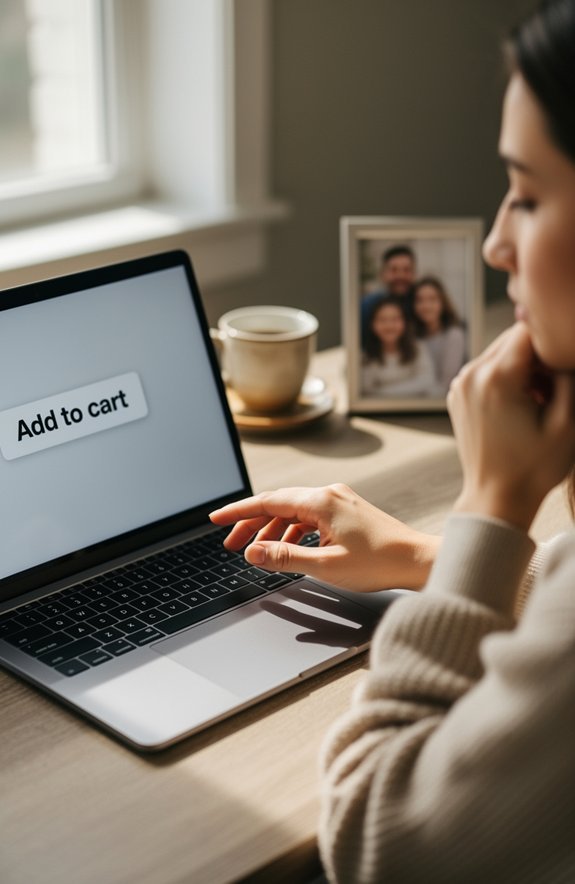
How I Retrained My Brain to Hate Shopping
What if the theory that “shopping is harmless fun” quietly fails every test of evidence in your life? When you start tracking your purchases, patterns emerge: stress spikes, boredom, and social comparison often drive your clicks more than real need. By mapping these triggers, you can retrain your brain’s reward system, swap spending highs for healthier cues, and redesign your environment so buying feels inconvenient—until something unexpected happens to your idea of pleasure.
Realizing My “Fun” Habit Was Quietly Draining Me

Although it looked like harmless fun on the surface, you probably noticed the first cracks in your shopping habit through small, measurable signals: a tighter budget, creeping credit card balances, or constant mental “tabs” open about what you wanted to buy next.
To see the real impact, you start tracking every purchase for a month. You label each item as need, plan, or impulse. Patterns appear: repeated low-cost buys, duplicates, and “treats” after stressful days.
Track every purchase for a month; tag it need, plan, or impulse—and watch your real spending patterns surface
You total the month’s damage and compare it with savings goals and debt payments. This simple audit confronts your consumer mindset with hard numbers.
You also jot down brief notes on situations around each purchase, so you can later spot emotional triggers without guessing. That data makes change feel.
Understanding the Psychology Behind My Shopping Urges
Once you’ve mapped out the numbers, the next step is to dissect what’s actually happening in your brain when you feel the urge to buy. You’re not “bad with money”; you’re wired for quick rewards.
When a shopping trigger hits—an ad, stress, boredom—your brain predicts a dopamine hit and pushes you toward the fastest relief. That’s why carts fill before you’ve thought things through.
To change this, you first label your shopping triggers in detail: time of day, emotion, environment, platform. Naming them gives your prefrontal cortex a foothold, the part responsible for planning and impulse control.
You then practice inserting a brief pause—standing up, breathing, or writing the urge down—so the decision shifts from automatic reaction to deliberate choice in your daily life.
Rewriting My Reward System Around Non-Spending Wins

Now that you can spot your triggers and create a pause, you need to change what your brain expects as a “reward” in those moments.
In behavioral science, this means pairing the old cue with new reward alternatives. First, name the feeling behind the urge: boredom, stress, or envy.
Then design a specific habit replacement for each category. For stress, you might walk, journal, or text a friend. For boredom, you might read, stretch, or learn something short.
Track each successful swap in a simple log. Your brain learns from repetition and salience, so highlight the benefits: calmer mood, more control, extra money.
Over time, those non-spending wins become the outcomes your brain anticipates—and craves. That shift makes shopping feel unnecessary, even strangely unpleasant.
Making Temptation Inconvenient and Boredom Productive
When you redesign your environment to slow spending and redirect idle time, you make your new habits far easier to follow than your old ones.
First, audit your main temptation triggers: apps, email promos, payday routines, certain friends, specific moods. Remove one link in each chain. Delete shopping apps, unsubscribe, move credit cards out of reach, set a 24-hour delay rule.
Next, engineer friction: require passwords you must look up, disable one-click checkout, block sites during vulnerable hours.
Then plan boredom alternatives grounded in research: short walks, skill-building videos, library holds, phone calls, stretching. Store a written menu of options where you usually scroll.
Each tiny obstacle to shopping and each ready alternative rewires your default responses. Over time, the effortful path feels natural.
Redefining What It Means to Treat Myself Well

Although it feels like “treating yourself” should be harmless fun, much of modern marketing has trained your brain to equate care with consumption. To retrain it, first separate three concepts: comfort, reward, and recovery.
Ask, “What problem am I solving—stress, fatigue, or loneliness?” Then match it with self care alternatives supported by research: sleep, movement, connection, time outside, creative focus.
Next, practice mindful indulgence instead of automatic buying. Before any “treat,” run a 4-step check: pause, name the feeling, choose the smallest action that truly helps, then evaluate how you feel 20 minutes later.
Track this in a notes app for two weeks. Patterns will show you which actions regulate your mood and which just spike dopamine and regret, so you naturally desire less.
You may also like:





The Surprising Freedom of Not Wanting to Shop Anymore
As you practice separating real comfort from quick dopamine hits, something unexpected starts to happen: shopping stops feeling magnetic and starts feeling optional.
You notice urges, label them as marketing or habit, and let them pass without acting. That cognitive distancing reduces craving, according to research on cue-exposure and delayed discounting.
Next, you deliberately test shopping alternatives: walks, calls with friends, small creative projects, even micro-naps.
You track mood before and after. Data in a notebook or app shows which options actually regulate stress.
Over time, your environment shifts toward a minimalist mindset.
Fewer possessions mean fewer decisions, less cleaning, and clearer finances.
You experience autonomy: you’re choosing purchases, not reacting.
That freedom reinforces your new identity as someone who doesn’t need to shop.
Conclusion
You’ve learned to spot your triggers, pause, and choose skills that actually regulate stress instead of swiping it away. By tracking data, redesigning your environment, and rewarding non‑spending wins, you’ve rewired your habits like slowly redirecting a river. Shopping loses its grip when you make boredom productive and “treats” truly restorative. Keep practicing these steps and you won’t just spend less—you’ll think, plan, and care for yourself on purpose today, tomorrow, and in every decision.