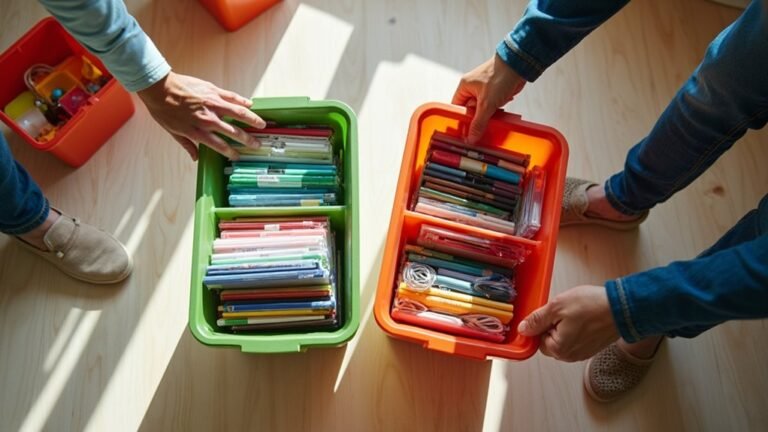
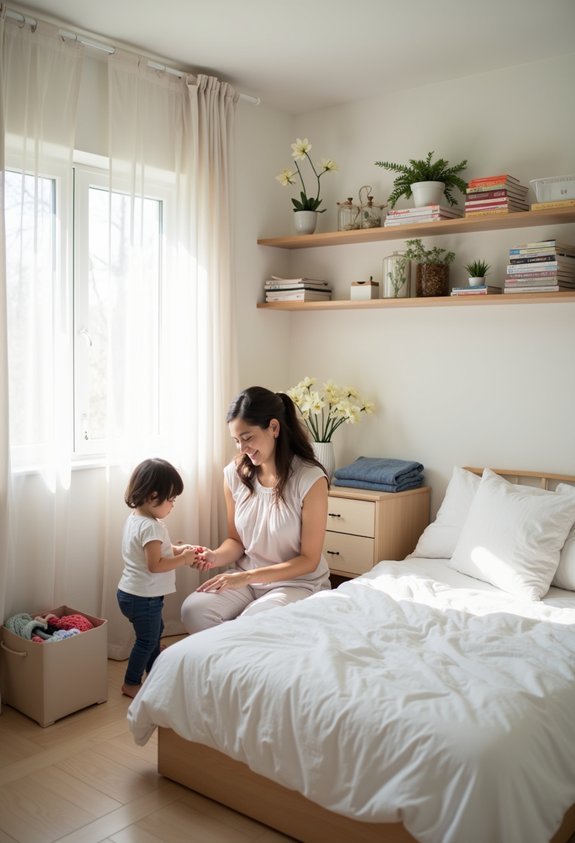
How to Declutter When You Feel Emotionally Attached to Everything
Studies suggest the average home holds over 300,000 items, so it’s no wonder you feel overwhelmed when everything seems emotionally important. You’re not lazy or broken; your brain simply links objects with identity, safety, and love. The key isn’t forcing yourself to toss things, but learning a structured way to decide what truly deserves space in your life—and what to do when guilt tries to stop you.
Understand Why Letting Go Feels So Hard
Even when you’re fully committed to decluttering, letting go can feel like you’re losing a part of yourself instead of just an object. You’re not imagining that intensity; your brain links things to identity, safety, and memory.
Emotional ownership makes a mug feel like “my college years” or a sweater feel like “my best self.” Attachment psychology explains this: repeated use, meaningful moments, and scarcity all strengthen bonds to items.
To understand why it’s hard, notice what each object represents. Ask, “What role does this play for me—security, status, nostalgia, unfinished goals?”
Name the role out loud or on paper. When you separate the symbolic job from the physical item, you create a small but powerful gap where choice becomes possible for you again.
Shift Your Mindset From Shame to Self-Compassion
Once you see how deeply your things connect to identity and safety, it becomes easier to understand why you haven’t been able to “just get rid of stuff.”
That’s where your mindset matters more than any organizing hack. Instead of attacking yourself for clutter, treat it as information about your needs, history, and fears.
You build change by pairing self forgiveness practices with small, honest reflections. Use emotional resilience techniques to stay grounded when guilt or anxiety spikes.
Try:
- Name your emotion out loud: “I feel ashamed,” not “I’m a mess.”
- Reframe mistakes as lessons: ask, “What is this pile teaching me?”
- Offer yourself the kindness you’d give a close friend facing the same room.
From this softer place, sustainable decluttering choices become possible.
Start Small: Gentle Decluttering for Low-Stakes Items
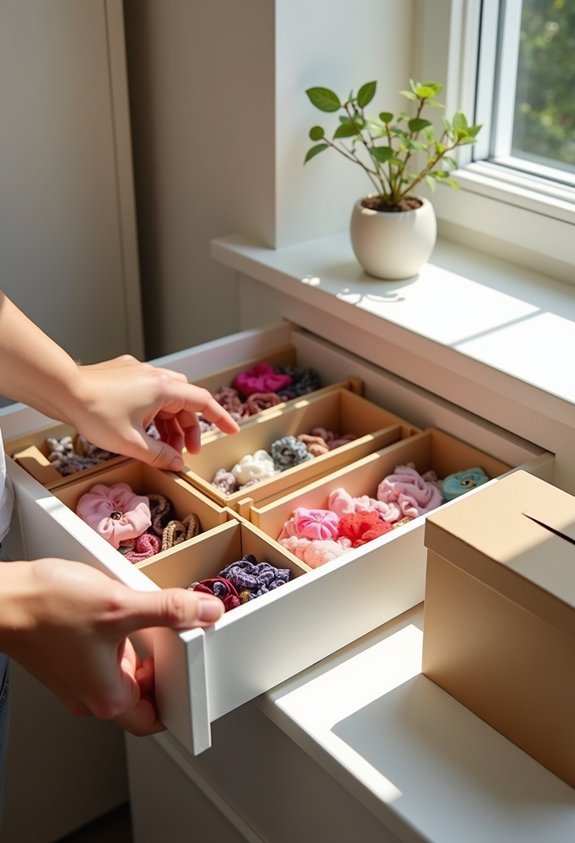
Instead of beginning with the boxes that make your chest tighten, you’ll make progress faster by practicing on low‑stakes items—things that hold little emotional weight but still add to visual noise.
Think expired coupons, worn-out socks, duplicate kitchen tools, mystery cords. These gentle starts let your nervous system relax while you build confidence.
Set a timer for ten or fifteen minutes. Choose one drawer, one shelf, or one small surface.
Stand there, item by item, and simply ask, “Do I use this now?” If the answer’s no, place it in a separate spot to leave your home later.
Stop when the timer ends. Notice the clearer space and the fact that nothing happened.
That evidence will support you when you’re ready for harder decisions.
Create Clear Categories for What Stays and What Goes
When you’re emotionally attached to your stuff, clear categories act like guardrails so every decision doesn’t feel like starting from scratch.
Instead of asking “keep or toss?” every time, decide your emotional categories and practical sorting rules first. That way, you simply match each item to its place.
- Definitely Keep – You use it often, it fits your life now, and it genuinely lifts your mood. Limit this to what you can store comfortably and access easily.
- Maybe / Review Later – You’re unsure, overwhelmed, or conflicted. Contain these in one box, labeled with a future review date.
- Release – It’s broken, duplicated, outdated, or tied to stress. Thank it, record any details you’ll want to remember, then let it go.
Honor the Memory Without Keeping Every Object
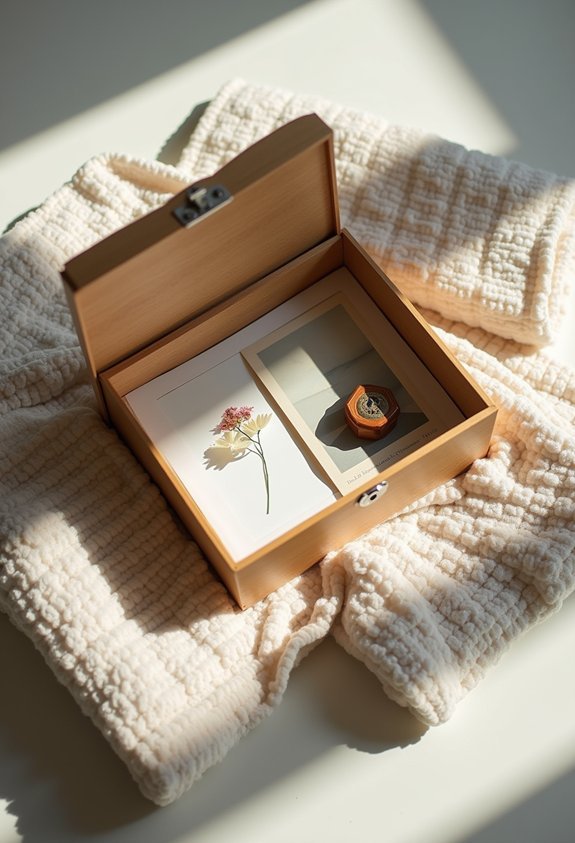
Although it can feel like letting go of an item means letting go of a person or a time in your life, you can separate the two: you keep the memory, not the clutter.
Start by asking, “What exactly does this remind me of?” Describe that story in a notebook, voice memo, or digital journal. You’re practicing memory preservation, not object preservation.
Capture the story, not the stuff—preserve memories in words, not in cluttered drawers
Next, photograph meaningful items from several angles, then let most of them go. Keep a small, clearly defined collection—one box, one shelf—that represents the chapter, not every page.
When strong feelings surface, pause, breathe, and name them; this creates emotional release while you sort. By capturing the essence and releasing the excess, you honor what mattered and reclaim your space with intention.
Navigate Guilt Around Gifts, Heirlooms, and Sentimental Clutter
You’ve learned how to keep the memory without keeping every object; now it’s time to tackle the heavy guilt that often comes with gifts, heirlooms, and sentimental clutter.
Start by separating the person you love from the item you’re holding. Your relationship doesn’t depend on storing every present forever. Use memory mapping: list key people and moments, then assign just a few meaningful objects to each.
You may also like:

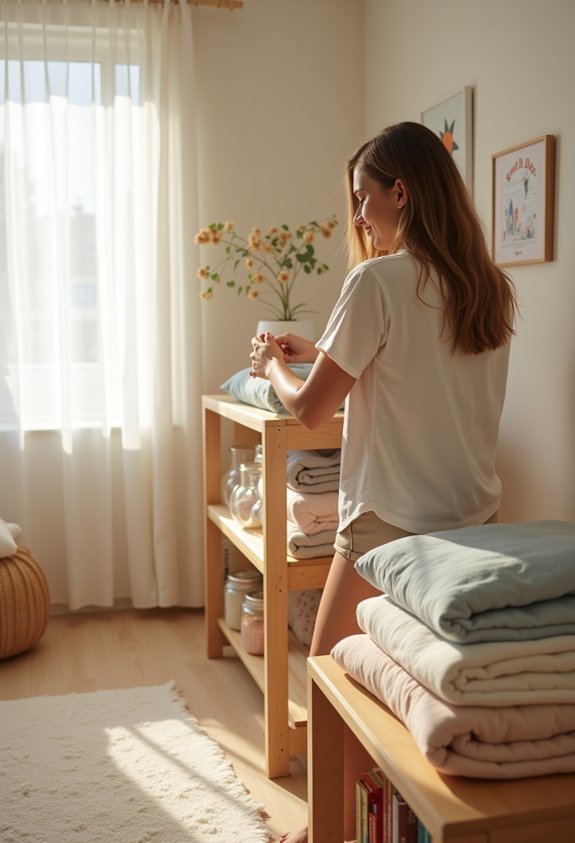
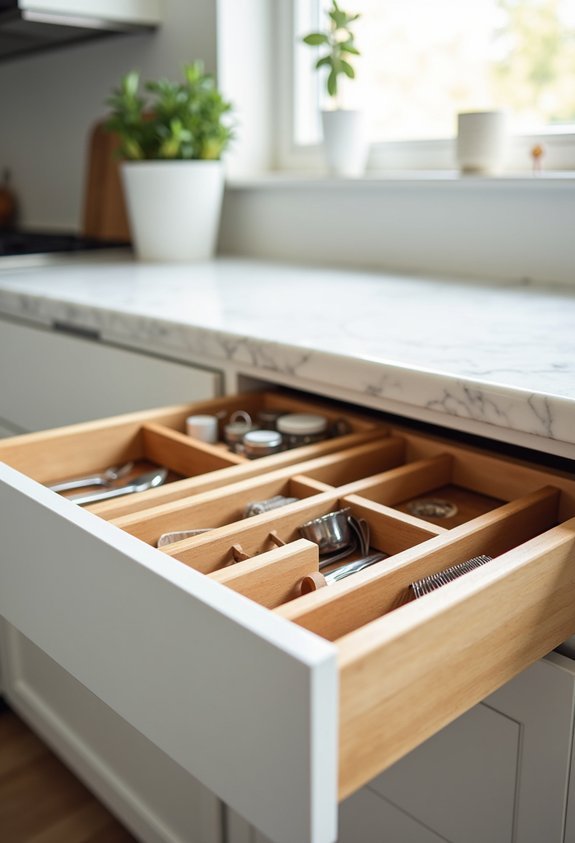
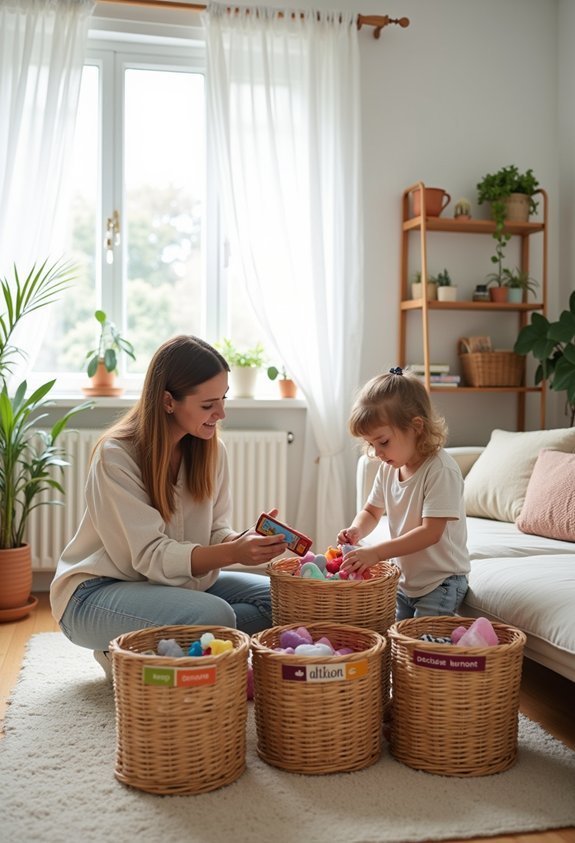

Anything without a clear connection becomes optional, not mandatory. To reduce gift guilt and pressure from heirlooms, you can:
- Decide the purpose: display, use, archive, or release. If it has no purpose, it’s a candidate to let go.
- Keep the representative item, not the entire collection—one quilt, not ten.
- Offer items to relatives, donate thoughtfully.
Maintain a Clutter-Light Home Without Feeling Deprived
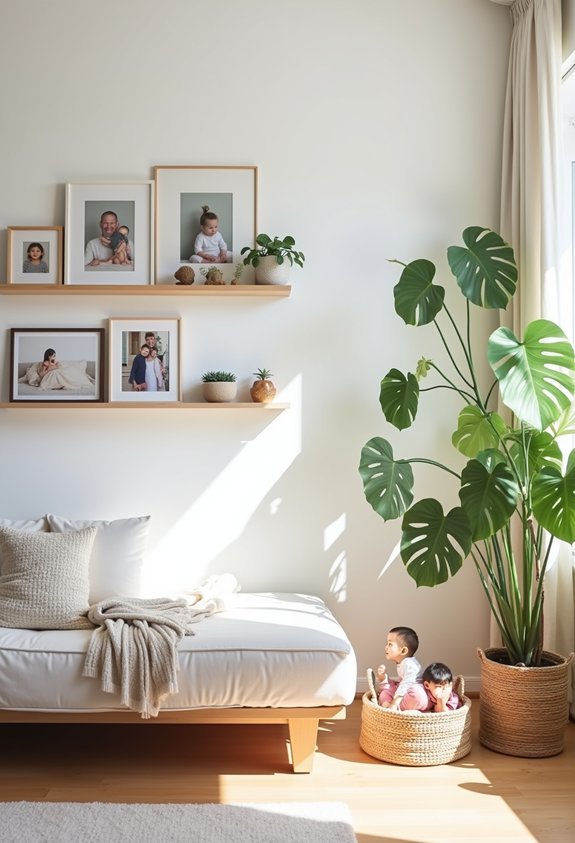
Instead of seeing decluttering as a one‑time purge, treat it as a simple system that protects your space, time, and energy.
Decluttering isn’t a single purge—it’s a gentle system that continually protects your space, time, and energy.
Start with a weekly reset: return items to homes, recycle obvious trash, pick one tiny zone to refine.
Use limits, not willpower: one drawer for tools, one shelf for hobbies, one box for sentimental extras. When a boundary’s full, choose what truly earns space.
To avoid feeling deprived, plan “abundance spots”: a cozy reading corner, a well‑used craft caddy, a generous tea collection.
You’re not chasing a rigid minimalist lifestyle; you’re designing rooms that support emotional balance and daily ease.
Notice how lighter surfaces shorten chores and free weekends—that feedback keeps you going.
Over time, your home feels calmer, spacious, and genuinely yours.
Conclusion
You’re not stripping a castle bare; you’re tending a garden. Each item is a seed, a weed, or a mature tree. You walk the rows, decide what to nourish, what to prune, what to compost. You label, sort, and release with intention, not panic. Over time, light returns, paths clear, and your home reflects who you are now—not every season you’ve ever lived, but the living forest you’re still growing.