How I Decluttered My Linen Closet in 20 Minutes
There’s a simple way to turn a chaotic linen closet into an efficient, organized space in just 20 minutes. You don’t start by buying new bins or labels—you start with a timer and a clear plan. By quickly emptying, sorting, and assigning specific zones, you create order without overthinking. The key is deciding what actually earns a spot on those shelves—and how to keep it that way. Here’s how you do it step by step.
Setting a Simple 20-Minute Game Plan
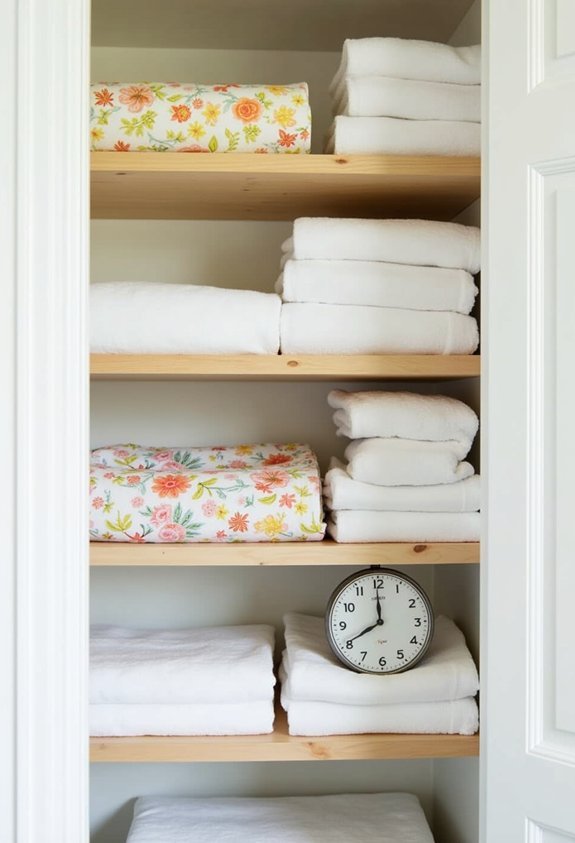
Start by giving yourself just 20 focused minutes so the task feels doable and you’re not tempted to overcomplicate it. Set a timer and define one clear goal: make every shelf hold only what you actually use.
Before you touch anything, quickly scan the closet and mentally divide it into zones: towels, bedding, extras. Decide your order and commit to moving top to bottom.
Use quick decluttering tips: keep, donate, or toss—no “maybe” pile. If you hesitate longer than five seconds, move on.
Apply time saving strategies by ignoring deep organizing for now; you’re just editing. Fill one small trash bag or donation bag per session.
When the timer rings, stop and reassess progress. Note what worked, and repeat the same process next time.
Grabbing the Right Supplies Before I Started
Two or three basic supplies make your 20-minute declutter far smoother and faster.
Before you touch a single shelf, run through a quick supplies checklist so you’re not stopping mid-task. Your essential tools are simple: a trash bag for worn-out linens, a donate box for extras, and a damp cloth or handheld vacuum for quick dust removal.
Gather a trash bag, donate box, and damp cloth first so decluttering decisions stay swift and uninterrupted
Add sticky notes and a marker so you can temporarily label stacks by size, room, or season without overthinking a system. If you already use bins, pull them nearby so you can edit what goes back later.
Line everything up just outside the closet, within arm’s reach. With tools ready, your decisions stay quick and momentum never stalls. You start focused, equipped, and less tempted to procrastinate.
Doing a Fast, Ruthless Empty-Out
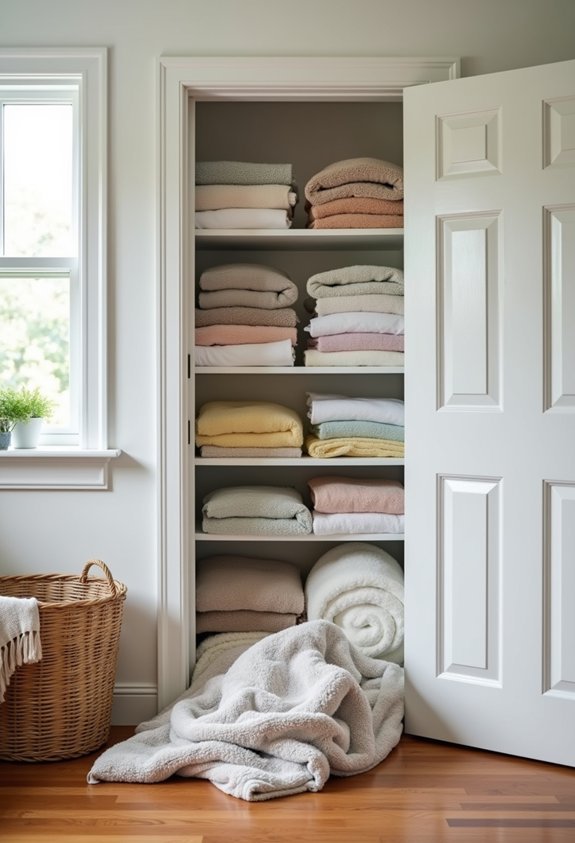
Pull everything out of the closet in one focused sweep, shelf by shelf, so you can see exactly what you own.
Work quickly; you’re running fast decluttering strategies, not browsing memories. Grab contents with both hands, stack them on the floor or bed, and clear each shelf completely before moving on.
Don’t pause to refold or decide what stays yet; that slows you down.
Use ruthless organization tips even at this stage: keep similar items clumped together as you pull them out—towels with towels, sheets with sheets, extras with extras.
Shake out hidden pieces stuffed in corners, check behind baskets, and strip the door rack.
Your goal is a bare, visible structure that’s ready for rapid decisions next, without overthinking or second-guessing any item.
Sorting Everything Into Clear Keep-or-Go Piles
With every shelf empty and everything visible, you can immediately sort each item into a clear “keep,” “donate,” or “toss” pile.
Work fast; aim for seconds per decision, not minutes. Use simple sorting techniques: keep what’s intact, currently used, and fits your space; donate what’s clean, complete, and still useful; toss anything stained, torn, or scratchy.
Stack sets together so you judge them as a unit, not piece by piece. As you create the donate pile, note practical donation options—local shelters, animal rescues for older towels, community centers, or buy-nothing groups.
Bag donations right away to prevent backsliding. Finally, remove trash immediately so only functional, wanted linens remain, ready for the next step.
This quick triage keeps decisions simple and your momentum high today.
Deciding How Many Sheets and Towels I Really Needed
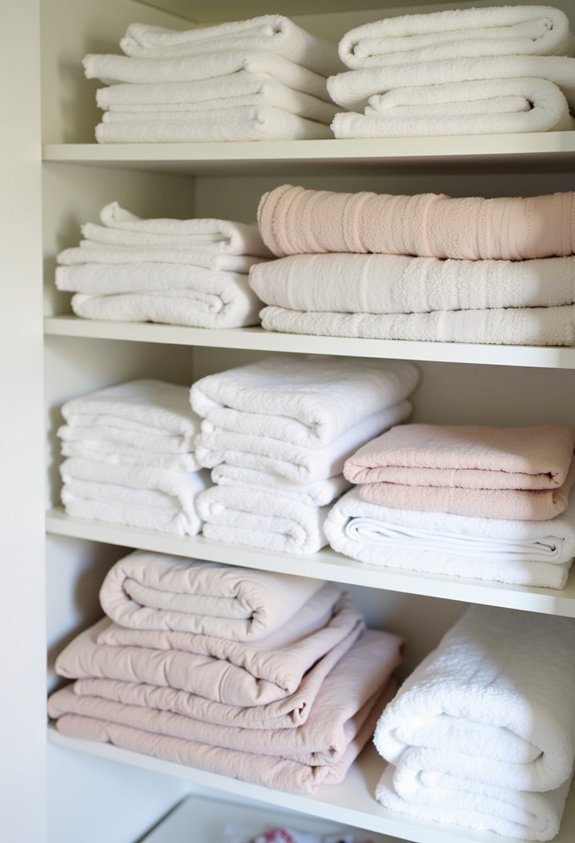
A clear linen limit keeps your closet from quietly refilling.
Start by matching linens to real life, not “just in case” scenarios. For sheets selection, assign a simple rule: two sets per regularly used bed, one extra for guests if you host often, otherwise skip.
Donate anything scratchy, stained, or unmatched.
Next, calculate towel quantity. Plan two bath towels, two hand towels, and four washcloths per person, plus one extra set for guests. If laundry happens more than once a week, cut that in half.
Pull everything out, sort by size and purpose, then count against your limits. Anything above your numbers becomes a donate-or-rag candidate.
With firm caps, every new linen requires letting one go. That’s how you keep clutter from creeping back.
Folding Linens So They Actually Fit and Stay Neat
Three simple folding habits will make your linen closet feel bigger without adding a single shelf.
Start by sorting everything into clear linen categories: sheet sets, towels, blankets, and extras. Work one stack at a time so you don’t refold later.
Use consistent folding techniques. For sheets, fold the fitted and flat, then tuck both plus one pillowcase into the remaining pillowcase for a compact bundle.
For towels, fold in thirds lengthwise, then in thirds again so they stand upright.
Blankets get folded into rectangles no wider than your shelf depth.
Finally, square up each stack. Turn the factory-finished edge outward, and file bundles front to back, not top to bottom.
You’ll grab what you need without shifting the whole pile every single time.
Assigning Zones for Everyday, Guest, and Seasonal Items

Once your linens are folded into compact bundles, assign every shelf a clear job so you’re not hunting for towels during a rush.
Put everyday essentials—bath towels, hand towels, frequently used sheets—at eye level, where you can grab them in seconds.
Reserve the lowest shelf for bulky items you don’t mind bending for, like extra blankets.
Designate the highest shelf for guest sets and anything in seasonal rotation, such as flannel sheets or beach towels, so they stay accessible but not in your way.
You may also like:





- Group by user: master bed, kids’ rooms, guests.
- Group by function: bathing, bedding, cleaning cloths.
- Group by frequency: daily, weekly, rarely used backup sets.
Keep walking the shelves in this order until the layout feels automatic daily.
Using Bins and Labels to Keep the Closet Organized
Even a well-zoned linen closet unravels fast without clear containers and labels guiding where everything lives.
Start by choosing uniform bins that fit your shelves; this instantly sharpens bins organization and stops stacks from toppling. Assign each bin to a single category: twin sheets, queen sheets, guest towels, washcloths, backups. Don’t mix types.
Choose uniform bins, one category each, to prevent toppling stacks and keep linens instantly findable.
Next, create labels that anyone can read in three seconds. Aim for label clarity: big font, simple wording, positioned at eye level when possible. Use removable labels so you can adjust as needs shift.
Finally, load bins front to back, keeping the most-used categories at the front. When every item has one bin and one label, you eliminate rummaging and decision fatigue. The system stays intuitive, fast, low-effort, and stress-free daily.
How I Maintain the Closet in Just a Few Minutes a Week
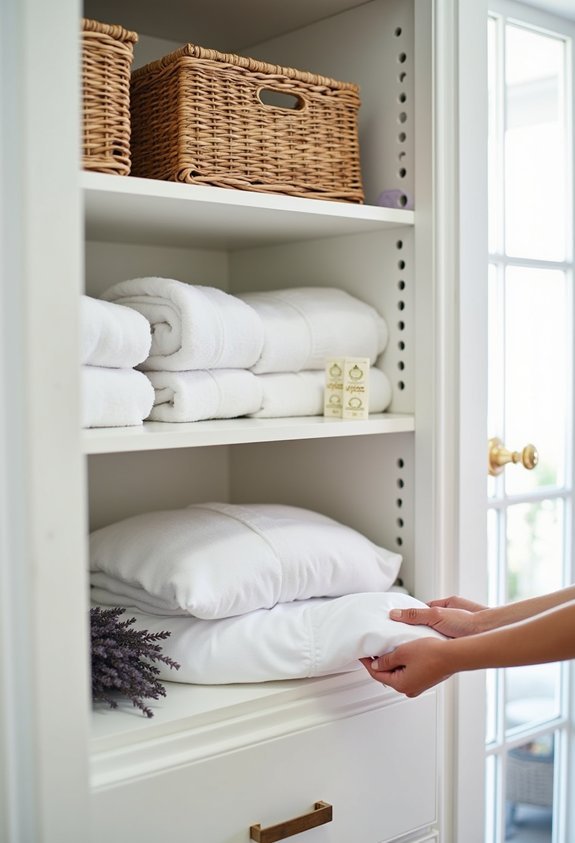
Two tiny habits keep this linen closet running smoothly without turning into a weekend project.
You rely on weekly maintenance, not marathon reorganizing. Every Sunday, do a two-minute reset: return stray items to their labeled bins, refold anything sloppy, and remove empties.
During the week, build in quick check ins whenever you put laundry away, so you correct small issues before they spread.
- Scan each shelf from top to bottom, asking: “Does anything live in the wrong zone?” Move it now instead of later.
- Apply a one-in, one-out rule for extras like towels, sheets, and blankets to prevent silent buildup.
- Keep a small donate bag nearby, so worn or surplus linens leave the closet immediately, instead of piling up on shelves or bedroom chairs.
Conclusion
Now when you open your linen closet, you don’t face a jumble—you see neat stacks of folded towels, crisp sheets in tidy rows, and labeled bins waiting like tools in a well-run workshop. In just 20 focused minutes, you turned chaos into an efficient system. Use this same step-by-step approach—empty, sort, decide, assign, contain—to tackle any small space. You’ll save time, cut stress, and make every closet work harder for you.