The Decluttering Approach That Respects Your Past
When you’re told to “just get rid of stuff,” it can feel like you’re being asked to throw away pieces of your life. Those old letters, ticket stubs, or worn-out sweaters aren’t just objects; they’re proof that you’ve lived, loved, and changed. A kinder approach treats your home like a personal archive, not a battlefield against clutter. The question isn’t “What should you toss?”—it’s how to decide what truly deserves to stay.
Why Traditional Decluttering Advice Feels So Harsh

Although it’s often meant to be motivating, a lot of traditional decluttering advice can feel surprisingly harsh because it ignores your real-life context, emotions, and constraints.
You’re told to toss anything you haven’t used in a year, even if it’s tied to deep emotional attachment or represents a season of life that still matters.
When you hesitate, you may label yourself lazy or weak, which builds decluttering guilt instead of momentum.
Rigid rules don’t account for grief, trauma, financial limits, or cultural expectations. They treat every item like a simple yes-or-no decision.
You need guidance that respects your pace, helps you name why something’s hard to release, and offers middle-ground choices, like temporary boxes or staged decisions, so progress feels humane, doable, and sustainable.
Seeing Your Belongings as a Personal Archive
When you see your belongings as a personal archive instead of random clutter, you shift from feeling judged by your stuff to becoming its curator.
Treat your belongings as an archive, and you stop feeling buried by clutter—you become its curator
You’re not asking, “Why do I still have this?” but “What role does this play in my personal history?” Each object becomes a document: of a season of life, a relationship, a risk you took.
Instead of attacking piles, you’ll review categories—photos, letters, clothes, tools—with the calm focus of memory curation. You ask: What’s the story here, and is it one I still need easy access to?
This mindset lets you keep meaning while gradually releasing what no longer documents who you’re today. You respect your past, but you also design shelves that serve your present life well.
Separating Sentimental Value From Everyday Clutter

How do you tell the difference between something that genuinely matters to your heart and something that’s just along for the ride?
Start by noticing how you use an item now, not just how you once used it. Everyday clutter hides in duplicates, broken things, and objects you keep out of habit.
Sentimental value usually shows up as a specific story, person, or turning point tied to the object. During sentimental sorting, separate what captures a clear memory from what only triggers a vague feeling of “I should keep this.”
You’re aiming for memory preservation, not obligation preservation. When you protect the few items that truly hold your history, you free space for living, while honoring the chapters you’ve already lived every single day.
Gentle Questions to Guide What Stays and What Goes
You’ve started to see which items hold real memories and which ones only linger out of habit; now it helps to give your decisions a calmer structure.
Begin with gentle prompts: “What specific memory does this hold?” “When did I last use or display it?” “Would I notice if it were gone?”
Ask, “Does this represent who I’m now, or only who I used to be?” Let mindful reflection guide you, not pressure or guilt.
Notice your body’s response—tightness may signal obligation, warmth may signal genuine attachment.
When an item feels important, ask why, then answer in one clear sentence. If you can’t, it’s a candidate to release.
Move steadily, item by item, honoring every yes and every no, without second-guessing yourself afterward.
Creative Ways to Preserve Memories Without Keeping Everything
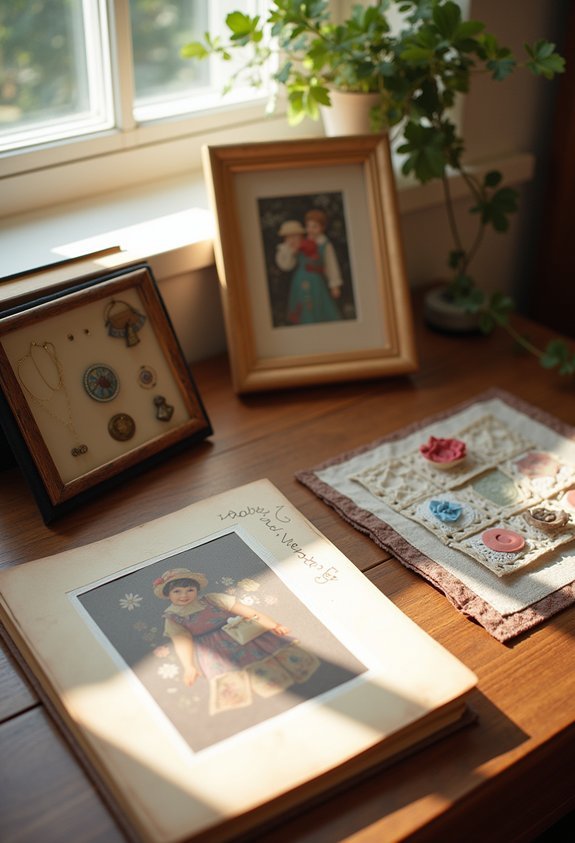
Although it can feel as if every object must stay to keep a memory alive, you can honor your past without keeping it all in physical form.
Start by choosing a few representative items and letting them stand for a whole chapter of life. Photograph things you’re ready to release and group the photos into dated digital albums so you can revisit them without storing boxes.
Create memory jars: slip in ticket stubs, written snapshots of moments, or tiny objects, then label the jar by year or theme.
Turn worn clothes into a small quilt or pillow cover instead of several overflowing bins. Capture stories by recording short voice notes tied to specific photos or objects.
This way, you keep meaning while releasing volume.
You may also like:


Setting Up Spaces That Honor Your Story
Where do your most meaningful memories naturally want to live in your home?
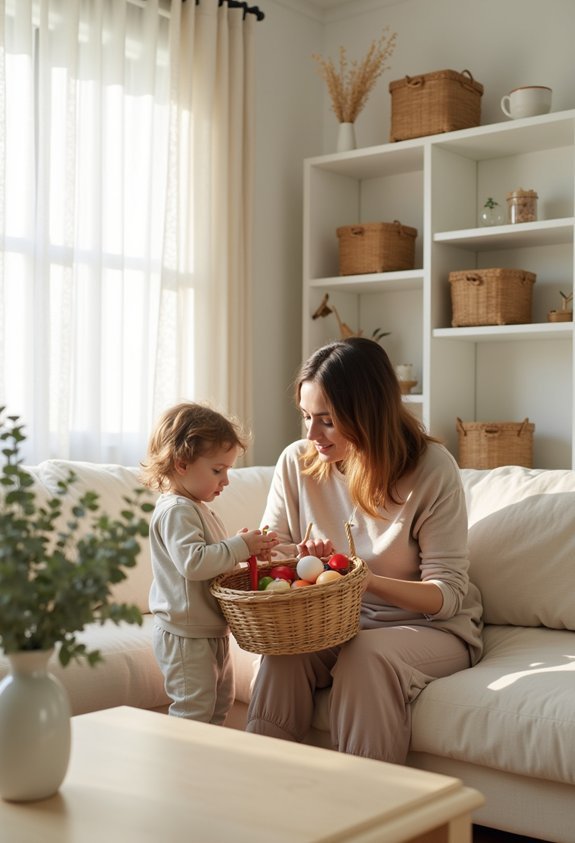
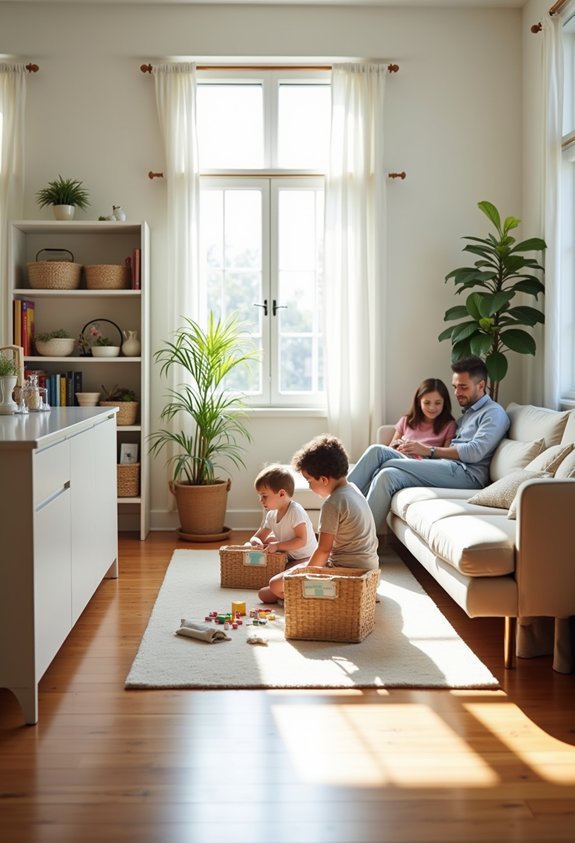
Start by mapping your daily paths: entryway, sofa, desk, bedside. Choose one or two zones for intentional display, not scattered clutter. Designate a shelf, tray, or small cabinet as a “story hub” where personal artifacts gather with purpose.
Map your daily paths and create one intentional “story hub” where meaningful objects quietly gather.
Create simple categories: people, places, milestones. Use memory walls for photos and flat mementos, and containers for three‑dimensional pieces. Label discreetly so you can revisit stories without feeling overwhelmed.
Give each item a clear boundary: a frame, a box, a dedicated hook. When space fills, review and rotate instead of expanding. This structure lets your home show who you are, while keeping surfaces calm and functional. You stay rooted, yet your rooms breathe.
Moving Forward Without Erasing Who You Were
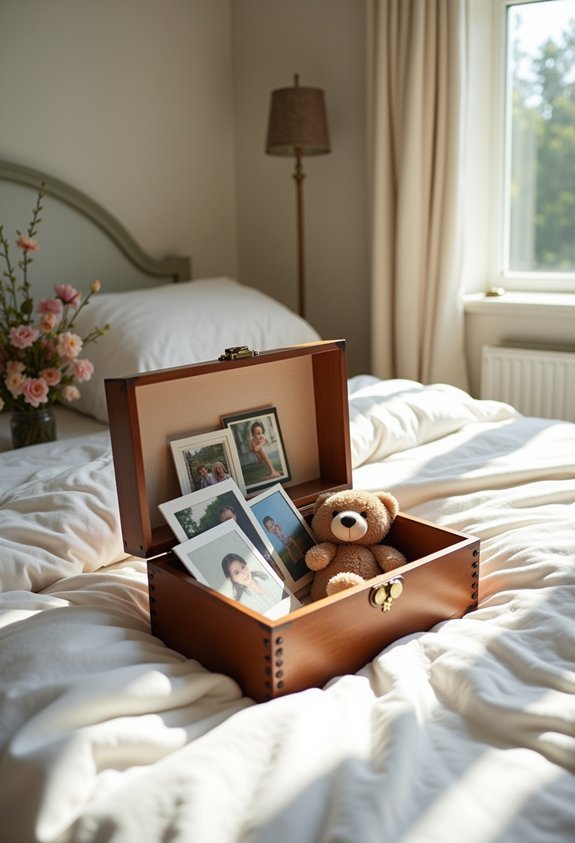
Even as you clear physical space, you don’t have to clear away the versions of yourself that lived those stories. Instead, let decluttering become a way to choose how you’ll carry your history forward.
Start by identifying memory markers that truly matter—objects that represent turning points, values, and personal milestones, not every event. Keep a small, defined number of these items and store them intentionally: a labeled box, a curated shelf, a single album.
As you release extras, say what that season gave you and why you’re ready to move on. Replace guilt with gratitude and a clear boundary: your past can inform you without crowding you.
You’re not discarding yourself; you’re designing space for who you’re becoming. Let that feel honoring, not loss.
Conclusion
When you treat decluttering as curating a personal archive, you don’t erase your past—you edit it with care. You keep what still supports who you are and gently release what doesn’t. Move room by room, question by question, like a careful historian cataloging a life. As you do, your space starts to feel lighter, kinder, and more honest—so your home reflects not just where you’ve been, but who you’re becoming.