How to Declutter Your Entry Way for a Calmer Home
If your entryway feels a bit “well‑lived in,” you’re not alone. You can turn that drop zone of shoes, bags, and mail into a calm, efficient space with a few focused steps. Start by deciding what truly belongs there, then clear everything out so you can reset with purpose. From defining zones to choosing the right storage, you’ll see how a few changes can transform how you feel each time you walk through the door…
Assess What Actually Belongs in Your Entryway
Before you move a single item, pause and define what your entryway is actually for: safe arrivals, quick departures, and a simple spot to transition between outside and inside.
Next, list your daily entryway essentials: shoes you wear often, one coat per person, keys, bags, umbrellas, maybe pet gear. Ask, “Do I reach for this here every week?” If not, it probably belongs elsewhere.
Assign clear zones: landing spot for keys and mail, hanging space for outerwear, parking for footwear and bags. Choose functional decor that supports these tasks—hooks, a small bench, a tray, a rug that hides dirt.
Keep surfaces dedicated to action, not storage. When every item has a purpose, your entryway immediately feels calmer. You know what stays and what goes.
Clear the Clutter and Create a Blank Slate
Now that you’ve decided what truly belongs in your entryway, it’s time to strip everything back so you can see the space clearly. Start by removing every loose item—shoes, bags, mail piles, décor pieces—and place them in a temporary holding area outside the doorway.
Clear your entryway completely to reveal the space, then rebuild only with what truly belongs.
Take down wall art and small furniture if you can move it safely. Vacuum or sweep, then wipe baseboards, doorframes, and any surfaces.
Pause and study the room’s proportions, light, and traffic flow; you’re resetting your entryway aesthetics from visual noise to calm intention. Notice where clutter naturally gathered; that’s where you’ll soon design smarter support.
Finally, imagine the space with minimalist decor only—clean lines, breathing room, and just enough warmth to feel welcoming. Let this blankness guide your decisions.
Define Zones for Shoes, Bags, Mail, and Keys
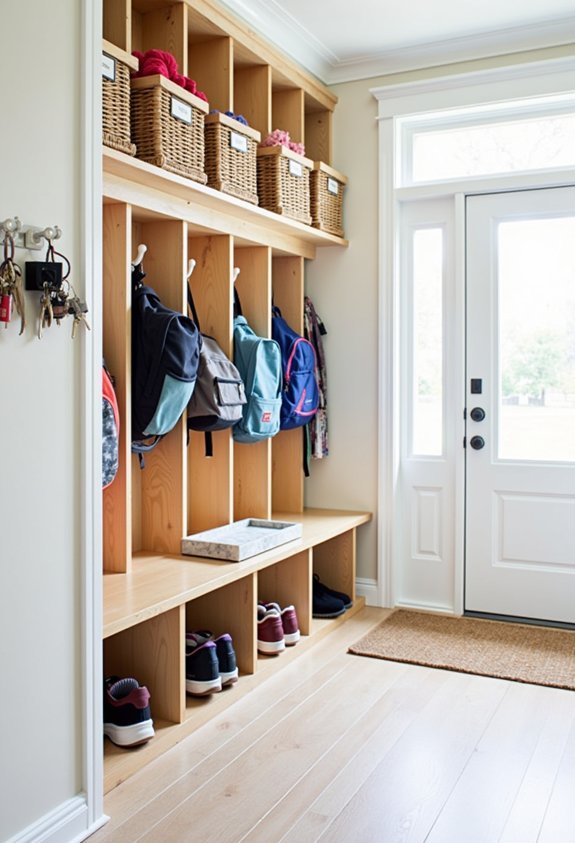
Start by assigning a specific, permanent “home” for each high-traffic category: shoes, bags, mail, and keys.
Picture your entry as four clear zones. First, designate a shoe organization area right where you naturally take footwear off. Next, choose a reliable bag storage spot you can reach the moment you walk in.
Then, decide where incoming mail will always land, and separate it immediately into “to handle” and “to file.” Finally, create a fixed place for keys that you can access without thinking.
Name each zone in your mind, or even label it. When everything has a predictable landing spot, you’ll stop dropping things randomly, reduce visual noise, and move through your entry quickly, calmly, and on autopilot.
This simple structure makes life feel lighter.
Choose Storage That Fits Your Space and Lifestyle
Once your zones are clear, match them with storage that works for how you really live and the space you actually have.
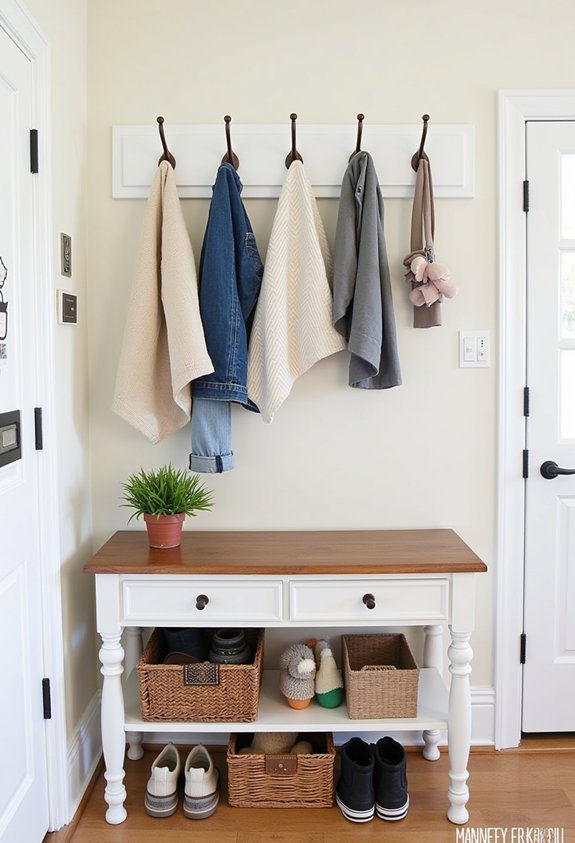
Start by measuring walls, floor area, and door swing so you don’t buy bulky pieces that crowd the entry. Choose storage solutions that serve multiple purposes: a bench with hidden compartments, a slim console with drawers, or wall-mounted hooks and rails.
Think through your lifestyle needs. Do you rush out daily with kids, pets, or workout gear? Prioritize open, grab-and-go spots. Live alone or travel light? You can use smaller, closed containers.
Label baskets and drawers so everyone knows where items go. Test your setup for a week, then adjust what isn’t working. Keep only what fits comfortably; let overflow signal reevaluation.
Tackle Shoes With Smart, Space-Saving Solutions
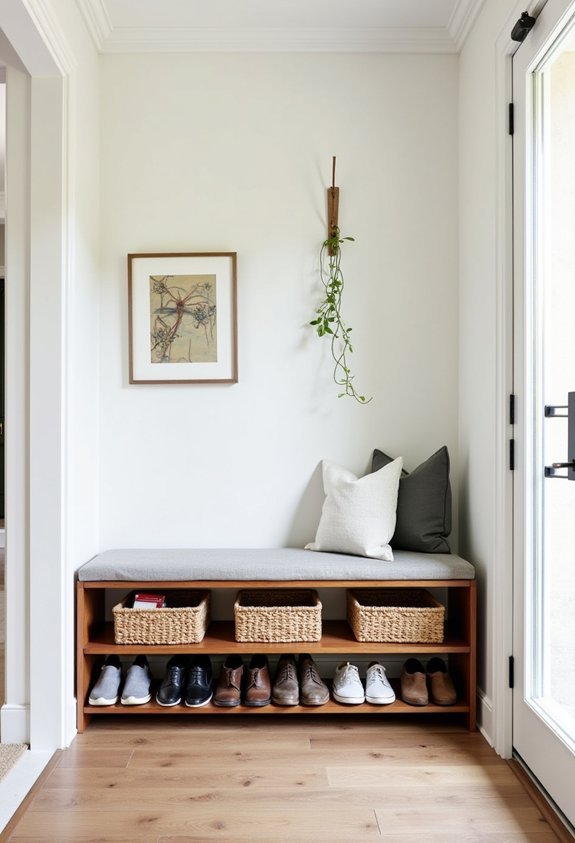
Few things clutter an entry faster than shoes scattered by the door, so give them a clear, efficient home.
Start by counting how many pairs actually live here each day, then set a firm limit. Choose shoe organizers that match that number: a slim vertical rack for tight spaces, a low bench with cubbies for households that sit to remove shoes.
Assign each person a specific row or bin. Use boot trays for wet boots and muddy sneakers; tuck one under the bench and another just inside the door for backup.
Add a small basket for quick toss-in sandals or kid shoes. Finally, label sections so everyone can reset the area in seconds.
When it’s full, return extra pairs to bedroom closets immediately instead.
Create a Drop Zone for Mail, Paperwork, and Small Items
With shoes contained, you can turn to the other big clutter culprit: paper and tiny everyday items that land by the door.
Once shoes are tamed, tackle the real entryway culprit: drifting papers and pocket-size daily clutter
Designate a small table, shelf, or wall-mounted organizer as your official drop zone. Use a tray or shallow basket for keys, sunglasses, and loose change so they stop wandering.
Add labeled vertical files or a desktop sorter for simple mail organization: “Inbox,” “To Pay,” and “To File.” Commit to a quick daily sort, then schedule a weekly session for deeper paperwork management.
Keep the surface clear except for these tools so the system stays obvious, easy, and calm. Place a small wastebasket and recycling bin nearby, letting you immediately toss junk mail and packaging before it spreads inside through the rest of.
Streamline Outerwear, Hats, and Seasonal Gear
You may also like:
Too many coats, bags, and hats competing for limited hooks can turn your entry into a tangled wall of fabric.
Start by pulling every jacket, scarf, and cap into one spot. Sort by person, then by season. Keep only what fits, feels good, and gets worn weekly. Donate duplicates and outgrown pieces.
For smarter outerwear organization, assign each family member a clearly defined section on the rod or in a cubby. Limit everyday options to two coats, one lightweight layer, and a single bag.
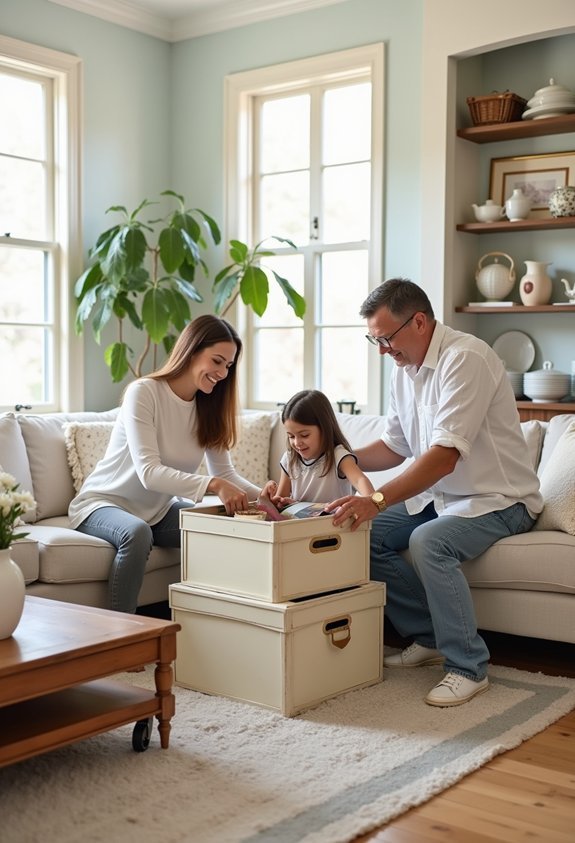
Move seldom‑used items to labeled bins or an extra closet for seasonal storage. Store bulky snow gear, umbrellas, and sports equipment together so you can grab them quickly, then return them to their place without clutter creeping back in again.
Add Hooks, Baskets, and Trays for Easy Everyday Use
Once you’ve pared things down, make your entry work harder by adding simple catch‑all stations right where you land.
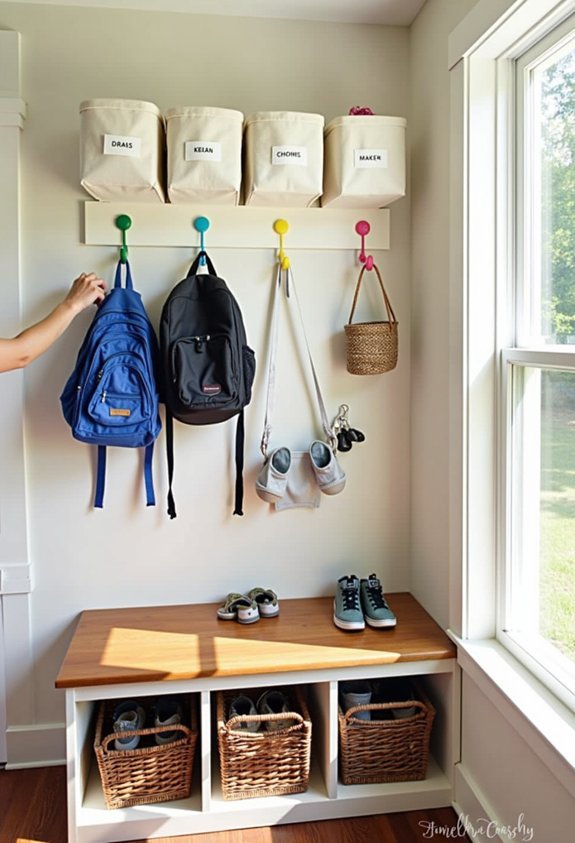
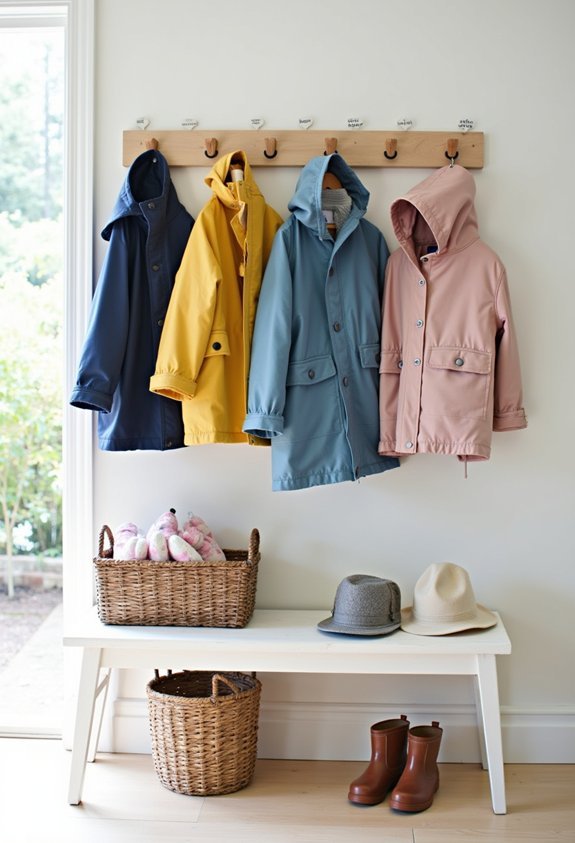
Start with the wall: choose hook options that suit your routine—one hook per family member for coats and bags, plus extra for guests. Mount them at reachable heights so everyone can use them quickly.
Give every person their own hook so coats and bags land instantly, not on the floor.
Next, place a sturdy tray or shallow bin by the door for keys, wallets, and sunglasses; empty your pockets there every time you come home.
Add a row of baskets beneath a bench or console. Assign clear purposes: one for shoes, one for mail, one for reusable bags.
Test a few basket styles to see which sizes and shapes actually contain your daily clutter and keep the floor open and manageable.
Style Your Entryway to Feel Calm and Welcoming
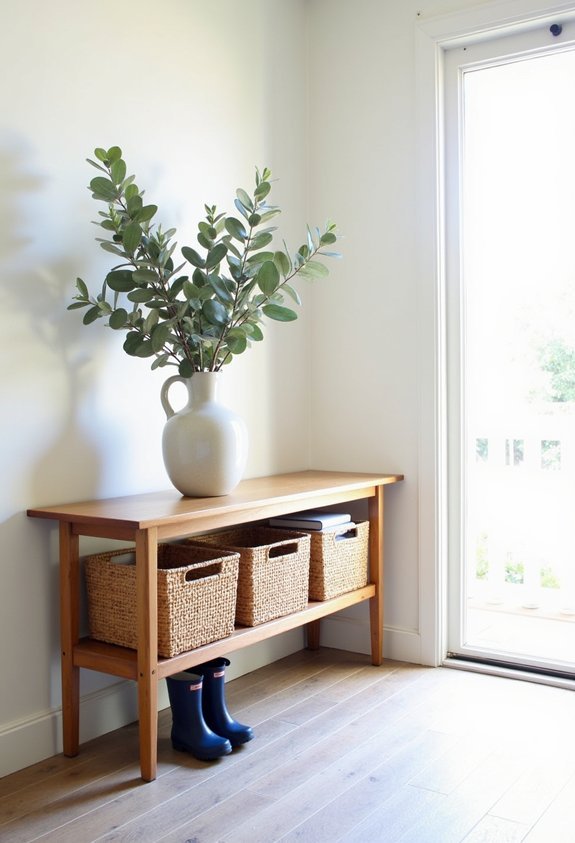
Your entry now works better; the next step is helping it feel better. Start with color. Choose two or three calming colors you already use at home, then repeat them in your rug, art, and storage pieces so everything looks intentional.
Add one soft light source, like a small table lamp or wall sconce, to keep the space warm in the evening. Next, choose streamlined entryway decor: a simple mirror, one small plant, and a limited number of framed photos or artwork.
Keep surfaces mostly clear so negative space balances what you display. Finally, add texture with a woven basket, a natural doormat, or a soft runner to make the space feel grounded and welcoming. Use scent sparingly so the first impression stays gentle.
Set Simple Habits to Keep Your Entryway Tidy Long-Term
Although a refreshed entryway feels great right away, it’ll only stay that way if you back it up with a few simple habits. Start by building tiny daily routines: hang your keys, drop mail in one tray, and return shoes to their spot the moment you walk in.
Set a two-minute reset timer each night to clear surfaces and rehome stray items.
Adopt a minimalist mindset at the door. Decide how many coats, bags, and pairs of shoes may live there, and stick to that limit.
Once a week, scan for clutter-creep and remove anything that doesn’t truly belong. Post a short checklist by the door so everyone in your home can follow the same system effortlessly, day after day without extra thought required.
Conclusion
When you declutter your entryway step by step, you turn daily chaos into calm. First, decide what truly belongs there. Then clear surfaces, assign zones, and add storage that fits how you live. Imagine coming home: shoes slide into a rack, your bag hangs on a hook, keys land in a tray, mail goes in one basket. You breathe easier, move smoother, and know exactly where everything goes—every single day.