The Decluttering Guide for People Who Inherited Too Much
What happens when the things you inherit start to feel heavier than the loss itself? You’re not just sorting objects; you’re navigating grief, guilt, and family expectations all at once. Instead of rushing, you can use a clear, step‑by‑step approach that protects your energy and your memories. With simple categories, gentle timelines, and a way to honor what truly matters, you’ll discover that letting go isn’t about losing them—it’s about…
Understanding Why Inherited Clutter Feels So Overwhelming

Even if you’re usually organized, inherited items can feel uniquely heavy because they carry grief, memories, and expectations all at once. You’re not just sorting objects; you’re confronting identities, roles, and family stories. Each item triggers emotional attachment, so a simple yes-or-no choice suddenly feels loaded with meaning.
Inherited items aren’t just objects; they’re grief, memories, and family expectations compressed into every decision
You may worry that letting go equals disrespect or forgetting, so you postpone choices and pile things up instead.
On top of that, the sheer volume creates decision fatigue. Every box asks, “Keep, donate, or discard?” over and over. Your brain tires, your standards wobble, and you second-guess yourself.
Understanding this mental load helps you name what’s happening, lower your self-criticism, and approach inherited clutter with smaller steps and clearer boundaries. That way, decisions feel safer.
Making Space for Grief Before You Make Space in Your Home
Before you decide what stays or goes, you need room to grieve the person, not just manage their things.
Start by pausing the urge to sort. Notice what rises when you see each box—sadness, anger, relief, numbness. Name it; that’s grief processing in real time.
Give yourself simple rituals: light a candle, play their favorite song, or tell one story aloud before opening anything. Allow tears, silence, or even laughter as emotional release, not a problem to fix.
If a memory feels too sharp, step back, breathe, and ground yourself by feeling your feet on the floor. You’re not behind; you’re honoring a relationship.
When your heart has a bit more space, decisions about objects become clearer. You can trust that slower still counts.
Setting Realistic Goals and Gentle Timelines for Sorting
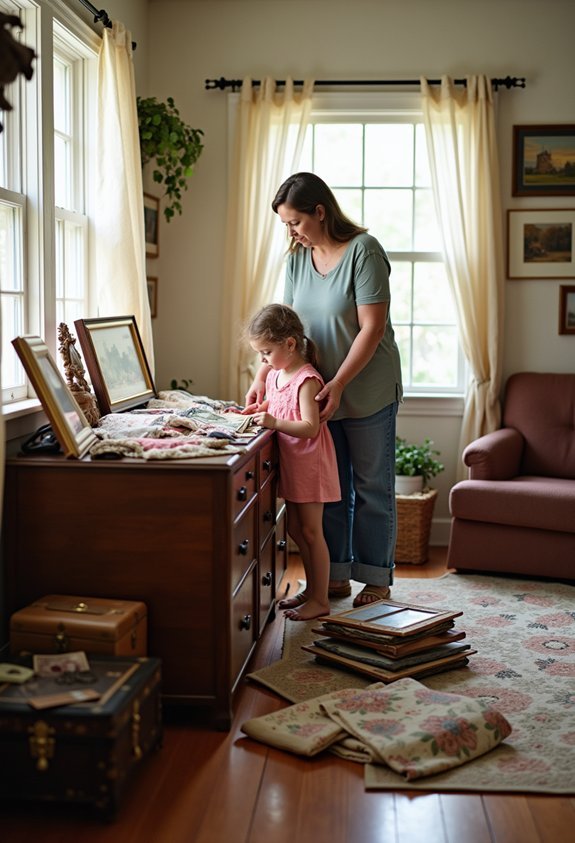
Although grief doesn’t follow a calendar, your sorting process can still have a kind structure that supports you instead of overwhelms you.
Start by matching your energy, not your to‑do list. Ask, “How many minutes can I give this today without crashing afterward?” Maybe it’s ten; maybe it’s sixty. That answer becomes your session limit.
Grief‑sorting works best when you honor your capacity, not your calendar or anyone else’s expectations.
Create achievable goals that are specific and small: one drawer, one shelf, or one box, not “the whole bedroom.”
Pair every goal with realistic timelines, such as “three evenings this week” rather than “finish everything by Saturday.”
Schedule breaks before you think you need them. When you complete a session, stop, breathe, drink water, and deliberately name what you accomplished, however modest it seems, for you today.
Creating Simple Categories to Triage a Houseful of Items
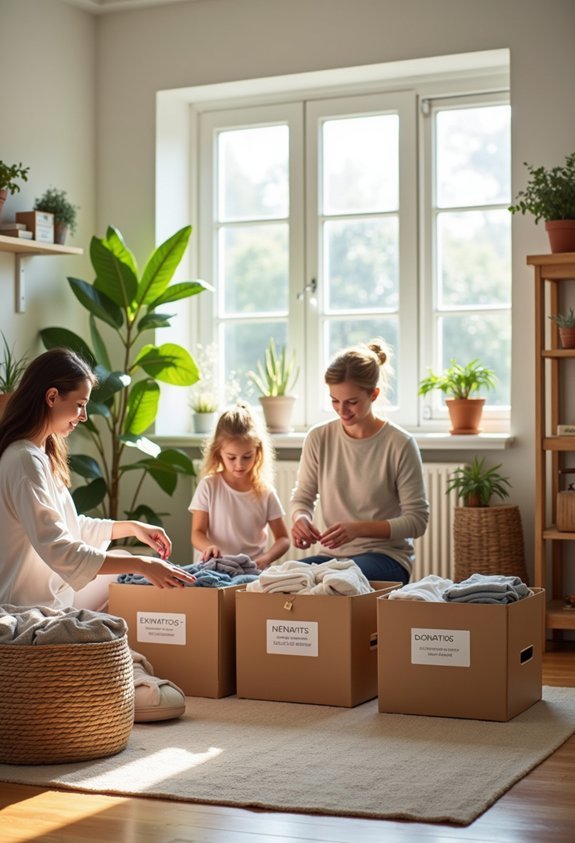
Once you’ve set gentle limits for your sorting sessions, you can make the work simpler by giving every item a clear, temporary “home.” Instead of agonizing over each object, you’ll sort quickly into a few broad categories such as: Keep (for now), Offer to family, Donate, Sell, Recycle/Trash, and Not sure yet.
Place labeled bins or sticky notes in each room so you can move steadily without backtracking.
Use simple sorting strategies: pick one surface, one box, or one drawer and touch each item only once. Ask, “Which container does this belong in today?” not “What’s its forever fate?”
These category examples reduce pressure, prevent decision fatigue, and let you pause anytime without losing track of what you’ve already processed from this inherited collection.
How to Decide What to Keep for Memory, Not for Guilt

How do you know if you’re keeping something because it truly warms your heart, or because you feel you’d be a bad person if you let it go?
Start by noticing your body’s response. Hold the item; if you feel comfort, curiosity, or a clear story surfacing, it likely earns a place as one of your meaningful keepsakes.
If you feel dread, heaviness, or obligation, you’re in memory vs. guilt territory.
Ask three questions:
Do I love it?
> Do I love it enough to give it space in my life right now?
Do I use it?
Does it reflect who I’m now, not just who they were?
If it’s only preserving guilt, photograph it, write a short memory, and release the object.
You’re honoring the relationship, not every possession. That choice is compassionate to you and them.
Smart Ways to Share, Donate, or Sell Belongings You Don’t Need
Now that you’ve sorted what truly holds meaning from what you kept out of guilt, the next step is deciding where those “no longer needed” items can do the most good.
Start by asking who could use this now—family or strangers—and match each item to its best next home.
1. Share intentionally. Use sharing platforms and community resources to offer furniture, tools, or medical equipment.
Involve relatives; family involvement can prevent conflict and spread comfort.
2. Donate strategically. Research donation options that align with your loved one’s values—faith groups, shelters, programs, libraries—so their legacy supports causes they’d recognize.
3. Sell thoughtfully. Choose selling strategies and online marketplaces that fit your energy: local pick‑up for bulky pieces, niche sites for collectibles, apps for smaller items.
You may also like:


Dealing With Paperwork, Photos, and Sentimental Collections
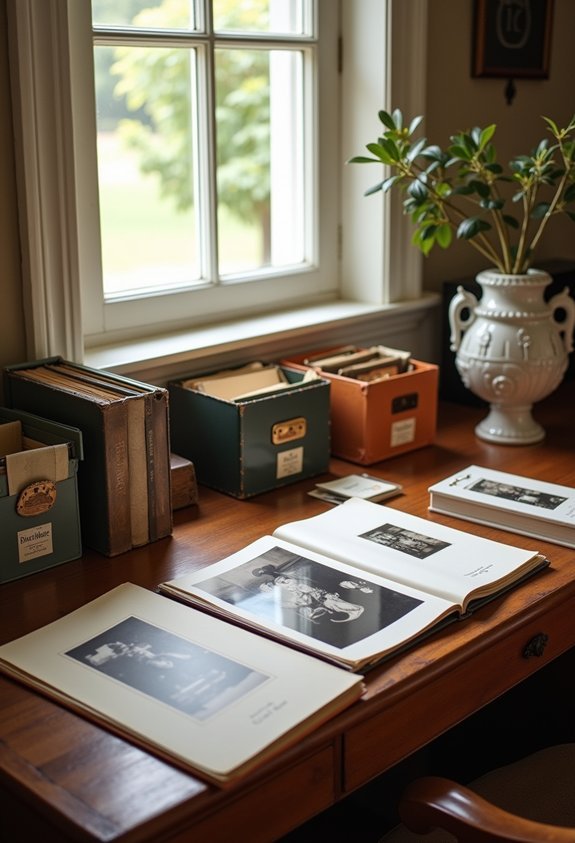
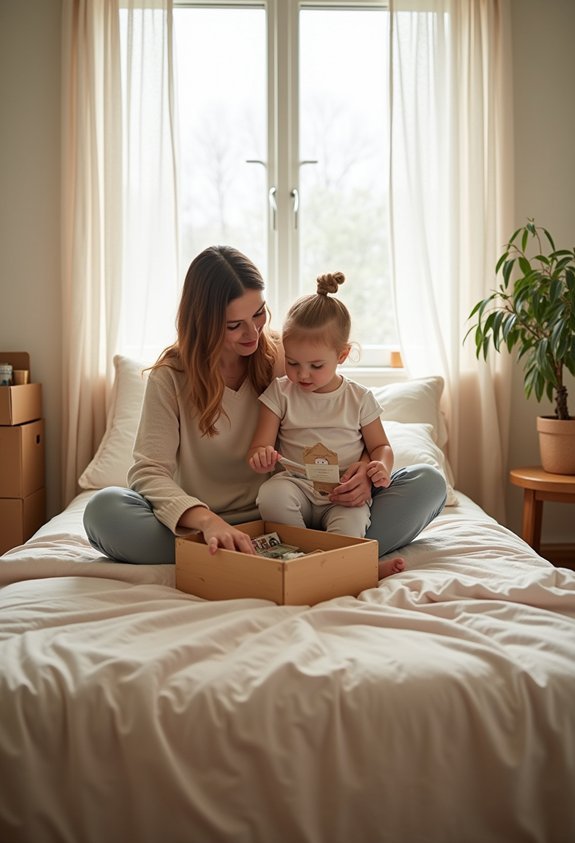
Although furniture and everyday items are easier to release, paperwork, photos, and sentimental collections often feel like the emotional core of what you’ve inherited.
Start with urgent documents: wills, deeds, insurance, tax records. Create three folders—“Keep,” “Scan,” “Shred”—to establish simple paperwork organization and reduce overwhelm. Label clearly and schedule a specific day to finish.
For photos, sort quickly by people and era, not perfection. Choose the best images, then use digital scanning for long‑term photo preservation. Add names and dates while you still recognize faces.
For sentimental collections—teacups, figurines, recipe cards—pick a small boundary: one box, one shelf, one album. Keep representative favorites, photograph the rest, and let them go knowing the stories, not the volume, carry your connection.
This process honors their memory.
Navigating Family Dynamics and Conflicts Over Stuff
Family conflicts over inherited belongings can surface old wounds just when you’re already emotionally drained. You’re not just dividing objects; you’re navigating identity, loyalty, and grief.
Start by slowing conversations down. Name the shared goal: honoring the person who died, not “winning” the stuff.
- Clarify expectations early. Share what matters most to you and ask others the same. Transparent family communication prevents assumptions and keeps negotiations grounded in facts, not guesses.
- Create simple ground rules. Agree on timelines, what counts as fair, and how you’ll document decisions. Written notes reduce later arguments and support calm conflict resolution.
- Separate decisions from disputes. When emotions spike, pause, park the issue, and return later. You protect relationships while still making steady progress for everyone.
When to Call in Professional Help—and What to Expect

When the emotional weight and sheer volume of inherited items start to stall every decision, it’s a sign you may benefit from professional help. A clear indicator is repeated sorting without progress—boxes move, but nothing actually leaves. You may also notice rising anxiety, family tension, or total avoidance of certain rooms.
Professional organizers bring neutral guidance, structure, and tested decluttering strategies. They’ll start with a walkthrough, ask about your timeline, legal constraints, and emotional hot spots, then create a phased plan: immediate trash, easy donations, uncertain “review later” items, and clear keepers.
During sessions, they’ll keep you moving, handle logistics with charities or haulers, and document key decisions so you don’t revisit them. You still choose; they manage process and pace that feel sustainable.
Building a Home That Honors Your Loved One and Supports Your Life Now
As the piles shrink and decisions get made, the real goal comes into focus: creating a home that carries your loved one’s presence without freezing your life in the past.
You’re not curating a museum; you’re designing workable home decor that holds meaning and leaves room to breathe.
- Identify one or two anchor pieces—a chair, painting, or quilt—that feel most like them. Place these where you’ll see and use them daily.
- Create a small memory tribute: a shelf or tray with a photo, one object, and perhaps a written story or recipe.
- Let the rest support your current life: donate duplicates, repurpose useful items, and release what triggers dread rather than warmth.
Revisiting these choices yearly keeps your space aligned with evolving needs beautifully.
Conclusion
You’re not just clearing rooms; you’re clearing weight, clarifying values, and choosing how love lives on. You pause to grieve, you sort with intention, you keep with purpose, you let go with compassion. Step by step, you set goals, create categories, and ask for help when you need it. As you edit what stays and release what doesn’t, you build a home that honors their story and fully supports your own—today, and tomorrow.