Why Decluttering Is an Act of Self-Care
When life feels loud, when your thoughts feel scattered, when your body never quite relaxes, your space often tells the same story. You’re not “weak” for feeling overwhelmed by clutter; your brain literally works harder in a crowded environment, which can heighten stress and numb your sense of calm. Decluttering isn’t about perfection or getting rid of everything—it’s about caring for your nervous system in quiet, practical ways that might surprise you…
How Clutter Impacts Your Mind and Emotions

Even when you’ve learned to ignore it, clutter quietly shapes how your mind and emotions function. Each pile your eyes scan becomes one more task your brain tracks. Research on attention shows that visual excess forces your nervous system to work harder, increasing mental overload and irritability. You may feel “on edge” at home without knowing why.
Clutter can also carry emotional heaviness. Items linked to unfinished projects, past relationships, or difficult seasons can trigger shame, grief, or anxiety when you see them.
If you’ve survived trauma, crowded spaces may heighten your sense of vigilance, because your body’s already primed to notice potential threats. None of this means you’re failing; it’s your brain doing its best to cope with constant signals coming from your surroundings.
Letting Go as a Practice of Emotional Release
When you recognize how heavily clutter presses on your mind and body, letting things go stops being a chore and starts becoming a form of emotional care. You’re not just discarding objects; you’re honoring the stories and pain they carry.
Letting go of clutter becomes less a task and more a quiet act of emotional care
Research on memory and trauma shows that physical items can reinforce emotional attachment, keeping you looped in past experiences. As you sort, you can pause, notice what surfaces, and name the feeling: grief, guilt, hope, relief.
This mindful attention turns decluttering into therapeutic release rather than self-criticism. You choose what supports your life now, and you gently thank what doesn’t.
Moving at your own pace, you build trust with yourself, proving you can face hard feelings and still stay safe, more steady, present, compassionate.
Creating a Home That Supports Your Well-Being
As you release what no longer serves you, your home can shift from a source of stress into a place that actively supports your nervous system, routines, and relationships.
Research shows that chaotic rooms can raise cortisol, while orderly, predictable surroundings help your body feel safer. You’re not aiming for perfection; you’re shaping a home environment that’s kinder to the version of you who wakes up, eats, rests, and reconnects there.
Start small: clear one surface you use daily, choose calming lighting, and keep necessities easy to reach.
Build supportive spaces around your real needs—maybe a soft corner for decompression, a basket by the door for transitions, or a simple, steady bedtime setup.
Each intentional change tells your brain, “You’re allowed to exhale here.”
Decluttering as a Path to Mental Clarity and Focus
Although decluttering is often framed as a purely aesthetic project, it’s also a powerful way to clear mental bandwidth and sharpen your focus. Neuroscience shows that visual clutter competes for your attention, raising cognitive load and stress hormones. When you reduce excess items, you lower that background “noise,” making it easier to concentrate, relax, and problem-solve.
You might notice that in a tidier room, your breathing slows and your thoughts feel less scattered. That’s not in your head; it’s your nervous system registering increased safety and predictability.
Through mindful organization, you choose what earns space in your daily field of vision, aligning your surroundings with current priorities. Over time, your home becomes a focused environment that quietly supports clarity, creativity, and follow-through each day.
Simple, Compassionate Strategies to Start Letting Go
Clearing mental space through decluttering sounds great in theory, but facing real objects and real memories can feel overwhelming, especially if you’ve lived through stress, loss, or instability.
You may also like:
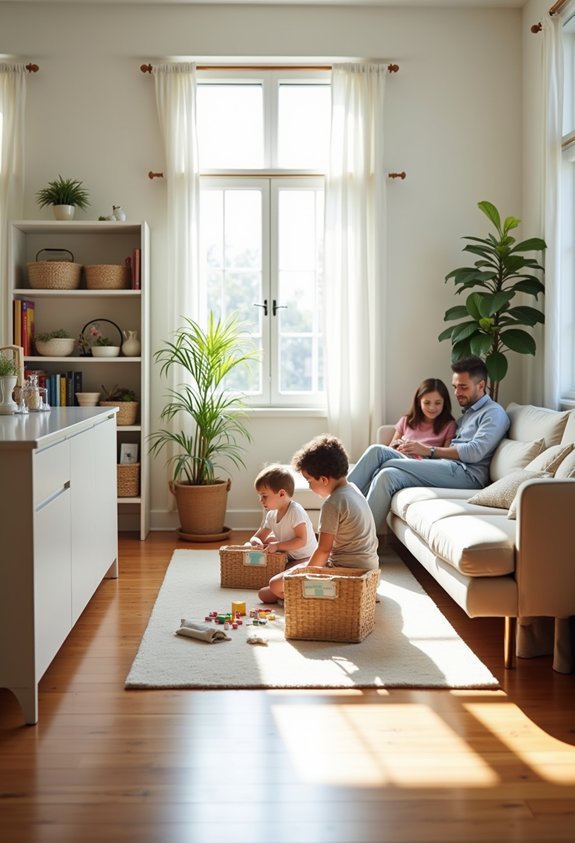




Start by choosing one tiny, emotionally low‑stakes area: a single drawer, your car door pocket, your wallet. Set a short timer, and give yourself permission to stop when it rings.
Begin with one small, low-pressure space and a short timer; stop gently when the alarm sounds.
As you sort, notice sensations in your body; if your heart races or your chest tightens, pause, breathe slowly, and ground yourself by naming five things you see.
When an item feels loaded with meaning, you don’t have to decide quickly. Ask, “Does this support my current season of life, my mindful minimalism, and my intentional living?”
Let your nervous system, not perfectionism, set the pace.
Maintaining a Calmer Space With Sustainable Habits
How do you keep your space calm after that first wave of decluttering energy passes? You protect your nervous system with small, repeatable habits instead of occasional exhausting overhauls.
Choose one simple routine—like a five-minute evening reset—and link it to something you already do, such as brushing your teeth. Research on habit formation shows this “anchoring” makes change more sustainable.
Practice sustainable organization by giving every item a clear home, then returning it there once a day. When new things tempt you, pause and use mindful consumption: ask, “Where will this live? What’ll it replace?”
This gentle pause creates choice where there used to be urgency, helping you maintain a calmer space without rigid rules or perfectionism, and supporting your healing over time.
Conclusion
When you declutter with care, you’re not just clearing shelves—you’re gently tending to your nervous system. Each item you release lightens your cognitive load, which research links to reduced stress and improved focus. You’re allowed to move slowly, honor memories, and keep what feels safe. Over time, your home becomes less like a storage unit and more like a soft, steady heartbeat—supporting you, calming you, and reminding you that you deserve ease in your everyday life.