How Decluttering Became My Unexpected Therapy
Studies suggest that more than 50% of people report increased stress when their home feels cluttered, but you might not realize how directly your environment impacts your mood, focus, and even sleep. As you begin sorting your belongings, you aren’t just managing objects—you’re confronting unresolved emotions, cognitive distortions, and old narratives. When you treat decluttering as a therapeutic intervention rather than a chore, something unexpected starts to happen…
Recognizing the Hidden Weight of My Stuff

Every object you own carries a measurable cognitive and emotional load, even when it’s neatly stacked on a shelf. You may not label it as stress, but your nervous system does. Visual excess increases attentional demands, raises cortisol, and fragments working memory. You scan, sort, and inhibit responses every time you walk through a room.
Clinically, this points to emotional burden and material attachment. Items function as unfinished tasks, safety cues, or identity props. The more roles your belongings play, the more vigilance your brain maintains.
To treat this, you first observe. Track which spaces you avoid, where you lose time, when you feel bodily tension. These data help you target high‑load zones and design small, testable decluttering interventions you can sustain over time.
The Moment Clutter Started To Feel Emotional
Although clutter often appears neutral at first, you usually recognize it’s become emotional when your reactions shift from mild annoyance to shame, grief, or anxiety tied to specific items or spaces.
Clinically, you’re observing an activation of unresolved loss, guilt, or fear each time you see that pile or open that closet. Your nervous system starts coding objects as cues, not things, so a broken mug can trigger the same stress response as an argument or a breakup. This is the point where emotional attachment stops feeling comforting and starts feeling constricting.
You may notice avoidance behaviors—closing doors, stacking more, telling yourself you’ll deal with it later—classic markers of emotional overload.
In psychological terms, those cluttered memories signal an environment no longer supporting recovery.
Sorting Through Memories, Not Just Objects

When you start sorting, you’re not just handling belongings—you’re initiating exposure to stored emotional material. Each item functions like a cue: photographs, gifts, paperwork all act as memory triggers that activate specific thoughts, sensations, and narratives. You’re essentially conducting a structured exposure exercise in your own home.
Decluttering isn’t just organizing objects; it’s gently exposing yourself to the stories your belongings still hold
Notice your physiological responses: tight chest, shallow breathing, racing thoughts. Label them as anxiety, grief, or anger rather than “being overwhelmed.” This diagnostic naming creates psychological distance and increases regulation.
You can then use basic treatment tools: slow exhale breathing, grounding with your five senses, and time-limited decision windows. Instead of avoiding certain boxes, you approach them gradually, in short, planned intervals.
Over time, your brain relearns that these emotional attachments are tolerable, not dangerous after all.
Letting Go of Guilt, “What Ifs,” and Someday Items
Because clutter often persists for psychological rather than practical reasons, “someday” items and guilt-laden possessions typically signal cognitive distortions and unresolved grief more than genuine future need.
When you keep unused gifts, expensive mistakes, or aspirational hobbies, you may be reinforcing all-or-nothing thinking, sunk-cost bias, and shame-based self-evaluation.
Start by naming the distortion: “I’m afraid letting this go means I failed.” Then test it: Did owning it ever make that belief untrue? If not, you can practice guilt release as an exposure exercise—disposing of one item and tolerating the discomfort.
Track your anxiety before and after. Most people observe rapid habituation.
Reframe discarded objects as reclaimed bandwidth for realistic future possibilities, not abandoned identities. Each decision builds mastery, agency, and evidence that you’re safe.
How a Cleaner Space Changed My Mood and Mindset

You may also like:





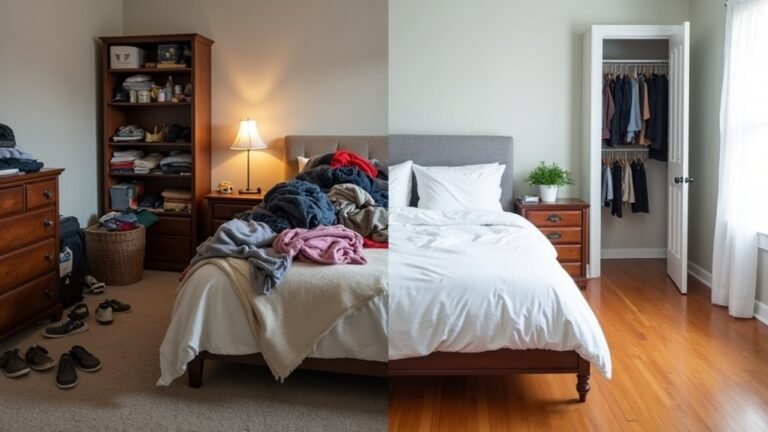
As your environment becomes less visually chaotic, your nervous system often shifts out of a chronic low-grade threat response and into a more regulated baseline, which changes how you think and feel.
You notice fewer cognitive intrusions, less irritability, and reduced decision fatigue. A clearer room decreases sensory load, so your brain can reallocate resources from constant monitoring to problem-solving and emotional regulation.
Simple cleaning rituals function like behavioral activation: you initiate a concrete task, complete it, then receive immediate visual feedback, which reinforces efficacy and stabilizes mood.
Over time, the “space energy” feels calmer, and you internalize that calm as a baseline state. You sleep more consistently, transition between tasks more smoothly, and access reflective thinking instead of automatic, stress-driven reactions and resilience.
Boundaries, Priorities, and the Power of Saying No
A calmer, less cluttered space doesn’t just soothe your nervous system; it exposes the next therapeutic task—learning to protect that order with clear limits.
You start noticing how overcommitting and impulsive purchases function as triggers, recreating overwhelm. Here, boundaries setting becomes a clinical intervention, not a personality flaw.
You assess requests, invitations, and “bargains” like a clinician doing triage: Does this align with my treatment goals or exacerbate symptoms of stress, resentment, and decision fatigue?
Through deliberate priority evaluation, you map what genuinely matters—sleep, recovery, meaningful relationships, finite energy.
Then you practice saying no as exposure work: tolerating guilt, fear of disappointing others, or missing out. Each no reinforces environmental control, reduces cognitive load, and stabilizes your emotional baseline.
This is relapse prevention work.
Building New Habits to Keep Chaos From Creeping Back

Once you’ve cleared space and installed boundaries, the clinical task shifts from acute intervention to maintenance planning: building small, repeatable habits that prevent relapse into chaos.
You’re not “bad at organizing”; you’re retraining executive functioning. Start by operationalizing one or two behaviors: ten-minute nightly reset, mail processed on arrival, laundry completed same day. Define clear cues, actions, and rewards so your brain can automate them.
Use habit tracking as a simple adherence measure, not a moral scorecard. Visible checkmarks provide feedback loops that strengthen neural pathways.
Track habits as data, not judgment—each checkmark quietly rewires your brain toward stability.
When you miss a day, conduct a brief, blame-free review: what barrier showed up, what micro-adjustment will you test tomorrow? That’s routine reinforcement—systematically pairing tiny successes with stability until order feels baseline, not exceptional, in your daily environment.
What Decluttering Taught Me About Caring for Myself
Habits don’t just keep your space orderly; they expose how you actually care for yourself under stress. When you scan a cluttered surface now, you don’t label it “messy”; you assess it as data. Piles signal avoidance, fatigue, or perfectionism. Clear zones indicate effective boundaries and realistic standards.
This diagnostic lens increases emotional awareness: you notice tightness in your chest, racing thoughts, or numb scrolling before you pick something up. Decluttering becomes a treatment protocol, not a cosmetic project. You schedule small sessions, pair them with self care rituals like breathing or stretching, and monitor mood shifts before and after.
Over time, your environment turns into a feedback loop, helping you adjust coping skills instead of silently accumulating overwhelm, in body, mind, and time.
Conclusion
You don’t just clear shelves; you reduce cognitive load. Studies show visual clutter can cut working memory performance by up to 20%, like trying to think through a messy browser with too many tabs open. When you discard one “someday” object, you interrupt avoidance, challenge guilt-based beliefs, and practice behavioral activation. Treat your home as an ongoing intervention plan: regular, small decluttering sessions that stabilize mood, protect your bandwidth, and signal that your needs matter.