How I Finally Let Go of My Wedding Dress
Letting go of your wedding dress starts with recognizing that keeping it doesn’t preserve your memories—those live in you, not in fabric tucked away in a closet. The guilt you feel when you see that garment bag? That’s the weight of emotional burden, not love or respect for your past. When you’re ready, you’ll know—clarity often comes quietly, without drama. You might donate it, repurpose the fabric into something new, or simply drive it to a donation center and feel unexpected relief wash over you. The freedom that follows isn’t about erasing what was; it’s about making space for what’s next.
Key Takeaways
- Recognizing the dress symbolized emotional burden rather than cherished memories enabled the decision to let go.
- Overcoming guilt required understanding that memories reside within people, not in physical objects like dresses.
- Finding the right disposal method—donation, repurposing, or creative transformation—provided meaningful closure and reduced decision paralysis.
- Joining online support communities offered validation and demonstrated that letting go follows unique, personal timelines.
- The act of physically removing the dress created unexpected emotional freedom and mental clarity.
The Weight of What We Keep
When you open that closet door and catch a glimpse of white fabric tucked in the back, you probably feel a weird mix of things—guilt, nostalgia, maybe even a little panic about the storage fee you’ve been paying for eight years.
Here’s the truth: that dress isn’t just taking up physical space in your closet. It’s carrying emotional baggage too.
Every time you squeeze past it to grab your winter coat, there’s this tiny weight on your shoulders. The dress becomes a symbol of who you were supposed to be—or who you thought you’d stay.
That visual excess isn’t just annoying—it’s quietly putting your nervous system on edge, creating a low-level stress you might not even consciously register.
But here’s what nobody tells you: keeping something doesn’t preserve the memory. The love, the joy, the terrible DJ? Those live in you, not in twenty pounds of tulle.
Every Excuse I Made to Hold On
“But I spent so much money on it!” That’s the emotional attachment talking, convincing you that keeping it somehow justifies the cost.
Here’s the truth: it doesn’t.
Then there are the practical considerations we hide behind. “I don’t have time to deal with it.”
Or, “What if I need it for… something?” (Spoiler: you won’t.)
We create these elaborate justifications because letting go feels like losing the memory itself.
But you’re not throwing away your marriage.
You’re just releasing a dress.
The love? The commitment? Those stay with you—no preservation box required.
Each item in our lives plays a specific role—representing security, status, or unfinished goals—and recognizing what your wedding dress symbolizes is the first step toward letting it go.
When Sentimentality Becomes Suffocation

There’s a fine line between cherishing memories and letting them take up all your oxygen.
Your sentimental attachment to that dress? It’s valid—but when does keeping something “just because” become an emotional burden you’re lugging around?
Here’s the thing: if you feel guilty every time you see the storage box, or if you’re paying for climate-controlled space you can’t afford, that’s not nostalgia anymore. That’s suffocation.
The memories aren’t *in* the dress. They’re in you.
I know, I know—it feels wrong to let go. Like you’re somehow betraying your younger self or dismissing what that day meant.
But holding onto fabric doesn’t make the love more real.
Every object you keep demands space, maintenance, and emotional energy—and sometimes the cost isn’t worth the comfort.
Sometimes the kindest thing you can do is release what’s weighing you down.
The Closet That Forced My Hand
For me, the turning point wasn’t some profound emotional breakthrough—it was my actual closet staging a revolt.
Here’s what finally pushed me over the edge:
- My winter coats were literally crushed against the wall, wrinkled beyond recognition.
- I couldn’t find my favorite jeans without excavating through layers of forgotten fabric.
- The dress box took up prime real estate while I wore the same five outfits.
The closet clutter became impossible to ignore.
Every morning felt like a treasure hunt—and not the fun kind.
That’s when it hit me: my emotional attachment to this dress was making my daily life harder.
Not metaphorically harder, actually harder.
I realized I was experiencing decision fatigue every single morning, exhausting myself before the day even began.
Sometimes the universe doesn’t whisper—it shoves your face into a overstuffed closet.
Confronting the Woman I Used to Be
Nostalgia hit me like a freight train the moment I unzipped that garment bag.
There she was—the woman who believed in forever, who’d spent three months obsessing over ivory versus champagne white.
That version of me felt like a stranger now.
Here’s the thing about holding onto wedding dresses: you’re not just keeping fabric and beading.
You’re clutching an entire identity that doesn’t fit anymore—literally and figuratively (because let’s be honest, stress eating is real).
This self identity shift wasn’t failure.
It was growth.
I needed emotional detachment from who I’d been, not because she was wrong, but because I’d evolved.
The dress represented a beautiful chapter, sure.
But my story wasn’t finished.
Keeping it meant carrying unprocessed emotions that my body registered as stress every time I saw that closet door.
And neither is yours.
What I Learned From Other Divorcées
When I finally worked up the courage to post about my dress dilemma in an online divorce support group, I braced myself for judgment—but instead got forty-three responses in two hours.
I braced myself for judgment from strangers online—but found forty-three compassionate voices instead.
Their shared experiences—raw, honest, and sometimes hilarious—taught me I wasn’t alone in this weird limbo.
These growth stories showed me that healing doesn’t follow a rulebook.
What they taught me:
- One woman turned hers into christening gowns for her nieces (talk about a plot twist)
- Another wore hers to paint her new apartment because why not reclaim the power?
- Most said the actual letting-go moment felt anticlimactic—almost boring after all that buildup
Turns out, everyone’s timeline looks different.
And that’s perfectly okay.
Choosing to let go when the time felt right—rather than forcing it on someone else’s schedule—made the decision feel like intentional spending for my emotional wellbeing instead of another item collecting dust in my closet.
The Day I Finally Made the Decision
Three months after reading those forty-three responses, I woke up on a random Tuesday and just *knew*.
No lightning bolt. No dramatic music. Just—clarity.
That decision moment felt weirdly anticlimactic (shouldn’t there be more fanfare when you finally let go of a $2,000 symbol of your failed marriage?).
But honestly, that’s how most big decisions actually happen. You wake up, make coffee, and suddenly you’re ready.
I texted my friend: “I’m donating the dress today.”
She wrote back: “FINALLY.”
The emotional release hit me in waves—relief, sadness, freedom all tangled together.
I pulled that garment bag from my closet, and you know what? My hands didn’t shake.
Because I was ready.
What I didn’t realize then was that my neural pathways had been rewiring through months of just sitting with the discomfort.
And that’s the only timeline that matters.
Finding the Right Way to Say Goodbye
Turns out, there are about seventeen different ways—and I considered all of them before my coffee even finished brewing that Tuesday morning.
Saying goodbye to your dress isn’t one-size-fits-all (pun absolutely intended). You’ve got options, and honestly, that’s the beautiful part.
Here’s what I narrowed it down to:
- Donate it to a charity or bride-in-need program
- Sell it online and let someone else create their own memories
- Transform it into something new—christening gowns, pillows, or art
The method matters way less than the emotional closure you’re creating for yourself.
You’re not erasing your memories by letting go of the fabric—you’re just making room for what comes next.
And that’s kind of the whole point, right?
Each item you release serves as a structured exposure exercise, helping your brain relearn that these emotional attachments are tolerable even as you move forward.
What Changed After It Was Gone
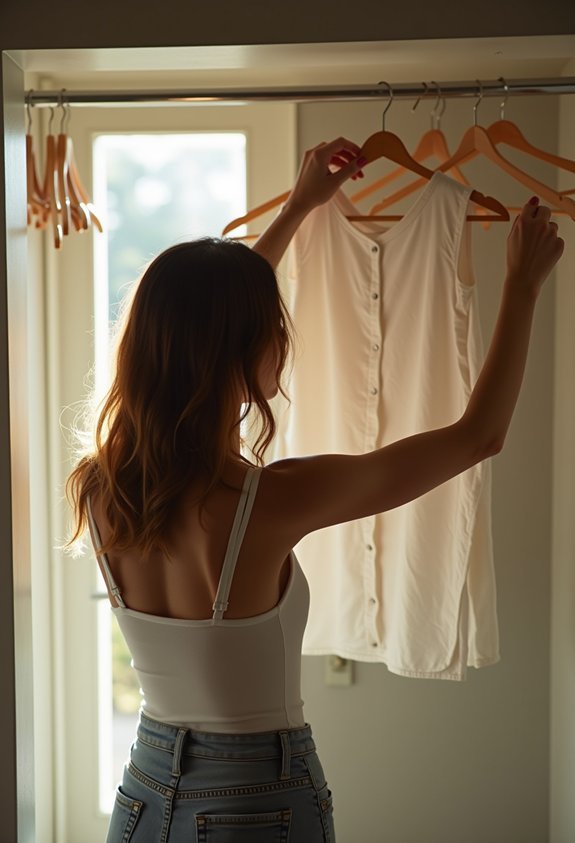
After I finally drove that garment bag to the donation center, I sat in my car for twenty minutes just…breathing.
Here’s what nobody tells you: the emotional freedom hits different than you’d expect.
I went home and reorganized my closet—not because I’m a psycho who Marie Kondo’s everything (okay, maybe a little)—but because suddenly there was *space*.
Real, actual space where that dress had been taking up residence like the world’s fanciest ghost.
The relief felt physical, like setting down luggage I’d been carrying for years.
That dress, like so many unworn items, had been demanding attention and contributing to a mental noise I didn’t even realize was there.
New beginnings don’t always announce themselves with fireworks.
Sometimes they show up as extra hangers in your closet, a lighter feeling when you walk past that door, and the quiet realization that you’re finally, genuinely ready for whatever comes next.
You may also like:



In case you were wondering
How Much Does Professional Wedding Dress Preservation Cost?
Wedding dress preservation typically costs between $150 and $600, depending on your gown’s fabric and detailing. Preservation cost factors include the dress’s condition, cleaning complexity, and packaging materials. You’ll find prices vary by location and preservation company reputation.
Can Wedding Dresses Be Altered Into Other Garments?
Yes, you can transform your wedding dress through garment repurposing. Dress transformation allows you to create cocktail dresses, christening gowns, or keepsake items. You’ll preserve memories while giving your gown new purpose and extended wearability beyond your wedding day.
What Are the Tax Deduction Rules for Donating a Wedding Dress?
You’ll need a written appraisal if your donation value exceeds $5,000, and coincidentally, that’s when most brides realize their dress’s worth transcends money. Complete IRS Form 8283 and itemize deductions—you’re finally free.
Do Secondhand Wedding Dress Buyers Care About Prior Divorce Stories?
No, they don’t. Most secondhand wedding dress buyers focus solely on the gown’s condition and style, not its history. There’s no divorce stigma affecting resale value—your dress’s beauty and fit matter most to prospective brides.
Should I Tell My New Partner About Keeping My Wedding Dress?
Like gardens harboring old roots, relationship honesty requires clearing space for new growth. Yes, you should tell your partner about keeping your wedding dress—those memories deserve acknowledgment, not secrecy, fostering trust between you both.
Conclusion
You’re not alone in this—studies show that 60% of divorced women keep their wedding dresses for years before finally letting go. And honestly? That’s okay.
Whatever you decide, there’s no timeline here. No right answer.
But here’s what I know: the moment you’re ready (truly ready, not just thinking-about-it ready), you’ll feel it. And when you do, you’ll realize something surprising—the memories you wanted to keep were never in the dress anyway.
They’re already yours.