The Truth About Decluttering With a Sentimental Heart
You’re not broken for struggling with decluttering—your brain naturally forms powerful connections between objects and memories, making that box of concert tickets feel impossible to toss. Here’s the truth: keeping everything actually dilutes what’s truly special, burying meaningful items in clutter while creating stress and guilt. You can honor your past without drowning in stuff by photographing items, asking if they reflect who you’re becoming (not who you were), and setting realistic quotas for keepsakes—because letting go of objects doesn’t erase memories, and there are strategies that’ll help you create space while celebrating what matters most.
Key Takeaways
- Emotional attachments to objects are normal, as items serve as memory triggers tied to significant life experiences.
- Keeping every sentimental item creates clutter that dilutes memories and causes stress, guilt, and anxiety.
- Letting go of physical objects doesn’t erase memories; it creates space for truly meaningful possessions.
- Digital preservation through photography, scrapbooks, and voice recordings retains emotional value without physical clutter.
- Decluttering allows releasing outdated identities, creating space for personal growth while honoring important memories differently.
Why Sentimental Attachment to Objects Is Completely Normal
Because we’re humans and not robots, we form deep connections with the stuff around us—and that’s actually a beautiful thing.
Your brain creates emotional connections to objects because they represent moments, people, and experiences you’ve cherished. That concert ticket isn’t just paper—it’s the night you sang until your throat hurt.
These items act as memory triggers, instantly transporting you back to important times in your life.
Objects become portals to precious memories, instantly reconnecting you with moments that shaped who you are today.
Scientists have actually studied this! Our brains link objects to emotions, creating powerful associations that feel impossible to break.
So when you struggle to toss your kid’s first finger painting (even though it’s basically just purple blobs), you’re not being silly or weak.
You’re being wonderfully, perfectly human.
And that’s completely okay.
Each item in your home might hold different meanings—some represent security and comfort, others carry nostalgia, and some symbolize goals you once hoped to achieve. Recognizing symbolic significance of your belongings is actually the first step toward making thoughtful decisions about what to keep.
The Hidden Cost of Keeping Everything: When Memory Preservation Backfires
While holding onto memories sounds like the perfect solution, there’s a twist nobody warns you about—keeping everything can actually bury the memories you’re trying to preserve.
Here’s the irony: when you save every ticket stub, birthday card, and souvenir magnet, they pile up until nothing feels special anymore. That emotional burden gets heavy—you feel guilty when you even think about letting go, stressed when you see the clutter, and anxious about disappointing someone who gave you that ceramic frog collection.
And the space sacrifice? Real.
You’re storing boxes in your garage, closets stuffed with things you haven’t touched in years, drawers overflowing with “just in case” items.
Meanwhile, you can’t find the truly meaningful stuff when you actually want it.
The memories get lost in the mess.
Instead of treating your home like a storage unit, try viewing your belongings as a personal archive where you consciously curate what deserves to be part of your collection rather than keeping everything by default.
Permission to Keep What Truly Matters: Redefining Meaningful Possessions
You don’t have to keep everything OR throw everything away—there’s actually a beautiful middle ground here, and finding it changes everything.
Here’s your permission slip: keep the stuff that makes your heart genuinely happy when you see it. Not guilty. Not obligated. Actually, truly happy.
That wedding album? Keep it. Your grandmother’s recipe box? Absolutely. The seventeen dried corsages from dances you barely remember? Maybe not.
The secret is distinguishing between emotional attachment (I feel bad getting rid of this) and meaningful memories (this brings me joy). One weighs you down—the other lifts you up.
Think of it this way: you’re not erasing memories by letting go of objects. You’re making room to actually enjoy the possessions that matter most.
Try naming the specific emotion tied to each item—it helps you separate your feelings from the physical object itself, making the decision clearer. When you identify what each item represents, whether it’s comfort, obligation, or genuine joy, you can finally choose which memories deserve space in your home and which ones you’re ready to release.
That’s the goal.
Practical Strategies for Evaluating Sentimental Items Without Guilt
If you’re staring at a box of sentimental items feeling completely paralyzed—congratulations, you’re officially normal.
The key is creating a system that honors your feelings while moving you forward.
Try memory mapping: snap photos of items before letting them go, creating a digital album of memories without the physical clutter. This simple trick makes guilt-free decisions so much easier.
Here’s your evaluation toolkit:
- Ask yourself: “Does this item represent who I’m now, or who I was?”
- Consider if the memory lives in your heart or truly needs the object.
- Set a realistic “keeper” quota—maybe five special items per category.
- Give yourself permission to feel emotional (it’s healthy, not weakness).
You’re not erasing memories by releasing objects.
Remember that each item you encounter acts as an emotional cue, so practice slow exhale breathing between decisions to help regulate your nervous system and maintain clarity throughout the sorting process.
Creative Alternatives to Physical Storage: Preserving Memories in Less Space
Once you’ve decided an item doesn’t need permanent residence in your closet, the real magic happens—because there’s honestly a world of options between “keep forever” and “toss it in the donation bin.”
Digital preservation has become ridiculously good (and cheap), meaning you can hold onto the emotional value without sacrificing your entire spare bedroom.
Snap photos of your kid’s artwork before recycling it—boom, instant digital memory bank that doesn’t require three storage units.
Creative scrapbooking apps let you arrange pictures of old concert tickets, letters, and birthday cards into gorgeous albums you’ll actually look at (unlike those boxes gathering dust).
Record videos of yourself telling stories about meaningful objects before letting them go.
The memory lives on, the clutter doesn’t.
By acknowledging the feelings tied to these items during the sorting process, you’re practicing mindful decluttering that honors both the memory and your need for a calmer space.
Setting Boundaries That Honor Both Your Emotions and Your Living Space
When sentimental items start competing with actual living space, it’s time to create some loving limits—not because you’re heartless, but because you deserve a home that functions for your present life, not just your past.
Here’s how to build emotional boundaries that actually work:
- Designate one specific zone for sentimental storage—a single closet, bin, or shelf (when it’s full, something’s gotta go)
- Apply the “would I grab this in a fire” test to gauge true importance
- Set a yearly review date to reassess what still resonates with you
- Remember that space management isn’t about forgetting—it’s about curating what truly matters
Your memories aren’t held hostage by objects.
They live in you.
The Category-by-Category Approach for Sentimental Declutterers
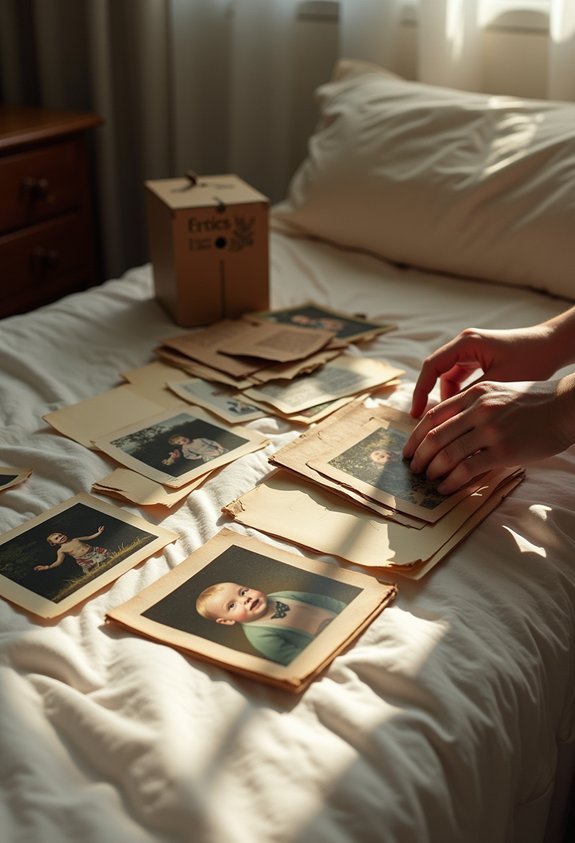
Now that you’ve got your boundaries in place, let’s talk strategy—because tackling “all the sentimental stuff” at once is basically emotional whiplash waiting to happen.
Instead, use category organization to break things down into manageable chunks. Start with lower-stakes items (like souvenirs or greeting cards) before moving to the heavy hitters (like family heirlooms or childhood artwork).
Start with the easy stuff—greeting cards and souvenirs—before tackling emotionally loaded items like heirlooms or childhood keepsakes.
This sentimental sorting approach gives you practice making decisions without immediately drowning in feelings.
Work through one category completely before moving to the next—don’t jump around or you’ll just create new piles of chaos. Maybe tackle birthday cards this week, concert tickets next month.
Give yourself permission to go slow.
Category-by-category isn’t about speed; it’s about building your decision-making muscles while actually honoring what matters. Reducing distractions through this focused approach frees up your energy for what genuinely deserves your attention and emotional investment.
Moving Forward: Building New Rituals That Don’t Require Physical Objects
Here’s the thing about sentimental items—they’re supposed to trigger memories, but you don’t actually need the ticket stub to remember the concert.
You may also like:

Creating memory rituals helps with emotional transitions without cluttering your space. Try these instead:
- Annual photo book tradition — compile your favorite moments into one beautiful album each year
- Monthly voice memo journal — record stories about people you love (way more meaningful than keeping their old sweater)
- Digital scrapbook parties — invite friends over to scan photos together and share stories
- Seasonal gratitude walks — dedicate time to remember experiences while moving your body
The goal isn’t erasing the past—it’s honoring it differently. You’re building new ways to celebrate what matters without needing physical proof. By releasing items tied to outdated identities, you create space for who you’re becoming rather than who you used to be.
In case you were wondering
How Do I Handle Sentimental Items From Deceased Loved Ones I Never Met?
You’re not obligated to keep items from people you never knew. Focus on memory preservation by selecting one or two meaningful pieces. Release emotional attachments to objects that don’t resonate with you—honor their legacy through stories instead.
Should I Tell Family Members I’m Decluttering Their Gifts to Me?
You don’t need to announce you’re decluttering their gifts—it’s your space and choice. However, if they ask directly, honest gift communication works best. Setting family boundaries means you’re not obligated to keep everything indefinitely.
Can Decluttering Sentimental Items Cause Regret Years Later?
Picture yourself decades from now, peacefully reminiscing without regret. Yes, you *might* experience some regret, but items’ sentimental value fades with time. Your emotional attachment to memories—not objects—endures, bringing lasting comfort and joy.
What if My Partner Doesn’t Understand My Attachment to Certain Objects?
You’ll need effective communication strategies to bridge this gap. Share the specific memories behind your objects, explain why they matter, and seek emotional support. Your partner can’t understand what you haven’t fully expressed yet.
How Do I Stop Guilt When Relatives Discover I Donated Their Gifts?
You’re not obligated to keep everything forever. Handle guilt management by remembering gifts become yours to steward responsibly. Set donation boundaries early—politely explain you’re simplifying. Their love wasn’t conditional on you storing items indefinitely.
Conclusion
You’re not building a museum to your past—you’re making room for your future. And honestly? That’s pretty exciting.
The memories you’re worried about losing won’t disappear when you let go of the stuff. They live in you, not your attic. So start small, be patient with yourself, and remember: keeping everything means nothing gets to shine. You’ve got this, and your home (and your peace of mind) will thank you.