13 Ways Minimalism Made Me a Better Parent
Minimalism transforms your parenting by clearing physical and mental clutter—you’ll pack away 75% of toys (and your kids won’t even notice), reclaim hours from laundry by cutting your wardrobe in half, and replace overscheduled chaos with lazy Saturday mornings that actually feel restful. You’ll stop chasing Pinterest-perfect moments, gain clarity on what truly matters to your family, and watch your patience increase as your stress decreases. The best part? Your kids will remember pancake breakfasts and weekend adventures far longer than any forgotten toy—and there’s so much more to discover about this game-changing approach.
Key Takeaways
- Reducing toys by 75% increased mindful play, simplified cleanup to 15 minutes, and created visible floor space for creativity.
- Cutting wardrobe in half freed up hours previously spent on laundry and clutter management for quality family time.
- Clearing the calendar of non-essential activities allowed for spontaneous bonding, lazy mornings, and unhurried parenting moments.
- Letting go of Pinterest expectations enabled authentic connections through simple activities like reading and baking together.
- Prioritizing experiences over possessions created lasting memories while reducing mental load and improving emotional well-being.
I Stopped Drowning in Toy Clutter and Started Playing With My Kids
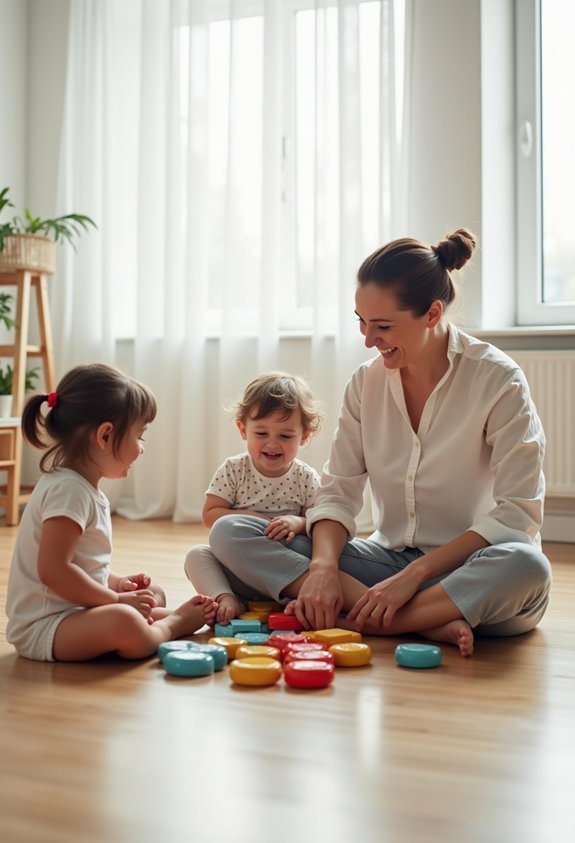
When I finally looked around my living room one Tuesday morning, I couldn’t actually see the floor—just a sea of plastic toys my kids hadn’t touched in weeks.
So I did something radical.
I packed up 75% of the toys—yes, really—and suddenly had time for actual mindful play with my children instead of constantly nagging them to clean up.
Here’s what shocked me: they didn’t even notice most toys were gone.
Better yet? Toy organization became a breeze because there was, you know, less stuff to organize.
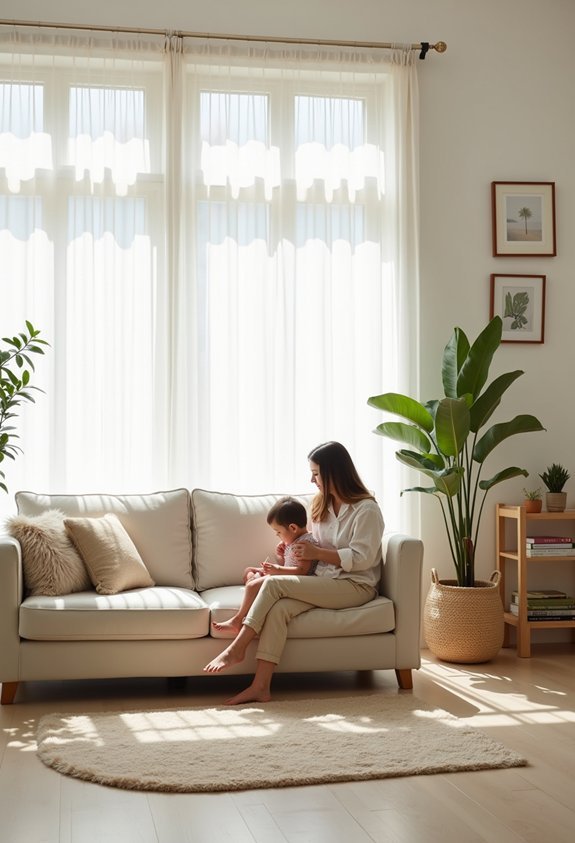
We started building block towers together, reading books without tripping over random puzzle pieces, and actually finishing games (revolutionary, I know).
I kept only the toys they actually played with weekly, which freed up so much physical and mental space.
Turns out, fewer toys meant more connection.
More giggles.
More us.
Less Stuff Meant More Time for What Actually Matters
The laundry mountain in my bedroom used to haunt me—I’d spend entire Saturday mornings folding, sorting, and muttering about where all these clothes came from (spoiler: I bought them).
After cutting our wardrobe in half, laundry became a thirty-minute task instead of an all-day affair.
Fewer clothes meant less laundry chaos—what once consumed my entire Saturday now takes just thirty minutes.
Suddenly, I’d hours back.
Hours I used to spend managing stuff—organizing toys, rotating seasonal decorations, hunting for that one missing shoe—became time for intentional living.
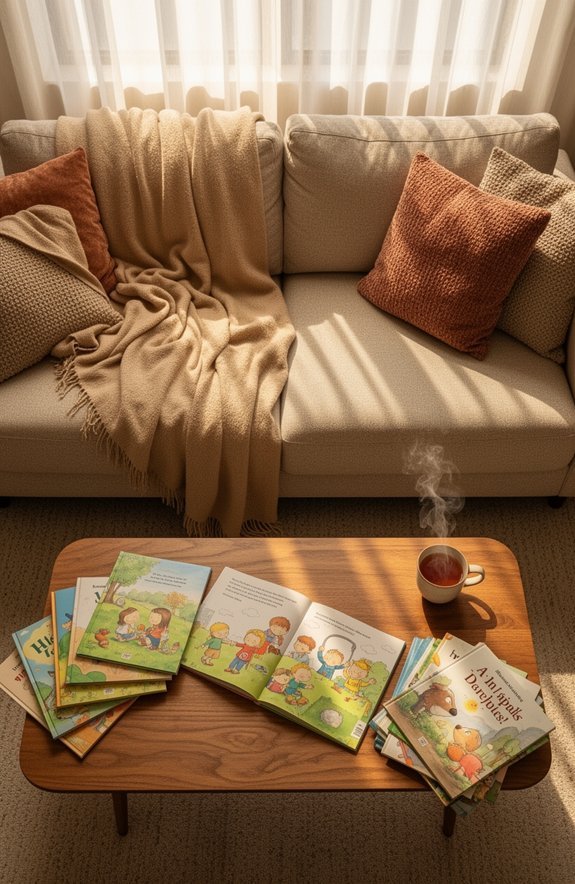
We started baking together on Saturdays. Reading chapter books before bed without rushing.
Mindful parenting isn’t about being perfect; it’s about being present.
When you’re not drowning in maintenance mode, you can actually show up for the moments that matter.
I learned to say no to nonessential commitments that pulled me away from family time, protecting space for what truly mattered.
Turns out, my kids didn’t need more stuff.
They needed more me.
I Finally Let Go of Pinterest-Perfect Parenting

After scrolling past my thousandth homemade volcano cake shaped like a dinosaur, I realized something: I was never going to be that mom.
And you know what? That’s perfectly okay.
Pinterest Pressure had me convinced I needed elaborate birthday parties, hand-stitched Halloween costumes, and color-coordinated bento boxes.
The Perfect Image I’d built in my head—fueled by Social Media Influence—was exhausting me before breakfast even happened.
Minimalism gave me Creative Freedom to parent authentically.
Instead of drowning in Parenting Expectations, I started focusing on Real Life Examples of connection: reading bedtime stories (without the Instagram-worthy backdrop), baking simple cookies that actually tasted good, playing board games on our messy living room floor.
I had been chasing a quick rush from each picture-perfect moment, but that happiness paradox meant the more I tried to curate, the less satisfied I felt.
Authentic Parenting isn’t about the aesthetics.
It’s about showing up, fully present.
That’s Joyful Parenting.
Our Simplified Schedule Created Space for Real Connection
Between soccer practice, piano lessons, art class, and weekend tournaments, my kids were busier than most CEOs—and about twice as stressed.
I cleared our calendar ruthlessly, keeping only activities they genuinely loved. The transformation? Magical.
Here’s what our simplified schedule gave us:
- Lazy Saturday mornings where we actually talk instead of rushing out the door
- Spontaneous game nights that happen because we’re not exhausted from running around
- Time for bonding activities like baking cookies or building forts—the stuff memories are made of
- Energy for intentional interactions where I’m present, not mentally planning the next carpool
By planning white space into our calendar, we reduced cognitive load and allowed our nervous systems to actually rest between commitments.
Turns out, my kids didn’t need enrichment programs.
They needed me—unhurried and available.
I Became Present Instead of Constantly Distracted

Clearing our schedule exposed an uncomfortable truth—I had all this newfound time with my kids, but I wasn’t actually *there*.
My phone was glued to my hand, calling my name every three seconds like a needy toddler. Ironic, right?
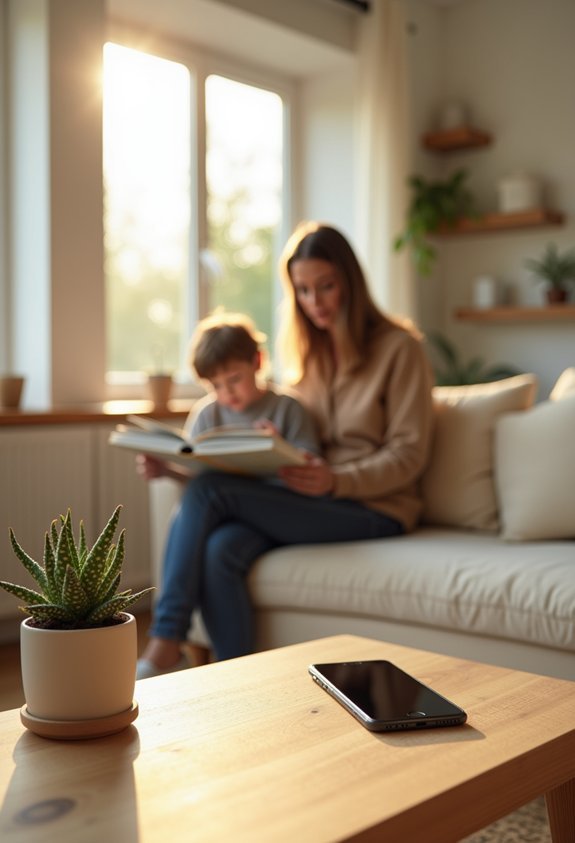
Minimalism pushed me toward a digital detox I didn’t know I desperately needed. I started leaving my phone in another room during playtime, and suddenly I noticed things—my daughter’s goofy commentary during Legos, my son’s terrible knock-knock jokes (they’re *so* bad, but also kind of amazing).
Putting down my phone didn’t just clear space—it opened my eyes to the kids I’d been missing.
Mindful parenting became possible when I stopped multitasking everything.
No more half-listening while scrolling Instagram.
Just us, fully present.
The constant visual noise from screens had been triggering stress responses in my body that I hadn’t even realized were there.
And honestly? Those moments—the ones where I’m actually paying attention—they’re the whole point of this parenting gig.
My Kids Learned to Be Creative With Less
I know it sounds backwards, but hear me out. When I cleared out the toy avalanche (you know the one), my kids actually started engaging in more creative play.
Turns out, having fewer options sparked their imagination in ways I never expected.
Here’s what changed:
- Cardboard boxes became spaceships — no batteries required
- Blanket forts evolved into elaborate kingdoms with complex storylines
- Random household items transformed into restaurant menus and pretend stores
- Drawing and building replaced screen time without me even nagging
Instead of switching between fifty toys every three minutes, they dove deep into imaginative activities.
They created entire worlds from practically nothing.
The truth? Too many toys had been doing the imagining *for* them.
With less stuff cluttering their space—and their minds—they discovered their own creativity.
Fewer distractions in their play area helped them recognize what truly engaged them and respond with deeper focus.
Cleaning Became Manageable, Not a Daily Battle
Before minimalism, cleanup time felt like negotiating a hostage situation—complete with tears, tantrums, and me questioning all my life choices.
Now? It’s actually doable.
Cleanup transformed from daily warfare into a simple 15-minute routine—no drama, no exhaustion, just done.
Here’s what changed: fewer toys mean less chaos to manage. My kids can actually see their floor now (imagine that!), and they know exactly where things belong because we’re not drowning in stuff.
Our cleaning routines became simple—15 minutes before dinner, and we’re done. No marathon sessions. No hiding toys in closets only to deal with the avalanche later.
The decluttering strategies we used weren’t complicated. We kept what they actually played with and donated the rest.
Turns out, you don’t need seventeen stuffed animals.
We even started using a one-in-one-out rule for new toys, which stopped the endless accumulation before it could start again.
Now cleanup is just… part of the day. Not a battle.
I Stopped Comparing Myself to Other Parents
Turns out, I didn’t need to. When you’re not drowning in stuff, you stop worrying about whether everyone else has the “right” toys, clothes, or activities.
Your self acceptance journey becomes easier—you’re too busy enjoying what you actually have. Here’s what changed:
- I stopped scrolling jealously through other parents’ highlight reels. Less clutter meant more confidence in my own choices.
- Our family traditions became uniquely ours (not copies of Pinterest perfection).
- I embraced parenting authenticity instead of keeping up appearances.
- My kids’ happiness wasn’t measured by how much they owned.
Minimalism gave me permission to parent my way.
No comparisons, no competition—just real life with real people. Without decision fatigue weighing me down, I could focus on what truly mattered in our family’s daily life.
Saying No Got Easier When My Priorities Got Clear
Clarity became my superpower—the thing that finally let me stop saying yes to everything out of guilt or obligation.
When I got clear on what mattered most (family dinner, bedtime stories, weekends without chaos), decision making clarity followed naturally. Each request got measured against my actual priorities, not some imaginary standard I thought I should meet.
The PTA fundraiser? No, thanks.
That birthday party across town on our rest day? We’ll send a gift.
Priority alignment meant I wasn’t just declining randomly—I was protecting what we’d already chosen as important.
And honestly? The guilt faded fast when I realized that saying no to the wrong things meant saying yes to the right ones.
Fewer choices meant less decision fatigue, which left me with more mental energy for the moments that actually mattered.
My kids got a calmer, more present mom. Worth it.
We Started Making Memories Instead of Accumulating Things
Once I stopped cramming our schedule full of obligations, I noticed something else taking up way too much space: *stuff*.
Toys everywhere, clothes they’d outgrown, random trinkets from birthday parties—it was overwhelming.
That’s when I realized we’d been choosing things over experience and memory making without even knowing it.
We’d accidentally traded meaningful moments for material things—and our kids were paying the price without us even realizing it.
Shifting focus changed everything:
- Weekend adventures replaced toy runs – hiking trails beat another plastic whatever
- Birthday experiences over stuff – zoo memberships instead of mountains of gifts
- One-in-one-out rule – new item means something goes (game-changer, honestly)
- Photo projects together – capturing memories instead of buying more clutter
Less overstuff meant more room for what mattered.
The clutter removal didn’t just clear physical space—it helped us see what our family actually needed versus what we thought we should have.
Turns out, kids remember the pancake breakfast picnic—not the forgotten toy buried in their closet.
My Patience Increased When My Stress Decreased

When the mental load of managing all that chaos finally lifted, I had emotional bandwidth I didn’t even know I was missing.
Turns out, constantly searching for lost shoes and stepping on toys wasn’t helping my stress management skills—who knew?
With less stuff crowding our space, I found myself actually responding to my kids instead of just reacting. My emotional regulation improved because I wasn’t already maxed out before breakfast.
Fewer belongings meant fewer things to clean, organize, and argue about.
Which meant more patience when my daughter wanted to tell me a twenty-minute story about her imaginary hamster (again).
I finally had the mental space to pause before snapping. To breathe before responding.
That’s the thing about minimalism—it gives you room to be the parent you actually want to be.
I Modeled Contentment Instead of Constant Wanting
But here’s what I didn’t expect: my kids stopped asking for stuff all the time.
When you’re not constantly shopping or obsessing over the next purchase, your children notice. They develop a contentment mindset—and honestly, it’s kind of amazing.
Here’s what shifted in our home:
- We started gratitude practices at dinner (just sharing one good thing from the day)
- I stopped saying “maybe later” and started saying “we have enough”
- They began appreciating what they already owned instead of eyeing every toy commercial
- Gift-giving became more meaningful because it wasn’t constant
Turns out, kids mirror your relationship with stuff. When you’re content, they learn contentment too.
No lectures required.
Quality Time Replaced Guilt-Driven Overcompensating
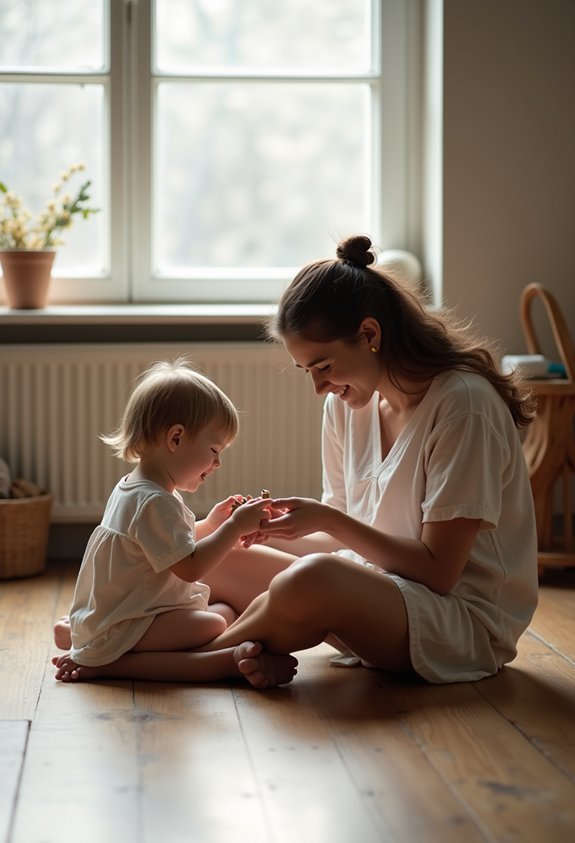
Before minimalism, I bought things to make up for the time I couldn’t give.
Another toy, another gadget—as if presents could replace presence (spoiler: they can’t, and deep down I knew it).
Minimalism freed me from that exhausting cycle.
Instead of spending weekends shopping for stuff to ease my guilt, I started planning intentional interactions.
I swapped guilt-driven shopping trips for moments that actually mattered—and my weekends finally felt like quality time.
Board game nights. Backyard picnics. Twenty minutes of genuine conversation before bed.
The shift to guilt free parenting happened when I realized my kids didn’t want more things—they wanted more me.
Not the distracted, phone-checking version either, but the fully-present one who laughs at their jokes and asks real questions.
Turns out, you can’t wrap attention in sparkly paper.
But it’s the gift they’ll actually remember.
You may also like:


In case you were wondering
How Do I Start Minimalism With Kids Who Resist Getting Rid of Toys?
Start with toy rotation instead of permanent removal. You’ll keep half their toys stored away, then swap monthly. This approach reduces resistance while encouraging creative play with fewer options available at once.
What if My Spouse Doesn’t Support a Minimalist Parenting Approach?
Think of it as building a bridge together. Start conversations using communication strategies that highlight minimalism’s benefits for your family. Find compromise solutions like decluttering shared spaces first while respecting your spouse’s personal belongings and pace.
How Do I Handle Gifts From Family Members After Becoming Minimalist?
Set clear family boundaries by communicating your minimalist values beforehand. Practice gracious gift acceptance while suggesting experiences or consumables instead. You can donate unwanted items later or establish a one-in-one-out rule that respects everyone’s intentions.
Can Minimalism Work for Large Families or in Small Living Spaces?
Less is more when minimalism thrives in large families and small spaces. You’ll master family organization through intentional belongings and space optimization with multipurpose furniture. It’s about maximizing what you’ve got, not square footage.
How Long Does It Take to See Positive Changes in Children’s Behavior?
You’ll notice behavior changes within 2-3 weeks of implementing minimalist parenting techniques. Your children’s focus and cooperation typically improve first, while deeper behavioral shifts develop over 1-3 months as they adapt to simplified routines and expectations.
Conclusion
You’ve got this, friend—and honestly, you don’t need half the stuff you think you do to be an amazing parent.
Here’s something wild: studies show families spend about 40% of their time managing household items instead of connecting with each other. That’s basically throwing away every other evening!
When you simplify your home and schedule, you’re not depriving your kids—you’re giving them something way better.
You’re giving them *you*.