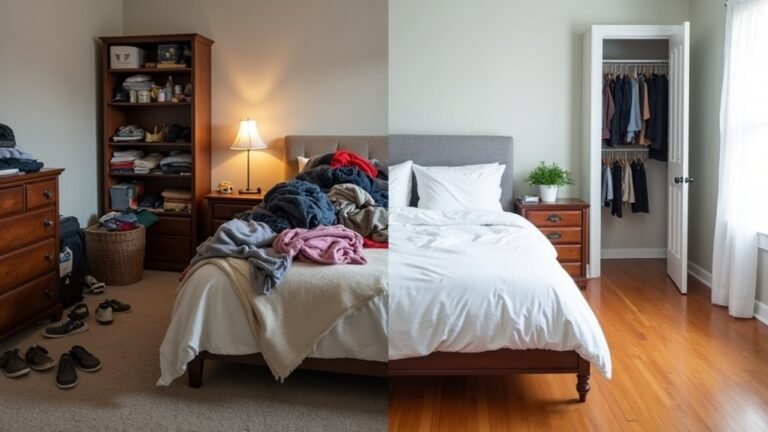
11 Decluttering Habits to Practice Daily
You can keep clutter from exploding by using tiny daily habits—clear counters morning and night, sort mail the second it lands, and do quick 10-minute “stuff roundups” (yes, including that sad mug on your nightstand). Use a one-in-one-out rule, simple house zones for keys and bags, and small digital cleanups. These little moves stack up fast, and the next steps will show you exactly how to make them part of your day.
What you will leave with
- Do a 5–10 minute morning and evening surface reset so counters, tables, and desks start and end the day clear.
- Sort incoming items immediately using a one-touch rule: keep, relocate, delegate, or toss to prevent clutter piles.
- Use a designated transitional zone for keys, mail, bags, and packages so they never spread across multiple surfaces.
- Schedule tiny 10–15 minute decluttering sprints focused on one small area with keep/donate/trash/relocate boxes.
- Follow simple house rules like “put it back after use” and “one-in-one-out” to maintain long-term clutter control.
Start and End Each Day With Clear Surfaces
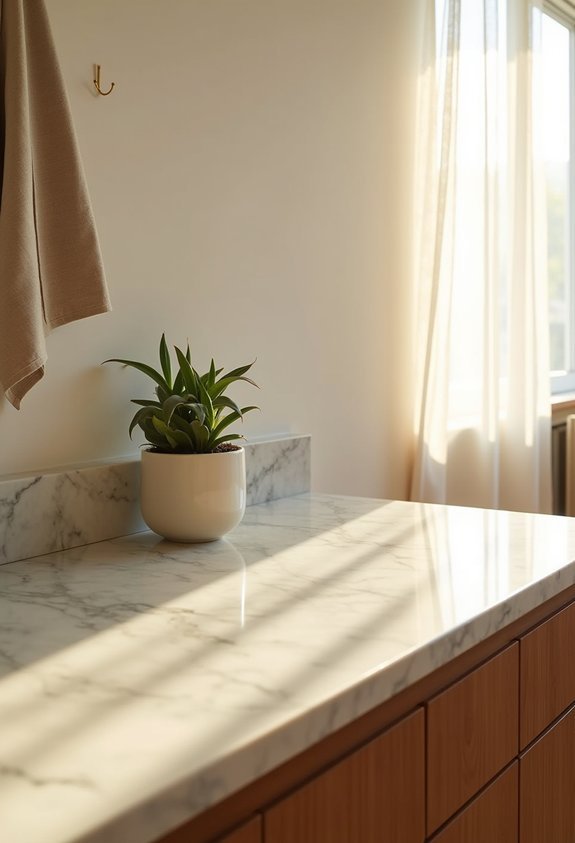
One tiny habit can quietly change how your whole home feels: starting and ending each day with clear surfaces.
In the morning, give yourself 5–10 minutes to clear counters, your desk, and the table—put dishes away, hang keys, toss obvious trash—so you walk out the door with less visual noise, more morning motivation, and a calm sense of “I’ve got this.” This simple practice mirrors the idea of a daily five-minute tidy, giving your brain a predictable reset that makes the whole home feel easier to manage.
At night, do the same quick sweep for evening relaxation—wipe the counter, stack mail neatly, put remotes back—so you’re not falling asleep staring at chaos, or waking up to yesterday’s mess judging you from the coffee table.
You’ll notice less stress, fewer silly arguments about clutter, and way less procrastination—because your space finally matches the focused, peaceful life you’re trying to build.
Sort Incoming Items the Moment They Arrive
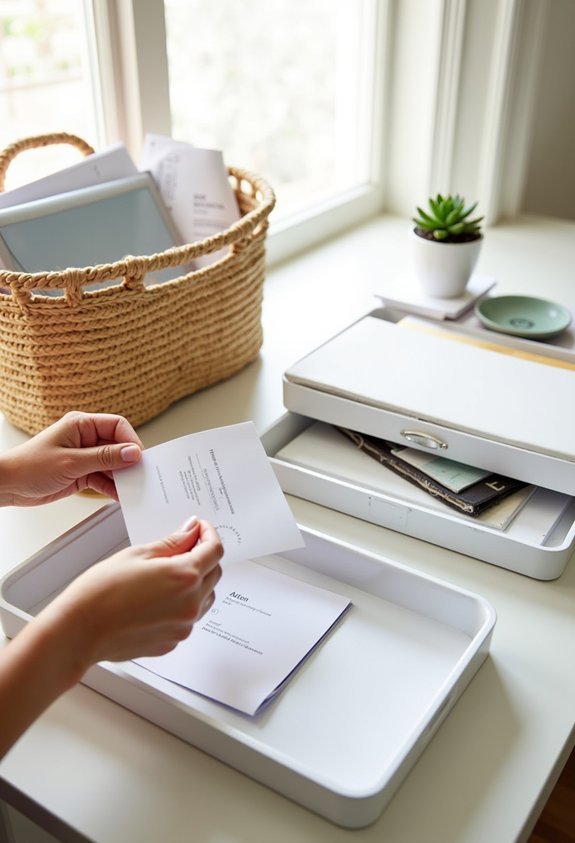
Even if it sounds a little extra, sorting stuff the minute it walks through the door is a total game‑changer.
You cut clutter off at the source—no giant mystery piles, no “where did my keys go?” panic every morning.
Use simple sorting strategies: a tray for keys, a hook for your bag, a bin for mail, a spot for packages.
When something comes in, follow a one‑touch rule—handle it once, then keep, relocate, delegate, or toss.
By cutting visual excess at the door, you’re also helping your brain reduce cognitive load so it doesn’t stay in a constant low‑level stress mode.
You’re not just putting things away, you’re doing real clutter management, which quietly slashes chores, stress, and “I swear I just had that bill” moments.
It takes practice, sure—but after a few weeks, it feels weird not to sort right away.
Use Quick Daily Decluttering Sprints
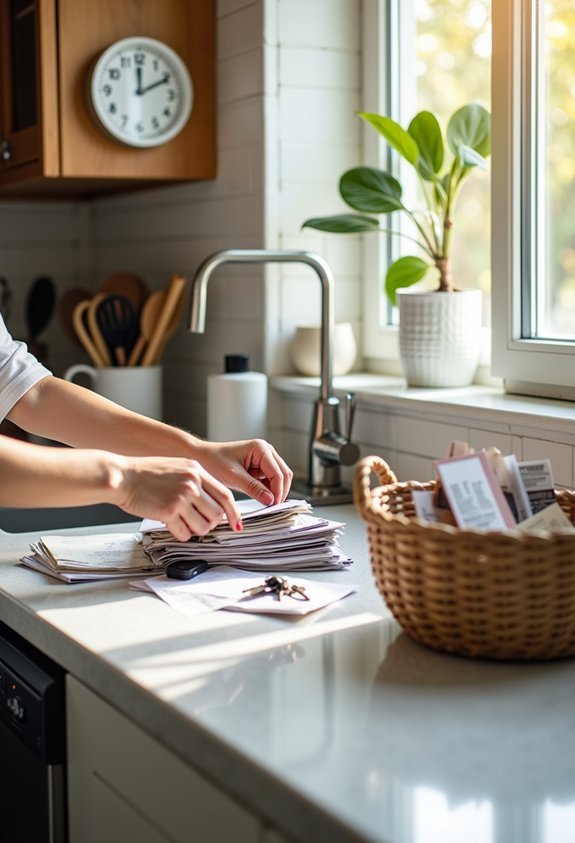
When you’re already tired and busy, the idea of “decluttering the whole house” feels like a bad joke.
So don’t. Do tiny timed decluttering sprints instead—10–15 minutes, tops.
Pick focused zones: one drawer, the entry table, yesterday’s mail pile, the fridge door.
Pick micro-zones: a single drawer, one counter, today’s mail, even just the fridge door
Set a timer, move fast, don’t overthink, just ask, “Use it, love it, or lose it?” and toss things into quick piles.
Use a simple four-box setup—Keep, Donate, Trash, Relocate—so your brain isn’t arguing over every sock.
Rotate zones each day, track them on a little checklist, and enjoy crossing boxes off like a boss.
You’ll build a daily rhythm, avoid burnout, and slowly notice something wild—your home actually stays calmer.
These tiny sprints also protect your mental energy by preventing forgotten piles from quietly draining your focus in the background.
Set Simple House Rules for Everyday Order
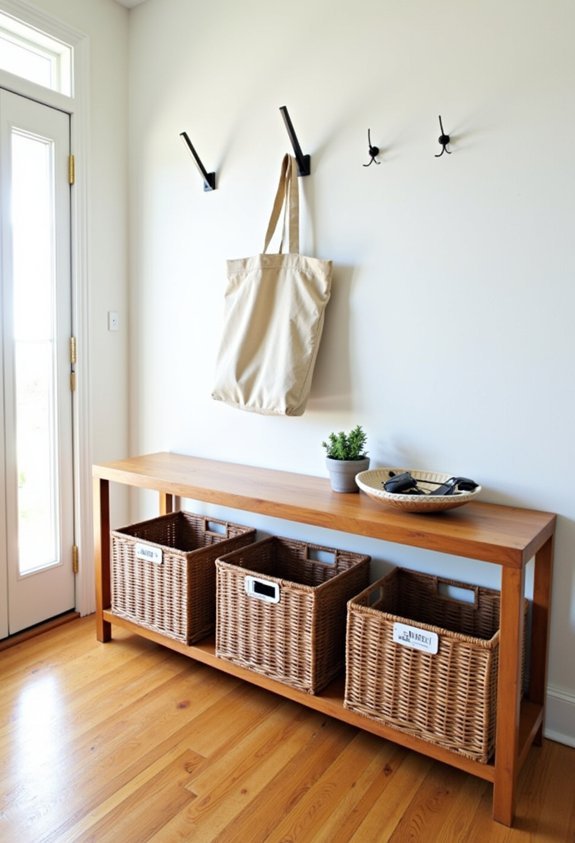
Daily sprints are great for clearing clutter fast, but house rules are what keep it from sneaking back in.
Think of them as your home’s “autopilot”—simple, clear, and easy to follow, even when you’re tired.
Start with entryway organization: hooks for bags, a bowl for keys, one spot for shoes (plus a no-shoes-inside rule, so dirt doesn’t tour the whole house).
Mail gets sorted right away—keep, recycle, or shred—no “mystery paper” piles.
Then tackle common areas.
Ten minutes at night to clear counters and the coffee table, and you’ll wake up calmer, not annoyed at yesterday-you.
Spread household responsibilities—everyone clears their own dishes, puts things back, and joins a quick weekly reset.
Tiny rules, big peace.
When you reset your spaces, take a moment to notice which spots feel energizing and which drain you—these energy mapping cues can guide where to simplify next so your home truly supports what matters.
Contain Sentimental Items With Clear Limits
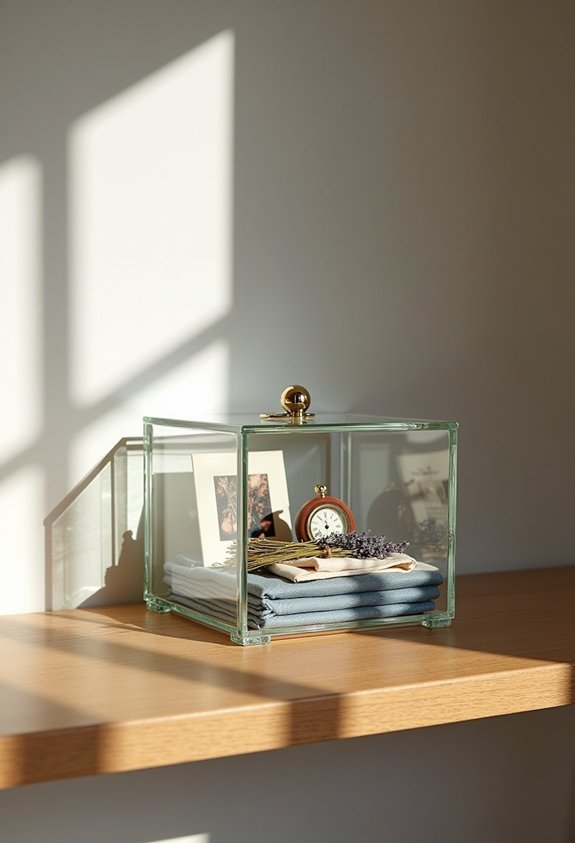
Some clutter is just annoying, but sentimental clutter hits you right in the feelings—and that’s why it needs clear limits.
Think of “sentimental boundaries” like little fences for your memories, not your heart.
Sentimental boundaries protect your space so your best memories can actually shine, not drown in clutter
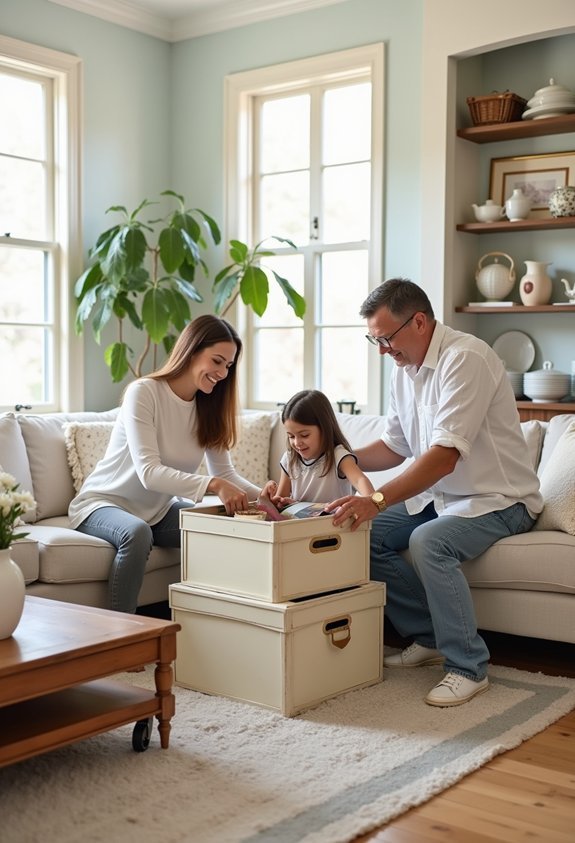
Pick specific homes: one small box per person, one under‑bed bin per generation, one drawer for letters.
When the space is full, you’re done—no “just one more” pile sneaking in.
Use containers with lids or clear sides so you can actually see what you’ve kept, instead of mystery tubs that haunt your closet.
Then do gentle emotional decluttering once a year.
Open one box, choose only what still sparks warm, true joy, and let the so‑so items go—with a deep breath and maybe a snack.
As you sort, notice how each item reflects your emotional ownership and ask whether it still supports who you are now, not just who you were.
Capture Memories in Photos, Not Piles
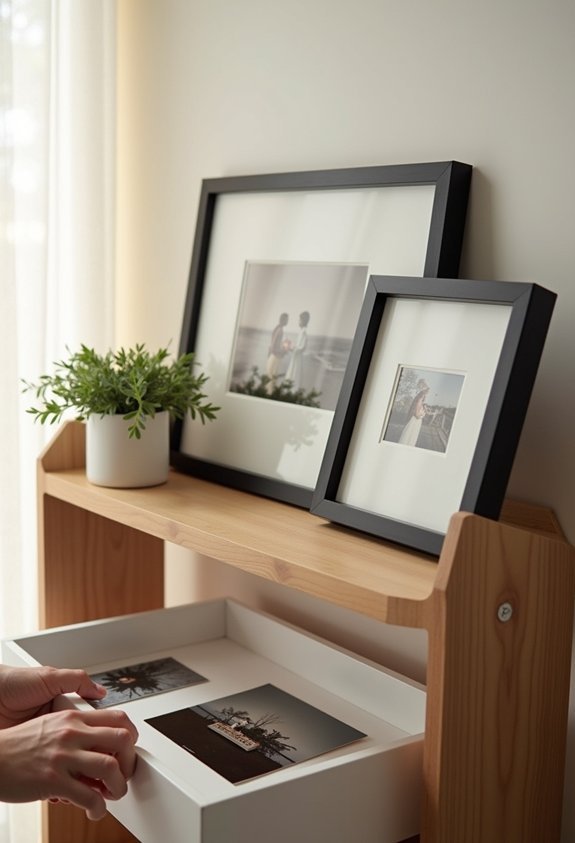
You’ve set loving limits on the keepsakes you keep—now it’s time to let your camera do the heavy lifting. Instead of saving every program, drawing, and ticket stub, snap a clear photo, then let the object go—photo preservation gives you memory organization without constant clutter management. By shifting physical items into digital form, you lower the cognitive and emotional load in your space while still honoring the stories attached to them.
Think of your phone as a tiny museum, and you’re the chill museum boss who actually finds stuff. Use digital albums, simple photo tagging, and light editing to boost image quality, then add backup solutions (cloud + hard drive) so one coffee spill doesn’t erase your life.
- Take photos of kids’ art before recycling
- Group images into yearly or trip digital albums
- Tag people, places, and holidays
- Delete near-duplicates during TV time
- Revisit favorites regularly—storytelling through photos boosts emotional well being and digital decluttering
Keep a Constant Donation Box Ready

One simple habit can change how your whole home feels—a donation box that’s always out and ready.
Pick a sturdy box or basket you can actually lift—no giant moving boxes you’ll regret later.
Focus on smart donation box placement: put it where you walk every day, like by the front door, hallway, or living room corner, so dropping items in feels almost automatic.
Donation box visibility matters too, because when you see it filling with clothes, books, toys, or old gadgets, you get that little “hey, I’m doing it” boost.
Give everyone permission to add things, no big ceremony needed—just a quick, “I’m done with this, someone else could use it,” and *toss*.
Then, when it’s full, you donate—and breathe.
To make this habit even more powerful, use your donation box as the landing spot for unwanted furniture and decor you’ve decided to let go of, so those bulky pieces don’t linger in your space once you’ve emotionally released them.
Practice a Daily “One In, One Out” Check
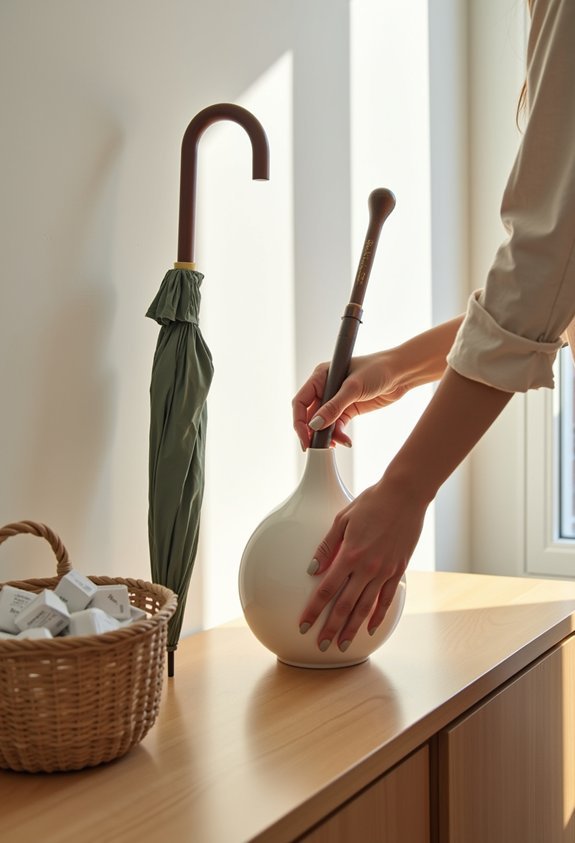
Picture a tiny traffic rule for your stuff—every time something new comes in, something old has to go out.
You grab a new mug, a book, or a shirt—something else has to leave, right then, no “later pile.”
This simple swap builds mindful consumption and gentle clutter awareness, because you pause and ask, “What will this replace?”
It turns shopping into a choice, not a reflex—if nothing feels worth letting go, maybe you don’t want that new thing as much as you thought. This daily habit slowly cultivates conscious consumption and a calmer, more intentional relationship with your belongings over time.
Try it with:
- Clothes (new hoodie, old hoodie out)
- Mugs and water bottles
- Toys and games
- Makeup and toiletries
- Hobby gear (yes, even the “someday” craft supplies)
Tidy Your Digital Spaces Like Physical Rooms
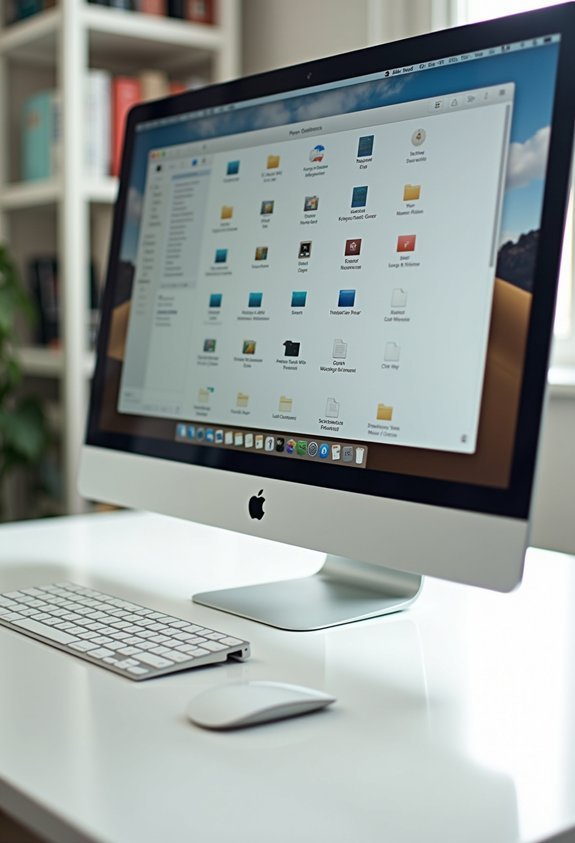
Even though it doesn’t spill on the floor, digital clutter can make your brain feel just as messy.
Think of your phone and laptop as tiny apartments—right now, they’re probably packed with random screenshots, half-finished files, and 1,000+ unread emails (you’re not alone, promise).
Your devices are tiny apartments overflowing with digital junk—no wonder your brain feels so cluttered
Start small: pick one “room.” Maybe your desktop, your photos, or your inbox, then practice digital minimalism—keep only what you use, love, or truly need, deleting old downloads, blurry pics, and mystery files you’ll never open again.
Just like physical clutter, treating your digital spaces as a design problem rather than a moral failure can lower stress and make it easier to clear what drains you.
Next, add simple virtual organization.
Create clear folders by project or year, use consistent file names, set email filters, unsubscribe from junk, and uninstall unused apps—your devices run faster, you feel calmer, and your future self will seriously thank you.
Make Transitional Zones a No-Drop Zone
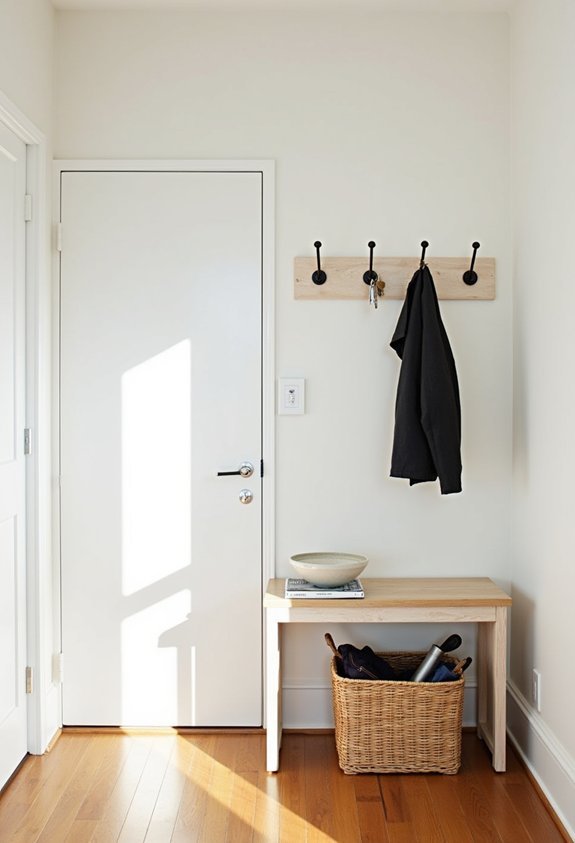
Your screens are under control (or at least less chaotic), so let’s tackle the spot that betrays everybody—the “drop zone” where stuff explodes the second you walk in the door.
Think of a transitional zone as a tiny airport for your stuff—everything lands there for a short layover, not a permanent vacation. You get huge transitional zone benefits when one small area near the door handles mail, keys, bags, and returns, instead of every flat surface in your home. A clearly defined drop zone supports minimalism in daily life by giving every essential item a designated place and preventing clutter from spreading across small spaces.
Use simple no drop strategies, so things don’t just pile up forever:
- One small table or tray by the door
- Hook for keys and bags
- Basket for mail and packages
- Labeled bin for returns/donations
- Basic supplies (pen, tape, scissors) nearby
Review and Reset Problem Areas Every Evening
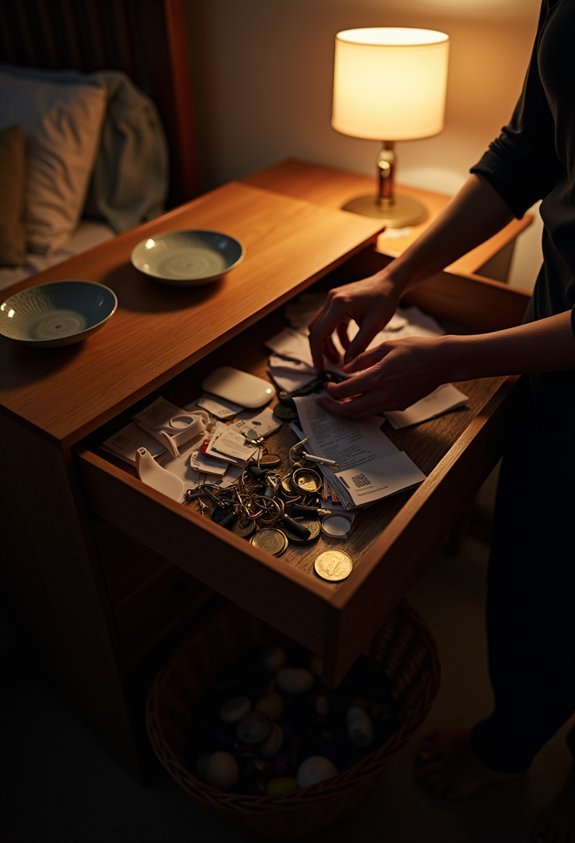
One of the kindest habits you can build for yourself is a quick evening “review and reset” of your space.
Think of it as an evening routine for clutter management, not a punishment for being “messy,” just a short check-in.
Set a 10–20 minute timer, walk through your hotspots—kitchen counter, desk, entry table—and grab anything out of place.
Papers go in a tray, mail gets sorted, dishes to the sink, shoes back by the door (not in the hallway where you’ll trip at 3 a.m.).
Clear surfaces, wipe them fast, then jot a tiny log: “Desk cleared, entry still wild.”
Bonus round—lay out clothes, pack a bag or lunch, toss one thing into a donation box.
You may also like:

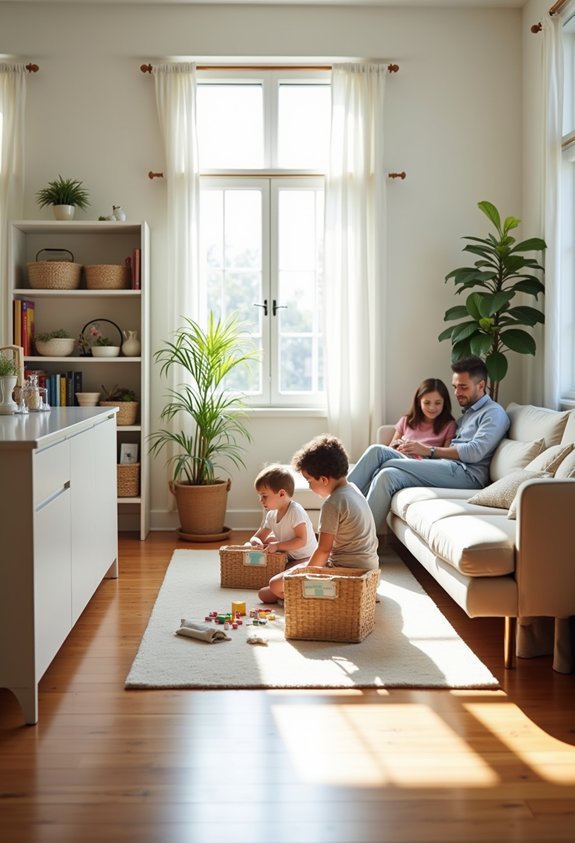


Then relax.
In case you were wondering
How Do I Get Family Members to Support and Maintain New Decluttering Habits?
You get family members to support and maintain new decluttering habits by using family involvement, clear communication strategies, shared routines, visible progress tracking, kid-focused toy rules, and celebrating milestones so everyone feels ownership, control, and real daily benefits.
What Should I Do When Decluttering Feels Emotionally Overwhelming or Paralyzing?
When decluttering feels emotionally overwhelming, pause and name your emotional triggers, then shrink the task. You break it into tiny zones, set short timers, use coping strategies like breathing, self-compassion, and photos, and stop before exhaustion.
How Can I Stay Consistent With Decluttering When My Schedule Is Unpredictable?
You stay consistent by using 5–10 minute micro-sessions, anchoring them to existing habits for reliable time management. Create flexible routines: tackle one small area, track wins, use reminders, and delegate or pause without guilt.
How Do I Prevent Decluttering From Turning Into Perfectionism or Obsessive Organizing?
You treat your home like a garden: you prune, not sculpt marble. To balance perfectionism, set time limits, accept “good enough,” practice mindful organizing, and stop when spaces function well, even if they’re not visually flawless.
What’s the Best Way to Track and Measure My Decluttering Progress Over Time?
You track decluttering progress best by combining simple measurement tools: use a calendar challenge, 10‑minute timers, and photo logs. Checklists or apps let you cross off zones, celebrate milestones, and see consistent item removal and improved space function.
Conclusion
You’ve got this—tiny steps, daily habits, real change.
Studies show people waste about 2.5 days a year just looking for lost stuff, which is both wild and very “yep, that tracks.”
So you’re not trying to become a minimalist monk, you’re just building small guardrails—clearing counters, doing 5‑minute sprints, one‑in‑one‑out—that keep life lighter, fresher, and way less “where did I put my keys…again?”