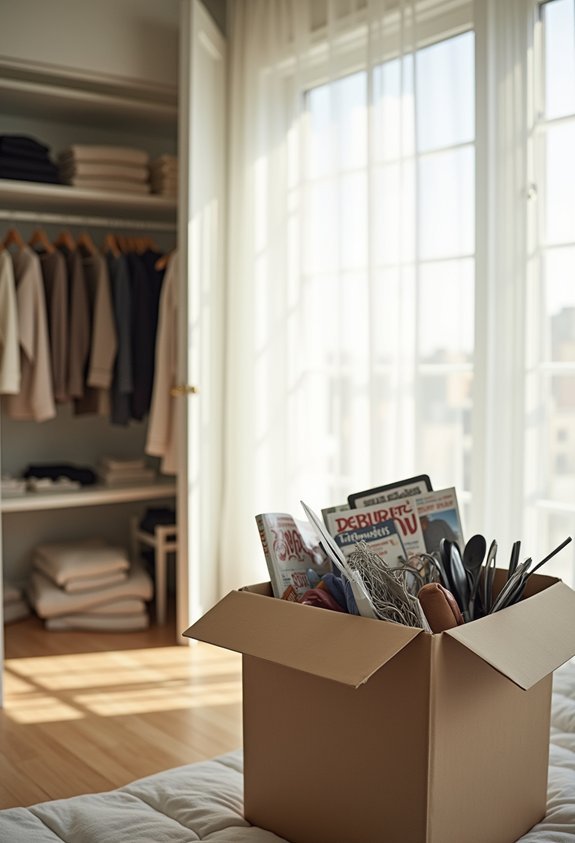
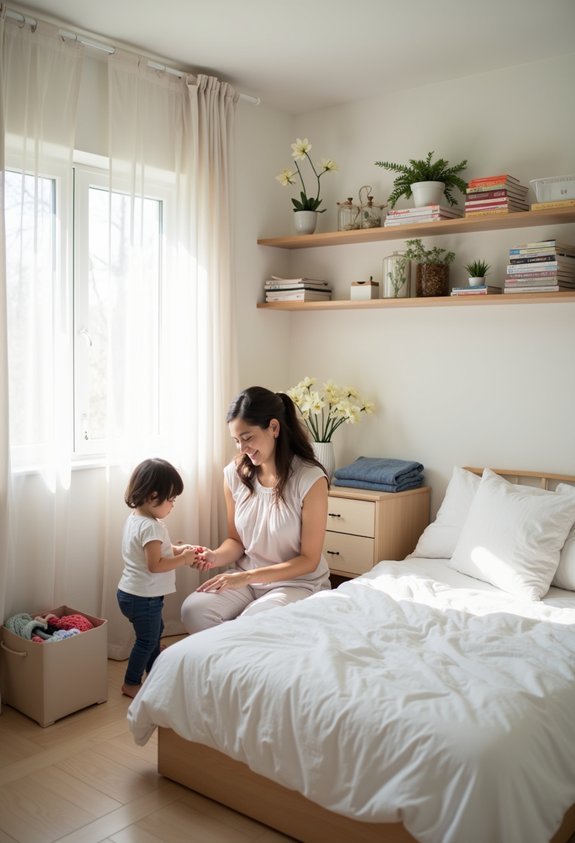
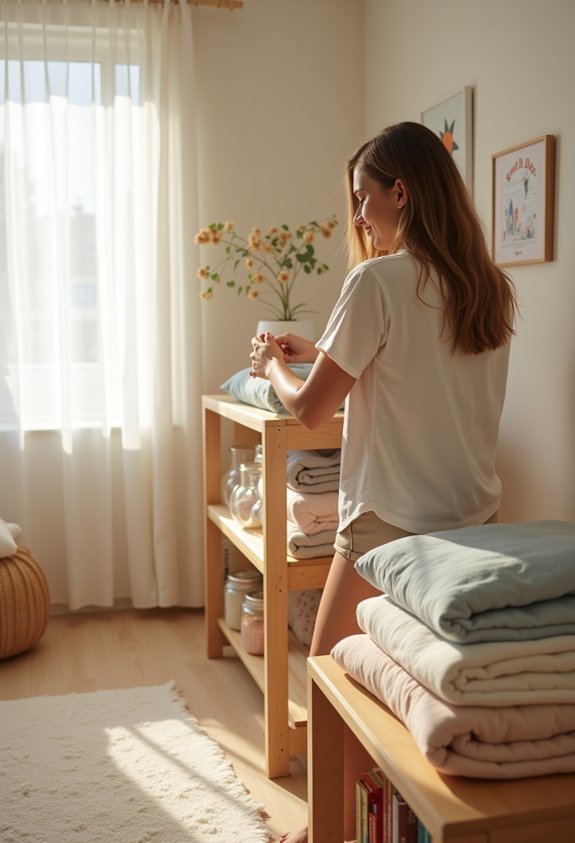
17 Decluttering Tips for Small Living Spaces
When you live in a small space, every item either works for you or works against you. You need simple systems that keep surfaces clear, storage efficient, and daily essentials easy to grab. From a quick 10-minute declutter sweep to smarter furniture choices and guilt-free edits of sentimental items, each shift builds on the last. Start with just one focused change—and then see how the next 17 strategies reshape your home.
Start With a Quick, Low-Stress Declutter Sweep
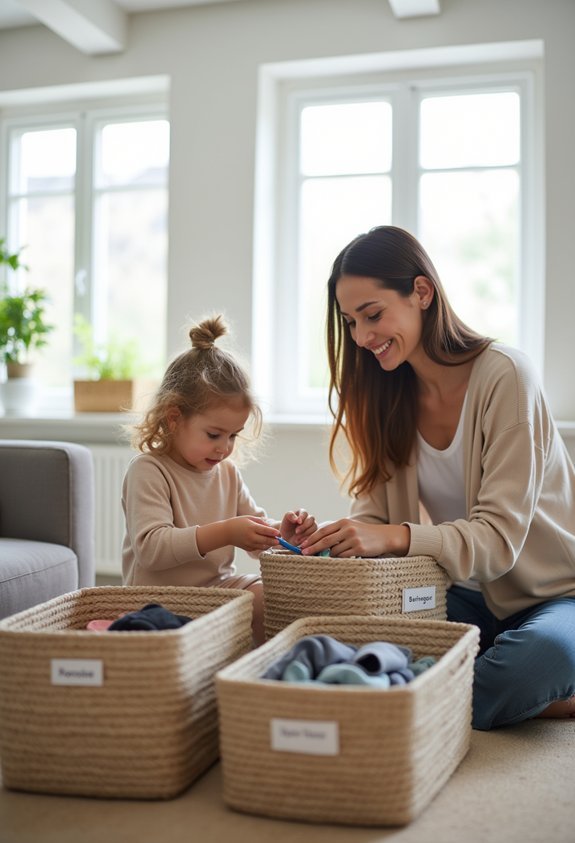
One of the easiest ways to begin is with a quick, low-stress sweep that targets only what’s obviously out of place.
Start at your entry, then move clockwise through your space. Grab a bag for trash and a bin for items that belong elsewhere.
Use quick declutter strategies: toss packaging, corral loose papers, return dishes, fold throws, and clear floors. You’re not deciding what to keep forever; you’re restoring basic order.
Skip perfection. Clear surfaces, gather papers, reset dishes and floors—simply restore calm, functional order.
Keep your focus on surfaces, walkways, and seating so the room instantly feels larger. For stress free organizing, set a ten-minute timer and stop when it rings.
You’ll create momentum, reveal actual storage needs, and prepare your small home for deeper, more targeted decluttering. Each sweep builds confidence and steadily reclaims your space.
Use the One-In, One-Out Rule for New Items
After you’ve cleared the obvious clutter with quick sweeps, you’ll keep your small space under control by limiting what comes in.
Adopt a strict one-in, one-out rule: every time a new object enters, another leaves. Bring home a mug, donate or recycle an old one. Add a shirt, release one you rarely wear. This creates automatic new item limits and prevents storage creep.
Before buying, practice shopping mindfulness. Ask: Where will this live? What’ll it replace? If you can’t name a specific item to remove or a precise spot to store it, don’t buy it.
Track trades in a simple list so you see patterns. Over time, your possessions stabilize at a manageable, space-friendly level. Your rooms stay open, flexible, and visually calm.
Maximize Vertical Space With Smart Wall Storage
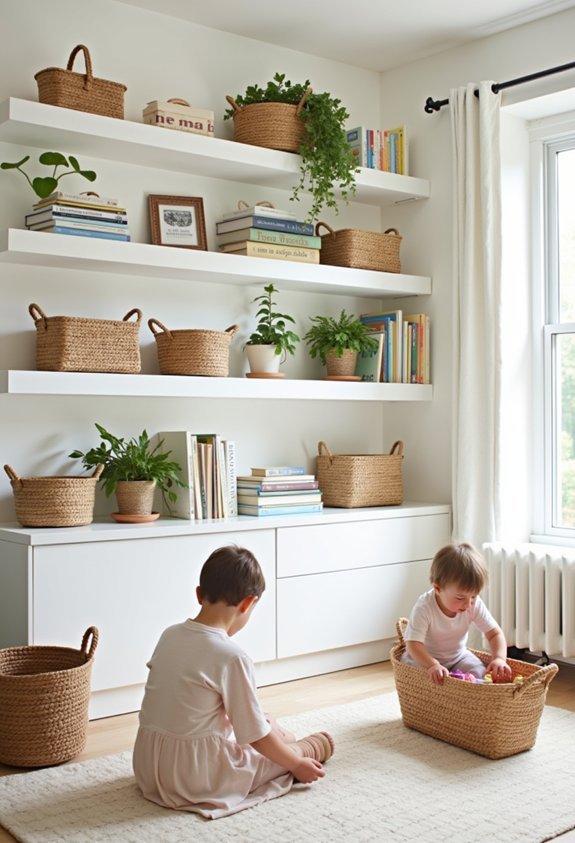
Instead of cramming more into drawers and floors, start looking up and treating your walls as prime storage real estate.
Begin by mapping vertical zones: above sofas, around doors, and over desks. Install sturdy wall mounted shelves for books, bins, and everyday essentials, keeping items you use most at eye level.
Place decorative pieces higher, so function stays accessible and clutter doesn’t creep back.
Add floating cabinets where you need closed storage for paperwork, tools, or cleaning supplies. Their hidden interiors reduce visual noise while using dead space.
Use uniform bins, labels, and consistent spacing so every wall system feels intentional, not chaotic.
Regularly reassess what each shelf holds, removing anything you’re not using to keep your vertical storage streamlined, efficient, calm, and flexible.
Rethink Bulky Furniture in Favor of Slim Profiles
As you free up your walls, your next biggest space gain comes from reassessing the furniture eating up square footage.
Start by measuring every large item and comparing it to how often you actually use it. Replace deep, overstuffed sofas with slim, raised-leg designs that expose more floor.
Swap chunky coffee tables for narrow benches or petite round tables that maintain flow. Choose armless or low-armed chairs to cut visual bulk and reinforce minimalist aesthetics.
In the bedroom, trade heavy dressers and massive headboards for streamlined frames and tall, narrow units. Prefer pieces with thin silhouettes, light colors, and open bases; they read as lighter and larger.
Systematically applying these space saving solutions frees pathways and calms the room, making each square foot intentional.
Choose Multi-Functional Pieces With Hidden Storage
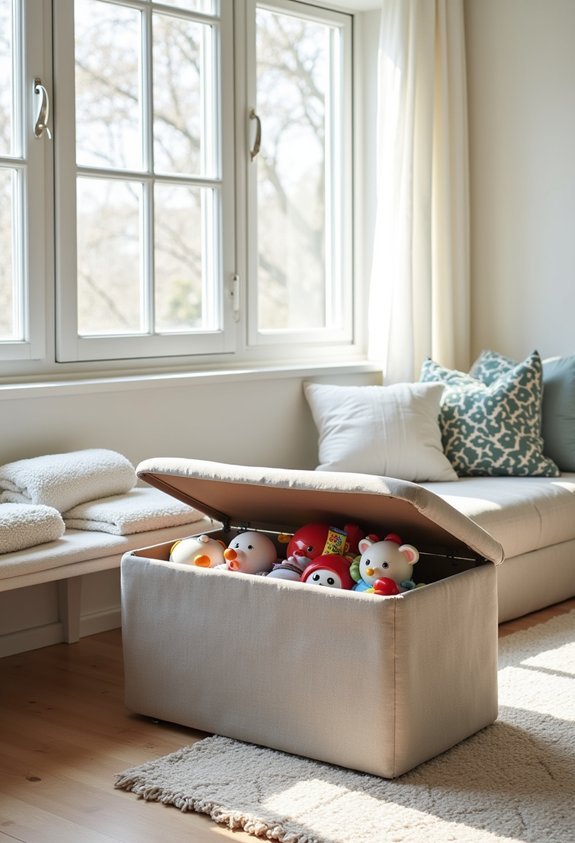
When every square foot matters, furniture should earn its place by doing more than one job.
Prioritize versatile furnishings that combine seating, sleeping, and storage in a single footprint. Choose a bed with drawers, a lift-top coffee table, or an ottoman with hidden compartments for blankets, games, or gear.
Let every piece work double duty: mix seating, sleeping, and storage to stretch every square foot.
Replace standard benches with storage versions near the entry, so shoes and bags disappear quickly. Use nesting tables or stools that stack, freeing floor area when not needed.
Measure before buying to ensure each piece fits and still allows easy movement. Group items by use inside every concealed space, then label discreetly.
Clear Surfaces to Instantly Open Up the Room
Smart storage furniture reduces what you need to keep out, and the next step is to clear every flat surface you see.
Start with visible zones: coffee table, nightstand, TV console, countertops, window sills. Remove everything, then add back only functional items you use daily plus one small accent. This simple surface organization rule prevents gradual clutter creep.
Group remaining objects on a tray to contain visual noise and make cleaning faster. Prioritize negative space; open areas around objects make your small room feel wider and calmer.
Choose minimalist decor with clean lines, matching tones, and limited heights so the eye moves smoothly across the room.
Finally, establish a quick end-of-day sweep: clear surfaces, return items to storage, and reset your space every night.
Create Dedicated Drop Zones for Daily Essentials
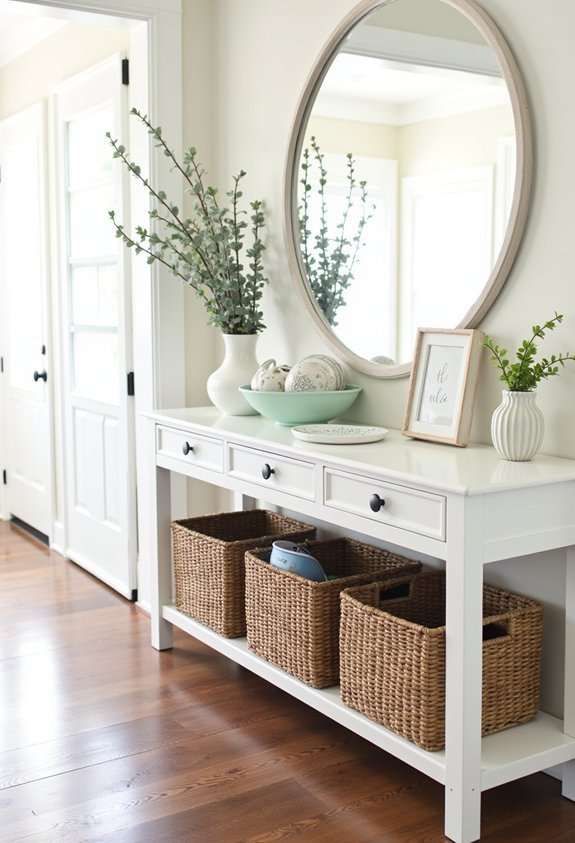
One of the fastest ways to prevent everyday clutter piles is to assign clear “drop zones” for the things you touch every time you leave or enter your home.
Start with entryway organization: mount hooks for coats, bags, and keys; add a shallow tray for wallets, sunglasses, and headphones. Place a small bin or drawer organizer for mail so it doesn’t spread across surfaces.
Define a second drop zone near the sofa or desk for tech-related daily essentials—chargers, remotes, tablets, and notebooks. Use a caddy, basket, or narrow console with labeled sections.
Keep each zone compact, within arm’s reach of where you naturally unload. When every item has a predictable landing spot, you’ll reduce visual noise and reclaim floor space in the smallest homes.
Sort Belongings by Category, Not by Room
Instead of tackling clutter room by room, sort your belongings by category so you can see exactly how much you own and where it should live.
Start with one type: books, paperwork, cleaning supplies, tech, or hobby materials. Gather every item from that group across your home into one spot.
This category organization exposes duplicates and gaps, so you can decide what stays and what goes with clear standards.
Once you’ve right-sized a category, assign it a primary storage zone, then choose one or two sensible backup spots.
Label containers and shelves so items migrate less.
This method builds room flexibility: you can rearrange furniture, repurpose corners, or split functions between spaces without losing track of what you own.
Everything gains a logical home.
Edit Your Wardrobe With a Small-Space Mindset
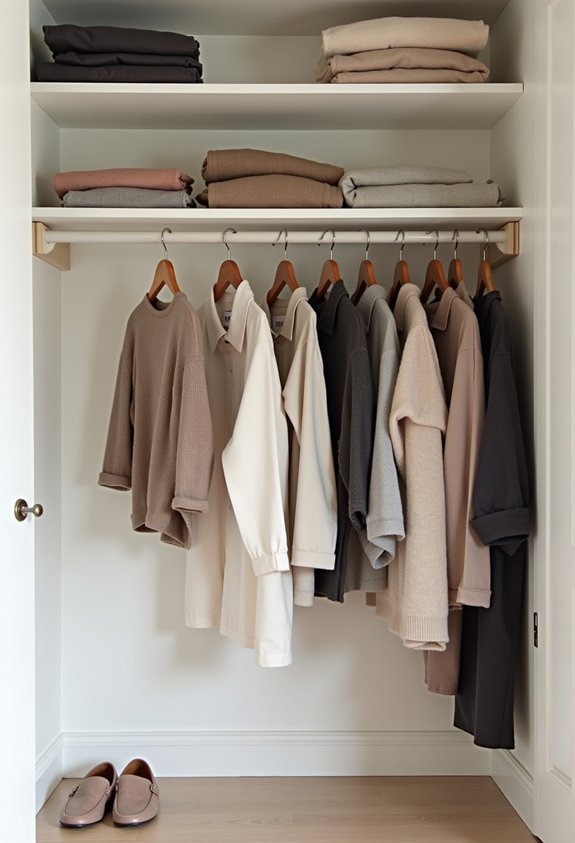
Although closets in small homes can feel like bottlenecks, your wardrobe becomes manageable when you treat it as a space problem, not a style problem.
Start by defining how many hangers, shelves, and drawers you realistically have, then let that capacity set your clothing limit. Build a tight capsule wardrobe: core neutrals, a few accent pieces, and versatile shoes that work across outfits.
Let your closet’s physical limits define your wardrobe—and curate only pieces that work hard together
Remove duplicates, poor fits, and rarely worn items; they consume volume without serving you. Do seasonal swaps: keep only current-weather clothing in prime space and store off-season items elsewhere.
When a new piece comes in, choose one to exit. Your goal isn’t owning less style—it’s making every inch of storage earn its keep. Visual calm follows, and daily dressing becomes faster.
Contain Clutter With Bins, Baskets, and Drawer Dividers
Once your wardrobe matches your space, the next step is controlling how every loose item lives within that space.
Start by assigning every category a container: a bin for workout gear, a basket for scarves, a divider for socks and underwear. Choose square or rectangular storage solutions, which line up tightly and waste less shelf depth. Use clear bins for items you access often; label opaque ones for seasonal or seldom-used pieces.
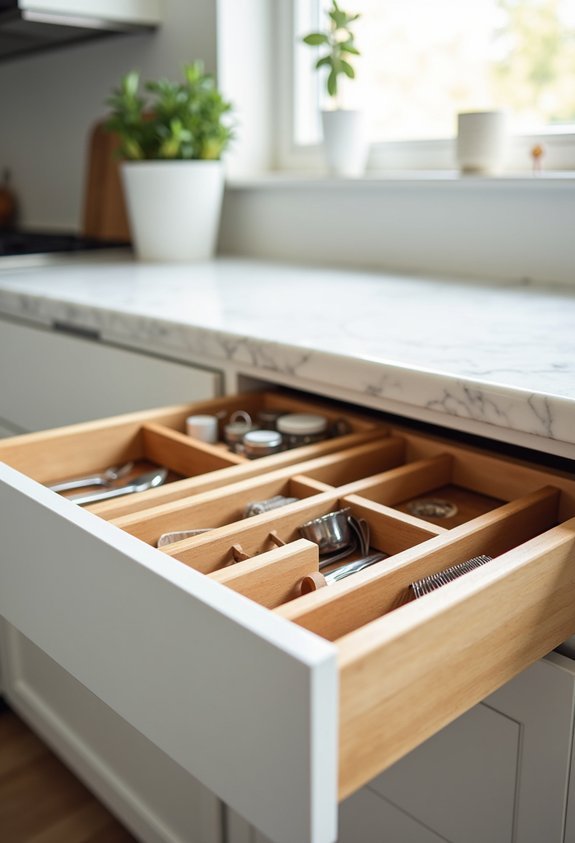
Insert drawer dividers to stop clothes from collapsing into messy piles; file-fold items so you see everything at a glance. Treat each container as a boundary—when it’s full, edit.
These simple organization hacks keep surfaces clear, maximize every inch, and make putting things away automatic. Your space feels calmer and stays clutter-free.
Use Under-Bed and Over-Door Areas Strategically
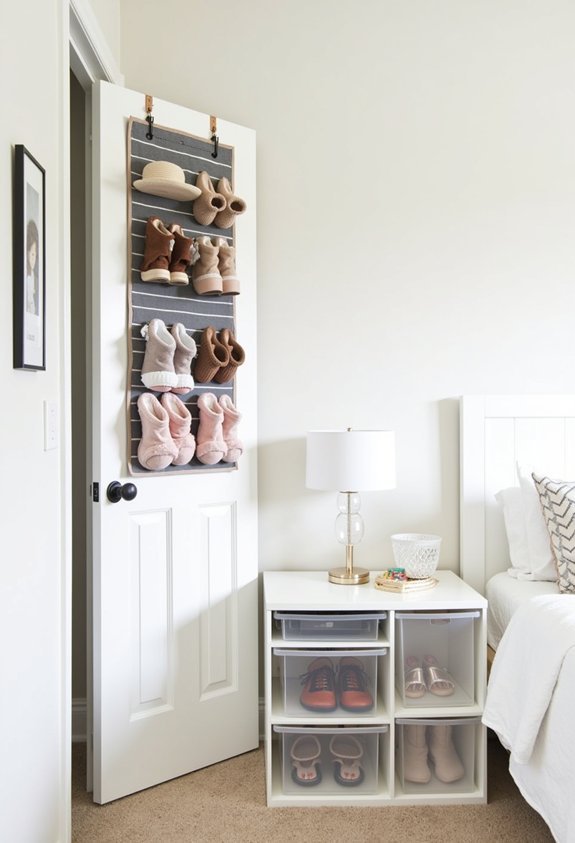
Two of the most overlooked storage zones in a small home sit right under your bed and above your doors.
Start by measuring the clearance under your bed, then choose low-profile bins or rolling drawers for under bed storage. Store off-season clothing, extra linens, or rarely used gear there, and label every container for fast retrieval.
Next, scan your doors. Install sturdy over door organizers on bedroom, bathroom, and closet doors. Use them for shoes, accessories, toiletries, cleaning supplies, or pantry items, depending on location.
Group like items together, and assign each pocket or shelf a clear purpose. Review these areas monthly, pulling out anything you no longer use so the spaces stay functional, not forgotten. Adjust contents as routines and storage needs shift.
Digitize Paperwork, Photos, and Media
Instead of letting paper piles and bulky media swallow your limited square footage, convert as much as possible into digital form.
Start with documents: scan bills, manuals, and warranties, then shred what you don’t legally need to keep. Use clear file names and dates so you can search quickly later.
Next, tackle photos. Sort in batches, keep the best, scan, and store them in labeled folders.
For music and movies, rip discs to reputable cloud or external drives, then donate or recycle the physical copies.
Prioritize secure, backed‑up digital storage with automatic sync across devices.
This shift to paperless organization instantly frees shelves, drawers, and tabletops, turning visual clutter into compact, searchable files you can access without sacrificing space in any room you use.
Establish a Home for Every Item You Keep
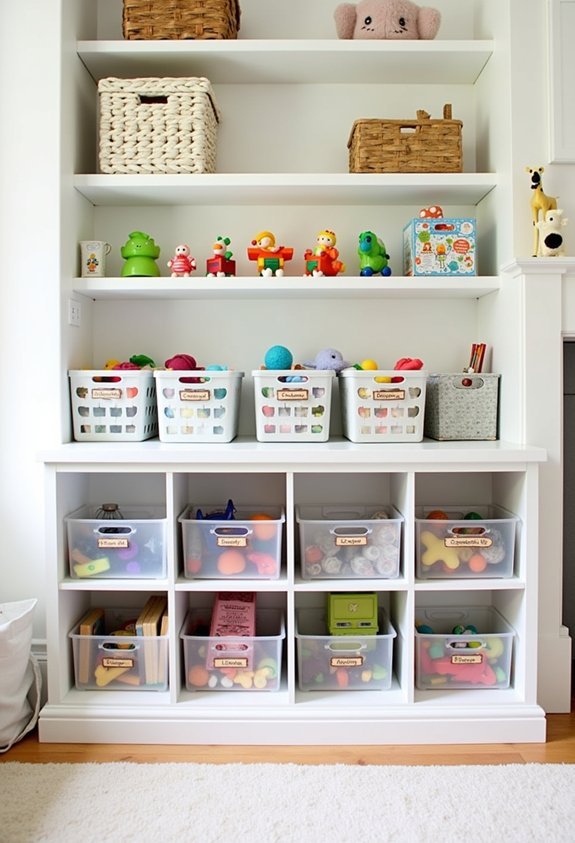
When every item in your small space has a clear, consistent home, clutter stops accumulating on counters, floors, and furniture.
Start by grouping belongings by function: cooking tools, work supplies, personal care, hobbies. Then assign each category a fixed zone near where you use it most.
Prioritize vertical and hidden spaces—walls, doors, under-bed areas, and cabinet backs—for efficient storage solutions. Use containers, drawer dividers, and labeled bins to support precise item organization so you can return things quickly.
Designate a specific spot for transient items like mail, keys, and bags to prevent random drop zones. If a category doesn’t fit comfortably in its space, edit the contents or upgrade the container, not the entire room.
This boundary keeps possessions intentional, visible, and effortlessly accessible.
Set Up Simple Routines to Maintain Order
Although organizing a small space once feels satisfying, simple daily and weekly routines are what keep it functional long-term.
Start by pairing routine building with existing habits: hang your keys when you lock the door, file mail after you drop your bag, clear counters while dinner simmers.
Create a five-minute reset for each zone: living area, kitchen, bathroom, entry. During this reset, return items to their homes, trash obvious clutter, and wipe the most-used surface.
Schedule a slightly longer weekly sweep to empty bags, process paperwork, and rotate anything drifting onto flat surfaces. Keep maintenance habits realistic; if a step feels tedious, shorten it.
Post a short checklist on the fridge so you can track tasks and stay consistent. Repeat these rhythms until automatic.
Tackle Sentimental Items Without the Guilt
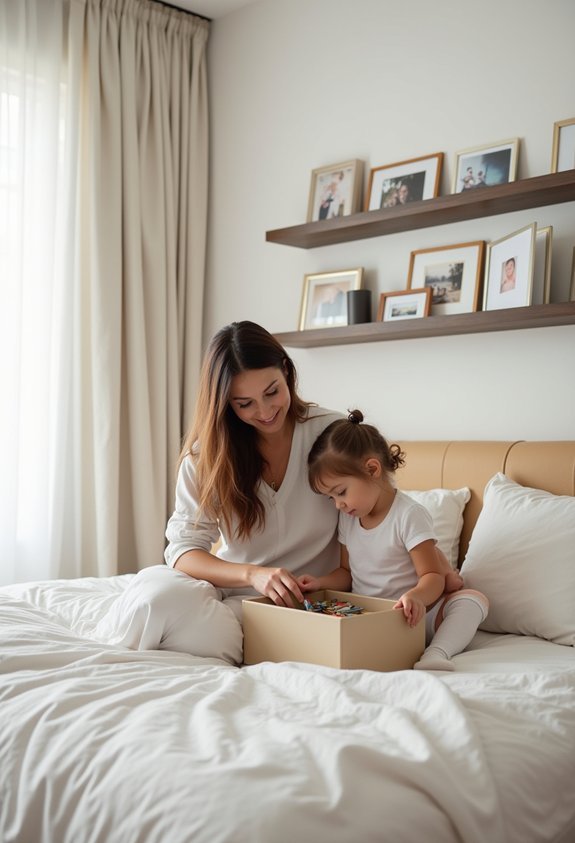
Sentimental items can quietly consume limited square footage, so you’ll approach them with a clear system rather than avoidance or all-or-nothing purging.
Start by grouping by category: letters, photos, childhood objects, inherited pieces. Handle each category in short, scheduled sessions, so the process stays manageable.
For memory preservation, choose a compact format: scan papers, photograph bulky objects, and keep only the most meaningful originals.
Set a firm container limit—a single box or shelf—and let its boundaries guide guilt free decisions. When it’s full, something must go before anything else stays.
Create simple labels that explain why each kept item matters; if you can’t define its significance in a sentence, release it.
Donate, share, or responsibly recycle immediately to prevent backsliding and clutter from returning.
Keep Decor Intentional and Visually Light
Even in a small home, every decorative item either supports a sense of openness or competes for visual space.
You may also like:
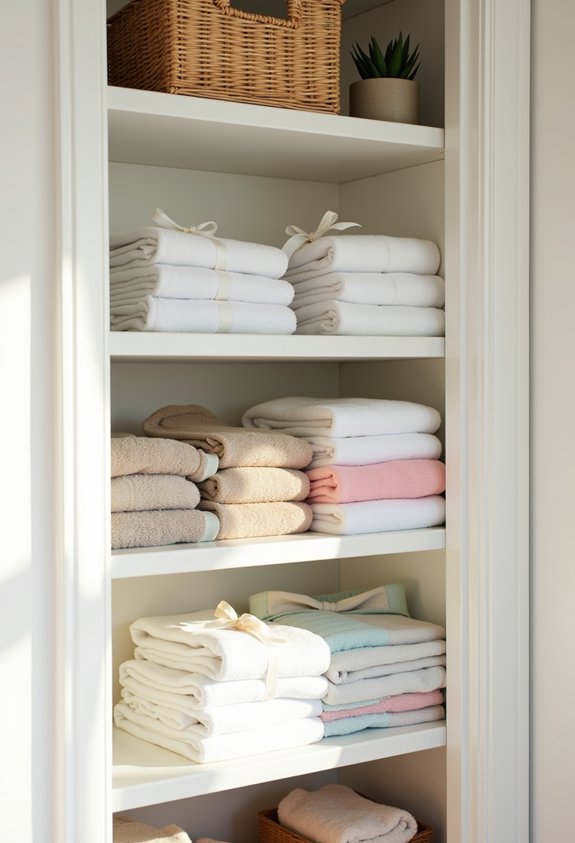

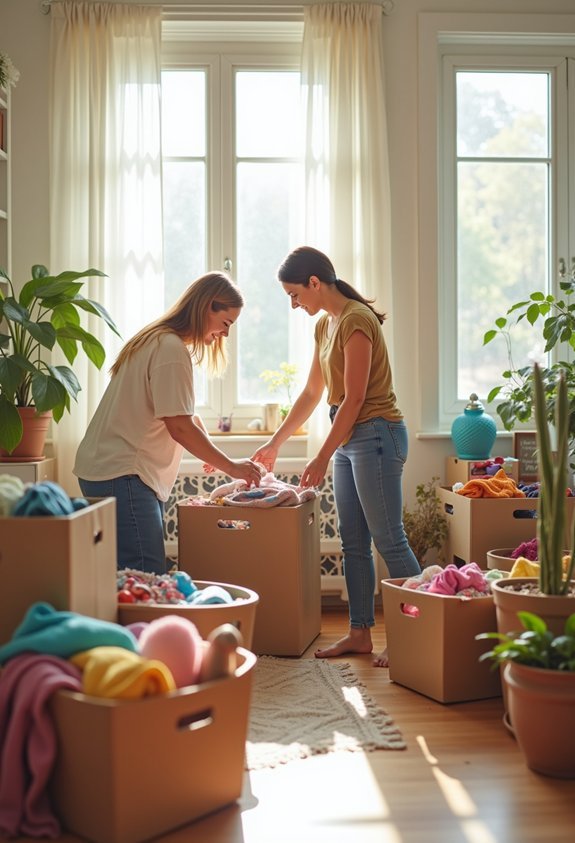
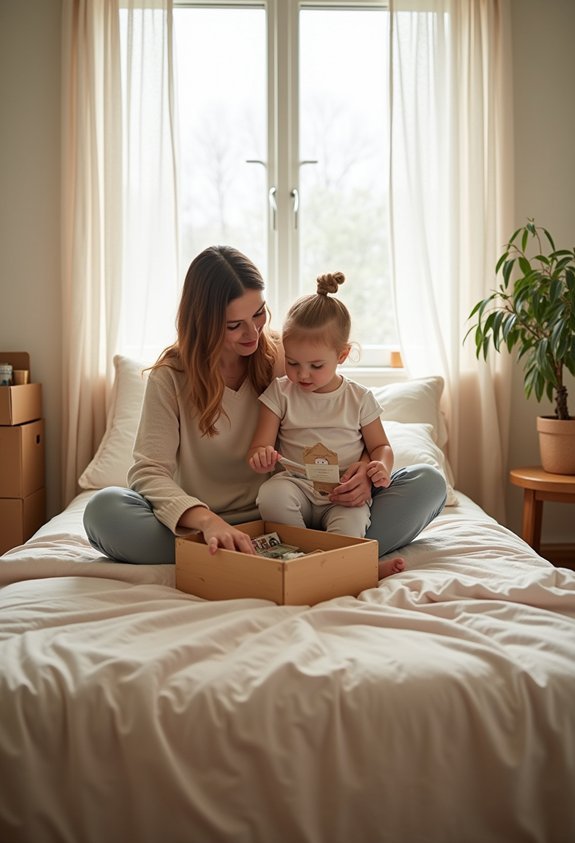
Start by clearing surfaces, then reintroduce only pieces that serve a clear purpose: function, memory, or focal point. Favor minimalist aesthetics—simple lines, airy shapes, and negative space around objects.
Edit ruthlessly: keep only what functions, holds memories, or quietly anchors the room.
Choose intentional colors: light neutrals for walls and larger items, with one or two accent hues repeated across textiles, art, and accessories. This consistency reduces visual noise.
Scale decor to the room; one larger artwork often feels calmer than many tiny frames. Use glass, mirrors, and raised-leg furniture to expose more floor and wall area.
Finally, keep patterns limited and low-contrast so your eye can rest. Avoid heavy drapery, rugs, and overstuffed shelves to maintain lightness.
Plan Seasonal Mini-Declutters to Stay on Track
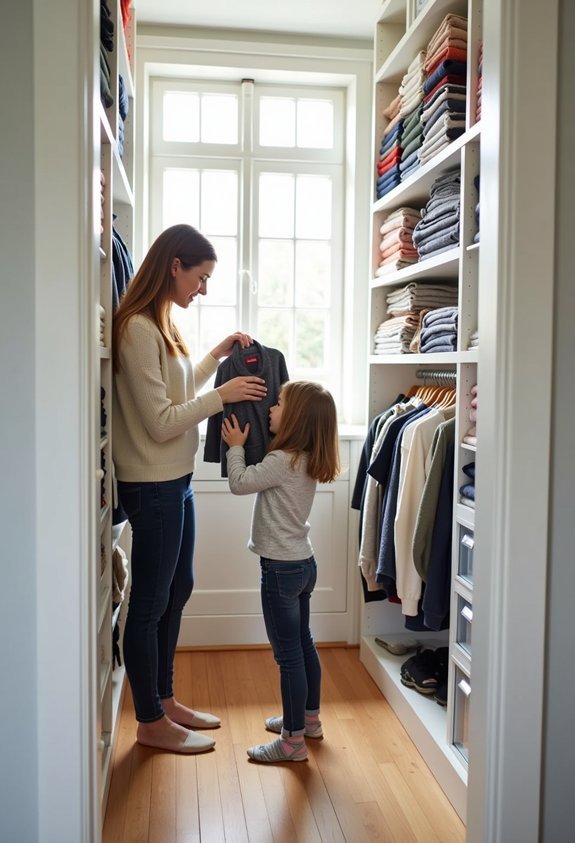
Two or three times a year, schedule short, focused declutter sessions so your small space never reaches a tipping point. Treat them like seasonal checkups for every zone: entry, kitchen, closet, bathroom, and living area.
Set clear seasonal goals—what must leave to keep each zone efficient? Use a declutter calendar to assign 20–30-minute sessions across a weekend or a week.
Work systematically: first remove trash, then duplicates, then items that don’t match current needs or space limits. Box donations immediately and schedule a pickup or drop-off so they don’t linger.
Finish by resetting storage: adjust shelves, swap bins, and relabel containers to reflect the season. Document what creeps back between sessions and adjust your next mini-declutter plan accordingly to stay streamlined and calm.
Conclusion
When you treat your small home like a finite system, every decision counts. By using one-in-one-out rules, vertical storage, and slim, multi-functional furniture, you free up cubic feet, not just square footage. Research shows visual clutter can reduce your ability to focus by up to 50%. When you declutter systematically—daily resets, seasonal edits, intentional decor—you design space that actually supports how you live. Start with ten focused minutes today and let each clear surface compound.