How I Afford to Travel on a Tight Budget
You can absolutely travel on a tight budget by treating your travel fund like a bill—set up automatic transfers of even twenty bucks a week, which adds up to over a thousand dollars yearly. Choose affordable destinations like Southeast Asia or Eastern Europe, fly budget airlines with flexible dates, stay in hostels or vacation rentals, and eat street food instead of restaurant meals. Stack travel credit card points (paying off monthly to avoid interest), take free walking tours, and consider remote work to earn while exploring—because the world’s way more accessible than you think when you know these strategies.
Key Takeaways
- Automate weekly savings transfers to a high-yield travel account and cut household expenses like groceries and utilities.
- Choose affordable destinations in Southeast Asia, Eastern Europe, or Central America and travel during off-season periods.
- Book budget airlines with flexible dates, use price-tracking apps, and explore alternative transportation like buses or trains.
- Use travel rewards credit cards for everyday purchases, pay balances monthly, and stack points with loyalty programs.
- Enjoy free activities like walking tours, local festivals, museum free days, and stay in hostels or vacation rentals.
Setting a Realistic Travel Savings Goal

Look, I know what you’re thinking—saving money for travel sounds about as fun as doing taxes while getting a root canal.
But here’s the thing: it doesn’t have to feel like punishment.
Start by figuring out your savings timeline. Want to hit Paris in eight months? Work backward from there.
Pick your destination, set your deadline, then reverse-engineer the math—that’s how you actually make travel happen.
A budget calculator (yes, they’re free online—you’re welcome) helps you see exactly how much to stash away each week.
Here’s my trick: treat your travel fund like a bill you can’t skip. Set up automatic transfers so the money disappears before you can spend it on another streaming service you’ll forget about.
Consider opening a high-yield savings account specifically labeled for your travel fund so your money grows while you’re building it.
Small amounts add up faster than you think. Even twenty bucks a week becomes over a thousand dollars in a year.
You’ve got this.
Choosing Budget-Friendly Destinations
So you’ve got some cash set aside—now where the heck should you actually go?
Here’s the thing: some places just stretch your dollars way further than others.
Southeast Asia, Eastern Europe, Central America—these spots offer amazing cultural experiences without destroying your bank account.
We’re talking delicious street food for two bucks, not twenty.
And here’s your secret weapon: off season travel.
Everyone wants Paris in spring? You want Paris in November (okay, it’s rainy, but also half-price and way less crowded).
Beach destinations during shoulder season mean better deals and—bonus—fewer tourists photobombing your pictures.
Skip the obvious “Instagram famous” spots.
Find places where your money actually matters, where you can stay longer and experience more.
That’s the real adventure anyway.
Just like choosing produce seasonally can slash your grocery bill, seasonal travel to destinations during their off-peak months means you’ll score the best deals on flights and accommodations.
Finding Cheap Flights and Alternative Transportation

Once you’ve picked your destination, the flight hunt begins—and honestly, this part can feel like a part-time job.
But here’s the thing: flexible travel dates are your secret weapon. Flying on a Tuesday instead of Friday? You might save a hundred bucks, just like that.
Budget airlines are total game-changers too—yeah, you’ll skip the free snacks (pack your own!), but who cares when you’re paying half price?
Skip the free pretzels and save half your cash—budget airlines aren’t glamorous, but your bank account will thank you.
And don’t sleep on alternative transportation. Buses, trains, even overnight ferries—they’re not just cheaper, they’re experiences themselves.
I once took a twelve-hour bus ride that cost twenty dollars, and sure, my neck was sore, but my wallet was happy.
Use price-tracking apps to monitor flight costs and score tickets at their historical low points—timing your purchase right can make a huge difference.
The key? Stay open-minded and keep searching.
Staying in Affordable Accommodations
Alright, you’ve scored the cheap flight—now where are you actually going to sleep?
Here’s the truth: hostel living isn’t just for college backpackers anymore, and honestly, it’s kind of awesome. You’ll pay a fraction of hotel prices (sometimes $15-30 a night), meet fellow travelers who actually *get* the budget struggle, and often score free breakfast.
Yes, you’re sharing a room—but think of it as built-in friends, not awkward strangers.
Can’t do the bunk bed thing? I feel you.
Vacation rentals through apps can be surprisingly affordable, especially if you’re traveling with friends and can split costs. A whole apartment for four people might cost less per person than separate hostel beds, plus you’ll have a kitchen to avoid expensive restaurant meals.
You can even furnish your temporary space with secondhand furniture if you’re staying somewhere long-term, saving 50-80% compared to buying new.
It’s all about creative thinking.
Eating Like a Local Without Breaking the Bank
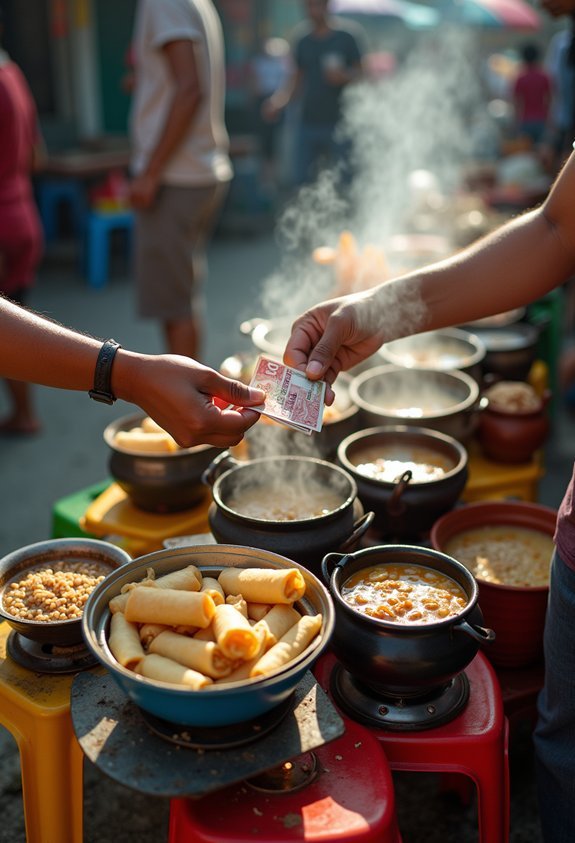
Want to know the fastest way to drain your travel fund? Eating at tourist-trap restaurants every single meal—trust me, I’ve made that expensive mistake more times than I’d like to admit.
Here’s what actually works: eat the local cuisine where locals eat. Those busy street food stalls with the long lines? That’s your goldmine. You’ll spend maybe three dollars on the most amazing tacos, dumplings, or grilled skewers you’ve ever tasted.
Skip the places with English menus and photos (usually overpriced). Instead, follow your nose—and the crowds. Markets are incredible for cheap, authentic meals.
And honestly? Street food often tastes better than fancy restaurants anyway.
Your wallet will thank you, and your taste buds will too. Before you head out, translate your daily food budget into hours of work to help you stick to smart spending decisions while abroad.
Taking Advantage of Free Activities and Attractions
While everyone’s lining up to buy expensive attraction tickets, you can be out there experiencing the city for absolutely free—and honestly, some of my best travel memories didn’t cost me a dime.
Free walking tours are everywhere (just tip your guide a few bucks). Local festivals and community events happen constantly—you’ll stumble into street fairs, concerts, and cultural exchanges just by wandering around.
Public parks and nature trails offer outdoor adventures without the entrance fees, and most cities have museum free days if you plan ahead.
Art galleries often don’t charge admission, and volunteer opportunities let you connect with locals while giving back.
The best part? These experiences feel more authentic than any overpriced tourist trap ever could.
I’ve found that focusing on free activities creates mental decluttering by eliminating the pressure to overspend and helps me appreciate what truly matters during my travels.
Working While Traveling to Offset Costs

If you’re planning a longer trip, working along the way can stretch your budget indefinitely—and honestly, it’s easier than you’d think.
Remote work and freelance opportunities let you earn from anywhere with WiFi (hello, beach office). Travel blogging takes time to monetize, but seasonal jobs—like harvest work or ski resort gigs—pay immediately.
Work exchanges are brilliant. You trade a few hours daily for accommodation and meals, meeting locals while saving serious cash.
Teaching abroad offers structured income, or go full digital nomad with online consulting. Volunteering abroad sometimes includes room and board, though it won’t pad your wallet.
The beauty? You’re not just saving money—you’re extending your adventure indefinitely while actually experiencing places deeper than any two-week vacation ever could. Working remotely means you can redefine enough for yourself—enough income to keep traveling, enough structure to stay productive, and enough freedom to embrace spontaneity when it knocks.
Using Travel Rewards and Credit Card Points
Why aren’t more budget travelers obsessed with travel rewards? Seriously—reward programs are basically free money you’re leaving on the table.
Here’s your game plan:
- Sign up for travel credit cards with big welcome bonuses (we’re talking 50,000+ points)
- Use your card for everyday purchases like groceries and gas—not extra spending
- Pay off the balance monthly to avoid interest (crucial!)
- Stack points with airline and hotel programs for double rewards
Smart credit card strategies can score you free flights and hotel stays within months. I’m not kidding—my friend Sarah flew to Portugal using points she earned buying her regular stuff.
The trick? Treat your rewards card like a debit card, spending only what you already have. It takes discipline, but man, does it pay off.
Before signing up for multiple cards, implement a 24-hour pause to compare annual fees, point values, and redemption restrictions—this prevents impulse applications that might not align with your actual travel goals.
Cutting Daily Expenses at Home to Fund Your Adventures

The real magic happens before you even book that flight—right there in your everyday spending habits where money just vanishes into thin air.
You’d be shocked how fast grocery budgeting can fill your travel fund—I’m talking meal planning, buying store brands, and skipping those “convenient” pre-cut vegetables that cost triple.
Every dollar you don’t spend on overpriced snacks becomes a dollar toward your adventure.
Skip the $6 coffee today—that’s a street food feast in Bangkok tomorrow.
And utility savings? Game-changer.
Lower your thermostat by two degrees (you won’t even notice), unplug devices when you’re not using them, and suddenly you’ve got an extra fifty bucks monthly.
That’s a hostel bed in Portugal or a train ticket through the Swiss Alps.
Small sacrifices at home create big possibilities abroad—and honestly, you won’t miss that premium cable package when you’re exploring ancient temples.
You may also like:





Try setting up automated micro-transfers of just a few dollars daily to your travel fund—you’ll barely notice the money leaving, but it adds up to an extra hundred bucks or more each month.
In case you were wondering
How Do I Handle Travel Insurance Costs on a Tight Budget?
You’ll find affordable options by comparing multiple providers online and choosing basic coverage that fits your needs. Look for insurance discounts through credit cards, memberships, or annual plans if you’re traveling frequently throughout the year.
What Should I Do if I Have a Travel Emergency With Limited Funds?
Like a sailor seeking harbor in a storm, you’ll need emergency funds first. Contact your embassy, tap local resources, and reach out to family. Don’t hesitate—hospitals and hostels often offer payment plans for travelers.
How Can I Travel on a Budget With Children or Family Members?
Choose family-friendly destinations with free attractions like parks and beaches. You’ll find budget-friendly activities include hiking, picnics, and museum free-days. Cook meals together, use public transportation, and let kids help plan affordable adventures they’ll enjoy.
Should I Use a Travel Agent or Book Everything Independently When Budgeting?
You’ll typically save more with independent booking since there’s no commission. However, travel agent pros include finding deals you’d miss and handling complications. Compare both options—agents sometimes access exclusive packages that offset their fees.
How Do I Maintain My Budget When Traveling With Friends Who Overspend?
Set firm spending boundaries upfront—here’s the secret: budget communication saves friendships. You’ll discuss costs before booking, suggest free activities, and don’t feel pressured. Sometimes you’ll skip expensive dinners, and that’s perfectly okay.
Conclusion
The world’s your oyster—you just need to pack smart and spend smarter. You’ve got the tools now: savvy saving tricks, budget hacks, and that unbeatable determination to make travel happen (even when your bank account’s giving you major side-eye).
So stop waiting for the “perfect time” with loads of cash. Book that ticket, embrace the adventure, and remember—the best stories don’t come from five-star resorts anyway.
Your journey starts now.