How to Create Space for What Actually Matters
Imagine your life as a room where the things you truly care about are buried under clutter you never chose. You’re busy, stretched thin, and yet the most important parts of your life keep getting pushed to “someday.” It doesn’t have to stay that way. When you start clearing space with intention—physically, mentally, and in your schedule—you unlock energy, focus, and peace you didn’t know you had. The shift begins with one simple decision…
Clarify What Truly Matters to You

Where do you feel most alive, and what quietly drains you? Start there. Clarifying what truly matters means noticing when your energy, curiosity, and sense of meaning rise.
Do a simple values assessment: list what you care about most—growth, relationships, contribution, creativity, health, faith, adventure, stability, anything real for you. Then rank them.
During personal reflection, ask, “If I could only keep three, which would stay?” Let your answers surprise you. Write concrete statements: “I value deep connection over surface approval,” “I value learning over looking busy.”
When you name your priorities, decisions get lighter, and “no” becomes a tool, not a guilt trip. You’re not chasing an ideal life; you’re choosing an honest one. That clarity guides every new commitment you say yes.
Audit Where Your Time, Energy, and Attention Go
Something powerful happens when you stop guessing where your days go and actually look. For one week, capture everything you do using simple time tracking: work, scrolling, talking, resting. Don’t judge; just observe.
Then review it against what you said matters most. Notice what expands and what shrinks.
Next, try energy mapping, noting when you feel focused, drained, or inspired throughout the day. Match demanding tasks with high-energy windows and batch lighter tasks when your energy dips.
Finally, examine your attention. What steals it—notifications, open tabs, certain people, worries? Turn off what you can, set boundaries where you need to, and choose one daily action that brings your time, energy, and attention back into alignment.
Repeat this regularly so your life stays intentionally directed.
Simplify Your Physical Space With Purpose

As you gain clarity on how you spend your time, energy, and attention, your surroundings become the next lever you can pull.
Your environment either supports your priorities or constantly distracts you, so choose minimalist living on purpose, not by accident.
Use intentional decluttering to align what you own with what you value most.
- Identify one space you use daily and clear every surface. Keep only items that serve a real function or spark commitment to your goals.
- Sort remaining belongings into keep, donate, recycle, and trash. Decide quickly; trust your first instinct.
- Contain what’s left with simple bins or shelves, then label clearly.
- Establish visible “empty zones” that stay open, reminding you that space itself is valuable. Protect them as non-negotiable boundaries daily.
Design Daily Rhythms That Reflect Your Priorities
Even with a clear space and sharper focus, your days won’t change until your rhythms do.
Begin by naming your top three priorities for this season—relationships, health, meaningful work, or rest. Then design daily habits that put those first. Schedule them like non‑negotiable appointments: a quiet morning check‑in, a focused work block, an evening wind‑down.
Name your top priorities, then build daily, non‑negotiable rhythms that quietly protect what matters most
Link new habits to things you already do—after coffee, take a five‑minute pause; after lunch, plan tomorrow’s single most important task. Create intentional routines for starting and ending your day so you’re not living on autopilot.
Review your rhythms weekly: What drained you? What energized you? Keep refining. Small, consistent shifts will realign your time with what truly matters. You’ll feel lighter, clearer, and more present in everything daily.
Set Boundaries Around Technology and Distractions
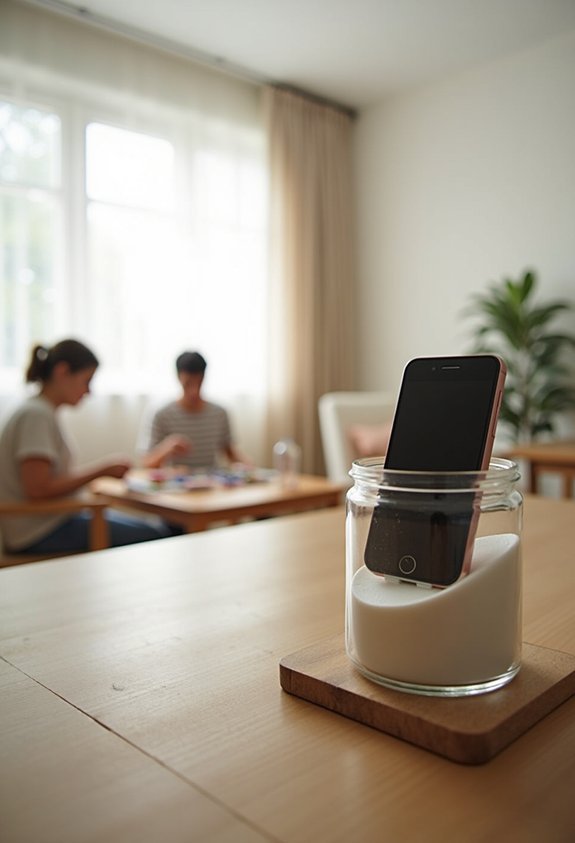
When your attention scatters across notifications, tabs, and endless scrolls, you quietly trade your priorities for everyone else’s agenda.
Technology isn’t the enemy; unexamined use is. You create space by choosing when and how you engage.
Try this:
- Silence nonessential notifications and schedule specific check-in times for email and social apps.
- Design phone-free zones—your bedroom, the dinner table, deep-work blocks—to protect focus and rest.
- Experiment with a weekly digital detox, replacing autopilot scrolling with reading, reflection, or unstructured thinking.
- Practice mindful consumption: before opening a device, name your purpose, set a time limit, and close it when you’re done.
As you honor these boundaries, you’ll notice more presence, clarity, and room for what truly matters.
Distraction shrinks; your most important work has breathing room.
You may also like:





Let Go of Obligations That No Longer Fit
You’ve started protecting your attention from constant digital demands; now it’s time to protect it from outdated commitments too.
Begin with an honest obligation evaluation. List every recurring meeting, group, favor, and task you’ve said yes to. For each one, ask: Does this align with my current values, energy, and season of life? If not, it’s a candidate to release.
Do a priority reassessment: what truly moves the needle on your wellbeing, relationships, and meaningful work? Let those few rise to the top.
Then communicate clearly. You don’t need lengthy explanations; a simple, respectful no is enough.
When guilt appears, remember: every unnecessary yes steals time from what matters most. You’re not quitting; you’re choosing deliberately. That choice creates real space for what matters.
Protect and Nurture the Space You’ve Created

Now that you’ve cleared room in your life, the real work is learning to protect and nourish it.
Guard this space like a priority, not a luxury. Commit to mindful practices that keep you grounded—breathing, journaling, moving your body with care.
- Define clear boundaries. Say no quickly when requests don’t align with your values or capacity.
- Schedule what matters. Block time for rest, creativity, and supportive relationships, then treat it as non‑negotiable.
- Monitor your energy. Notice habits, screens, or people that drain your emotional well being, and limit their access.
- Make intentional choices. Ask, “Does this expand or crowd my life?” Choose the option that protects your space and future self.
Return to this question whenever your calendar feels crowded.
Conclusion
Now it’s your turn to investigate the truth of the theory that less really can mean more. As you clarify what matters, clear your space, and guard your time, you’ll feel a deeper ease and focus take root. Start with one small change today, then another tomorrow. Bit by bit, you’ll design a life that reflects your real priorities—and you’ll finally have room to show up fully for what actually matters in every single day.