The Real Reason No-Buy Challenges Feel So Hard (And What Works Instead)
No-buy challenges trigger psychological reactance—your brain rebels when freedom feels threatened, making you crave exactly what you banned. The restriction activates dopamine pathways that intensify desire rather than diminish it, and one slip feels like total failure under all-or-nothing rules. What actually works is a sustainable framework: automate savings first, spend what’s left guilt-free, and replace shopping’s quick hit with activities that genuinely satisfy, like creative hobbies or volunteering. There’s a gentler way to align spending with what truly matters.
What you will leave with
- Strict no-buy rules trigger reactance, making forbidden items more desirable and intensifying cravings instead of reducing them.
- Shopping activates dopamine reward pathways; abrupt cutoff causes brain to amplify cravings or seek satisfaction elsewhere.
- All-or-nothing rules create failure spirals where one purchase feels like total defeat, often triggering excessive rebound buying.
- Sustainable frameworks use autopilot savings and value-aligned spending instead of willpower-draining restrictions that inevitably break down.
- Replacing shopping requires alternative dopamine sources like creative hobbies or volunteer work that provide meaningful engagement without cost.
Why Your Brain Rebels Against Rigid Spending Rules
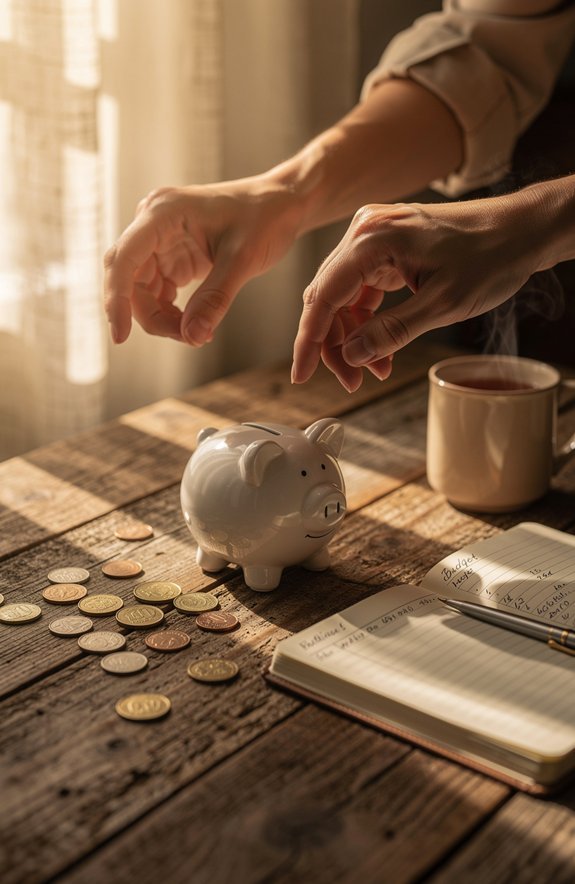
When you set a rule like “I’m not buying clothes for an entire year,” something strange happens in your brain within the first week.
That forbidden feeling kicks in, hard.
It’s called reactance theory—the more you restrict something, the more intensely you want it.
Your brain literally pushes back against being told “no,” even when you’re the one setting the boundary.
Then there’s the dopamine dynamics at play.
Shopping triggers reward pathways, small hits of satisfaction you’ve trained yourself to expect.
Cut it off completely, and your brain scrambles for that feeling elsewhere, often intensifying cravings.
The rigidity itself becomes the problem.
All-or-nothing rules create pressure, and pressure creates cracks.
One slip feels like total failure, which makes quitting easier than continuing.
Instead of rigid restrictions, simple pause rules can weaken emotional arousal and restore impulse control without triggering the same rebellious response.
The Hidden Emotional Triggers Behind Your Shopping Habits

Before you ever open your wallet, there’s a feeling—something quiet and insistent that whispers you need this right now.
You’re not actually shopping for the thing itself. You’re reaching for the person you once were, chasing nostalgia triggers that promise to recapture a moment when life felt simpler, more exciting.
Or you’re buying into identity cues, constructing who you think you should be—the pulled-together professional, the trendy friend, the person who’s it all figured out.
The truth is, shopping became your shortcut to feeling something, anything, when everything else felt stuck. It’s not weakness. It’s your brain doing exactly what it was designed to do: seek comfort, belonging, quick relief from the weight of just existing.
These emotional states actually heighten your sensitivity to rewards while diminishing the self-control you’d normally rely on to pause before clicking “buy now.”
The Deprivation Cycle: How Restriction Leads to Overspending

You decide to fix it—you’re done with the impulse buys, the cart abandonment guilt, the credit card statements that make your stomach drop. So you declare a total ban, a full stop, zero tolerance.
And for a week, maybe two, it feels powerful. Then scarcity rebound kicks in—that gnawing sense of being denied, of missing out, of watching everyone else have what you can’t. The rules start feeling punitive instead of protective.
You notice cue stacking: the ad, the empty cart notification, the influencer unboxing, all piling up until your resistance cracks. And when it does, you don’t just buy the thing. You buy three versions of it, because the deprivation made the craving louder than it ever was before.
This is where structured waiting periods work differently—they don’t eliminate the option to buy, they just create deliberate distance between the trigger and the transaction.
Creating a Sustainable Spending Framework That Actually Feels Good
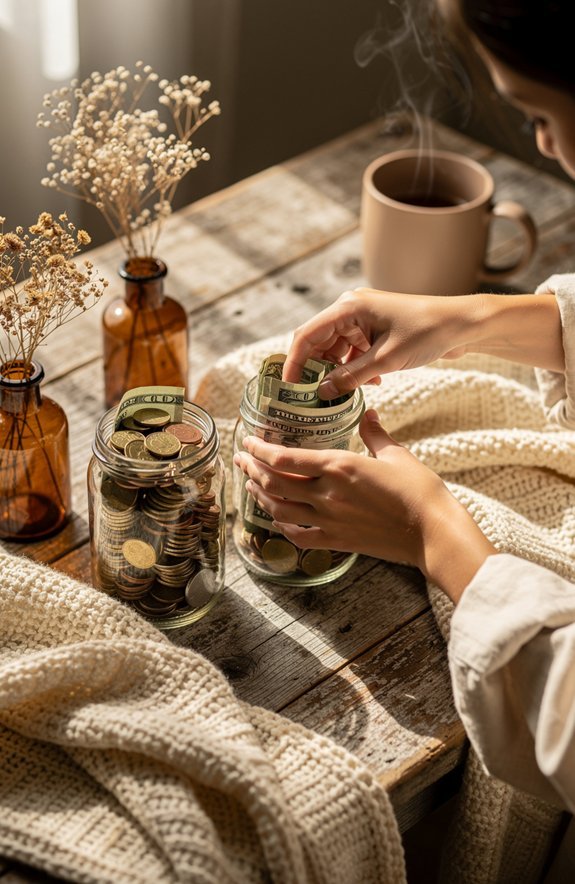
The sustainable part isn’t about gritting your teeth harder—it’s about building a system that doesn’t require willpower at all.
Stop fighting yourself with willpower—build systems that make the right choices automatic.
Here’s what I’ve learned: value alignment matters more than restriction.
When you spend on what genuinely lights you up, coffee with a friend, plants that make your space feel alive, those purchases don’t leave you hollow.
Autopilot savings removed the constant decision-making that wore me down.
Twenty percent vanishes before I see it, funding goals I actually care about.
The rest? I spend it without guilt, because the framework handles the hard part.
It’s not deprivation when your money reflects who you are. It’s relief, honestly, like finally exhaling after holding your breath too long.
This approach mirrors how budget planning aligns spending with your values rather than forcing you into arbitrary limitations that breed resentment.
Replacing the Shopping High With Activities That Truly Satisfy

Shopping gave me something real, even if I didn’t want to admit it. That click, that package on the doorstep, those five minutes of pure excitement—they mattered because everything else felt flat.
You may also like:





So when I stopped buying, I’d to face the void. What actually fills it?
Creative hobbies helped, honestly. Not Instagram-worthy ones, just messy drawing or baking that flopped. Volunteer work surprised me too, giving me that same hit of newness without the credit card bill.
The trick wasn’t replacing shopping with one perfect thing. It was recalibrating my dopamine expectations, learning that satisfaction could be quieter, slower, and still count as real. I learned to track my mood responses to different activities, which helped me identify what actually regulated my stress versus what just gave me a quick hit that faded fast.
In case you were wondering
How Do I Explain My No-Buy Challenge to Friends Without Sounding Preachy?
You’ll avoid sounding preachy by using empathy framing—focus on your own goals, not others’ habits. Try casual phrasing like “I’m testing this out” or “trying something new for myself” rather than prescribing what anyone else should do.
Can No-Buy Challenges Work if I’m Already Living Paycheck to Paycheck?
Traditional no-buy challenges won’t help much if you’re already stretched thin. Instead, focus on intentional budgeting to find small leaks and redirect them toward emergency savings, even if it’s just a few dollars weekly.
What Counts as an Essential Versus Non-Essential Purchase During a No-Buy?
The line in the sand: health essentials, groceries, and utility payments are essential; discretionary items like new clothes, decor, or hobby supplies aren’t. You’ll need to define gray areas upfront based on your lifestyle.
Should I Tell My Partner or Family About My Spending Challenge?
Yes, you should. Sharing your challenge builds emotional transparency and prevents secret rule-breaking. If debt or overspending affected your relationship, it’s essential for trust rebuilding. Partners can also provide accountability and support when temptation strikes.
How Long Should a No-Buy Challenge Last to See Real Results?
Forever, obviously—why stop at a year when you can white-knuckle indefinitely? Seriously: 30 days lets you disrupt habit formation and hit goal benchmarks without triggering rebound spending or emotional burnout that derails progress.
Conclusion
You know that saying about how you can’t hate yourself into a version you’ll love? Same goes for spending. I’ve tried the punishment approach, the rigid rules, the shame spirals. None of it stuck. What actually changed things was treating myself like someone worth taking care of, not controlling. Your relationship with money shifts when you stop fighting yourself and start listening instead.