The Room-by-Room Decluttering Plan That Actually Works
Start with your bedroom’s flat surfaces—nightstands and dressers—because visual clutter actually ruins your sleep quality. Then tackle your kitchen pantry by pulling everything out (yes, it’ll look worse first), tossing expired stuff, and keeping only what you actually use. Set up four simple boxes labeled Keep, Donate, Trash, and Relocate before you begin any room. The secret isn’t purging faster—it’s building stupidly simple maintenance habits like one-minute resets before bed, so clutter doesn’t creep back in. Stick around to discover the complete system that makes decluttering finally stick.
Key Takeaways
- Set up four labeled boxes (Keep, Donate, Trash, Relocate) as your decluttering command center before starting any room.
- Begin with the kitchen pantry by removing expired items, grouping similar products, and keeping only regularly used essentials.
- Clear bedroom flat surfaces first, limit nightstands to three essential items, and address hidden under-the-bed clutter.
- Tackle living spaces using a basket system for misplaced items and focus on one problem zone at a time.
- Maintain organization with daily one-minute resets, weekly 15-minute room sweeps, and a one-in, one-out rule for new items.
Why Traditional Decluttering Methods Leave You Stuck and Frustrated

You’ve probably tried the popular decluttering methods before—you know, the ones that promise you’ll transform your entire home in a weekend or feel pure joy from every single possession.
But here’s the thing: those approaches often ignore your emotional attachment to stuff (hello, grandma’s china you never use but can’t donate). They also skip the practical strategies that actually fit into your real, messy life.
Instead, you’re left sorting through everything you own in one exhausting marathon session—only to quit halfway through, surrounded by bigger piles than when you started.
Sound familiar?
The problem isn’t you. It’s the method.
What you need is a realistic plan that respects both your feelings and your schedule, giving you manageable steps that actually stick. These marathon sessions also trigger decision fatigue, where each choice to keep or discard something drains your mental energy until you can’t make any more choices at all.
The Essential Preparation: Setting Up Your Decluttering System Before You Start
Before you touch a single drawer or open that scary closet (you know the one), you need to set up your decluttering command center—and no, this doesn’t mean buying fancy organizing supplies you’ll never use.
Here’s what you actually need: four boxes labeled Keep, Donate, Trash, and Relocate (because let’s be honest, half your stuff is just living in the wrong room). Grab some trash bags too.
Four boxes, zero excuses: Keep, Donate, Trash, Relocate—because your stuff is probably just in the wrong room anyway.
The real prep work? Getting your decluttering mindset right. You’re not just moving piles around—you’re making decisions that’ll stick.
Skip the Pinterest-perfect organizing supplies for now. They’re a procrastination trap disguised as productivity.
You just need simple containers and fifteen minutes of mental preparation. Remember that letting go of items is actually a practice of emotional care, not just physical tidying.
That’s it.
Now you’re ready to actually start.
Kitchen and Pantry: Tackling the Heart of Your Home First
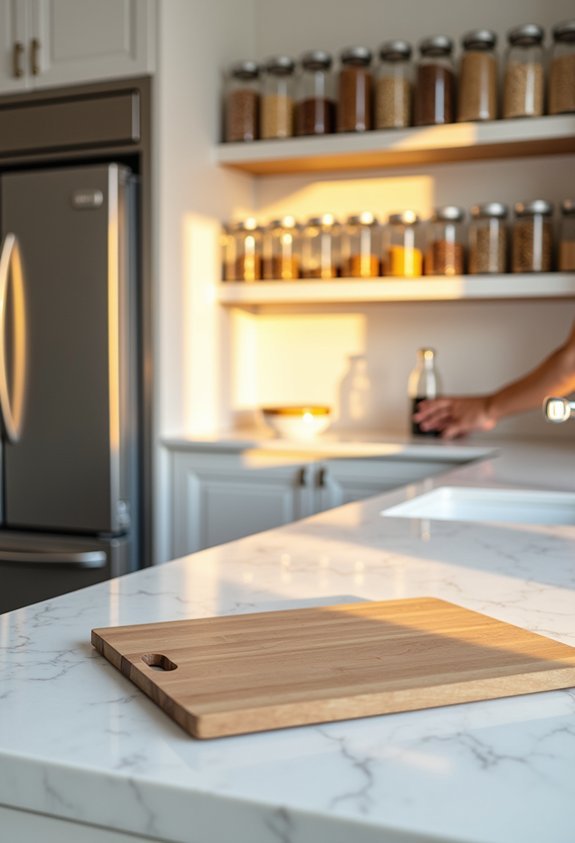
The kitchen deserves your attention first because it’s where clutter does the most damage—expired food, mystery Tupperware without lids, and those three cheese graters you somehow accumulated even though you barely cook.
Start with your pantry essentials: toss anything expired (yes, even that fancy mustard from 2019), and group similar items together so you can actually see what you have.
Kitchen organization becomes surprisingly easy when you’re not playing hide-and-seek with your pasta every night.
Pull everything out—counters, drawers, that scary cabinet under the sink. It’ll look worse before it gets better, but that’s progress.
Keep only what you use regularly. Donate duplicates.
Those specialty gadgets you’ve touched once? They’re taking up valuable space you actually need.
Assign clear homes for every item using simple, labeled containers so you always know exactly where things belong.
Bedroom Sanctuary: Creating a Clutter-Free Zone for Better Sleep
Your bedroom’s current state—clothes draped over that chair (you know the one), nightstand buried under books you meant to read, charging cables creating a tangled sculpture—is probably sabotaging your sleep more than you realize.
Here’s your bedroom organization game plan:
- Clear flat surfaces first: Nightstands, dressers, and that notorious chair need to serve their actual purpose—not as clothing storage.
- Tackle under-the-bed chaos: Those dust bunnies aren’t paying rent, and neither should random junk.
- Simplify your nightstand: Keep only three items maximum (lamp, current book, water bottle).
Studies show your sleep environment directly affects rest quality, and visual clutter literally stresses your brain.
You deserve a space that feels calm—not like a laundry explosion happened.
As you declutter, you might notice unprocessed emotions surfacing—grief over items connected to past versions of yourself, or guilt about purchases that never served you—and that’s actually part of the healing process.
Start tonight. Just one surface.
Bathroom Blitz: Quick Wins That Build Momentum
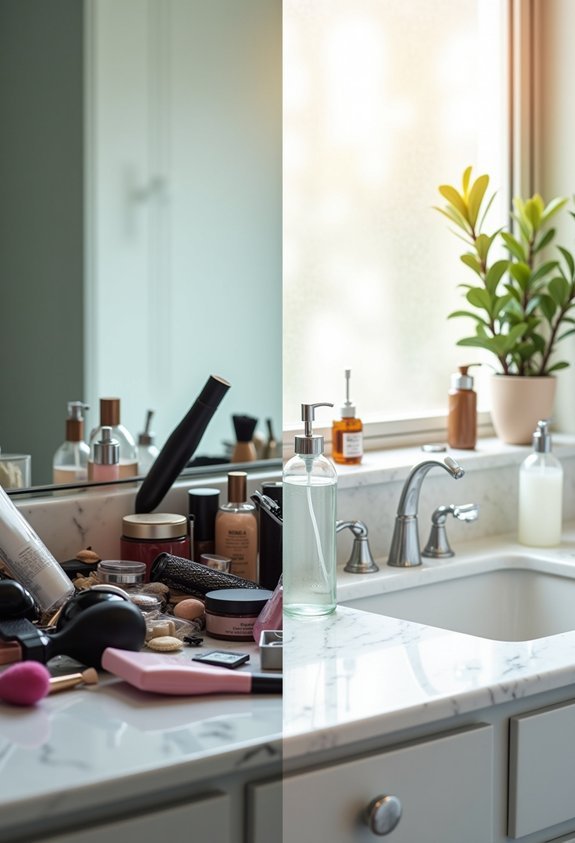
Why does such a small room manage to accumulate *so much stuff*?
Let’s tackle this space fast—because nothing builds confidence like seeing your bathroom counter again.
Start with expired products. Toss that sunscreen from 2019, the crusty mascara, and mystery creams you’ve forgotten about (yes, they’re probably bad now).
You’ll instantly reclaim space and feel accomplished.
Next, identify your true bathroom essentials—the stuff you actually use daily.
Everything else? Find storage solutions elsewhere or donate it. That sample collection isn’t serving you if it’s creating chaos.
Group similar items together: skincare here, hair stuff there.
Use drawer dividers or small bins to maintain order.
The key is making decisions within seconds—avoid the emotional spiral that keeps you holding onto products you’ll never actually use.
Done already?
See how quick wins create momentum? You’re unstoppable now.
Living Spaces: Decluttering the Rooms Where Life Actually Happens
Now that you’ve conquered the bathroom, let’s move into the spaces where you actually *live*—where Netflix happens, where mail piles up mysteriously overnight, and where that throw blanket somehow migrated from the couch to the floor (again).
Your living room holds family memories, yes, but it shouldn’t hold everything you’ve touched in the past week. Start with these quick wins:
- Clear all flat surfaces (coffee table, side tables, TV stand)
- Gather rogue items that belong elsewhere—create a basket system
- Tackle one “problem zone” like the mail corner or random toy explosion
If you’ve got kids, playroom organization doesn’t mean perfection. Simple storage solutions—labeled bins, low shelves they can reach—work better than complicated systems you’ll abandon by Thursday.
Focus on function, not magazine-worthy aesthetics. Set up dedicated drop zones near your entryway for keys, bags, and daily essentials to prevent items from scattering across every surface.
Home Office and Paper Piles: Conquering the Most Avoided Areas
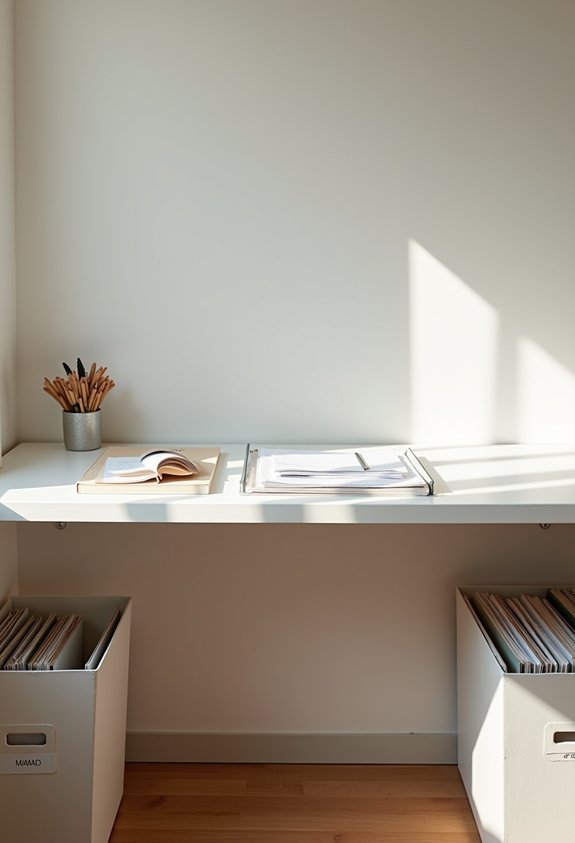
How does a single sheet of paper multiply into fourteen identical permission slips, three outdated insurance forms, and that recipe you swore you’d try?
Paper management becomes impossible when you treat your desk like a horizontal filing cabinet.
Here’s the truth: you need three bins—shred, recycle, action required. That’s it.
Touch each paper once and decide immediately (because shuffling piles isn’t office organization, it’s procrastination with extra steps).
Bills go into one designated folder, important documents get scanned then filed, and everything else—yes, that flyer from 2019—goes straight to recycling.
Create a “deal with it” basket for urgent items, but empty it weekly or you’ve just made another decorative pile.
When mindful consumption becomes your default, you’ll stop printing things “just in case” and start questioning whether you need the physical copy at all.
The goal isn’t perfection. It’s finding last year’s tax return without excavating.
Maintaining Your Decluttered Home Without Constant Effort
After spending two weekends decluttering your entire house, the last thing you want is watching it all slide back into chaos by Thursday.
Here’s the truth: maintenance strategies work best when they’re basically invisible. You need systems so simple you’ll actually use them—even on your most exhausted Wednesday evening when you can barely remember your own name.
You may also like:


The secret to habit building? Making it stupidly easy:
- One-minute reset before bed – just toss visible clutter into baskets (we’re not aiming for perfection here)
- “Don’t put it down, put it away” – sounds preachy, but it genuinely works once you remember
- Weekly 15-minute room sweeps – set a timer and blitz one space
Small habits beat marathon cleaning sessions every single time.
Another powerful way to prevent backsliding is adopting a one-in, one-out rule where each new item you bring home means one existing item gets donated or discarded.
In case you were wondering
What Should I Do With Sentimental Items I Can’t Decide About?
Create a “maybe box” for items with strong emotional attachment and store it away for six months. You’ll gain perspective on what truly matters for memory preservation. If you don’t miss them, you can let go easier.
How Do I Declutter When My Family Members Resist Throwing Things Away?
Think of clutter as anchors weighing down your ship. Start family communication by listening to their attachment reasons. Develop compromise strategies like designated keepsake boxes or trial separations. You’ll navigate resistance together when everyone feels heard and respected.
Should I Hire a Professional Organizer or Do It Myself?
You’ll benefit from DIY organizing if you’re budget-conscious and motivated. However, hiring a professional organizer provides expert systems, accountability, and faster results. Consider cost considerations against organizing benefits—maybe start yourself, then hire help if you’re stuck.
What’s the Best Way to Sell or Donate My Decluttered Items?
Picture your clutter finding new life elsewhere. You’ll maximize returns by listing valuable items on online marketplaces like Facebook Marketplace or eBay, while donating everyday goods to local charities for tax deductions and community impact.
How Long Does the Entire Room-By-Room Decluttering Process Typically Take?
The entire process typically takes 2-6 months, depending on your home’s size and clutter level. You’ll need realistic time estimates for each room. Create a decluttering schedule that allows 2-4 weeks per room for sustainable progress.
Conclusion
You’ve done it—you’ve walked through every room, made the tough decisions, and your home finally feels lighter. But here’s the thing nobody tells you: the real test starts tomorrow morning when you’re rushing to find your keys. Will you slip back into old habits, or have you actually changed? That answer depends on what you do in these next twenty-four hours. Don’t waste this momentum.