15 Smart Shopping Wins That Made Me Proud
You’ll feel like a retail genius when you score designer jeans for $39 instead of $198, snag a $900 laptop for $247 through a Black Friday pricing error, or stack cashback apps with credit card rewards to essentially get paid for buying detergent. Shop charity stores in wealthy neighborhoods, buy seasonal items at 70-80% off at season’s end, try refurbished electronics with warranties, and set alerts for 3 AM flash sales—because the best deals reward those who know exactly where and when to look.
Key Takeaways
- Charity shops in affluent neighborhoods and end-of-season sales offer 70-80% discounts on quality items with strategic timing.
- Stacking cashback apps with credit card rewards and price matching at major retailers maximizes savings on every purchase.
- Generic brands often match name-brand quality at lower prices, from medications to batteries to groceries.
- Black Friday pricing errors and refurbished electronics provide significant tech savings when combined with quick checkout and price tracking.
- Multi-function tools and clearance designer items offer long-term value through reduced clutter and cost-per-use analysis.
The Multi-Function Kitchen Gadget That Replaced My Entire Drawer

You know that kitchen drawer we all have—the one crammed with potato peelers, garlic presses, and at least three types of zesters you swore you’d use?
Mine’s gone.
Well, the drawer’s still there—but now it actually closes properly, which feels like winning the lottery.
I found this multi-function gadget that does literally everything those twelve tools did (minus the guilt of never using them).
We’re talking slicing, dicing, peeling, grating—the works.
Kitchen organization has never felt so satisfying, and honestly, the gadget versatility means I’m actually cooking more instead of digging through utensil chaos.
Best part? It’s dishwasher-safe, so there’s no excuse not to use it.
My counters are clearer, my drawers are calmer, and I’m feeling like a genuine adult.
Finally.
This purchase actually introduced me to the one-in-one-out rule—replacing multiple items with one better solution instead of just adding more stuff to the pile.
Designer Jeans From the Clearance Rack at 80% Off
Some people think designer denim is only for trust-fund kids or people who’ve really got their lives together—but I’m here to tell you that clearance racks don’t discriminate, and neither should your wardrobe.
Clearance racks are the great equalizer—designer denim for everyone, no trust fund required.
I found my favorite pair of jeans—originally $198—marked down to just $39 because they were last season’s wash. Who cares? They fit like they were custom-made for me, and nobody’s checking the tag to see if I bought them in spring or fall.
The trick with clearance treasures is patience. You’ve got to dig through the picked-over sizes and weird colors, but when you find that perfect pair of designer deans hiding in the back? Pure victory.
It’s like winning the lottery, except you actually get something useful. Plus, focusing on cost per use means these jeans will end up being pennies per wear compared to cheaper pairs I’d replace every year.
My Perfectly Timed Tech Purchase During Black Friday Price Errors

Three years ago, I scored a $900 laptop for $247 because someone at a major retailer’s tech department clearly had a very bad day—and I happened to be refreshing the page at exactly the right moment.
Black Friday price errors are like finding actual gold in your backyard—rare, exciting, and totally worth bragging about forever.
Here’s the thing about being a savvy shopper: you’ve got to stay alert when retailers accidentally list products at ridiculously wrong prices.
Most companies will honor these mistakes if you check out fast enough (before their panicked tech team catches on).
My laptop still runs perfectly, and every time I open it, I feel like a tech savings champion.
Was it luck? Sure. But I was ready when opportunity knocked—and that’s what smart shopping’s all about.
While I jumped on this deal instantly, using price trackers to verify whether discounts are genuine can help distinguish real bargains from manufactured urgency.
The Generic Brand That Actually Outperformed the Name Brand
When I switched from Advil to the Walmart generic ibuprofen, I expected to tolerate a slightly inferior product—but honestly, my headaches disappeared just as fast (maybe even faster, though that’s probably just my bias talking because I saved twelve bucks).
Here’s what surprised me most about my generic brand comparison journey:
Generic products delivered identical results at a fraction of the cost—my comparison journey completely changed how I shop.
- Taste test results for store-brand cereals beat Cheerios in my completely unofficial kitchen experiment (my kids agreed, and they’re brutally honest critics).
- Generic batteries lasted nearly identical times in my TV remote—seriously, I timed them because I’m nerdy like that.
- Store-brand trash bags held up through Thanksgiving leftovers without a single tear.
You don’t need fancy packaging when the ingredients list looks identical.
I apply this same logic to secondhand kitchenware, which often sells for 50–90% less than new while offering the same durability.
Sometimes being smart means ignoring the logo completely.
Stacking Cashback Apps and Credit Card Rewards on One Purchase

Ignoring logos saves you money at the shelf, but here’s where things get really fun—you can actually get paid multiple times for buying the exact same item.
I’m talking cashback stacking, and it’s honestly wild how many people don’t know about this.
You scan an app like Ibotta, pay with a credit card that gives you credit rewards, and boom—double the money back. Sometimes triple if the store runs its own rewards program (yes, really).
I once bought laundry detergent and got $2 from the app, 2% from my card, plus store points. For detergent!
It feels like finding a cheat code in real life. Takes an extra thirty seconds, but you’re literally getting paid to shop smart.
That’s a win worth celebrating.
While you’re maximizing rewards on things you buy, it’s worth checking if you’re still paying for brand names when private-label options offer the same quality at 20–50% less—that’s where the real savings multiply.
The Viral Product I Snagged Before It Sold Out Forever
The trick? Set those stock alerts and act immediately when you get the notification.
No overthinking, no “I’ll wait until payday”—because by then, it’s gone.
Trust me on this one.
But before you click “buy now,” recognize that scarcity tactics are designed to override your rational thinking and trigger impulse purchases you might regret later.
Negotiating My Way to Free Shipping and 25% Off

And they did.
Free shipping *plus* 25% off my entire order.
Here’s the thing about shipping strategies and discount tactics—the worst they can say is no, and you’re no worse off than before.
But when they say yes? You’ll feel like a genius.
Just be polite, honest, and ready to ask.
This kind of deliberate friction between wanting something and actually buying it gives you space to evaluate whether you’re making a purchase that aligns with your real needs.
The Thrift Store Find That’s Worth Ten Times What I Paid
Thrift stores are treasure hunts where patience pays off—literally. You never know what thrift store treasures you’ll stumble upon while browsing those dusty shelves and overstuffed racks.
I once grabbed a vintage designer coat for $12—turns out it had unexpected resale value of $150. Sometimes you just get lucky.
Here’s what to look for:
- Designer labels (even if you don’t recognize them, Google is your friend)
- Vintage electronics or collectibles in good condition
- Quality furniture pieces that just need minor TLC
The key? Don’t rush through. Take your time, check every tag, and trust your instincts when something feels special.
For the best selection, try visiting charity shops in higher-income neighborhoods on weekday mornings when fresh stock hits the floor.
That ten-times markup? It’s out there waiting for you—you just have to dig a little deeper than everyone else.
Buying Seasonal Items at the End of Season for Next Year
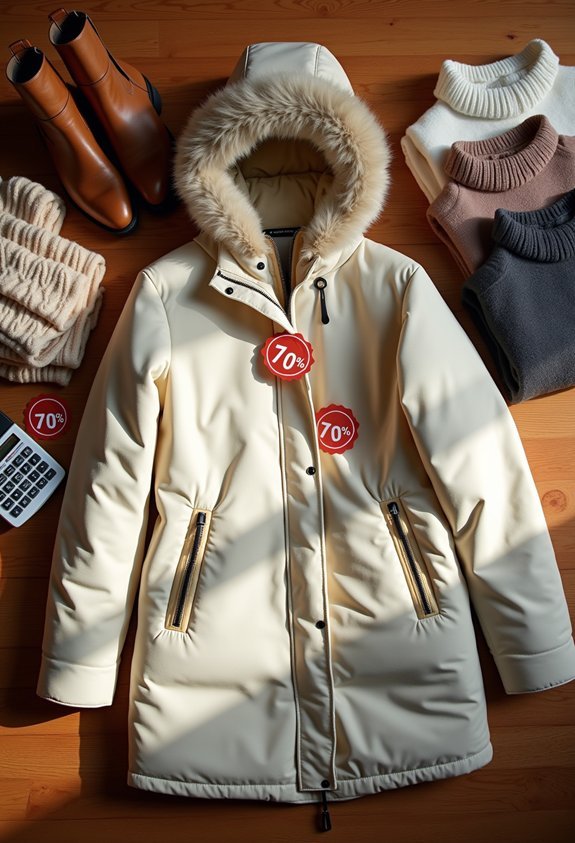
When winter clearance racks hit in February, that’s your golden ticket to next year’s wardrobe—and the savings are honestly ridiculous.
February clearance racks are your secret weapon for next year’s wardrobe at 70-80% off—future you will be thrilled.
I’m talking 70-80% off those cozy sweaters you’ve been eyeing all season. The key to seasonal savings? Think ahead while everyone else moves on to spring fashion.
Sure, it feels weird buying winter boots when tulips are blooming, but future planning means you’re basically paying yourself back next December.
Your future self will literally thank you when you’re not panic-buying expensive holiday decor or last-minute winter gear.
I snagged outdoor string lights for $4 (originally $25!) last January, and my summer patio looked incredible without the usual sticker shock.
The secret? Buy what you’d actually use—not just whatever’s cheap. Planning treats in advance not only captures these seasonal sales but helps you avoid impulse purchases that can quietly drain your budget throughout the year.
The Amazon Dupe That Saved Me $200 and Works Better
Speaking of smart savings—sometimes the best deals aren’t waiting for the right season, they’re hiding in plain sight on Amazon right now.
I needed a milk frother for my morning lattes (because $7 daily Starbucks runs were destroying my budget), and the fancy brand cost $250. The Amazon alternative? Just $47.
Game changer.
Here’s what made these cost effective solutions work:
- Read the reviews religiously—look for verified purchases with photos
- Compare features side-by-side—often the specs are identical
- Check the return policy—Amazon makes it risk-free to try
The “dupe” actually froths better than my friend’s expensive version.
Sometimes you’re just paying for a logo, and honestly? My wallet doesn’t care about brand names when my coffee tastes this good.
By comparing unit prices and features across similar products, I’ve learned to spot when cheaper alternatives deliver identical value—a strategy that’s saved me hundreds over the past year.
Price Matching My Way to the Lowest Price Anywhere
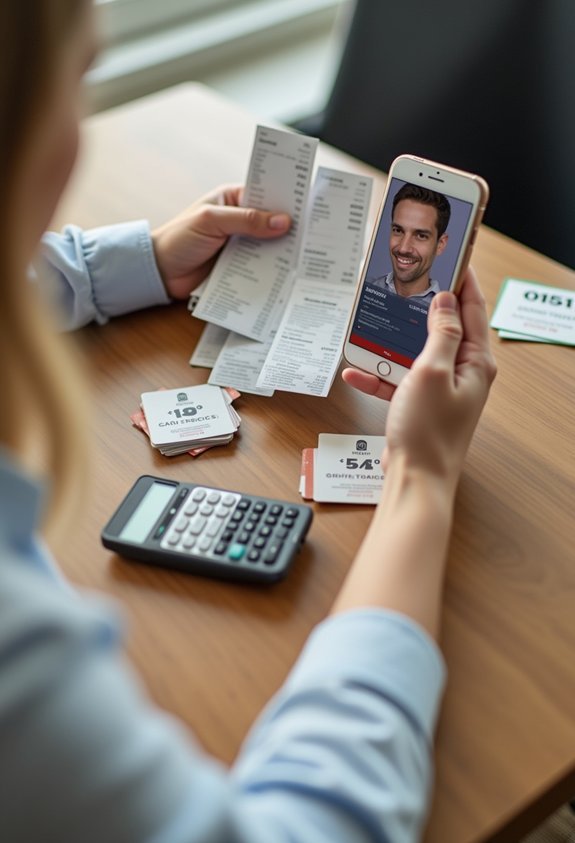
Most people don’t realize they can get stores to match competitors’ prices—but once you learn this trick, you’ll never pay full price again.
I spotted wireless earbuds at Target for $79, then checked the price history on my phone (yes, there are apps for that—game changer). Best Buy had them for $59.
Walked back to Target’s customer service, showed them Best Buy’s website, and boom—instant $20 savings.
Showed Target the competitor’s price on my phone—walked out paying $20 less without leaving the store.
No driving across town. No waiting for shipping.
The secret? Do quick competitor analysis before checkout. Most major retailers—Target, Best Buy, Walmart—will match verified online prices from competitors.
They’d rather keep your business than lose the sale.
It’s like having a personal shopping assistant in your pocket. Takes two minutes, saves real money.
Why wouldn’t you?
The Refurbished Electronics Purchase I Was Nervous About But Loved
Why did I wait so long to try refurbished tech?
I’d convinced myself it meant “broken and barely working”—but wow, was I wrong.
My refurbished laptop arrived looking brand new, and the electronics reliability blew me away.
It’s been running perfectly for two years now (knock on wood).
Here’s what made me a believer in refurbished benefits:
- The price was 40% less than buying new—same specs, way better deal
- It came with a warranty that covered me for a full year, so zero risk really
- The condition was pristine—I literally couldn’t find a scratch anywhere
Best part? I used the money I saved to upgrade my phone too.
Sometimes the “risky” choice turns out to be the smartest move you’ll make.
Joining a Warehouse Membership That Paid for Itself in Two Months

I’ll admit—I used to think warehouse memberships were only for people with giant families or small businesses, not regular folks like me living in a one-bedroom apartment.
But then I did the math.
After buying toilet paper, laundry detergent, and coffee beans on my first trip, I’d already saved $35—more than half the annual membership fee.
The warehouse benefits kept adding up: gas discounts (eighteen cents cheaper per gallon!), ridiculously affordable rotisserie chickens, and those massive bags of frozen fruit that lasted forever.
Two months in? I’d saved $95.
The membership savings paid for itself, and suddenly I felt like I’d cracked some secret code.
Turns out, you don’t need a huge house to benefit—just a little freezer space and smart planning.
The Flash Sale I Caught at 3 AM That Changed My Shopping Game
When insomnia struck that Tuesday night, I grabbed my phone and started mindlessly scrolling through my favorite retailer’s app—you know, the kind of thing you do when your brain won’t shut off at 3 AM.
That’s when I spotted it—a four-hour flash sale on kitchen appliances with prices slashed by 70%.
My late night shopping habit suddenly paid off big time.
Here’s what I learned about flash sale strategies:
- Set app notifications for your favorite stores (they often drop deals when most people are sleeping)
- Keep your payment info saved so you can checkout fast before items sell out
- Follow brands on social media where they announce surprise sales first
Now I’m that person who actually benefits from midnight scrolling sessions.
Worth it.
Using Coupon Codes, Points, and Gift Cards All at Once
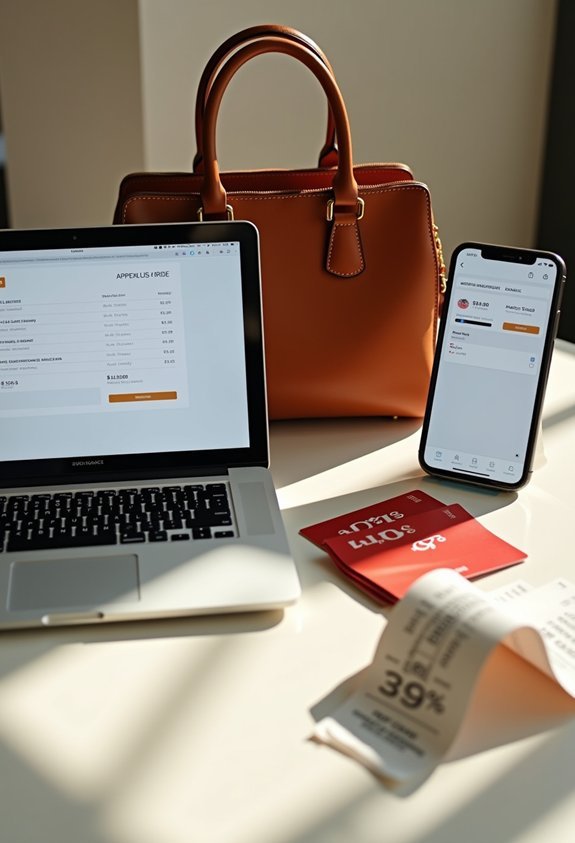
Most stores don’t exactly advertise this trick, but you can absolutely stack discounts—and it’s completely legal.
Here’s how coupon stacking strategies work: you apply a promo code, then use your rewards points, then pay the remaining balance with a gift card.
It’s like a beautiful discount sandwich.
I once bought running shoes using a 20% off code, 500 store points (worth $5), and a $25 gift card I’d been hoarding. My $80 shoes cost me $29 out-of-pocket—and I felt like a shopping genius.
The key to maximizing rewards programs? Check every possible discount before checkout.
Read the fine print (I know, boring—but worth it), and don’t be shy about asking customer service if you can combine offers.
Stack away.
You may also like:





In case you were wondering
How Do I Avoid Impulse Purchases When Hunting for Deals?
You’ll avoid impulse purchases by setting strict budgeting strategies before shopping and using deal alerts only for items you’ve pre-planned. Create a waiting list, sleep on decisions, and don’t browse sales without specific needs in mind.
What’s the Best Way to Track Prices Over Time?
Like a medieval scribe recording prices in ledgers, you’ll use price tracking apps and browser extensions. They collect historical data automatically, showing you price drops and trends so you’ll know when deals are genuine steals.
How Can I Tell if a Discount Is Actually Worth It?
You’ll know through discount comparison against regular prices and price evaluation using historical data. Check if the “sale” price actually beats typical costs, compare across retailers, and calculate the percentage savings to determine real value.
Are There Risks to Sharing Personal Data Across Multiple Shopping Apps?
Yes, you’re risking data breaches, you’re exposing yourself to targeted scams, and you’re creating detailed consumer profiles. Each app weakens your data privacy and app security, making you vulnerable to identity theft and unauthorized purchases.
What Should I Do if a Retailer Won’t Honor an Advertised Price?
You should document the advertised price with photos, then calmly reference consumer rights awareness when speaking with management. Use price negotiation tactics like requesting a competitor match, or file a complaint with consumer protection agencies if needed.
Conclusion
You’ve seen the wins, you’ve gotten the ideas—now it’s your turn to become a shopping genius yourself.
Start small. Stack one discount with another. Check that clearance section you always walk past. Sign up for price alerts on items you’re already planning to buy.
Because here’s the thing: every shopping victory starts with just paying attention, staying patient, and remembering that full price is always negotiable.
You’ve totally got this.