11 Surprisingly Satisfying Ways to Save Money This Month
You can save more this month without feeling deprived by making a few strategic shifts in how you spend. Try no-spend days, cook at home instead of defaulting to takeout, and use what you already own before buying more. Layer in small automated transfers, intentional subscription check-ins, and a 48-hour rule for non-essentials. Add a visual tracker and a few simple at-home swaps, and you’ll see why these 11 tactics feel surprisingly satisfying.
Turn No-Spend Days Into a Personal Challenge

Some of the most effective savings strategies cost nothing except intention, and no-spend days are a proven example.
Start by picking 4–8 no-spend days this month and mark them on your calendar. You’re simply committing to spend $0 outside fixed bills. Track your progress in a notes app or spreadsheet; data from budgeting apps shows people cut discretionary spending 15–25% when they pre-plan “zero” days.
Pick 4–8 no-spend days this month; pre-planned “zero” days typically cut discretionary spending by 15–25%.
To keep your no spend motivation high, define clear challenge rewards: if you hit every target day, you might transfer a fixed bonus, like $25, into savings or debt payoff.
When urges to buy appear, set a 24-hour delay and log the avoided purchase. Review totals weekly so you see concrete gains. That feedback loop keeps challenge cycle easier.
Make “Use What You Have” Your New Default
When you make “use what you have” your default, you turn every closet, pantry, and junk drawer into a savings tool instead of a spending trigger.
Start with a quick inventory assessment: list what you already own in food, toiletries, cleaning supplies, and hobby materials. Studies show most households forget about 20–30% of stored items, which often expire or get replaced unnecessarily.
Commit to using those “extras” before buying duplicates. Practice creative repurposing: turn leftover notebooks into project planners, glass jars into storage, and fabric scraps into cleaning rags.
Track how long you delay each purchase; treating “days since last bought” as a metric makes your savings visible and motivating.
Review digital photos of closets monthly to refresh memory and prevent wasteful impulse purchases.
Swap One Weekly Takeout for a Home-Cooked Upgrade

You’ve already started squeezing value from what you own; now apply that same strategy to one of your biggest recurring splurges: takeout.
Replace just one weekly order with a deliberate home-cooked upgrade. If you usually spend $25 on delivery, cooking that meal yourself can cost $6–$10 in groceries, saving roughly $60–$80 this month.
Start with simple meal prep: choose one favorite dish, watch a reputable recipe video, and shop with a short, specific list.
Use ingredient swaps to keep costs low—chicken thighs instead of breasts, frozen vegetables instead of fresh, store brands instead of premiums.
Batch-cook double portions so tonight’s “takeout replacement” also becomes tomorrow’s lunch.
Track the actual savings in a note on your phone to reinforce the habit and your steady savings.
Automate Tiny Transfers You’ll Never Miss
Instead of waiting to see what’s left at the end of the month, lock in savings by setting up automatic micro‑transfers that move money out of your checking before you can spend it.
Schedule $3–$5 daily to a high‑yield savings account; that’s $90–$150 a month without feeling a hit.
Auto-transfer $3–$5 a day into high-yield savings and quietly build over $100 every month
Use savings apps that round purchases up and stash the difference, or move a fixed amount every payday. Treat these transfers as bills: you don’t turn them off unless your income drops or you’re attacking high‑interest debt.
Review your automatic budgeting rules monthly; adjust amounts up after raises, down during tight weeks, so the habit survives.
To stay motivated, track how many days of expenses you’ve banked; research shows concrete milestones keep you contributing regularly.
Turn Subscriptions Into Intentional Treats

Although subscriptions feel small, they quietly drain an average of $219 per month for U.S. consumers, according to J.D.
Start by pulling a 90-day statement and listing every recurring charge. Next, rate each on a 1–5 scale for usefulness and joy. Cancel anything below 3; you’ll rarely miss it.
Then turn what’s left into intentional indulgence: keep only services you actually schedule and use. For example, if streaming stays, plan one weekly movie night so subscription satisfaction comes from a ritual, not background noise.
Finally, cap subscriptions at a fixed dollar amount, like 5–7% of take-home pay. When you want a new one, pause or cancel another first so your total cost never creeps back up. That boundary protects cash while preserving small luxuries.
Gamify Your Grocery Shopping
Once subscriptions stop leaking cash, groceries become the next big win—food typically eats 10–15% of take-home pay for many households.
Turn that line item into a game. Before you shop, set a target: cut last month’s bill by 5–10%. Screenshot your receipt as a baseline.
Then play grocery bingo: make a 5×5 grid with challenges like “swap brand-name for store brand,” “buy only produce on sale,” or “plan three dinners from the circular.” Aim to complete a row each trip.
Next, act like a shopping scavenger. Hunt for unit-price drops, “manager’s special” stickers, and cheaper package sizes. Track wins in a note on your phone.
When you beat your target, move the saved cash to a dedicated goals account to make progress feel tangible.
Embrace Secondhand for Fun, Not Just Frugality

A growing body of data shows secondhand shopping can cut clothing and household costs by 50–80%, but the real power move is treating it as a hobby, not a sacrifice.
You turn thrift store adventures into a weekly “treasure hunt,” setting a clear budget and list before you go. Track the retail value of what you bring home so you see real savings, not guesses.
To make it fun, visualize the possibilities:
- Overflowing racks where you scout for vintage fashion finds and quality basics.
- Sturdy bookshelves, cookware, and décor waiting for a second life.
- Unique gifts and craft materials you’d never spot in big-box aisles.
Wash, mend, or tailor items immediately so bargains become usable wins, not clutter in your home and monthly budget.
Trade Convenience Buys for Simple At-Home Rituals
Every week, small “convenience buys” like coffee runs, takeout, and impulse snacks can quietly drain $100–$300 from your budget, but you can reclaim much of that cash by turning them into simple at-home rituals.
Start with coffee: if you normally spend $4 a day, brewing at home saves about $80 a month.
Batch-cook grain bowls or soups on Sunday and skip two $15 takeout meals a week, freeing another $120.
Prepare homemade snacks—roasted chickpeas, cut veggies, yogurt cups—in 30 minutes; you’ll avoid $1–$3 vending or gas-station purchases.
Turn paper towels and single-use wipes into a DIY cleaning kit using vinegar, baking soda, and reusable cloths; households save $20–$40 monthly this way.
Track swapped habits for 30 days so you can see the dollar impact.
Turn Decluttering Into Cash
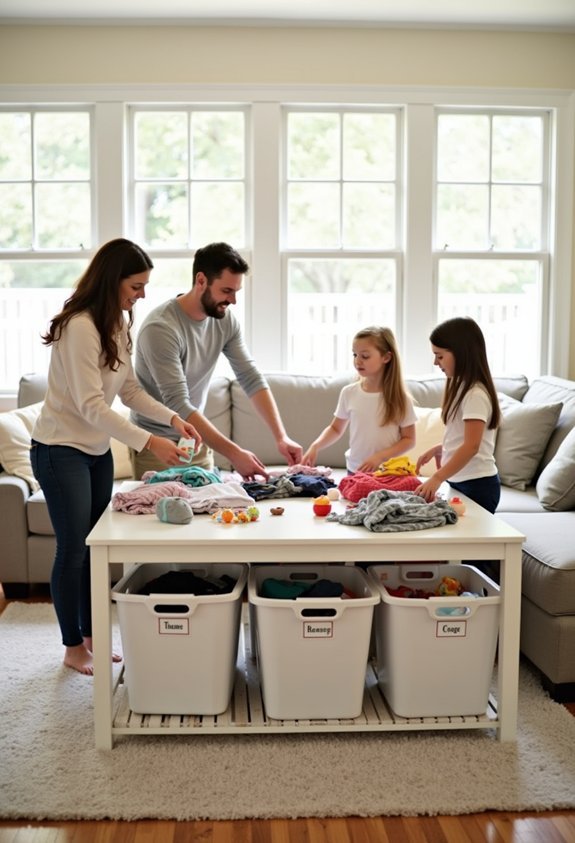
Instead of letting unused items sit in closets and storage bins, you can convert them into $200–$1,000 of extra cash this month by decluttering strategically.
Start with a 30-minute sweep of one room, aiming to pull 20–30 items you haven’t used in a year. Research shows the average household holds hundreds of dollars in resellable goods.
Focus on high-demand categories:
- A decluttered closet with brand-name clothing, shoes, and bags
- Small electronics, gaming gear, and unopened gadgets
- Furniture, kids’ items, and hobby equipment you’ve outgrown
Check recent sold prices on eBay or Facebook Marketplace, then undercut the median by 5–10% for faster sales.
Batch photographs and listings in one session so you improve cash flow quickly while keeping your space streamlined daily.
You may also like:





Build a “Wait 48 Hours” Rule for Non-Essentials
Two simple days between wanting something and buying it can save you hundreds this month by disrupting impulse spending.
You implement a “wait 48 hours” rule for every non-essential over a set dollar amount—say $20 or $50. Add the item to a list with the date, price, and why you want it.
During the pause, compare prices, read reviews, and calculate how many work hours the purchase represents. Studies show that brief delays significantly improve impulse control and satisfaction because your brain shifts from emotional to analytical processing.
Pause to compare, research, and translate price into work hours—delays turn emotional splurges into rational choices.
After 48 hours, ask three questions: Do I still want it? Can I truly afford it? What happens if I don’t buy it?
You’ll keep the winners and effortlessly delete the rest, as delayed gratification strengthens.
Create a Visual Tracker That Makes Saving Feel Rewarding
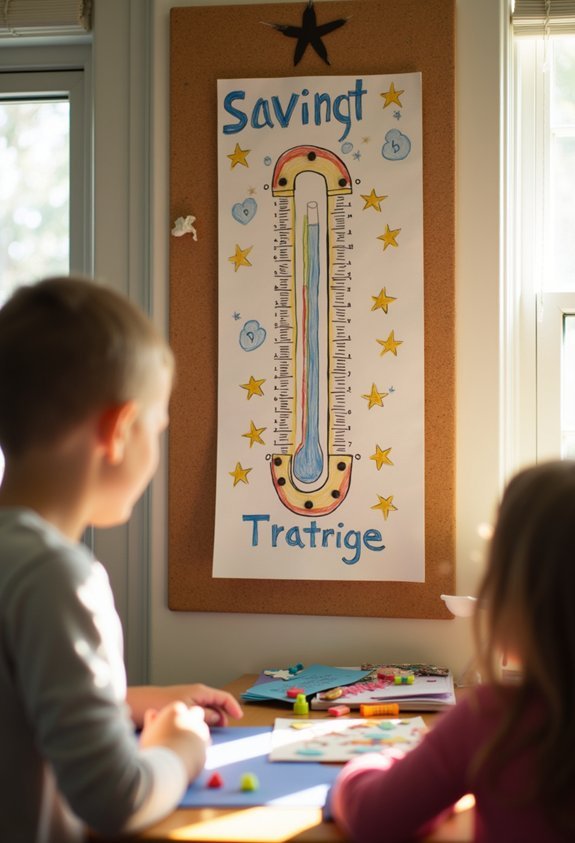
Although saving can feel abstract and demotivating, a simple visual tracker turns progress into something your brain can see and reward. Neuroscience shows your brain releases more dopamine when you literally watch numbers climb, so you’re more likely to stick with visual saving.
Pick one goal and break it into clear milestones. Then design a tracker you’ll actually look at:
- A thermometer chart on your fridge that you color in with every $25 saved
- A digital bar graph in a spreadsheet that updates whenever you move money to savings
- A wall calendar where you add a bold sticker for each no-spend day
Review your tracker weekly. You’ll see rewarding progress and quickly spot when your momentum slips, so you adjust habits before overspending returns.
Conclusion
When you stack these tiny shifts—no-spend days, home-cooked swaps, 48-hour waits, and automated transfers—you don’t just save a few dollars; you build a financial force field. You could reclaim hundreds this month and *thousands* this year, without feeling deprived for a single second. Start today with just one move, track it visually, and watch your momentum skyrocket. You’re not trimming expenses—you’re engineering a radically more powerful version of your money.