The Before and After That Motivated My Declutter
You’ll hit your breaking point when you can’t see your bedroom floor anymore—that’s when you need to take one brutally honest photo of your mess. It’ll feel uncomfortable (maybe even mortifying), but that single image becomes your wake-up call and your motivation rolled into one. The truth is, that before picture captures more than clutter—it shows the mental weight you’ve been carrying every single day. Stick around to see how one photo sparked a complete transformation.
Key Takeaways
- Taking a “before” photo of the clutter provided uncomfortable but necessary visual evidence that served as motivation throughout the decluttering process.
- The bedroom chaos prevented seeing the floor, caused anxiety when entering, and created mental overload that affected daily functioning.
- Sorting through possessions revealed emotional attachments, but letting go provided significant release and improved mental clarity.
- Each transformed room eliminated background noise and visual chaos, restoring functionality and enhancing focus on daily tasks.
- Clear spaces created a clearer mind, with organized mornings and improved habits replacing the frustration of lost items.
Rock Bottom: The Chaotic Reality I Could No Longer Ignore
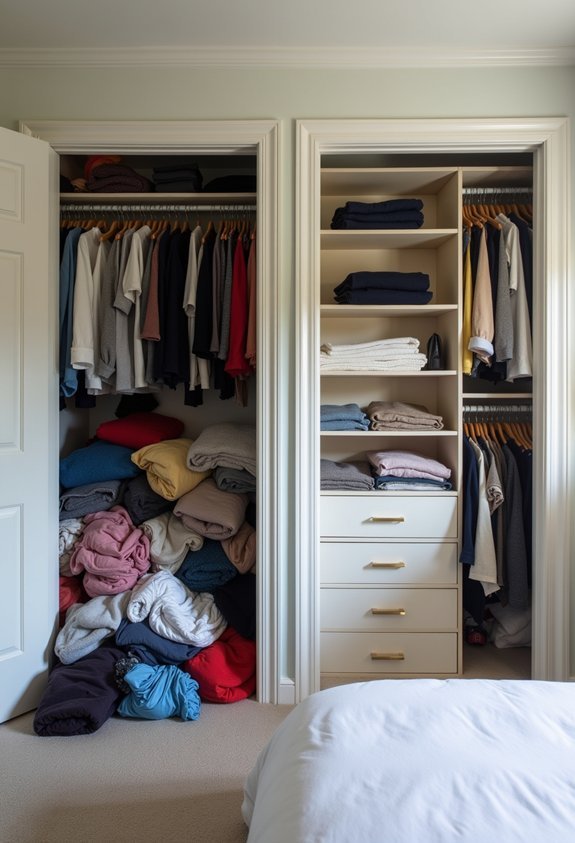
When I finally looked around my bedroom and couldn’t see the floor—like, literally couldn’t remember what color the carpet was—I knew something had to change.
That chaos recognition moment hit differently. It wasn’t just messy anymore—it was affecting everything.
My mental clarity? Gone. I’d lose my keys every single morning, spend twenty minutes searching for clean socks (spoiler: they were under three pizza boxes), and feel this weird anxiety just walking into my own space.
The breaking point came when I couldn’t invite anyone over without feeling embarrassed. Not even my mom.
That’s when I realized the mess wasn’t just physical anymore.
It was stealing my peace, my time, and honestly—my sanity.
I didn’t know it then, but all that visual clutter was forcing my brain to track dozens of additional tasks, creating a mental overload that left me irritable and on edge every single day.
Something had to give.
Taking That First Honest Photo of My Clutter
Why did grabbing my phone feel scarier than actually cleaning? Because that photo would be honest reflection—no hiding the mess behind closed doors or making excuses. I’m talking real evidence of how bad things had gotten (yikes).
The camera doesn’t lie—and that’s exactly why hitting that button feels harder than picking up the first piece of clutter.
But here’s the thing: you need that uncomfortable moment.
That first photo becomes your visual motivation when you’re tempted to quit halfway through. It’s proof you’re making progress, even when your brain tries convincing you nothing’s changed.
So I took a deep breath, snapped those pictures, and—wow. Seeing my clutter through a camera lens hit different than just walking past it daily.
It was embarrassing. Motivating. Necessary.
Your “before” photo isn’t about shame—it’s about transformation. That image captures the cognitive and emotional load each object was carrying before you started the work of letting go.
The Emotional Weight of Letting Go
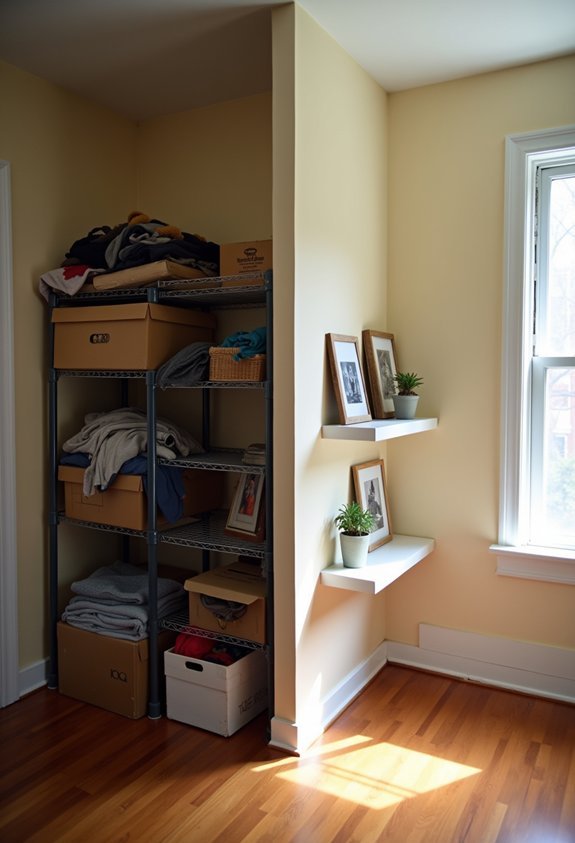
After sorting through three boxes of old papers, I realized something: I wasn’t just holding onto stuff—I was holding onto feelings.
That concert ticket from 2008? Held a memory I didn’t want to forget. Those broken earbuds—yeah, the ones that haven’t worked in years—represented “someday” fixing them (spoiler: I never would).
Here’s the thing: letting go isn’t about erasing your past. It’s about making room for your present.
When I finally tossed those items, something shifted. The emotional release was real—like exhaling after holding my breath.
And the mental clarity? Game-changer.
You’re not betraying your memories by decluttering. You’re honoring your future self.
The stuff doesn’t hold the feelings. You do.
Each forgotten item had been a mental energy leak, quietly draining my focus without me even realizing it.
Room-by-Room Transformation: What Actually Changed
The living room hit different once I actually cleared it out—like walking into someone else’s house, except it was mine all along.
Suddenly I could see the actual room layout instead of just piles with a couch somewhere in there.
The kitchen became functional again (wild concept, I know).
I rediscovered my kitchen counter like it was a new appliance—turns out having actual workspace changes everything.
Counter space reappeared—turns out I’d more than six inches to work with the whole time.
My bedroom transformation was honestly the most shocking.
Implementing simple storage solutions meant I could actually walk around without doing that sideways shuffle thing.
The closet went from “avalanche waiting to happen” to “I can see what I own.”
Each room told the same story: I’d space all along, just buried under stuff I didn’t need.
The reduced background noise in each space made it easier to think clearly and actually enjoy being home.
How My New Space Changed My Daily Life
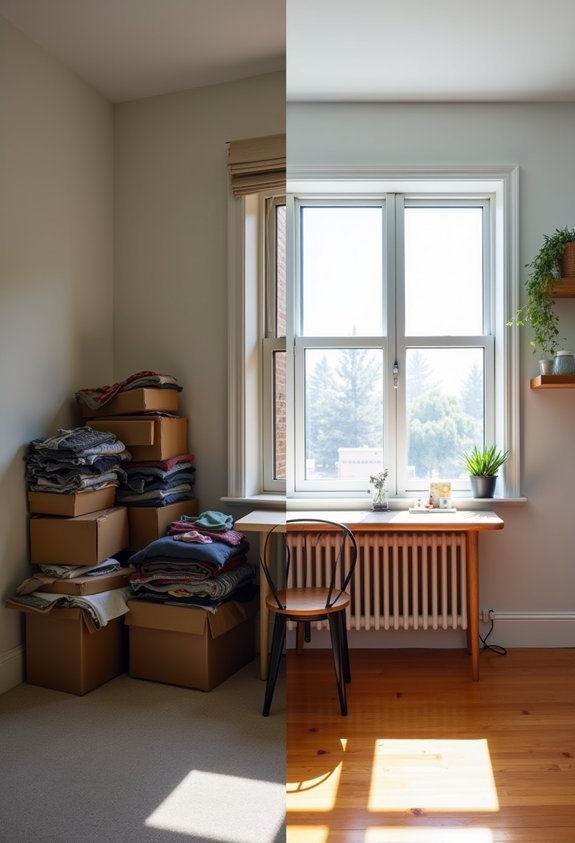
Having all this newfound space was cool and everything, but here’s what actually blew my mind—my mornings stopped feeling like a disaster movie.
I wasn’t digging through piles to find clean socks anymore (game-changer, honestly). My daily habits shifted because everything had a spot—keys by the door, wallet on the dresser, done.
And the improved focus? Wild.
When you’re not constantly surrounded by visual chaos, your brain gets to actually think about real stuff instead of mentally cataloging clutter.
I started finishing projects I’d abandoned for months because I could concentrate without that nagging feeling of “I should really deal with that mess.”
The reduced cognitive load from clearing my space meant my brain had energy for what actually mattered.
Turns out, clear space equals clear mind isn’t just some Pinterest quote.
It’s legit.
You may also like:



In case you were wondering
How Long Did the Entire Decluttering Process Take From Start to Finish?
You’ll find the decluttering process typically takes anywhere from several weeks to several months, depending on your home’s size. Effective time management and practical decluttering strategies help you work systematically through each space at your own pace.
Did You Hire a Professional Organizer or Do It Yourself?
You’ll picture yourself knee-deep in chaos, tackling mountains of belongings alone. I chose DIY organizing over hiring a professional organizer, transforming each cluttered space through my own determined hands and personal vision.
What Storage Solutions or Products Did You Purchase for Organizing?
You’ll want to invest in clear storage bins so you can see what’s inside at a glance. I’d also recommend getting a quality label maker – it’s a game-changer for keeping everything organized and easy to find.
How Much Money Did You Make Selling or Donating Items?
You’ll find financial gains vary widely—some people make hundreds from online sales while others focus on donation impact. Track your tax deductions carefully, as charitable donations can offset costs and provide meaningful value beyond immediate cash returns.
Have You Experienced Any Relapses Into Clutter Since Completing the Transformation?
Old habits die hard, but you’ve stayed strong. You haven’t experienced major relapses because you’ve identified your clutter triggers early and implemented solid maintenance strategies like weekly reviews and one-in-one-out rules that work.
Conclusion
Your space is like a garden—you’ve pulled the weeds, and now you’re watching new things grow.
You’ve done the hard part, that gut-wrenching before photo that made you cringe. Now? You’re living the after, and it feels different, doesn’t it?
So here’s your permission slip: keep going. Not perfectly (because who has time for that?), but consistently.
Your decluttered space isn’t just cleaner—it’s proof you can change what’s not working.