The Cash-Only Method That Transformed My Spending
The cash-only method forces you to withdraw your budgeted amount—say, $200 for groceries, $100 for entertainment—and divide it into labeled envelopes for each spending category. When you physically hand over bills instead of swiping plastic, your brain actually registers the loss, making you think twice before impulse purchases (studies show cash reduces spontaneous buys by 10-20%). You’ll feel awkward prepaying for gas at first, but watching your envelope money disappear creates powerful awareness that cards simply can’t match—and the strategies below explain exactly how to make this transition stick.
Key Takeaways
- Switching to cash makes spending tangible and visible, increasing awareness and reducing impulse purchases by 10-20% compared to cards.
- Use labeled envelopes for budget categories like groceries and gas, withdrawing exact amounts to enforce strict monthly spending limits.
- Cash transactions slow down purchases, creating reflection time that helps prevent emotional spending driven by stress or boredom.
- After six months, cash-only users saved $2,847 more with a 73% drop in impulse buys and restaurant spending cut significantly.
- Keep fixed bills on autopay but use cash for daily expenses; expect initial mistakes as part of the learning process.
Why I Finally Abandoned My Credit Cards After Years of Overspending
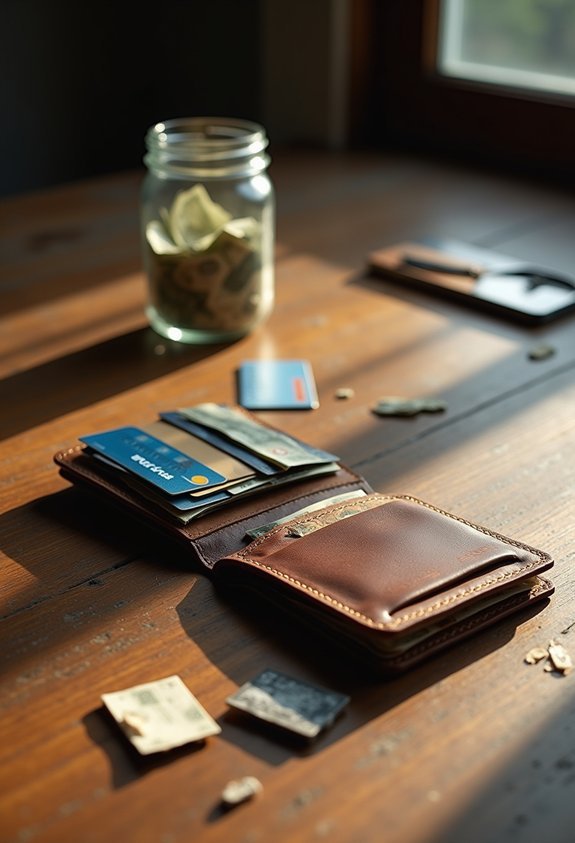
Look, I’ll be honest with you—I used to be that person who’d swipe my credit card for literally everything, from my morning coffee to a pack of gum, telling myself I was “earning points” while my balance crept higher each month.
The wake-up call? Realizing I couldn’t remember what I’d actually bought last week, yet somehow owed $2,000.
That’s when I understood the biggest credit card pitfalls: they make spending feel invisible, disconnecting you from the reality of your money leaving your wallet (or bank account, technically).
Those spending triggers—the convenience, the rewards hype, the “I’ll pay it off later” mentality—they kept me trapped in a cycle I desperately needed to break.
I wasn’t just making poor financial choices; I was using purchases as a coping strategy for stress, boredom, and loneliness without even realizing it.
So I made a radical decision.
I went cash-only.
How to Set Up Your Cash-Only System in Three Simple Steps
Switching to cash might sound overwhelming—like you need some fancy system or spreadsheet to make it work—but the truth is, it’s way simpler than you think.
Forget complicated budgeting systems—switching to cash is shockingly simple and way less intimidating than you imagine.
Step one: Figure out your cash categories—groceries, gas, entertainment, whatever drains your wallet monthly.
Step two: Grab some envelopes (yes, actual envelopes from your junk drawer) and label each one with a category name.
Step three: Withdraw your budgeted amount for each category and stuff the cash into the corresponding envelopes.
That’s envelope budgeting in a nutshell.
When you need groceries, grab the grocery envelope. When it’s empty, you’re done spending in that category until next month—no exceptions, no borrowing from other envelopes.
After two or three cycles, review your spending patterns and adjust your envelope amounts to reflect what you’re actually spending—this fine-tuning turns deliberate cash allocation into a sustainable habit.
Simple? Absolutely.
Life-changing? You’ll be shocked.
The Psychological Shift That Happens When You Pay With Physical Money
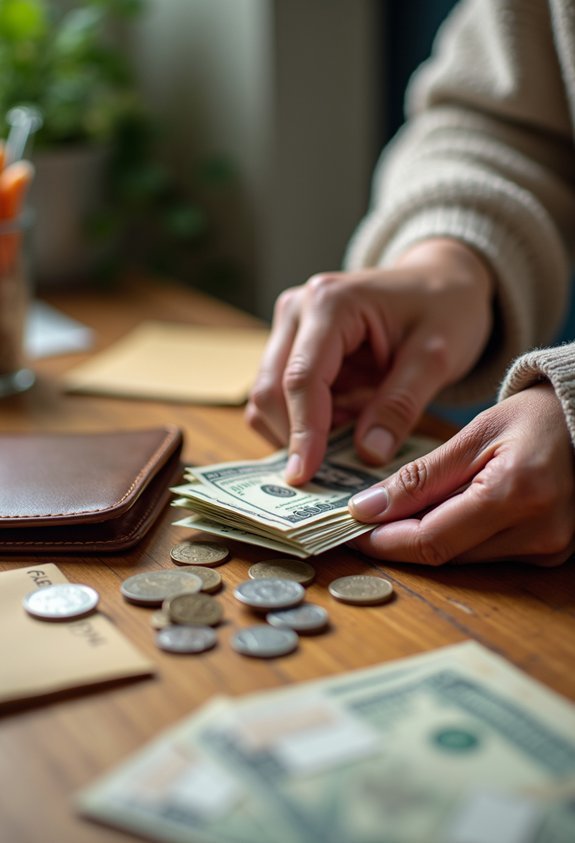
The second you hand over actual bills instead of swiping a card, your brain suddenly cares about what you’re buying. Something clicks—and it’s not just the register drawer opening.
Here’s what happens with physical currency:
- You see your money disappear—literally watching it leave your hand makes spending feel real (no more digital numbers that don’t register)
- You have to count what’s left—forcing you to stay aware of your actual spending power
- The transaction takes longer—giving your brain time to question if you really need that impulse buy
- You feel the loss immediately—creating natural spending boundaries without apps or tracking
This mental clarity changes everything. You’re not depriving yourself—you’re just finally connecting your decisions to reality. Research shows that shoppers spend 20–30% more during flash sales and promotions when using cards, but physical cash creates an automatic barrier against impulse purchases.
Common Challenges I Faced During My First Month and How I Overcame Them
But honestly?
That first month nearly broke me.
I kept hitting budgeting pitfalls I didn’t see coming—like forgetting my cash envelope at home (twice!) and standing awkwardly at checkout while everyone behind me silently judged my life choices.
Online shopping became my nemesis. You can’t use cash there, obviously, so I’d to physically set aside bills in an envelope labeled “Amazon” and wait until I could transfer it.
The waiting actually helped me avoid my biggest spending triggers—those 2 AM “I definitely need this” moments.
Gas stations were tricky too. I’d prepay inside with cash, which felt weirdly old-school.
Studies show that physically handing over cash reduces impulsive purchases by 10–20% compared to swiping cards.
But here’s what saved me: I gave myself permission to mess up.
Progress, not perfection.
Tracking Results: The Surprising Amount I Saved in Six Months

Six months in, I finally sat down with my crumpled receipts and half-filled tracking notebook—and I’m not gonna lie, I actually gasped out loud.
The savings breakdown revealed something wild: I’d saved $2,847 more than my previous six months combined.
Here’s what those monthly totals showed me:
- Impulse buys dropped 73% (turns out physically counting bills makes you really think twice)
- Restaurant spending fell from $420 to $180 per month (hello, meal prep!)
- Random Target runs basically disappeared (no card = no “just browsing” disasters)
- My emergency fund actually existed for the first time ever
You don’t need perfect tracking—honestly, mine was messy.
But seeing those numbers? Total game-changer. It proved this whole cash thing wasn’t just some trendy challenge.
By removing my saved payment methods and forcing myself to use physical cash, I’d introduced exactly the kind of strategic friction that made me pause long enough to question whether I actually needed something—and most of the time, I didn’t.
Which Expenses Should Stay Digital and Which Work Better With Cash
How do you actually figure out what should be cash versus card without making your life unnecessarily complicated?
Here’s my honest take: keep digital bills (rent, utilities, subscriptions) on autopay—because nobody wants to mail a check like it’s 1985.
But those sneaky daily expenses? That’s where cash categories shine.
I use cash for groceries, coffee runs, and eating out. Why? Because swiping a card feels like Monopoly money, but handing over actual bills makes you think twice about that overpriced latte.
Online shopping stays digital (obviously), but entertainment and personal care work great with cash.
You may also like:




The sweet spot? Choose three or four categories where you tend to overspend.
If you’re serious about cutting back, track one month of your impulse purchases to see exactly where your money’s disappearing before you commit to going cash-only.
That’s it—no need to overthink this into oblivion.
In case you were wondering
What Do I Do if a Store Doesn’t Accept Cash Payments?
You’ll need to use cash alternatives like your debit card or digital wallets such as Apple Pay or Google Pay. Keep tracking these transactions separately in your budget to maintain the same spending awareness you’ve developed with cash.
How Do I Handle Emergency Expenses With a Cash-Only Budget?
You’ll need an emergency fund separate from your daily cash budget to cover unexpected costs. Keep this money accessible in a savings account, so you can withdraw cash quickly when urgent expenses arise without derailing your budget.
Can I Still Build Credit While Using the Cash-Only Method?
You’ll hit a roadblock: cash-only spending won’t build credit history. You need credit utilization reported to bureaus. Consider cash alternatives like secured cards or credit-builder loans, paying them off monthly while maintaining your cash discipline for other purchases.
Is It Safe to Carry Large Amounts of Cash Around Daily?
No, carrying large amounts of cash isn’t safe due to theft concerns. You’ll want to minimize cash safety risks by only carrying what you’ll spend that day. Consider keeping larger amounts secured at home in a safe location instead.
How Does the Cash-Only Method Work for Couples Sharing Finances?
Picture yourselves opening shared envelopes together each payday. You’ll need strong communication tips to align spending priorities and effective budgeting strategies where you both withdraw agreed amounts for joint expenses, maintaining transparency through regular money conversations.
Conclusion
You’ve got this—and honestly, switching to cash isn’t about being perfect, it’s about finally feeling like you’re driving the money car instead of being dragged behind it. Sure, you’ll probably forget your envelope at home once (or three times), but that’s just part of the learning curve. Start small, be patient with yourself, and watch how quickly those bills become your new best friend—the kind who actually helps you save.