The Decluttering Approach for Overwhelmed Moms
Start with just fifteen minutes—set a timer, tackle one visible surface, and walk away when it beeps. You don’t need Pinterest-perfect systems; you need ones that survive sticky fingers and constant interruptions. Use one-bin-per-kid (seriously, that’s it), photograph your child’s artwork before recycling it, and remember that keeping things you don’t love just drains your energy. The secret isn’t doing everything—it’s doing what actually works for your real, messy, beautiful life right now.
Key Takeaways
- Use 15-minute timed sessions to declutter one visible surface, reducing pressure while fitting into busy schedules between daily tasks.
- Implement simple one-bin systems per child with visual cues like hooks instead of complex organizational methods requiring multiple steps.
- Discard items without guilt by removing broken toys, outgrown clothes, and keeping only essentials that support current family needs.
- Establish a 10-minute bedtime tidy routine and follow the one in, one out rule to maintain manageable clutter levels.
- Lower organizational standards to accommodate real-life chaos, recognizing that progress matters more than Pinterest-perfect results.
Why Traditional Organizing Methods Fail Busy Moms

Because traditional organizing systems were designed by people who apparently don’t have a toddler hiding their car keys in the laundry basket, they often feel impossible to maintain when you’re juggling actual mom life.
Here’s the truth: those Pinterest-perfect pantries with matching containers and color-coded labels? They set unrealistic expectations that make you feel like you’re failing when—spoiler alert—you’re not.
Pinterest-perfect organizing systems weren’t designed for real life with kids—and that’s why you’re not failing when they don’t work.
Traditional methods ignore that you’re constantly interrupted (hello, “Mom, where’s my…”), that your energy fluctuates wildly, and that overwhelming clutter accumulates faster than you can say “school permission slip.”
They demand perfection instead of progress.
They require hours you don’t have and mental space that’s already maxed out managing everyone else’s needs.
What these systems miss is that clutter increases mental overload by forcing your brain to track even more tasks on top of everything you’re already managing.
No wonder they fail. They weren’t built for your reality.
The 15-Minute Reset: Decluttering When You Have No Time
When you’re running on three hours of sleep and someone just spilled juice on the permission slip you finally signed, the last thing you need is another overwhelming organizing project.
That’s where the 15-minute reset saves your sanity.
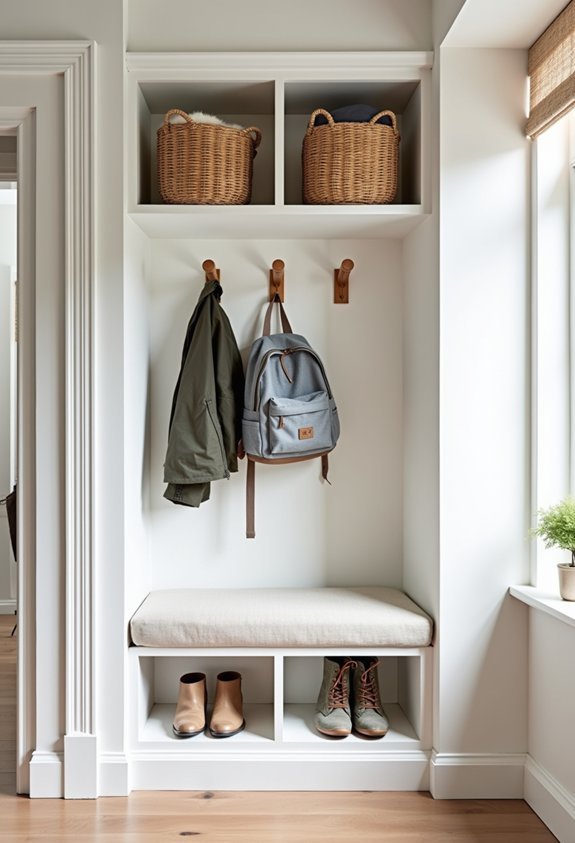
Set a timer—seriously, just fifteen minutes—and tackle one visible surface. Your kitchen counter, that chair covered in clean laundry (we all have one), or the entryway where backpacks multiply overnight.
These quick declutter tips work because they’re actually doable. You’re not reorganizing your entire life; you’re just clearing one spot before the timer dings.
Timed decluttering sessions remove the pressure to finish everything perfectly. You can manage fifteen minutes between carpool runs, during screen time, or while nuggets bake.
Small wins count. They really do.
Each quick session also helps you avoid decision fatigue, which is exactly what happens when you try to tackle too much at once and end up frozen in front of your overflowing linen closet.
Creating Systems That Actually Stick With Kids in the House
The moment your organizational system requires a label maker, a color-coded chart, and your kids to remember seventeen steps, it’s already dead in the water.
You need kid friendly routines that work with reality—not against it.
Think sustainable habits, not Pinterest-perfect solutions. Your systems should be so simple that tired-you (at 8 PM) can still follow them.
Here’s what actually works:
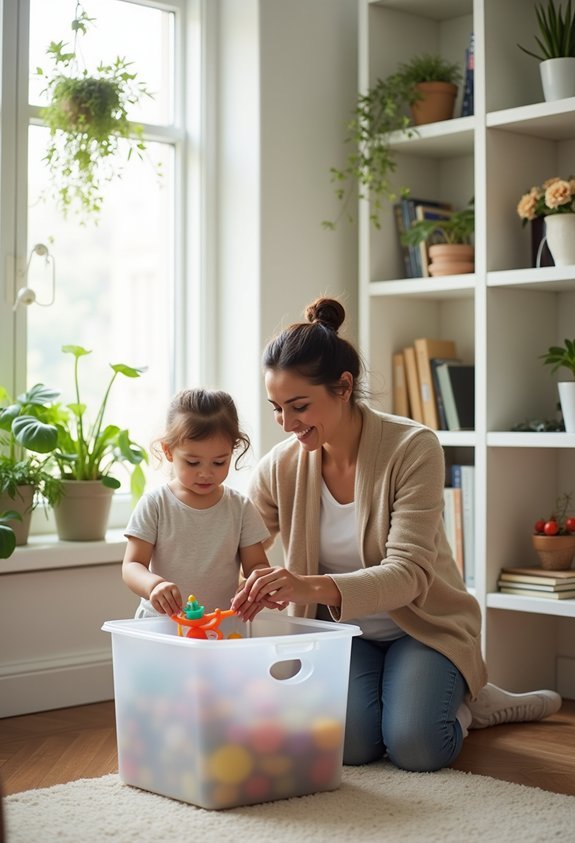
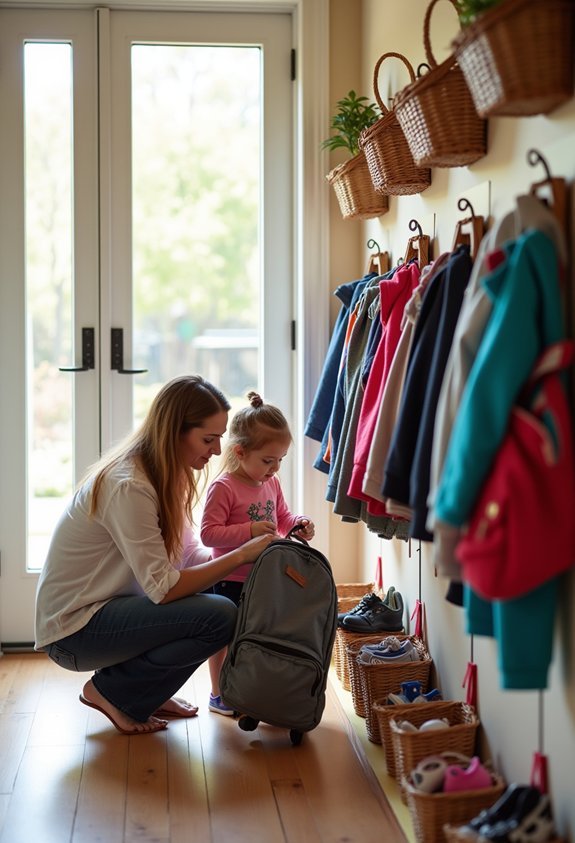
- One-bin wonder: Each kid gets ONE catch-all bin for their daily stuff—backpacks, shoes, whatever. That’s it.
- The five-second rule: If putting something away takes longer than five seconds, it won’t happen.
- Visual cues over verbal reminders: Hooks at kid-height beat nagging every time.
- Reset stations: Designated spots where things live, always.
- Lower your standards: Done beats perfect.
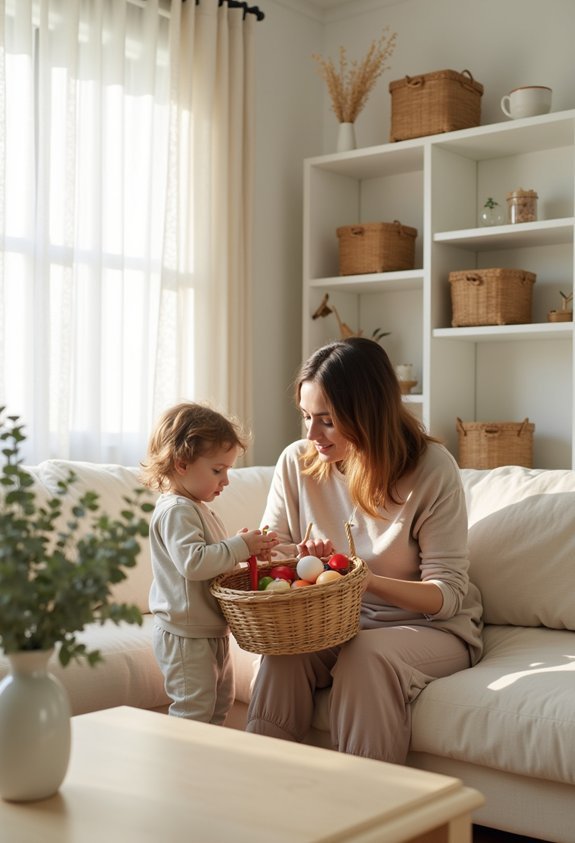
When baskets start overflowing, it’s simply a signal that it’s time to declutter or resize, not a sign that your system has failed.
What to Toss Without Guilt: A Mom’s Permission Guide
Right now, somewhere in your house, there’s a broken toy you’re keeping “just in case,” a stack of artwork that’s literally just scribbles, and baby clothes your youngest outgrew three years ago.
Here’s your permission slip for guilt free decluttering: those aren’t memories—they’re dust collectors.
Toss the stained bibs, mismatched socks (they’re never reuniting), and toys missing essential pieces. That bread maker you’ve used once? Gone. The forty plastic cups from birthday parties? Keep six, ditch the rest.
You’re not a bad mom for letting go.
Keep only essential items that serve your family *right now*—not the family you were five years ago or might be someday.
The artwork? Photograph the good stuff, recycle the rest.
Your memories live in your heart, not your overflowing closets. Remember that every object you keep demands emotional energy, even when you’re not actively thinking about it.
Maintaining Order When Life Gets Messy (Which Is Always)
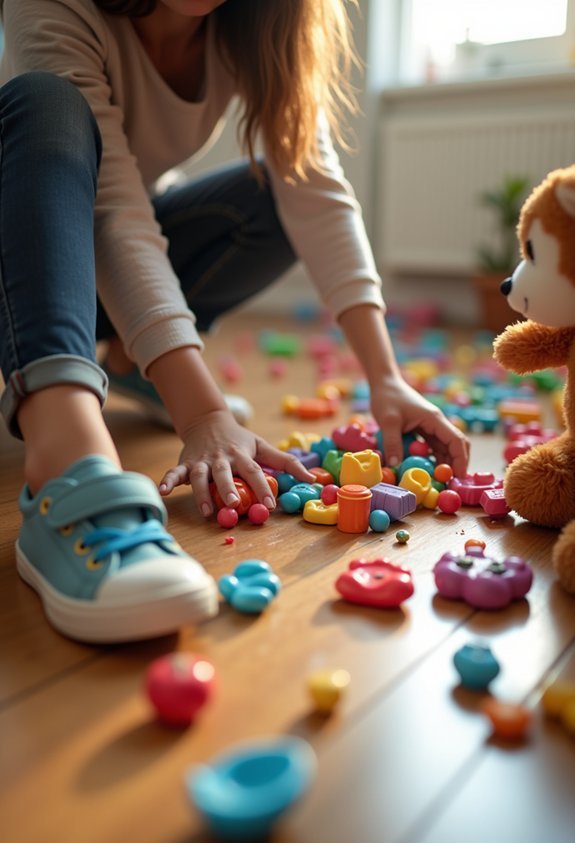
Let’s be honest—you’re not going to maintain a pristine home with kids underfoot, and that’s completely fine.
The goal isn’t perfection—it’s managing those messy moments without losing your mind.
Here are practical tips that actually work:
- The “10-minute tidy” before bed resets your space (and your sanity)
- One in, one out rule keeps toy avalanches from happening
- Baskets everywhere because containment is your best friend
- Lower your standards on busy days—cereal for dinner counts as a win
- Involve the kids with simple tasks they can actually handle
Real talk: some weeks you’ll nail it, others you’ll find crusty Cheerios in weird places.
Both scenarios are normal.
You may also like:


The key is building habits that survive chaos, not fighting against it.
Instead of judging yourself for past clutter disasters, focus on whether items support your current daily routines and make life easier right now.
In case you were wondering
How Do I Declutter When My Partner Keeps Bringing More Stuff Home?
Have an honest conversation with your partner about decluttering goals and communication strategies. Establish shared responsibilities for maintaining your space. Set clear boundaries about new purchases and agree on a “one-in, one-out” rule together.
What if My Kids Have Emotional Attachments to Every Toy?
Rome wasn’t built in a day—start small with attachment strategies like photographing special toys before donating them. You’ll provide emotional support by letting kids choose which treasures stay, teaching them healthy decision-making skills while decluttering gradually.
Should I Declutter My Children’s Things Without Their Knowledge or Permission?
No, you shouldn’t. Decluttering without permission raises ethical considerations and undermines children’s autonomy. Instead, involve them in decisions about their belongings. You’ll teach valuable lessons about ownership, respect, and decision-making while maintaining trust.
How Do I Handle Gifts From Relatives That Create Clutter?
You’ll need to establish clear gift policies with relatives upfront, requesting consumables or experiences instead. For items already received, practice creative repurposing by transforming them into useful items, or donate them guilt-free after appropriate time passes.
What’s the Best Way to Digitize Kids’ Artwork and School Papers?
You’ll become a professional photographer overnight! Use your phone to snap clear photos of each masterpiece for digital archiving. Store them in cloud folders by year and child. This artwork organization method preserves memories without drowning in paper mountains.
Conclusion
You’ve got this, mama—messiness doesn’t mean failure. Progress, not perfection, is your new parenting motto. Start small, stay consistent, and show yourself some serious self-compassion along the way.
Your home won’t ever look like those pristine Pinterest pictures (and honestly, who wants that pressure?), but it’ll feel calmer, cleaner, and completely yours. Take that first fifteen-minute step today—because you deserve a decluttered, drama-free space.