The Decluttering Guide for Sentimental Hoarders
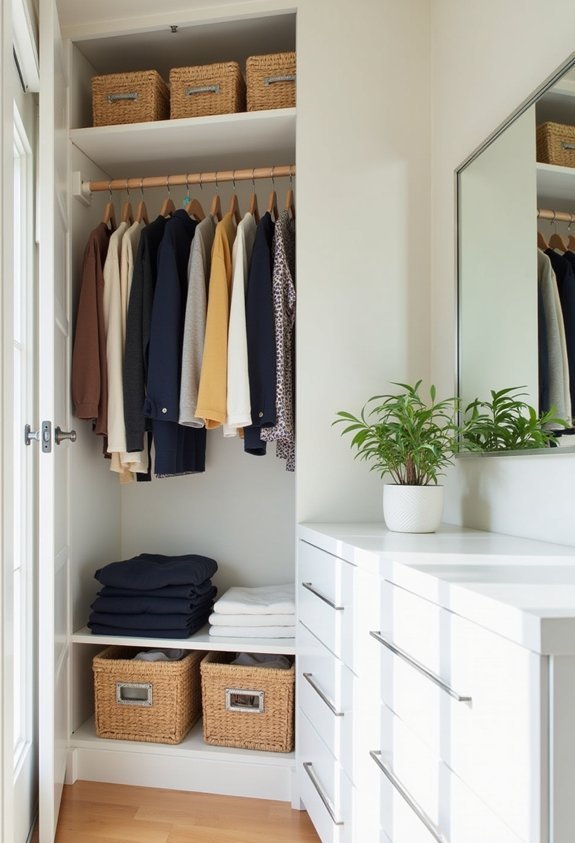
Start small—one drawer, five photos—because you’re not heartless, you’re just drowning in memory-triggers. The secret is distinguishing joy from obligation: keep the childhood toy that makes you smile, photograph the rest, and create a digital archive that preserves stories without the clutter. Display your true treasures on floating shelves instead of hiding them in boxes, because memories live in the stories you tell, not the stuff collecting dust. There’s a whole system for honoring your past without letting it consume your present.
Key Takeaways
- Distinguish between items that spark genuine joy versus those kept from guilt or obligation to simplify decluttering decisions.
- Start with small, manageable tasks like one drawer or five photos to build momentum without emotional overwhelm.
- Photograph and document sentimental items before releasing them to preserve memories without physical clutter.
- Display meaningful keepsakes on shelves or in shadow boxes rather than hiding treasures in storage boxes.
- Implement “one in, one out” rule for new items and recognize hoarding patterns to maintain long-term progress.
Understanding Why You Hold On: The Psychology Behind Sentimental Attachment
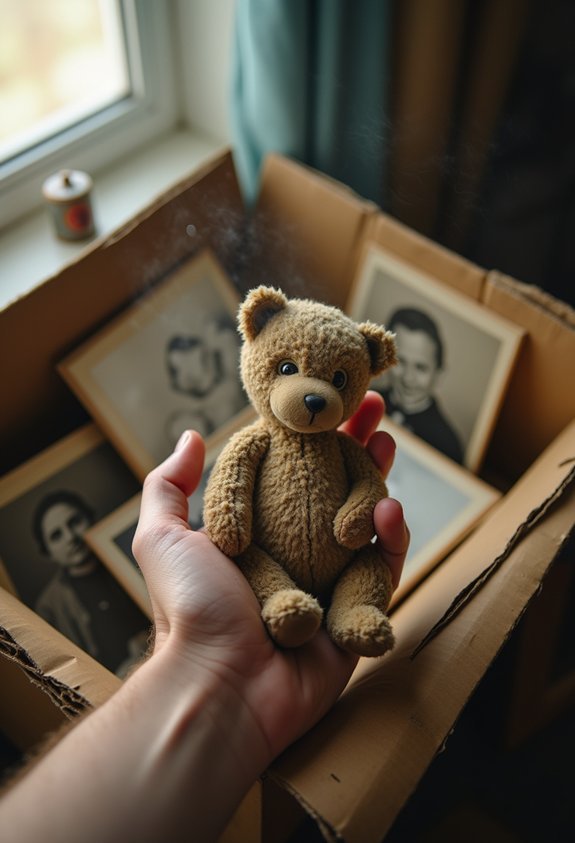
Because we’re human beings with hearts and memories, we form deep emotional bonds with objects that witnessed our lives.
That concert ticket isn’t just paper—it’s the night you felt truly alive, dancing until your feet hurt.
Here’s the thing: your brain uses these items as memory triggers, little shortcuts to precious moments you’re terrified of losing.
But holding onto everything? That’s not building emotional resilience—it’s actually making you more anxious (and buried under stuff).
You’re not broken for feeling this way. You’re wired to connect meaning with physical things.
Your grandmother’s teacup, your kid’s first drawing, that ratty college sweatshirt—they all represent love, achievement, identity.
The trick isn’t eliminating attachment. It’s learning which objects truly serve you.
When attachment becomes constricting rather than comforting, it often leads to avoidance behaviors like closing doors to certain rooms or stacking more items to hide what’s already there.
The Difference Between Cherished Keepsakes and Emotional Clutter
Not every object carrying emotion deserves a permanent home in your life.
Here’s the truth: cherished keepsakes spark joy when you see them, while emotional clutter just weighs you down with guilt. That concert ticket from 2003? If it makes you smile—keep it.
But those seventeen birthday cards from your dentist’s office? That’s just paper you’re afraid to toss.
Real cherished memories live in items you’d grab during a fire, things that tell your story and make your heart lighter.
Emotional attachments, though, often disguise themselves as keeper-worthy when they’re really obligation-disguised-as-love.
Ask yourself: does this item bring happiness, or does it bring “I should feel something about this”?
There’s your answer.
The difference is genuinely that simple—even if acting on it isn’t. Naming the specific emotion you feel when holding each object—whether it’s genuine love, guilt, or obligation—helps you separate feelings from items and make clearer decisions about what stays.
Setting Realistic Goals That Honor Your Feelings
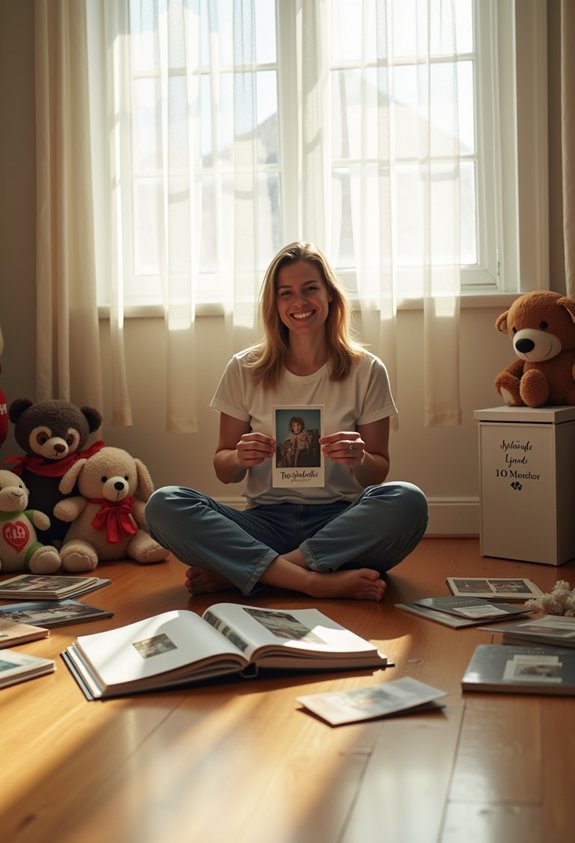
When you’re sitting there surrounded by three decades of memory-laden stuff, telling yourself to “just declutter the whole house this weekend” is like deciding to run a marathon tomorrow when you haven’t jogged since gym class.
Goal setting needs emotional awareness—especially when every item whispers a story.
Start ridiculously small:
- One drawer this week (not the whole dresser)
- Five photos from that shoebox of 500
- Three birthday cards, not all thirty-seven
- Your kid’s artwork from just last year (the elementary years can wait)
- Two coffee mugs with chipped sentimental value
Here’s the truth: slow progress beats guilty paralysis every single time.
You’re not being lazy—you’re being realistic about processing emotions while making decisions. That’s actually harder than tossing everything mindlessly.
Give yourself permission to feel and to take baby steps forward.
Set a timer for ten or fifteen minutes during each session to create focused boundaries that prevent emotional overwhelm while building momentum.
The Memory Preservation Method: Keeping the Sentiment Without the Object
You’ve chosen your drawer, you’ve set your timer, and now you’re holding your grandmother’s tea-stained recipe cards—realizing with a sinking feeling that you’ll never make her lime Jell-O salad but also can’t imagine throwing these away.
Here’s the thing: you can keep the memory without keeping every physical reminder.
Memories aren’t stored in objects—they live in your heart, your stories, and the people you share them with.
Try memory mapping—photograph those recipe cards, scan your daughter’s entire kindergarten art portfolio, record yourself telling the story behind that chipped vase.
Digital files don’t take up closet space.
Or use emotional storytelling: write down *why* these items matter.
Sometimes the act of documenting the memory—really capturing what made Grandma’s kitchen feel like home—lets you release the object itself.
The sentiment lives in you, not in the stuff.
Consider creating a memory tribute with a photo of the item alongside your written story, giving the memory a dedicated space without the burden of storing every physical object.
Category-by-Category Strategies for Sentimental Items
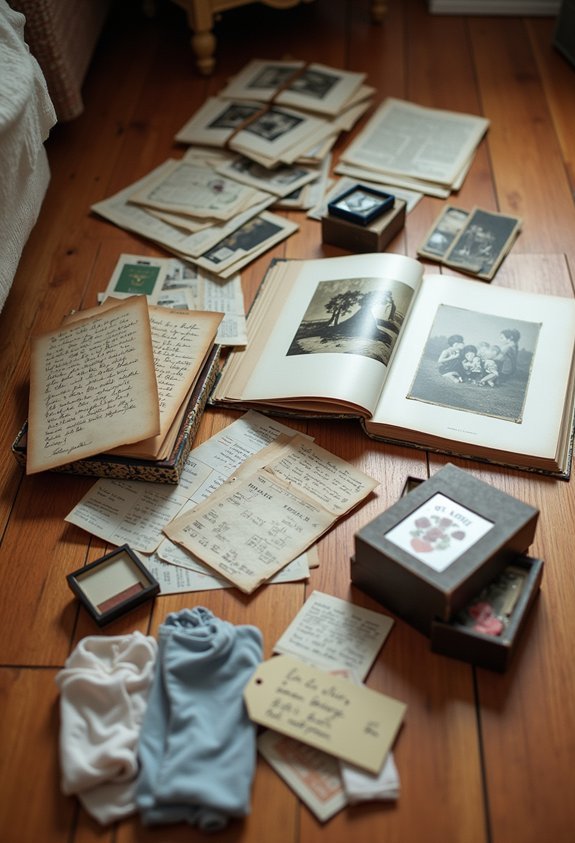
Different types of sentimental items need different approaches—because the stuffed bear you’ve had since childhood hits differently than your late father’s workshop tools.
Here’s how to tackle each category:
- Childhood toys: Keep your absolute favorite (yes, just one), photograph the rest, then donate so other kids can love them.
- Photograph albums: Digitize everything, create one beautiful physical album with your top 50 prints.
- Family heirlooms: Ask yourself if you’d display it or hide it—storage doesn’t honor anyone’s memory.
- Travel souvenirs: Display your favorites in a shadow box, toss the random keychains collecting dust.
- Greeting cards: Save five truly meaningful ones, recycle the “Happy Birthday!” signatures.
You’re not dishonoring memories by letting go—you’re making room for new ones. Remember that every object requires space and attention in your home, so be intentional about what you choose to keep.
Creating a “Maybe Box” System for Difficult Decisions
Sometimes your brain short-circuits when you’re holding that ratty college sweatshirt—you know it’s garbage, but you physically can’t put it in the donation bag.
Enter the maybe box.
This is your emotional safety net for brutal decision making moments. Grab a container, toss in the stuff that’s breaking your brain, and seal it up. Write today’s date on top with a marker.
Here’s the deal: store it somewhere inconvenient (attic, garage, back of a closet) and set a calendar reminder for six months from now.
If you haven’t desperately searched for anything inside that box by then? You don’t actually need it.
And honestly—you probably won’t even remember what’s in there.
The maybe box isn’t procrastination. It’s permission to let go gradually. By treating this as a low-stakes experiment, you remove the pressure of making a permanent decision right now.
How to Digitize and Document Your Most Precious Items

Okay, so you’ve boxed up the stuff that makes you cry—but what about the things that are genuinely precious and also taking up half your closet?
Enter: digital archiving.
Here’s your game plan for sentimental photography and documentation:
- Scan old photos and letters using your phone or a cheap scanner—you don’t need fancy equipment.
- Take photos of bulky items like that ceramic elephant from Grandma (keep the memory, ditch the dust collector).
- Record video stories about special objects before you donate them—future you’ll appreciate the context.
- Create digital albums organized by person or event, not just random folders labeled “stuff”.
- Back everything up in two places because losing these would actually be devastating.
You’re essentially creating a museum of your life, minus the storage fees.
This approach transforms your belongings into a personal archive that you can revisit anytime without the physical burden.
Designing a Display System for Your True Treasures
What’s the point of saving your grandmother’s teacup collection if it’s wrapped in newspaper in the garage, slowly getting coated in spiderwebs and regret?
Your treasures deserve better than a cardboard box afterlife.
Here’s the thing about display aesthetics—they transform clutter into intentional celebration. A simple floating shelf turns random keepsakes into a curated gallery. Shadow boxes protect delicate items (like your kid’s first ballet shoes) while keeping them visible.
Rotating displays work brilliantly when you’ve got more treasures than wall space—swap items seasonally to keep things fresh.
Treasure organization doesn’t mean cramming everything onto one shelf until it looks like a yard sale exploded. Choose your absolute favorites. Give them breathing room.
Display what you love, or you’ll forget why you kept it.
That’s the whole point, isn’t it?
Consider setting limits on sentimental items you display to maintain focus on the memories that matter most while keeping your space from tipping back into chaos.
Dealing With Guilt, Grief, and the Fear of Forgetting
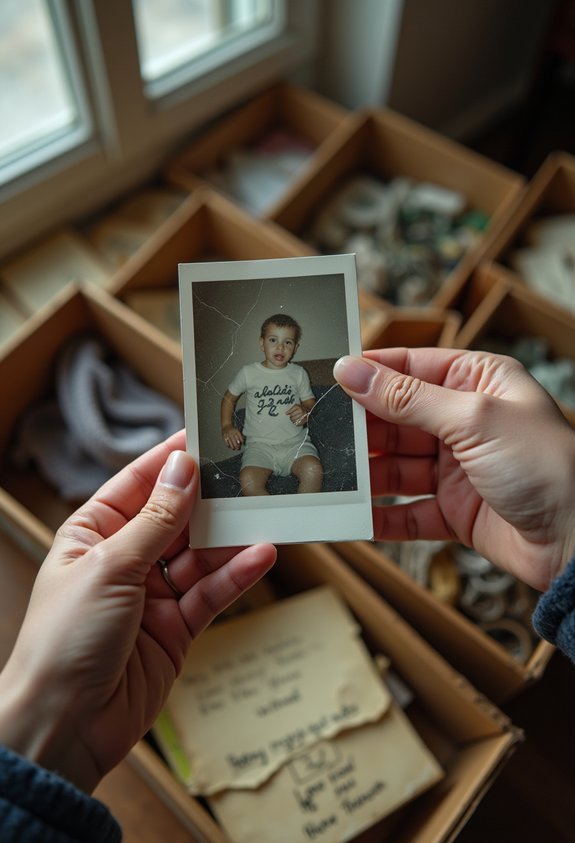
Getting rid of your dad’s old sweater feels like getting rid of your dad all over again. That’s guilt management talking—and it’s lying to you.
Here’s what’s actually true about memory recognition:
- Photos capture memories better than dusty boxes in your garage
- Your brain holds onto love without needing physical proof
- Stories you share keep people alive, not their old stuff
- Digital scans preserve items without eating your space
- One meaningful keepsake beats twenty forgotten objects
Grief processing doesn’t mean erasing someone.
Attachment release means you’re choosing what matters most—the connection itself, not every single reminder.
You won’t forget. That’s the fear talking.
But keeping everything? That buries the good memories under piles of obligation.
Physical items can reinforce emotional attachments, keeping you tied to experiences in ways that feel protective but actually prevent emotional release.
Maintaining Your Progress Without Falling Back Into Old Patterns
You’ve done the hard work—sorted through boxes, made tough choices, maybe even cried a little (or a lot).
Now comes the tricky part: staying decluttered.
Here’s the thing about habit formation—it takes time, repetition, and a whole lot of patience with yourself.
Set simple rules: one in, one out. New birthday card arrives? Time to recycle an old one.
Building emotional resilience means recognizing those old patterns before they grab hold again.
Notice when you’re keeping something “just in case” (spoiler: you probably won’t need it).
You may also like:
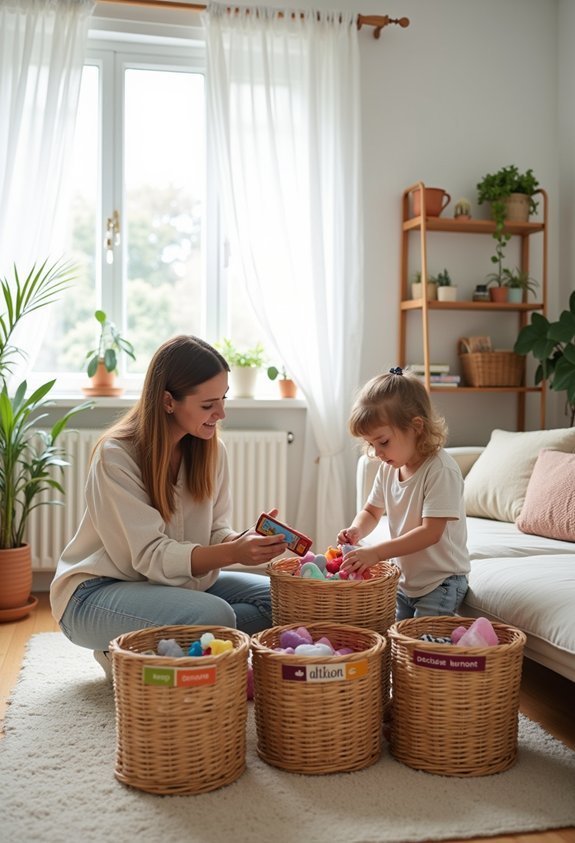

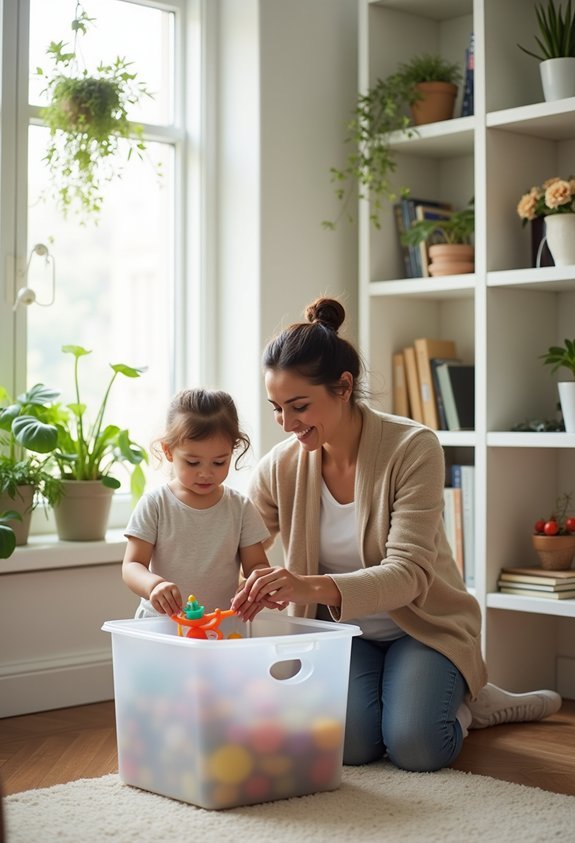
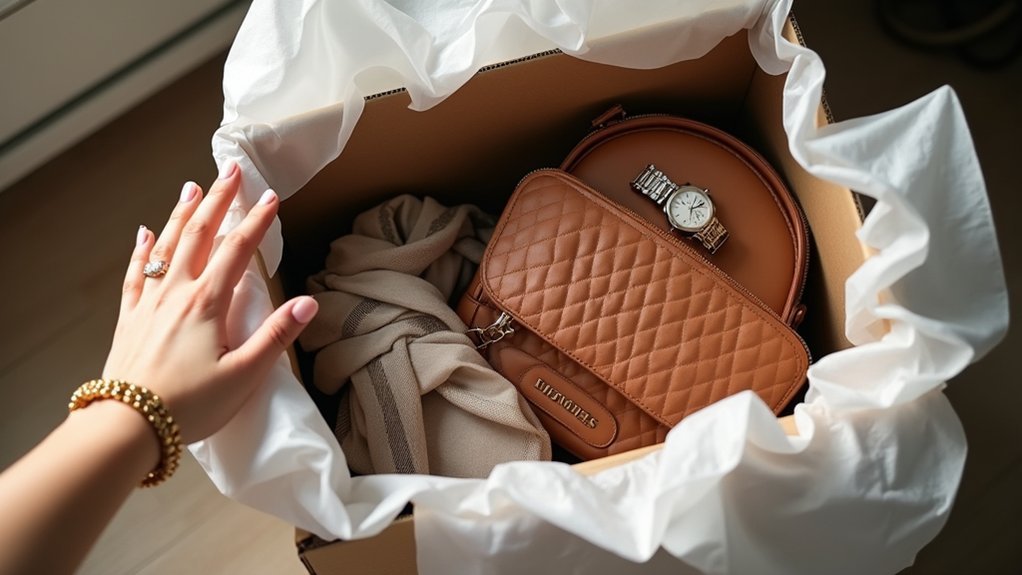
Track your high-risk scenarios—maybe it’s browsing estate sales on Sunday mornings or wandering into thrift stores when you’re bored—so you can prepare better responses before the urge hits.
Give yourself grace on tough days. You might slip up—keep that concert ticket, save that napkin—and that’s okay.
Progress isn’t perfection. It’s just moving forward, even when it’s messy.
In case you were wondering
What Should I Do With Sentimental Items Belonging to Deceased Relatives?
You should keep only meaningful pieces that spark joy, then photograph the rest for memory preservation. This allows emotional processing while reducing clutter. Don’t feel guilty—honoring their memory doesn’t require keeping everything they owned.
How Do I Handle Items My Children Made but Don’t Want?
Studies show parents keep 90% of children’s artwork unused. You should photograph items for memory preservation strategies, then keep only favorites. Create creative display solutions like rotating galleries or memory books, letting your children help decide what’s truly special.
Can I Throw Away Gifts Without Offending the Gift Giver?
Yes, you can discard gifts privately without telling the giver. Gift appreciation doesn’t require keeping items forever. The giver won’t know, and your emotional attachment to the relationship matters more than retaining unwanted objects cluttering your space.
Should I Keep My Wedding Dress if I’m Divorced?
Like an anchor weighing you down, keeping your wedding dress isn’t mandatory after divorce. You’re not obligated to preserve wedding memories that no longer serve you. Dress preservation only matters if it brings you genuine peace and joy.
How Many Childhood Items Is Reasonable to Keep as an Adult?
Keep 10-20 meaningful pieces that hold genuine adult sentimental value. You’ll find quality matters more than quantity when establishing childhood memorabilia limits. Choose items sparking joy and specific memories, not everything from your past.
Conclusion
You know how butterflies need to let go of their cocoon to actually fly? That’s you now. You’re not erasing your memories—you’re making room for them to breathe. The clutter was never protecting your past; it was just blocking your view of what really matters. So take that first step. Your favorite treasures (and your sanity) are waiting on the other side of this mess you’ve been carrying around.