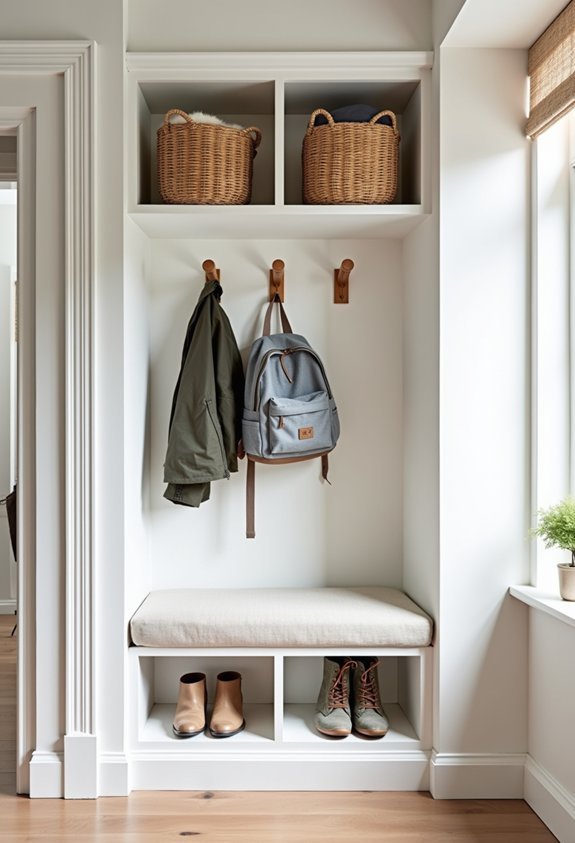
The Decluttering Rule That Finally Made Sense
You’ve probably tried every decluttering trick out there—sorting by joy, color-coding bins, forcing yourself to decide what to keep—and still ended up with the same piles. It’s not that you lack willpower; it’s that most methods ignore the person you are now. There’s one simple rule that shifts the focus to your future self, speeds up every decision, and cuts the guilt. Once you learn it, you’ll never look at your stuff the same way again.
Why Traditional Decluttering Advice Keeps Failing

Although you’ve probably tried popular methods like “keep what sparks joy” or “touch everything once,” traditional decluttering advice often fails because it ignores how your life, energy, and habits actually work day to day.
Traditional methods usually assume you’re motivated, well-rested, and have long, quiet blocks of time. You probably don’t. You’re juggling work, family, fatigue, and unpredictable moods.
When advice doesn’t match reality, you blame yourself instead of the system. That’s where decluttering psychology matters. Your brain avoids decisions that feel endless, emotional, or risky.
Randomly pulling everything out of a closet triggers exactly that: decision fatigue, guilt, and second-guessing. You stop halfway, feel defeated, and the clutter returns.
The problem isn’t you; it’s unrealistic instructions. You need strategies built for real life.
The One Rule That Changes How You Decide What Stays
When you use this question, your decision making process becomes simpler and kinder.
You’re not judging your past self; you’re choosing for your future self.
To see how this changes what stays, imagine you’re deciding whether an item deserves space because it:
- Supports your real daily routines.
- Reflects who you’re becoming.
- Lightens, rather than drains, your energy.
- Survives honest scrutiny of your emotional attachments today.
How to Apply the Rule in Five Minutes or Less
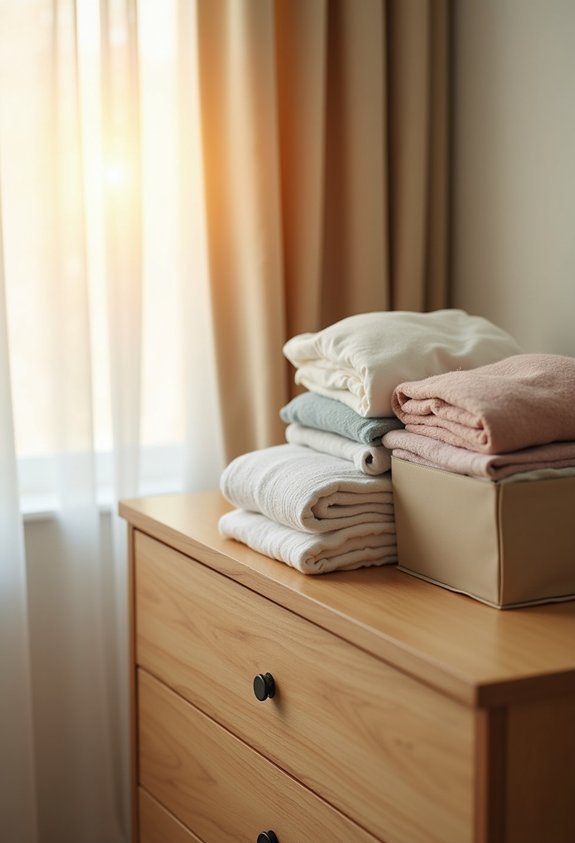
You’ve seen how this rule reshapes your decisions; now it’s time to put it to work quickly.
Start by setting a five‑minute timer and choosing one small area: a single drawer, a shelf, or your bag.
Pick up each item and apply the rule immediately—no piles, no postponing.
Ask, “Does this truly serve my life now, or am I keeping it out of guilt, habit, or fear?”
Decide in ten seconds or less; that builds quick decision making and weakens emotional clutter.
Keep what clearly supports your current priorities.
Release what doesn’t, and move it straight to trash, recycling, or donation.
When the timer ends, stop.
You’ve practiced a minimalism mindset in minutes, with visible progress.
Repeat tomorrow to strengthen your confidence and ease.
Using the Rule in Your Kitchen, Closet, and Living Room
How does this rule look in the spaces you use most—your kitchen, closet, and living room? Start by asking, “Do I use this regularly, and does it earn its space?” Then act.
1. In the kitchen, keep daily tools visible and store backups.
Let kitchen organization follow your cooking zones: prep, cook, serve, clean. Remove duplicates and single‑use gadgets you ignore.
2. In your closet, define closet essentials you reach for weekly.
Anything uncomfortable, worn out, or rarely chosen gets donated or recycled.
3. In the living room, test living room functionality: can you relax, host, and move easily?
Clear surfaces first.
4. For overall space optimization, treat every shelf and drawer as prime real estate.
Only items with a clear job stay today.
Tackling Sentimental Items Without Regret
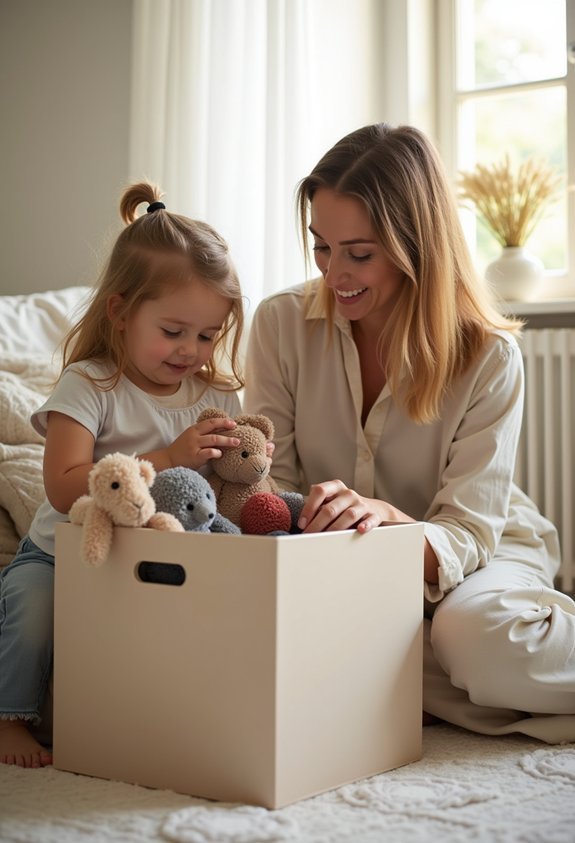
Even though sentimental items feel like the “exception pile,” you can still apply the decluttering rule to them without feeling cold or guilty.
Start by grouping similar mementos together: cards, photos, childhood objects, inherited pieces.
Then ask your rule question: Does this still serve your life today? Notice whether it carries genuine sentimental value or mainly obligation and emotional attachment.
If an item instantly warms your heart, it earns its place. If you have to dig for a reason, pause.
Give yourself permission to keep a representative sample instead of every version—a few letters, not the whole stack.
Set a clear limit, like one box per person or per life chapter, so what you keep truly stands out.
That way, memories stay focused, joyful.
What to Do With the Stuff That Doesn’t Make the Cut
Sentimental favorites now have a clear place, which means it’s time to decide what happens to everything that doesn’t pass your decluttering rule.
Instead of shoving it back into a closet, give each item a clear exit path.
- Donate intentionally. Match items with local shelters, schools, or mutual aid groups. Strong donation options turn “clutter” into direct help.
- Sell selectively. List only what’s valuable enough to justify your time; box the rest for giveaway.
- Recycle responsibly. Look up textile, electronics, and packaging recycling methods so usable material re-enters circulation.
- Toss what’s truly done. If it’s broken beyond repair, moldy, or unsafe, release it without guilt; you’ve already taken the lesson from it.
Step back, notice the space you’ve created, and let that motivate you.
Building Tiny Habits Around the Rule So Clutter Stops Re-Forming
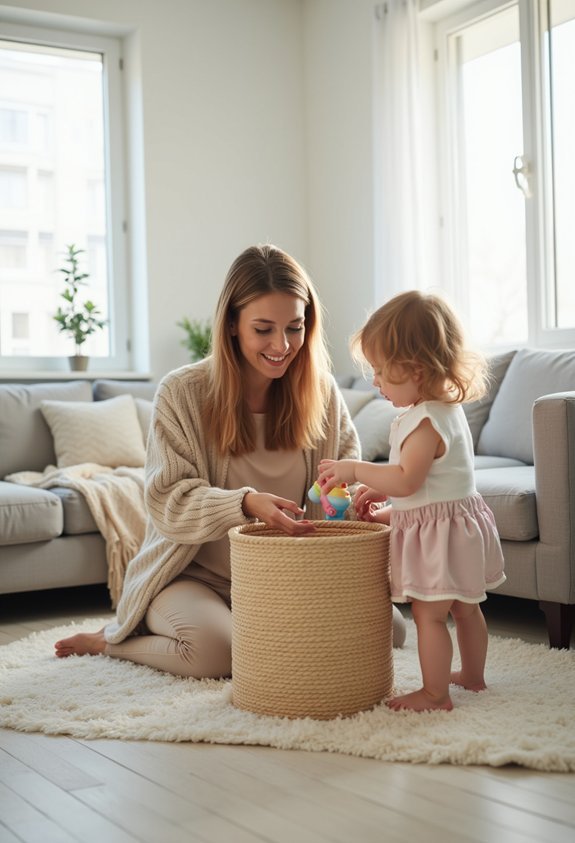
Once you’ve cleared the excess, your decluttering rule only sticks if you wrap it in tiny, repeatable habits.
Start by linking the rule to moments that already happen every day. That’s habit stacking: you attach one clear action to an existing cue. For example, after you walk in the door, you immediately put every item in its decided spot or the outbox.
Tie each decluttering rule to a daily cue, then act immediately—no pausing, no piles, just placement.
Keep these tiny routines specific and quick, so they never feel overwhelming. Use visual prompts—a small basket, a label, a sticky note—to remind you of the rule at the exact moment you’re likely to forget.
You may also like:


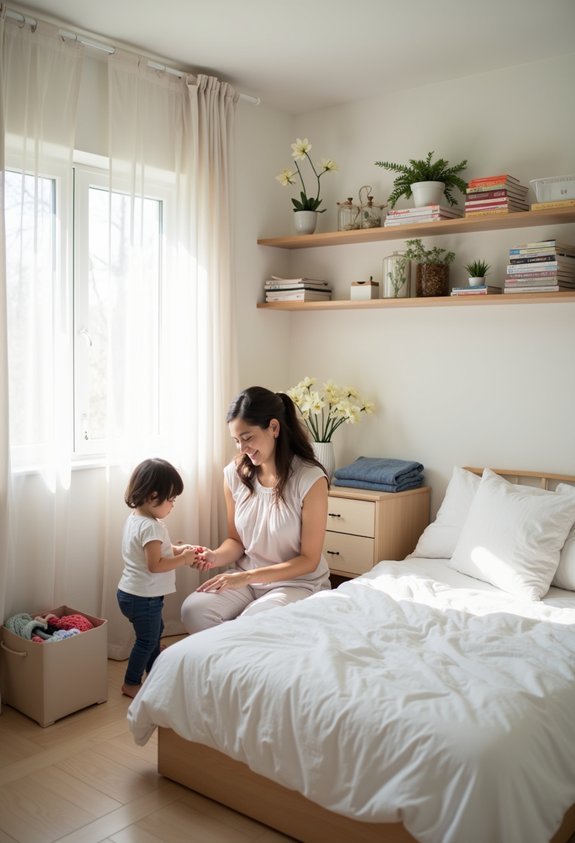

When the habits run automatically, clutter has far fewer chances to sneak back in. Review your routines weekly and adjust any step that still creates hesitation later.
Real-Life Examples of the Rule in Action
When you see the rule working in real homes and schedules, it stops feeling like an abstract idea and starts looking practical and doable.
You can borrow these personal stories as practical applications in your own space. Picture how the rule plays out:
- You open mail, recycle junk immediately, file keepers, and leave the surface empty.
- You try on a sweater, decide it’s “not a favorite,” and place it straight into the donation bag.
- You finish cooking, return every tool to its “home,” and clear counters before serving.
- You end your workday by resetting your desk: laptop in one spot, pens in a cup, one notebook, nothing else.
Each scene shows you what “following the rule” looks like in motion.
When the Rule Feels Hard—and How to Adjust It to Your Life

Even with clear examples, applying a decluttering rule every day can feel rigid, tiring, or unrealistic. When that happens, step back and assess your real limits: time, energy, and emotional bandwidth.
Then create personalized adjustments. Maybe you declutter for five minutes instead of fifteen, or you apply the rule only to one category—like mail, clothes, or digital files—until that feels automatic.
Shrink the rule to fit your life—shorter sessions, single categories, steady automatic progress
Name the specific thoughts that show up (“I’m wasting money,” “I might need this”) and answer them with simple truths. This is how you start overcoming resistance instead of arguing with it.
Finally, protect your wins: schedule decluttering like an appointment, pair it with a habit you already do, and celebrate small, visible changes each week. That way, the rule supports you daily.
Conclusion
When you use this rule, you’re not “getting rid of stuff”; you’re casting a vote for the life you’re actually living. Think of a gardener pruning a tree: in one study, careful pruning increased fruit yield by over 30%. You’re doing the same—cutting what drains you so your energy can grow. Start with one drawer, give yourself ten seconds per item, and let your future self be the standard that guides every choice.