The Minimalist Journey I Didn’t Expect to Take
Your minimalist journey probably won’t start with intention—it’ll begin in chaos, maybe while searching frantically for something important buried under years of clutter. That panic becomes clarity when you realize you’re not just looking for a passport, you’re drowning in possessions that steal your time, energy, and peace. Decluttering one drawer turns into transforming your entire home, and suddenly you’re discovering that letting go of stuff means letting go of who you used to be—insecurities, abandoned dreams, and all. What follows isn’t just a tidier space; it’s reduced anxiety, financial freedom, and room for spontaneous living you didn’t know you needed.
Key Takeaways
- A missing passport triggered panic and revealed how excess clutter was consuming valuable time, energy, and mental clarity.
- Starting small with one kitchen drawer prevented overwhelm and gradually expanded into a complete home transformation through manageable steps.
- Decluttering uncovered hidden insecurities and abandoned dreams, becoming an unexpected journey of self-discovery beyond physical organization.
- Life after decluttering brought enhanced mental clarity, increased freedom for spontaneous activities, and significant financial benefits from mindful spending.
- Minimalism shifted focus from managing possessions to intentional living, reducing stress while improving mood, productivity, and overall well-being.
The Morning Everything Changed: A Missing Document and a Mountain of Chaos

When Sarah opened her filing cabinet that Tuesday morning, hunting for her passport three hours before her flight to Seattle, she discovered something that made her stomach drop—a tangled mess of papers, receipts from 2019, mysterious warranties for appliances she no longer owned, and absolutely no passport.
You know that feeling, right?
That chaotic morning panic when one missing document turns into an archaeological dig through your entire life. Sarah ended up tearing through drawers, dumping out boxes, and texting her boss about “unexpected delays” (translation: total disaster).
The passport eventually turned up—wedged behind her dresser.
But here’s what hit her during that frantic search: this wasn’t just about one missing document.
It was about everything.
The excess. The clutter. The weight of stuff she didn’t need, couldn’t find, and honestly didn’t even remember keeping. She realized her clutter was consuming valuable time and energy that could have been spent actually preparing for her trip.
Starting Small: How One Drawer Led to an Entire Home Transformation
Sarah could’ve done what most of us would do after that passport disaster—sworn she’d “get organized someday” and then promptly forgotten about it by Wednesday.
But something shifted.
Instead of tackling her entire house (because who’s that kind of energy?), she opened one kitchen drawer. Just one. The junk drawer—you know the one, stuffed with expired coupons, mystery keys, and approximately forty-seven pens that don’t work.
That simple act of drawer decluttering sparked something unexpected. A minimalist mindset started creeping in, making her question what she actually needed versus what she’d been hoarding “just in case.”
One drawer became two. Then a closet. Then an entire room.
She didn’t realize it then, but starting with that single drawer helped her avoid the decision fatigue that derails most decluttering attempts before they even begin.
Sometimes the biggest transformations start ridiculously small.
The Emotional Weight I Didn’t Know I Was Carrying
As boxes of old stuff piled up by the door, something weird happened—the physical space wasn’t the only thing getting lighter.
Turns out, you’ve been lugging around hidden burdens disguised as keepsakes, and nobody warned you about that.
Each item you release—the broken kitchen gadget, your ex’s hoodie (why?), those jeans from 2012—creates this unexpected emotional release that catches you completely off-guard.
You might actually cry over a coffee mug. That’s normal.
Because here’s the thing: stuff holds stories, and some stories have been weighing you down without permission.
When you finally let go of objects tied to guilt, old identities, or shoulds that never fit, you’re not just clearing shelves.
You’re giving yourself permission to move forward.
Every forgotten item in your closet or drawer represents mental energy leaks that you didn’t even know were draining you.
And honestly? That feels better than any organizing system ever could.
What I Learned About Myself While Sorting Through Decades of Possessions
Beyond the emotional release, I discovered that my possessions were basically a tell-all biography I’d never agreed to write.
Every item revealed something—my insecurities (hello, twelve identical black sweaters), my abandoned dreams, my younger self’s questionable taste.
This self discovery journey taught me I’d been using stuff as armor, protection against facing who I really was.
The decluttering mindset shift hit hardest when I realized: I wasn’t my things. My worth wasn’t measured in boxes stored or closets stuffed full of “just in case” items I’d never actually need.
Sorting through decades of possessions became less about what to keep and more about understanding why I’d held onto things in the first place.
Each item demanded not just physical space, but mental energy—a constant decision fatigue that clouded my ability to think clearly about what actually mattered.
It was uncomfortable, messy—and completely necessary.
The Unexpected Benefits That Went Far Beyond a Tidy Home

Once I’d cleared out enough space to actually see my floors again, something weird happened—my whole life started improving in ways I never saw coming.
The unexpected clarity hit me first. Without all that visual noise screaming for attention, I could actually think straight—like someone turned down the volume on life’s chaos.
Then came the newfound freedom.
Less stuff meant less time cleaning, organizing, fixing broken things I didn’t even like. Suddenly I’d entire weekends back (wild concept, right?).
I started saying yes to spontaneous plans instead of “sorry, I really need to reorganize my closet this weekend.”
My wallet got happier too. When you’re not constantly shopping to fill emotional holes, money sticks around longer.
Who knew?
What surprised me most was how mindful spending became automatic—I stopped buying things on impulse and started questioning whether each purchase actually earned its place in my life.
Mistakes I Made and What I’d Do Differently Today
Looking back, I definitely didn’t glide gracefully into minimalism like some zen master floating on a cloud of good decisions.
My minimalism journey was messy, chaotic, and full of regrettable purges—definitely not the peaceful transformation I’d imagined.
Nope—I made plenty of mistakes made along the way, like getting rid of things I actually needed (goodbye, favorite sweater I never wore but suddenly missed desperately).
I also got way too obsessed with hitting some arbitrary number of possessions, which completely missed the point.
The biggest lessons learned? Don’t declutter when you’re angry or emotional—you’ll regret those decisions.
And honestly, minimalism isn’t about deprivation or proving anything to anyone.
If I could start over, I’d go slower, keep the things that genuinely mattered, and remember that progress beats perfection every single time.
I wish I’d known earlier that emotional attachment to objects can actually become constricting rather than comforting, leading to decisions rooted in guilt instead of genuine need.
Living With Less: What My Life Looks Like Now
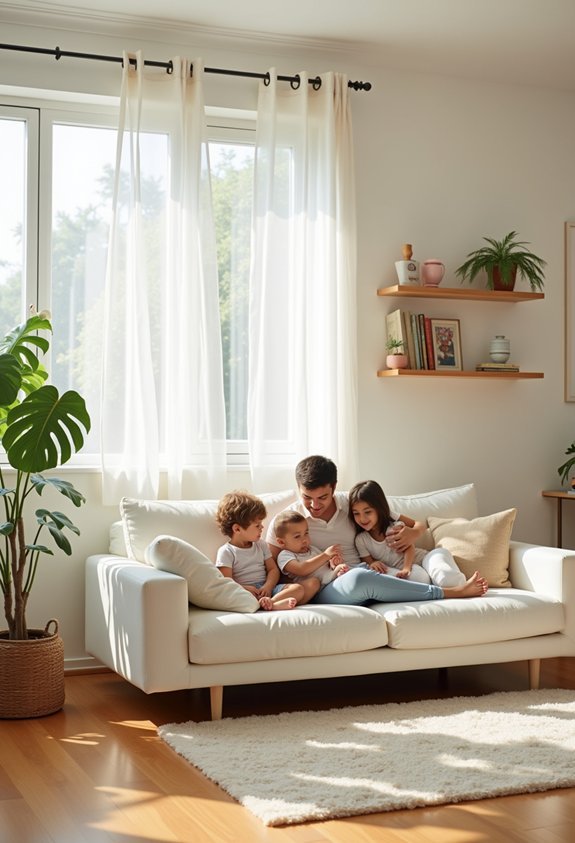
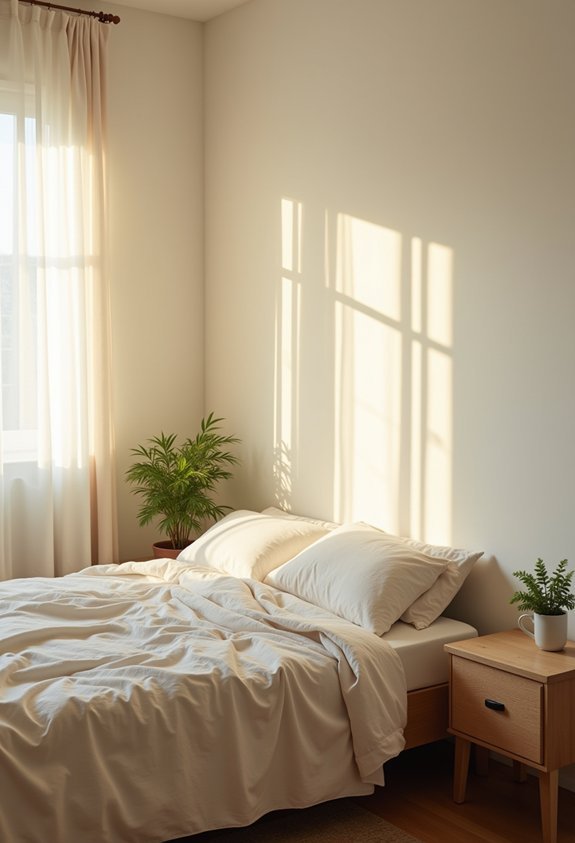
These days, my apartment doesn’t look like some stark Instagram photo where everything’s white and nobody actually lives there—it just looks like a normal home with way less stuff crammed into it.
The minimalist mindset clicked when I realized I wasn’t managing belongings—they were managing me.
Here’s what changed:
- My closet has 30 items (yes, including socks) and getting dressed takes two minutes instead of twenty.
- I own four plates and four bowls because honestly, who needs twelve when you’re one person?
- My counters stay clear without effort since there’s simply nothing to pile up anymore.
The decluttering process wasn’t about perfection—it was about breathing room.
And yeah, I actually use everything I own now. Wild concept, right?
Turns out, orderly surroundings actually help lower cortisol levels, which explains why I feel less anxious just walking through my door.
In case you were wondering
How Do You Handle Gifts From Loved Ones When Living Minimally?
You’ll want to communicate gift alternatives like experiences or consumables beforehand. When you receive physical items, keep those with genuine sentimental value and graciously donate others. It’s about honoring relationships, not accumulating stuff you don’t need.
What Minimalist Principles Do You Apply When Grocery Shopping?
Think of your cart as a curated art gallery—you’ll only display the essentials. You’ll embrace meal planning to avoid overbuying, stick to tight grocery lists, and you’ll buy what you’ll actually use, not what tempts you.
You may also like:


How Has Minimalism Affected Your Digital Life and Screen Time?
You’ll find digital decluttering strategies transform your relationship with technology. By implementing mindful screen usage practices, you’ve likely deleted unnecessary apps, unsubscribed from distracting notifications, and set intentional boundaries that reclaim your time and mental space effectively.
Do You Have Specific Rules for Bringing New Items Into Your Home?
I’ve become ridiculously obsessive about item evaluation before purchases! You’d think I’m defusing bombs with my purchase guidelines: Does it replace something? Will I use it weekly? Can I afford it twice? These questions stop impulse buying cold.
How Do You Maintain Minimalism When Living With Non-Minimalist Family Members?
You’ll need open communication about boundaries in shared spaces. Focus on keeping your personal areas minimal while respecting others’ choices. Lead by example, showing how less clutter improves daily life without pressuring family members to change.
Conclusion
You’re probably waiting for me to tell you this’ll be easy—that you’ll wake up tomorrow miraculously loving empty countertops.
I won’t lie to you like that.
Some days you’ll miss your stuff (even that broken blender you finally tossed). But here’s what I know: you’ll discover something better than perfect minimalism.
You’ll find your own version of enough.
And honestly? That’s where the real freedom starts.
Your turn now.