The Truth About Becoming a Minimalist With Kids
When you’ve got kids, becoming a minimalist can feel impossible—like you’re fighting a losing battle against toys, artwork, and tiny mismatched socks. You want calm spaces, but you also don’t want to stifle their creativity or feel guilty about what you let go. The truth is, you can simplify family life without becoming extreme or depriving your kids—but it starts with redefining what “enough” really looks like for you all…
Why Minimalism Feels So Hard When You Have Kids
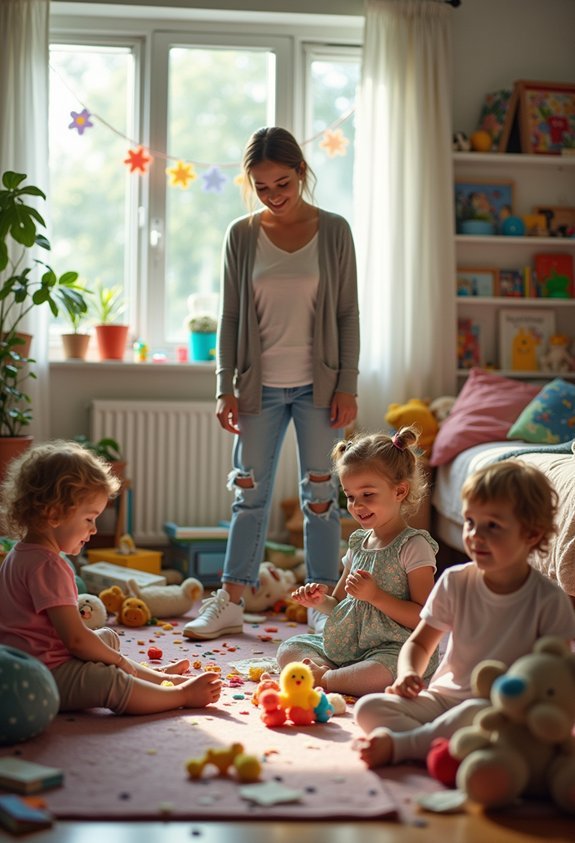
Why does something that sounds so simple—own less, stress less—feel so complicated once kids are involved?
You’re not just managing your stuff anymore; you’re managing everyone else’s, plus emotions, schedules, and expectations.
Minimalism with kids isn’t just less stuff; it’s juggling belongings, emotions, routines, and everyone’s expectations
Toys multiply, artwork piles up, relatives gift more than your shelves can handle.
On top of that, you wrestle with guilt: Will clearing out things hurt your kids’ feelings or limit their opportunities?
You want a calmer home, but you also want to be a “good” parent, and those goals can seem to clash.
Adopting a minimalist mindset asks you to question habits you’ve carried for years, right as parenting challenges peak.
Still, you’re not failing; you’re just learning new skills in a very full season.
Small daily choices gradually change things.
Myths About Minimalism That Stress Parents Out
Even before you donate a single toy, certain ideas about minimalism can weigh you down. You might hear that real minimalists own almost nothing, never buy character toys, and keep spotless, magazine-ready rooms.
Those aren’t rules; they’re stories, and they create pressure, not peace.
Let’s do some myth debunking. Minimalism doesn’t mean your kids can’t have collections, messy play, or bright plastic. It doesn’t erase your hobbies, sentimental items, or cultural traditions.
Another of the common parenting misconceptions is that you must convert your whole family overnight. You don’t. You can start with your stuff, one drawer or surface at a time, and invite your kids into the process slowly.
Minimalism is a tool, not a moral test you can fail on bad days.
Redefining “Enough” for Your Family
Consider sketching your version of “enough”:
- Enough space: rooms where people can move, create, and relax.
- Enough time: margins in the day for slowness and surprises.
- Enough activities: commitments that match your energy.
- Enough digital noise: screens that serve, not rule.
- Enough stuff: tools for real needs and joys that fit your unique family.
Decluttering Kid Stuff Without the Guilt
When you start sorting through kid clutter—art projects, forgotten toys, outgrown clothes—it’s normal to feel a knot of guilt or second‑guessing in your chest.
Begin by naming the purpose: you’re creating space for what your child actually uses and loves.
Use simple decluttering strategies: choose one category, set a small time limit, and decide in this order—keep, photograph, donate, recycle, trash.
Let yourself keep a modest “memory box” so you’re not forcing ruthless choices.
For toys, ask, “Does this get played with weekly?” If not, it can serve another family.
Talk kindly to yourself: removing excess isn’t erasing memories.
Practice guilt free practices like thanking items before you let them go and reminding yourself that caring includes curating.
That’s responsible, loving stewardship, not deprivation.
Setting Up Simple, Kid‑Friendly Spaces That Work
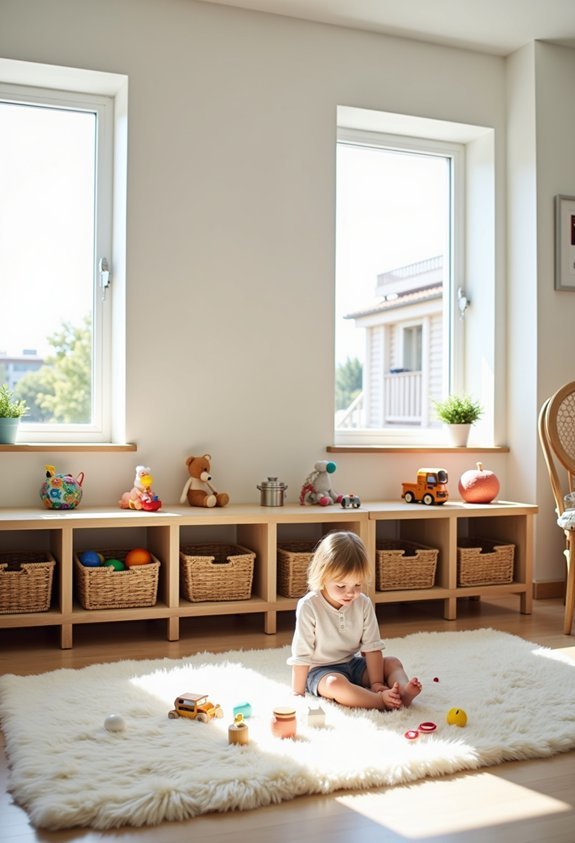
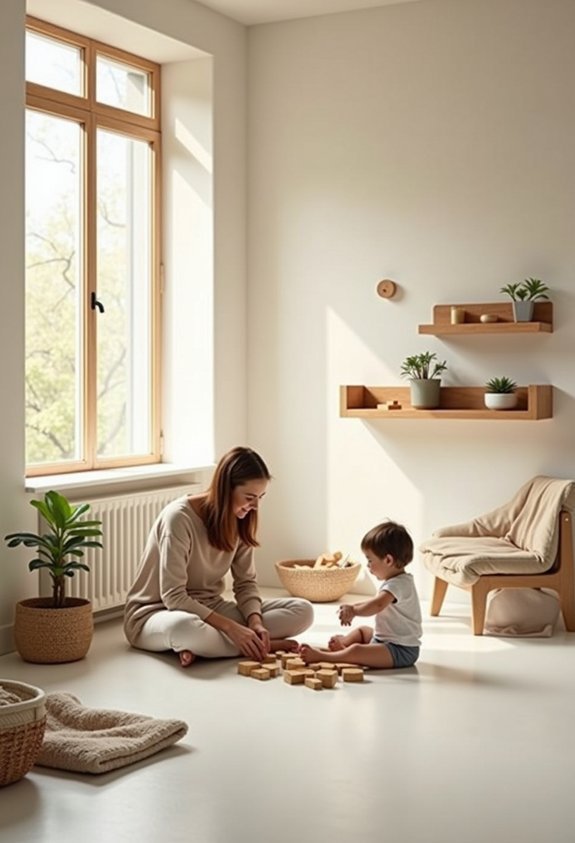
Although every home and child is different, kid‑friendly minimalist spaces all rely on the same idea: make it easy for your kids to use things and easy for everyone to put them away.
Design for ease, not excess: simple spaces kids can use, enjoy, and reset themselves.
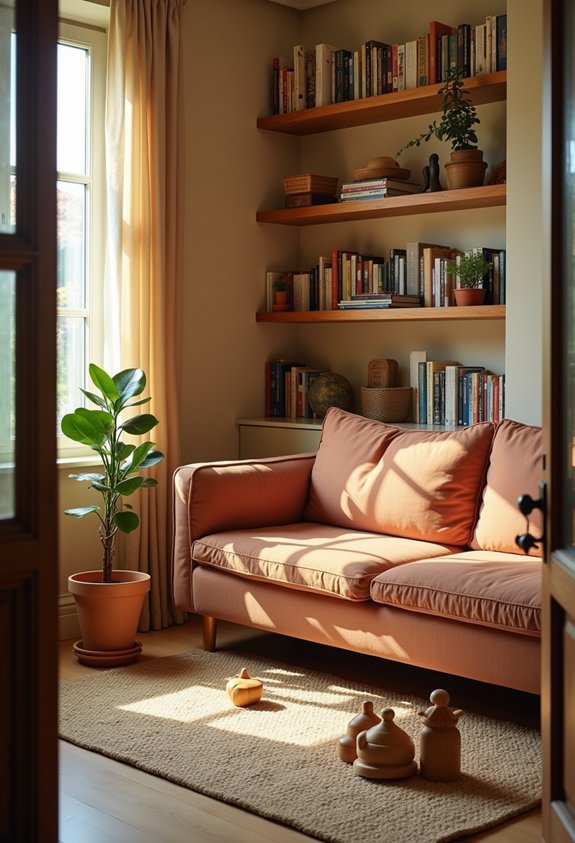
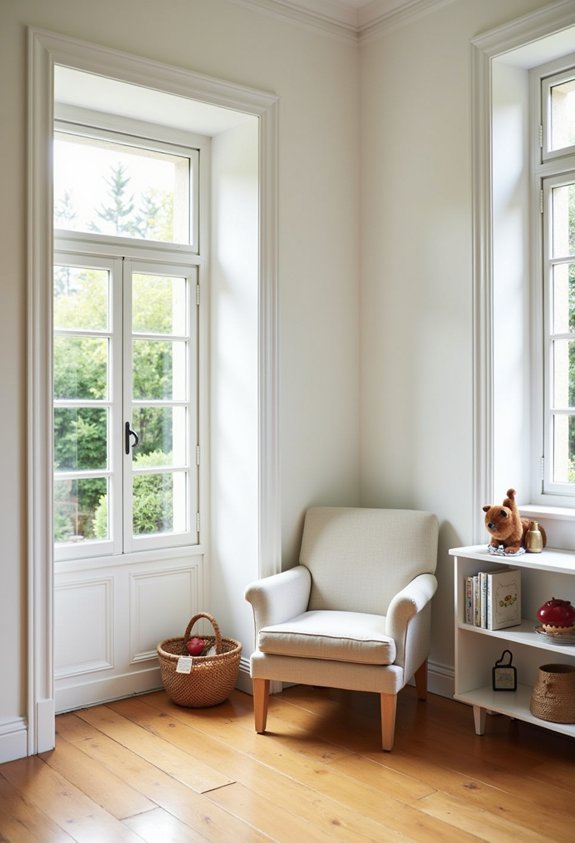
Start by choosing one small area—a play corner, bedroom, or craft table—and design it for flow, not perfection. Aim for low, open shelves and containers that invite quick cleanups. Think fewer, larger categories, not micro‑sorting.
Kid friendly organization should feel intuitive, so your child can reset a room without constant supervision. Simple storage beats elaborate systems that fall apart on busy days.
- Use one basket per activity.
- Keep surfaces clear for play.
- Store art supplies in a single caddy.
- Label bins with pictures or words.
- Put everyday items within easy reach.
Involving Children in Decisions About Their Things
Even in a minimalist home, your kids still need to feel that their things—and their opinions—matter. When you declutter, invite child involvement instead of secretly purging their stuff.
Sit together, sort items by category, and ask simple questions: “Do you use this?” “Does it make you happy?” This builds decision making skills and reduces battles later.
Offer clear choices: keep, donate, recycle, or “decide later” in a small pending box. Set gentle boundaries, like limiting collections to one bin, but let your child choose what earns a spot.
Respect a few “always keep” items, even if they’re not your favorites. When your kids see you listening and explaining the why behind minimalism, they’re more likely to cooperate—and even take pride in owning less.
Managing Gifts, Hand‑Me‑Downs, and Incoming Clutter
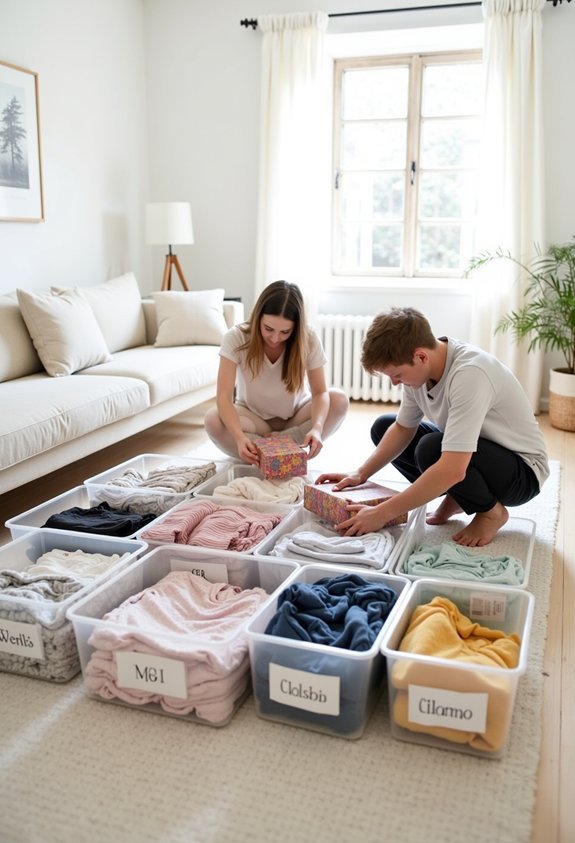
Gifts, hand-me-downs, and surprise “treasures” from well‑meaning relatives can quietly undo your minimalist progress if you don’t manage them on purpose.
You’re not ungrateful; you’re practicing intentional gift management. Decide ahead what comes in, what stays briefly, and what leaves. Create simple rules and share them kindly with family so expectations shift over time.
You may also like:
- Keep only what your child truly uses, loves, or needs.
- Store one size ahead for hand‑me‑downs; donate anything beyond that.
- Use “one in, one out” to protect clutter control in bedrooms and play areas.
- Photograph sentimental items, then pass them on responsibly.
- Designate a small “incoming” basket you empty weekly, making mindful decisions instead of reacting later.
This keeps generosity supportive, your home peaceful, and your values clearly visible daily.
Simplifying Routines: Mornings, Meals, and Bedtime
When you simplify your daily routines, you turn the most stressful parts of family life—mornings, meals, and bedtime—into predictable, calmer rhythms that support your minimalist goals.
Start with morning rituals: limit choices by creating a simple capsule of school clothes, a consistent breakfast rotation, and one landing spot for bags and shoes. You’re not aiming for perfection, just fewer decisions.
For meals, use basic meal planning: repeat family favorites, assign themes to nights, and keep ingredients you actually use. A simple menu on the fridge cuts “What’s for dinner?” drama.
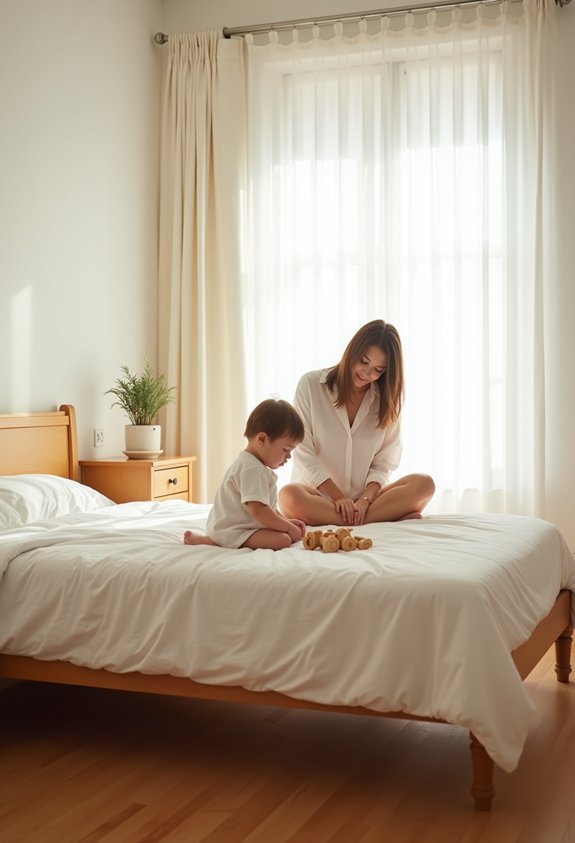
At bedtime, follow the same short sequence every night—bath, pajamas, two books, lights out.
Keep bedrooms quiet and mostly toy‑free so your kids’ last moments feel peaceful, not stimulating for everyone at home tonight.
Staying Minimalist Through Growth, Seasons, and Setbacks
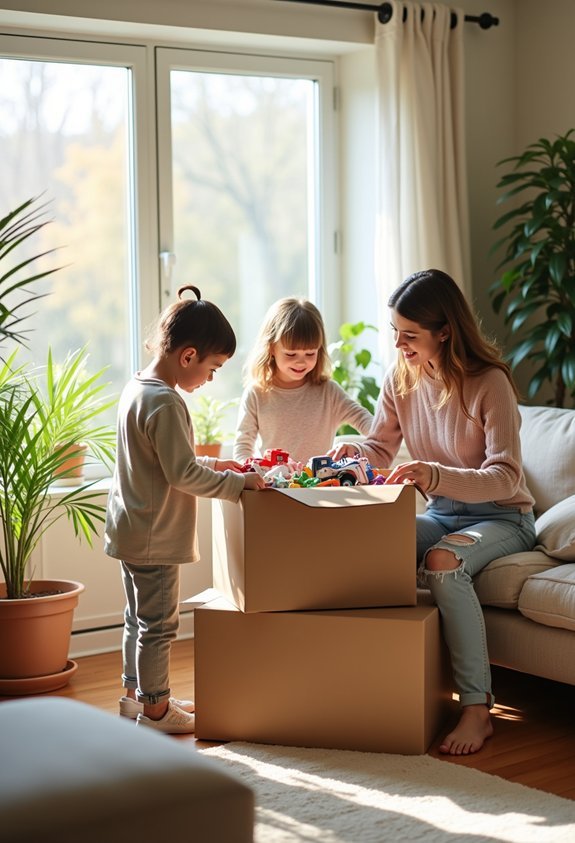
As your kids grow, the seasons change, and life throws curveballs, minimalism doesn’t stay fixed—it flexes with you. You’ll face growth challenges: new hobbies, bigger clothes, harder homework. Instead of clinging to how things were, treat minimalism as a living system you update.
- Revisit toys, clothes, and activities every season; release what no longer fits.
- Use seasonal adjustments to test new routines, then keep only what truly helps.
- When crisis hits, relax standards; prioritize rest, connection, and basic order.
- After setbacks, reset one small area—a drawer, backpack, or corner—to rebuild momentum.
- Keep a “maybe” bin so kids can practice letting go without feeling forced.
You’re not failing when life shifts; you’re refining. Minimalism lasts when you allow it to grow up with your family.
Conclusion
When you choose a simpler home, you’re not chasing perfection; you’re clearing a path. Think of the parent who boxed half the toys and watched her kids play longer with what remained—like a garden flourishing once you pull the weeds. You can do this slowly: one drawer, one bedtime routine, one honest conversation at a time. Keep what supports your family’s real life, and let the rest gently go when you’re ready, again and again.