19 Things I’m Never Keeping Again
You already know clutter isn’t just physical—it’s mental, emotional, and even digital. When you keep clothes that don’t fit, gifts you don’t like, or “just in case” clutter, you quietly drain your time, energy, and confidence every day. If you want a calmer home and a clearer mind, start by refusing to keep these 19 specific things—and one of them might surprise you most.
Clothes That Don’t Fit My Life (Or My Body) Anymore

Start by pulling out every item you’re keeping “just in case” you lose weight, change jobs, or magically become someone who wears it.
Lay everything on the bed and run a quick wardrobe evaluation: Does this fit your current body today, without pinching, gaping, or strategic sucking in?
Next, check lifestyle alignment. Do you still attend events that require this piece, or are you dressing for a past career, hobby, or fantasy schedule?
Try on borderline items. Sit, raise your arms, walk fast. If you’d never choose it for a full day, it doesn’t stay.
Create clear piles: everyday workhorse, occasional use, donate, tailor, trash.
Give prime closet space only to clothes that support who you’re and what you actually do each day.
Sentimental Stuff I Only Feel Guilty About
How much of your “sentimental” stash is actually just guilt in a box?
Start by sorting every card, souvenir, and school project into three piles: keep, digitize, release.
Ask: Do I remember this moment without the object? Would I miss it next month? If not, it’s emotional baggage, not treasure.
Photograph nostalgic trinkets, then let the physical item go.
Keep one representative piece per person or era, clearly labeled in a small, finite container.
Detach obligation: you’re not rejecting the giver, you’re decluttering the evidence.
For inherited items, choose what you’ll actually display or use; offer the rest to relatives, donation centers, or specialty resellers.
Create a simple rule: if it only triggers guilt, it doesn’t stay.
Review yearly so clutter never quietly regrows.
Just in Case” Purchases Gathering Dust
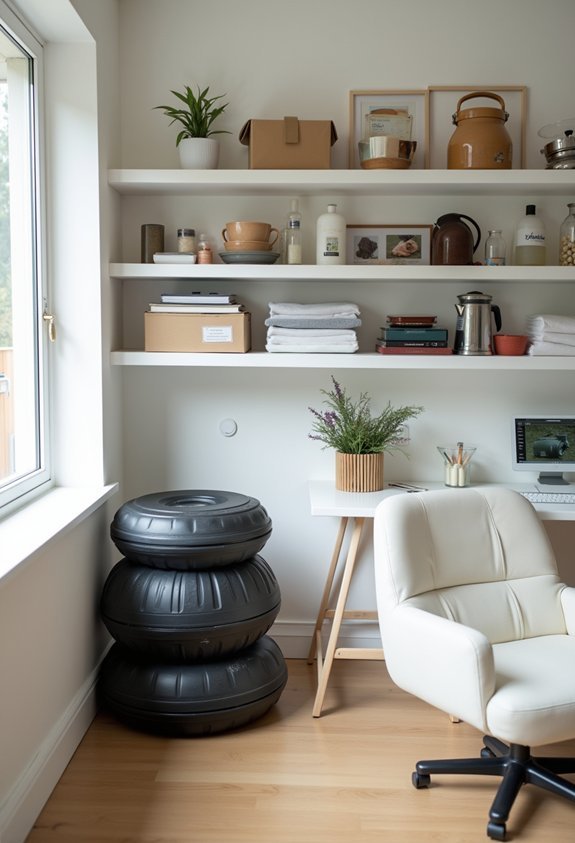
Even if you’re good at avoiding impulse buys, “just in case” purchases slip in disguised as practicality: backup gadgets, extra linens, niche tools, emergency outfits, specialty ingredients.
You tell yourself they’ll save you someday, but they quietly demand space, cleaning, and attention. Start by listing every item you’ve kept “just in case.” Note when you bought it, the scenario you imagined, and whether it’s happened.
“Just in case” items steal space and attention; track them and challenge their imagined emergencies
If it hasn’t in a year, that’s data, not failure. Designate one small container for true contingencies; once it’s full, something must leave. Store essentials together, label them clearly, and set a calendar reminder to review quarterly.
This turns vague anxiety and clutter regret into a measurable, repeatable process you can maintain. You buy less, keep less, breathe easier.
Half-Used Products I Secretly Hate
Those “just in case” items have cousins: the half-used products you quietly avoid but keep anyway.
Start by pulling everything out: half used skincare, crusty hair products, faded makeup, unused beauty tools. For each item, ask three questions: Do I like using this? Does it work? Would I buy it again today? If you answer “no” twice, it goes.
Check expiration dates, weird smells, texture changes; anything questionable is trash, not a backup. Group what survives by category and frequency of use, then store it where you’ll actually reach for it.
Finally, create a one-in, one-out rule for products and a strict sample limit. You’ll stop stockpiling disappointment and start finishing what you own. Set reminders to review this stash every quarter and purge.
Gifts I Don’t Want but Feel Obligated to Keep
Although they come wrapped in good intentions, unwanted gifts quietly colonize your space and guilt-trip you every time you see them.
First, name them accurately: they’re guilt gifts, not treasured possessions.
Then apply gift etiquette: once a gift is given, the giver’s ownership ends; you may use, regift, donate, or sell it.
Assess each item: Do you like it? Will you use it within three months? Does it match your real life, not an imagined version? If not, release it.
Notice any emotional attachment: Are you afraid of offending someone, or of appearing ungrateful? That’s anxiety, not obligation.
Communicate simply—“Thank you, it was so thoughtful”—while quietly moving it out.
Protect your home by choosing a decluttering mindset over social performance. Your space deserves better.
Books I’ll Never Actually Read
Books form their own kind of clutter when they exist only as aspirational trophies instead of tools you actually use. You scan crowded, cluttered shelves and feel literary guilt about untouched book genres, ambitious reading goals, and unfinished series you’ve hauled through three moves.
Books become clutter when they hold your guilt and ambitions, but never your actual, present attention
- Hardcovers you bought because they looked smart, not because they matched your reading lists.
- Self help books promising reinvention that you never open beyond chapter one.
- Digital books buried in an app, silently adding pressure instead of pleasure.
- Cheap paperbacks you kept to avoid repeating library fines, though you won’t reread them.
You release them through donations and book swaps, keeping only what you’ll realistically read next.
Space returns, and every remaining spine represents intention, not postponed, imaginary progress today.
Paper Piles and Old Documents I Don’t Need
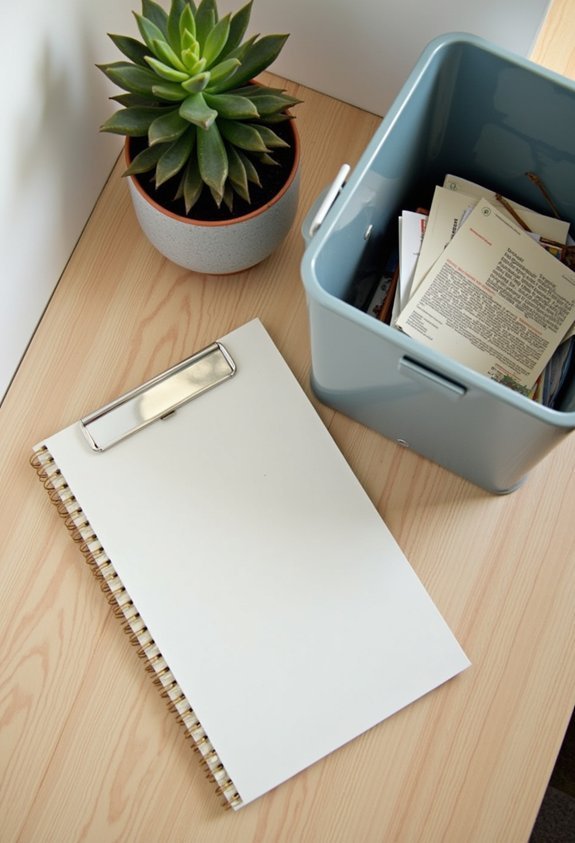
Paper piles creep in from every corner: bank statements you can access online, appliance manuals for things you no longer own, warranties that expired years ago, and mystery forms you kept “just in case.”
They clog drawers, file boxes, and desktop trays, making it harder to find the few documents you actually need—like IDs, tax records, and legal papers.
Start with a paperwork audit: sort every sheet into shred, paper recycling, scan, or save.
Keep only essential paperwork required for taxes, warranties, and identification, guided by document retention timelines.
Create filing systems with labeled folders and digital backups.
Use checklists and reminders as memory management tools.
Apply decluttering strategies weekly so document organization becomes routine and supports a minimalism mindset instead of desk chaos.
Duplicate Items I Forgot I Already Owned
Once you clear the paper clutter, another hidden drain on space shows up: duplicates you forgot you already owned.
Cleared your paper piles? Now you’ll spot the real space hogs: all those forgotten duplicates.
You buy backups because you can’t find the original, then both disappear into drawers. Fix this by auditing categories, not rooms.
- Duplicate kitchenware – Stack every spatula, whisk, and ladle on the counter. Keep your best two of each; donate the rest.
- Forgotten gadgets – Line up mixers, blenders, coffee makers. Keep the most versatile, then release the extras.
- Office supplies – Gather every pen, stapler, tape dispenser. Test, keep a small working set, donate surplus.
- Personal care tools – Corral brushes, clippers, tweezers. Keep reliable favorites, store them in one labeled container so you stop re-buying those items ever again.
Expired Food, Spices, and Supplements

Even if your pantry looks under control, expired food, stale spices, and outdated supplements quietly waste space and money while dulling your cooking and health routines.
Start by emptying shelves and checking every date; separate a clearly expired pantry pile from items still safe. With spices, prioritize airtight containers, labels, and strict spice organization so you actually use what you own.
For supplements, learn typical supplement shelf life and discard expired vitamins that may have lost potency. Note patterns that cause food waste, then adjust shopping lists, portions, and meal planning.
Choose storage solutions that keep frequently used items visible and older items forward. This simple kitchen declutter supports mindful consumption, better nutritional value, and more deliberate health choices for you and your household.
Digital Files I’ll Never Open Again
Hundreds of forgotten screenshots, outdated downloads, and duplicate documents quietly clog your devices and slow every search. You don’t need them, but they still demand attention, storage, and backup space.
Apply focused digital decluttering techniques: schedule a monthly 15-minute purge and delete anything older than a year unless it’s legally or financially important. Use precise file organization tips to keep what remains findable.
- Create a “Review-This-Week” folder and move questionable files there.
- Sort by size and remove the biggest offenders first.
- Rename surviving files with dates and clear labels.
- Back up essentials, then empty trash on all devices.
Repeat this workflow consistently so your storage stays lean, searches return only relevant results, and you stop wasting decision-making energy on files you’ll never actually use again.
Apps and Subscriptions That Don’t Earn Their Keep

Three kinds of digital clutter quietly drain your money and attention: unused apps, forgotten subscriptions, and “free trials” you never canceled.
Start by listing every paid service and icon on your phone; you’re diagnosing subscription fatigue and app overload, not doing a casual scroll. For each item, calculate cost versus value: how often you use it, which unused features you’re theoretically “paying for,” and whether cheaper or free alternatives exist.
List every paid app and service, then compare real-world use against cost, features, and free alternatives.
Flag service redundancy—multiple cloud backups, overlapping note apps, three video streamers. Then confront trial temptations: cancel during the trial, not after the first renewal.
Finally, run a quarterly digital declutter. Remove any tool that creates a productivity paradox, where managing it takes more effort than the benefit. Keep only what consistently earns its place.
Projects I’m No Longer Excited To Finish
When a project stops energizing you and starts feeling like a nagging obligation, treat that feeling as data, not a moral failing. You don’t have to finish every plan you start.
Instead, audit your unfinished crafts and abandoned hobbies with ruthless clarity:
- Open the closet. Notice half-knit scarves, untouched kits, stalled courses. Ask, “Would I start this today?”
- Estimate remaining time, money, and attention. Compare the cost against your current priorities.
- Decide: complete, delegate, repurpose, or release. Write the decision on a sticky note and act within 24 hours.
- Create a “done with this” box. Donate, recycle, or trash weekly.
You’re not quitting; you’re reallocating resources. You make room for projects that genuinely match who you’re now and priorities.
Toxic Relationships Masquerading as Loyalty

You’ve cleared projects that no longer fit; now you need to apply the same standard to people.
Start by listing relationships that drain you after every interaction. Note specific patterns: subtle put-downs, obligation-heavy favors, guilt when you say no. That’s not loyalty; that’s emotional manipulation wearing a loyalty facade.
Notice who leaves you depleted, guilted, or small—that isn’t loyalty, it’s emotional manipulation in disguise.
Next, define clear boundaries: how often you’ll meet, what topics are off-limits, what behavior you won’t accept. Communicate these once, calmly and concretely.
Then watch: do they respect your limits, or argue, mock, and escalate?
Use that data. If they adjust, renegotiate the relationship, not your self-respect. If they don’t, downgrade access: fewer replies, shorter visits, no private details.
You’re not cruel—you’re choosing alignment over erosion. Your calendar, energy, and peace become non-negotiable screening tools.
Commitments That Only Impress Other People
Although they can look admirable from the outside, commitments that only impress other people quietly bankrupt your time, energy, and identity. You say yes to social validation, but no to yourself.
To clear them, audit your calendar for promises driven by external expectations, superficial approval, or status symbols, then replace them with choices that match your actual priorities.
- Picture yourself dressing for an event you hate, choosing outfits around appearance anxiety and judgment fear instead of comfort.
- Imagine signing up for another committee, chasing praise while performance pressure eats your weekends.
- See your money evaporating into fleeting trends that feed the comparison trap and opinion overload.
- Watch yourself rehearsing explanations for obligations you’d drop instantly if no one were watching.
Work Habits That Confuse Busyness With Progress

Even in roles you genuinely care about, it’s dangerously easy to mistake a crowded schedule and constant activity for meaningful progress. You inherit productivity myths, then reinforce them with color‑coded lists of busy work that never moves a project forward.
Start by auditing your day: label every task as impact, support, or noise. Notice time wasting activities, distraction habits, and procrastination patterns disguised as preparation.
Audit your day: separate real impact from support tasks and well-disguised procrastination habits
Question each meeting, report, or update: what outcome justifies this? Delete false priorities that only create status theater.
Challenge multitasking fallacies; block single-focus windows and protect them. Watch for efficiency traps, where you optimize low-value tasks instead of reducing them.
Redesign your workflow so energy tracks outcomes, not appearances. Measure weekly progress by shipped results, not hours or messages.
Unrealistic Standards for My Home and Appearance
When every room and mirror becomes a silent performance review, you start managing your home and appearance for an invisible audience instead of for your actual life.
You can drop that script. Treat both spaces and grooming as systems that serve you.
- Notice triggers: social media, relatives’ comments, internalized rules. Label each as “external pressure.”
- Redefine home aesthetics: choose colors, objects, and layouts that simplify cleaning and support how you actually spend time.
- Standardize appearance: build a small rotation of outfits, products, and hairstyles that feel comfortable, repeatable, and aligned with personal authenticity.
- Schedule maintenance, not perfection: short daily resets, a weekly reset hour, and realistic “good enough” criteria for leaving the house and welcoming people in, without sacrificing your time, money, or sanity.
Regret-Driven “What If” Scenarios

You can simplify your environment and still feel mentally crowded by one thing: regret. Your brain replays “what if” scenarios like a glitchy loop: the job you didn’t take, the relationship you stayed in, the move you postponed.
Regretful nostalgia paints those unrealized paths as perfect, while your fear of missing keeps you frozen.
To stop keeping these loops, treat them as data. First, name the specific loss you imagine.
Second, separate facts from fantasy: write what actually happened, then what you’re idealizing.
Third, extract one concrete lesson and assign it to a future decision.
Finally, set a boundary: when the scenario appears, repeat, “I used this regret; I don’t reuse it.”
You’re not erasing the past; you’re archiving it in a closed folder.
You may also like:
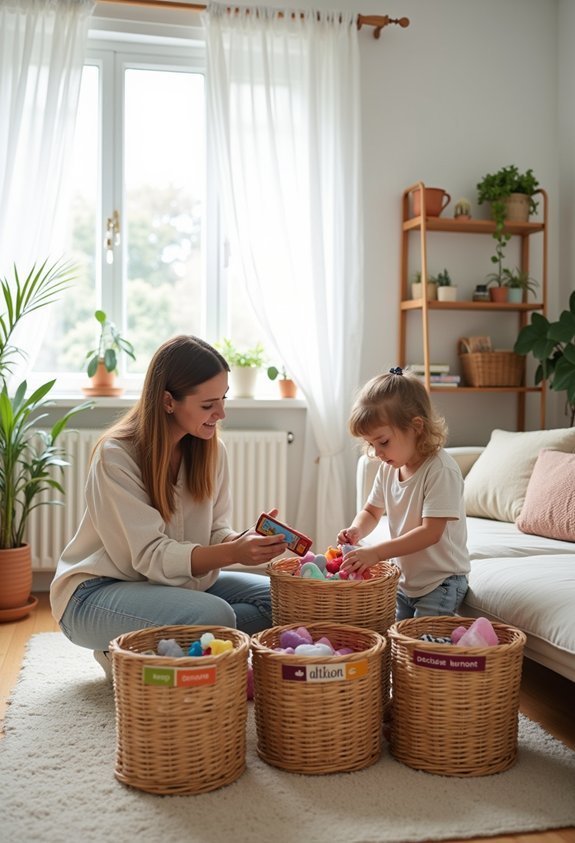




Comparing Myself to People I Don’t Even Know
A quiet thief of joy slips in through your screen every time you measure yourself against strangers online. Each scroll invites a silent self worth comparison based on fragments, filters, and staging.
Each swipe trades presence for projection, grading your whole life against someone else’s highlight reel.
You treat curated feeds as evidence and your real life as the control sample, then call the outcome failure.
To stop keeping this habit, design guardrails against social media influence:
- Set strict time windows for apps; remove them from your home screen.
- Mute accounts that trigger envy, even if they seem “inspiring.”
- Track your own metrics—skills learned, hours slept, money saved—in a visible list.
- When you feel inferior, write three specific ways your lived reality already works. Review this list weekly and adjust habits before comparisons quietly return.
Versions of Me That Only Exist to Please Others

For years, you may have built entire versions of yourself around other people’s expectations—polite, agreeable, always “fine”—while your actual preferences stay muted underneath.
First, map your people pleasing patterns: notice when you say yes while your body tenses, when you mirror opinions, when you apologize for existing. Write specific situations, names, and triggers.
Next, run each version through a self worth exploration: What do you fear losing if you act honestly—approval, safety, status? What evidence says you’d survive anyway?
Then design tiny experiments: decline one invitation, voice one unpopular but respectful opinion, let one text go unanswered. Track outcomes.
You’ll gather data that your relationships can adapt, or fall away, while your real self finally takes up space, with less guilt and more integrity.
Conclusion
When you stop keeping these 19 things, you don’t just clear shelves—you reclaim control. Research shows the average home contains over 300,000 items, so every intentional “no” matters. Systematically question: Do I use this? Need this? Choose this? If not, release it. Create a donation box, a trash bag, and a “test” bin, then set a weekly declutter appointment. You’ll build a lighter home, clearer mind, and spending habits that finally match your values today.