13 Things to Declutter Today That Won’t Hurt
Start with easy wins you won’t miss—old receipts, expired meds, dried-up pens, crusty makeup, mystery cords, and solo food container lids (their partners are gone, friend). Clear your wallet, purse, and phone of extras, toss worn socks and towels, recycle dusty magazines, and dump duplicate gadgets in the junk drawer. You’ll feel lighter fast, no deep emotional decisions required, and the next few ideas will make it even easier.
What you will leave with
- Empty your wallet, handbag, and junk drawer, keeping only daily essentials and tossing expired cards, dead pens, and random odds and ends.
- Audit your phone’s apps and tech cords, deleting unused apps and recycling outdated chargers, mystery cables, and old devices.
- Declutter beauty products by tossing expired makeup, dried-out skincare, and anything that smells off or has changed texture.
- Edit food containers, keeping only sets with matching lids, good seals, and no cracks; recycle or discard the rest.
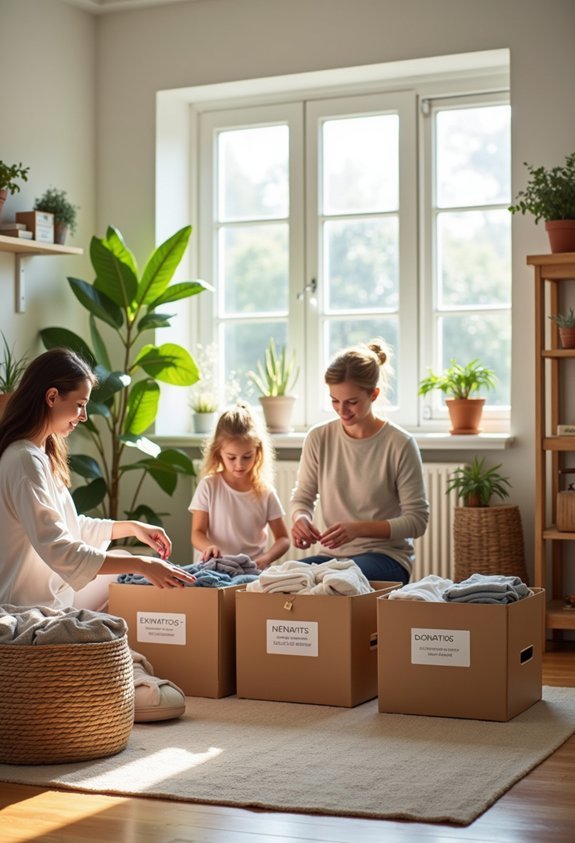
- Review towels, linens, underwear, and socks, keeping only comfortable, intact items and donating or recycling worn or mismatched pieces.
Wallet and Handbag Essentials
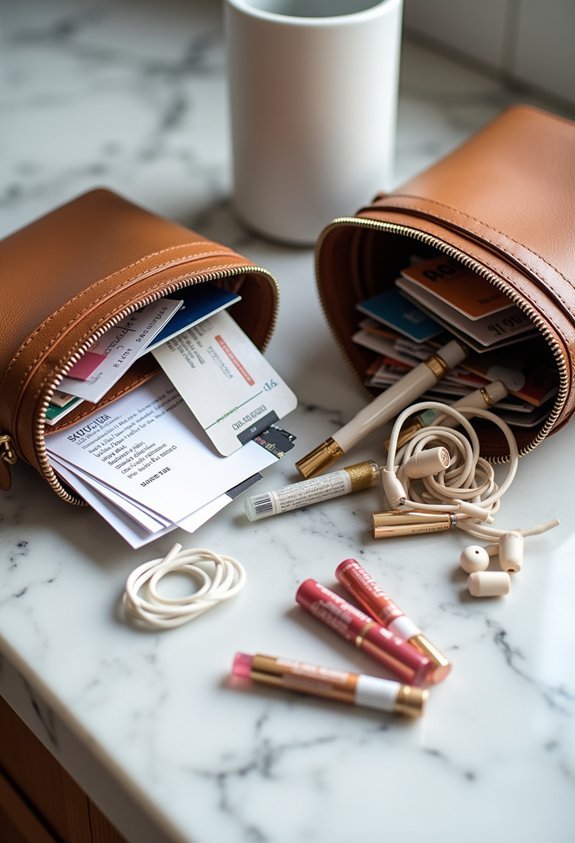
Let’s be honest—your wallet and handbag can turn into a tiny moving junk drawer before you even notice.
Your handbag is not a portable junk drawer—unless you let it secretly become one
So, start wallet organization by pulling *everything* out—yes, even that mystery crumb village at the bottom.
Keep only what you truly need: ID, a couple main cards, a bit of cash, and your keys on one keyring.
By clearing out what you don’t use, you’re giving your brain a break from visual excess and creating a calmer, more intentional everyday routine.
Add a small hand sanitizer, maybe a tiny lotion, plus a compact notebook and pen so you’re not writing on receipts again.
For real handbag maintenance, toss expired coupons, old loyalty cards, and scary-old receipts.
Ditch loose change bricks, dried-up pens, broken hair ties, and crusty makeup samples—you won’t miss them, but your shoulders will.
Phone Storage and Unused Apps
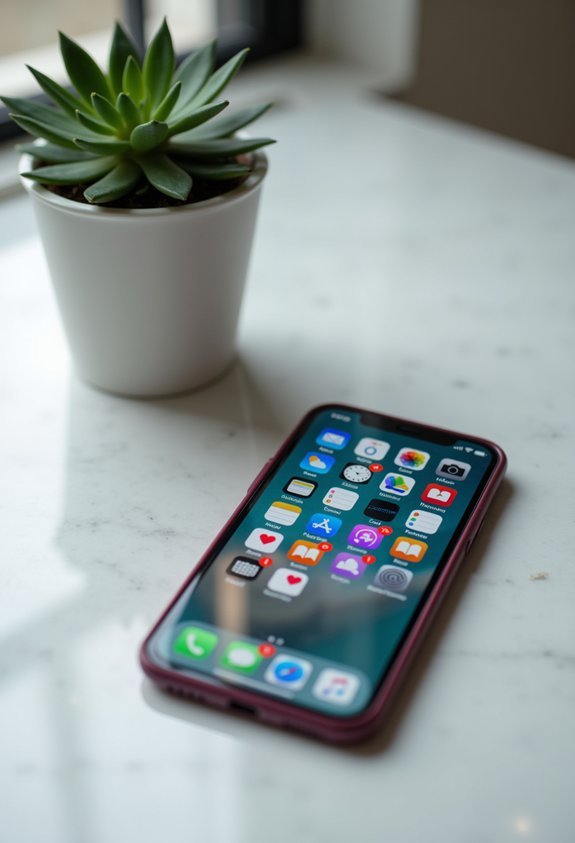
Even though your phone looks tiny, it’s basically a stuffed closet that you’ve been shoving things into for years.
Start with a quick usage analysis—open settings, see which apps you actually use, and which just sit there judging you.
Do simple app audits: daily apps on your home screen, sometimes‑used in a folder, everything else on the chopping block.
Use kind uninstall strategies—delete old games, duplicate photo editors, and expired store apps, then enjoy instant storage optimization and performance enhancement.
Next, do bloatware removal (or disable what you can), then a full storage cleanup of giant videos and downloads.
Backing up your photos and essential files before deleting them is a simple way to practice good data management while preserving what you truly value.
Good data management—backing up photos, clearing cached files, using cloud instead of hoarding everything locally—creates “fake” memory expansion without buying a new phone.
Beauty and Cosmetic Products
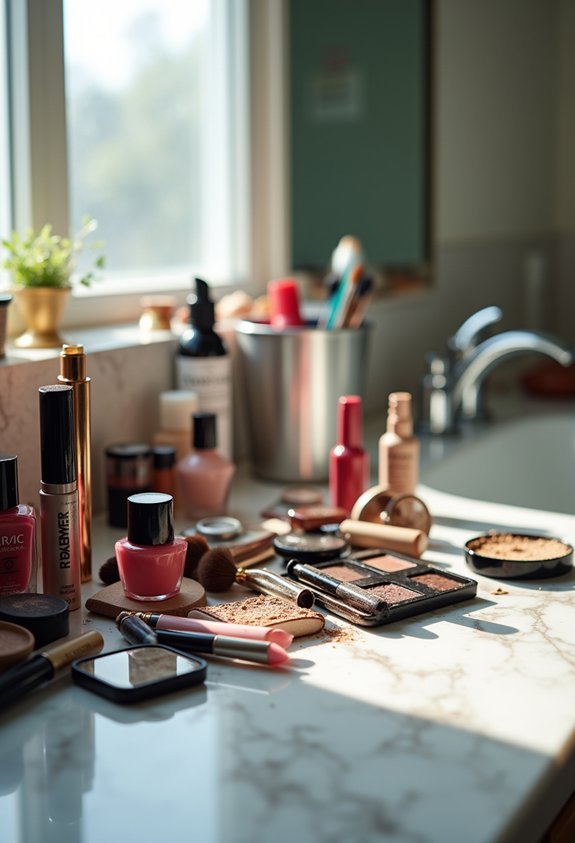
How did your bathroom shelf turn into a tiny Sephora that exploded and never cleaned itself up? You’re not alone—half those bottles are probably expired cosmetics just quietly plotting breakouts. When you clear out old products, you’ll also feel the mental freedom that comes from having only what you actually use.
Let’s do a quick sweep, no guilt, no drama. Check what smells weird, looks clumpy, or changed color—those go first. Then look at your mascara and liquid stuff; if you can’t remember when you opened it, it’s likely done.
- Toss the troublemakers – Old mascara, chunky foundation, crusty lip gloss, and anything that burns or itches.
- Fix your skincare storage – Keep daily products cool, dry, and closed tight, instead of cooking on the steamy sink.
- Keep only what you love – One everyday routine, a tiny “fun” stash, and that’s it.
Medicine Drawer and First Aid Supplies

Somewhere in that medicine drawer, there’s probably a mix of real help (bandages, pain meds) and total mystery items.
Pull everything out—yes, everything—and check dates. Toss expired medications into a “disposal” bag, not the trash, then later use a pharmacy or DEA take‑back box so you’re safe and the planet’s happy. While you sort, notice what truly supports your current routines and energy, and let go of anything that clearly doesn’t fit your future self.
Now sort what’s left. Make simple groups: first aid (bandages, gauze, ointment), cold/flu stuff, daily vitamins, dental, personal care. Keep the “we use this a lot” things front and center, and shove rare items higher or in a backup bin.
Ditch empty tubes, crusty toothbrushes, and five half‑used allergy bottles—combine where it’s safe.
Last step: wipe shelves, label bins, and store meds up high or locked if kids or pets wander.
Paper Pads, Notebooks, and Planners
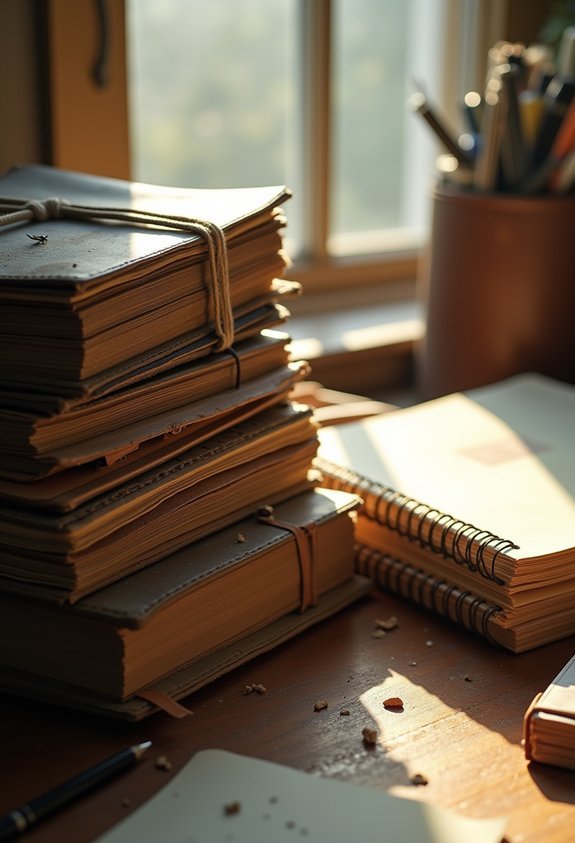
Before you buy one more “perfect” notebook, let’s talk about the small stationery mountain hiding in your home.
Pull every pad, planner, and journal into one pile—it might shock you.
Now do a quick math check, nothing fancy. If you use four notebooks a year and you own forty, that’s ten years of paper waiting—so breathe, you’re stocked.
If you burn through four notebooks a year and own forty, relax—you’re fully supplied for a decade
Use some kind notebook organization and simple planner strategies to keep what actually helps you think, plan, and dream. Creating a few simple rules for what stays and what goes turns these choices into almost automatic yes/no decisions instead of exhausting debates.
- Keep only notebooks you can finish in the next 2–3 years, recycle the rest guilt‑free.
- Save planners that still match your current life, toss the expired ones.
- Review your stack every few months, let old projects and half‑used pads go.
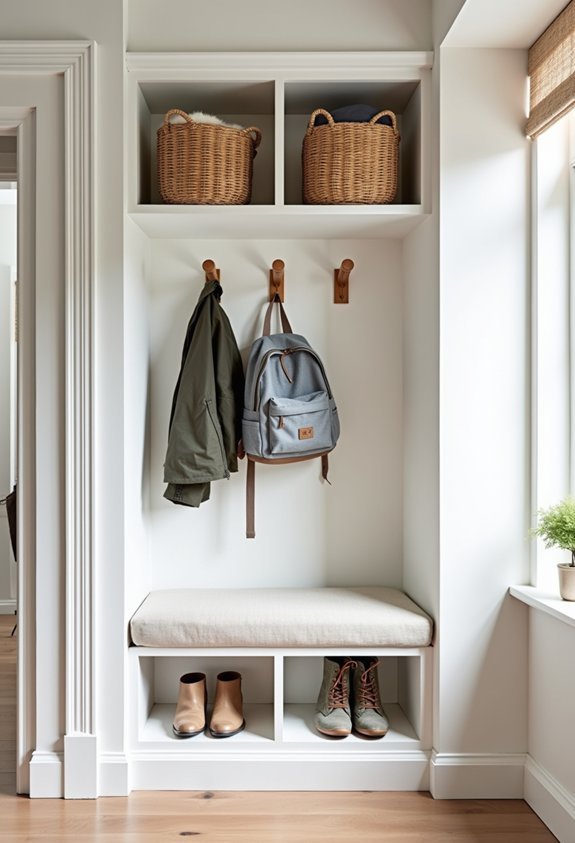
Entryway and Doorway Drop Zone
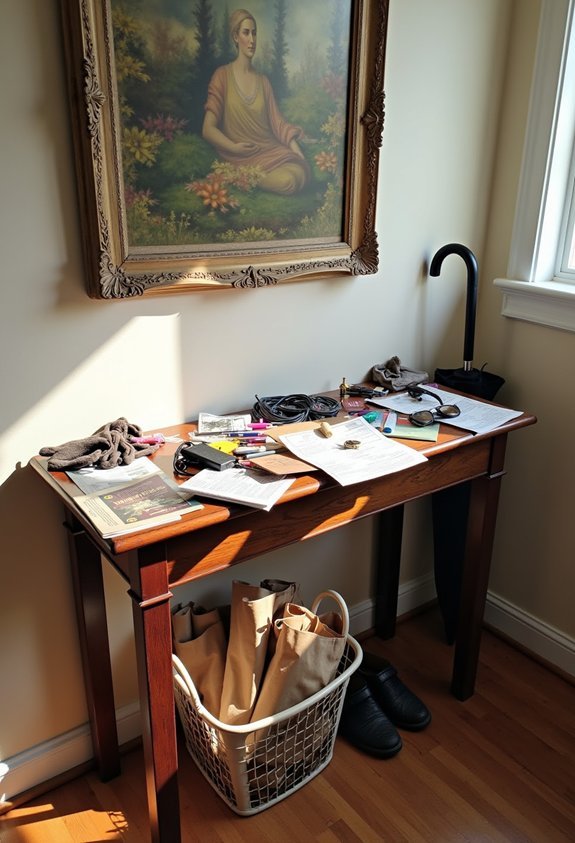
Your notebooks are tamed (or at least contained), so now let’s tackle the wild zone right by your front door.
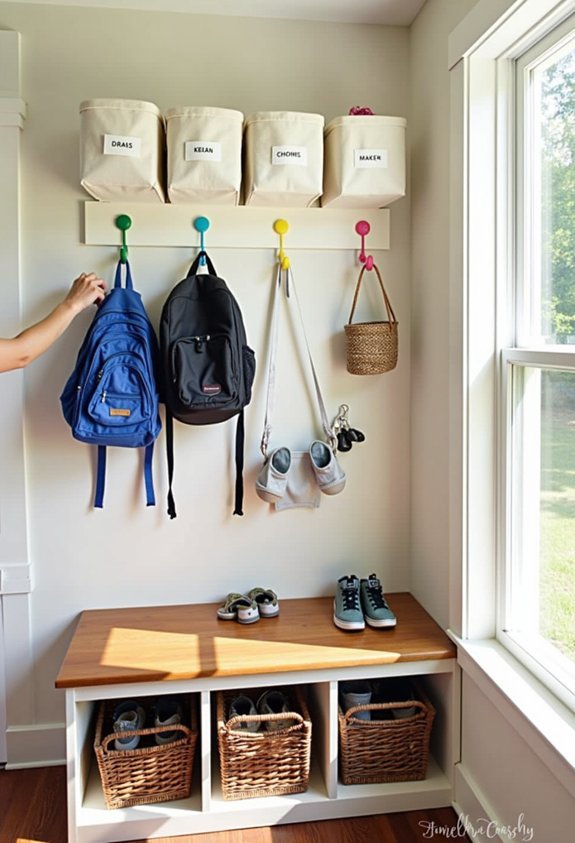
Look at your entryway storage with fresh eyes—shoes everywhere, mail piles, random backpacks nesting on the floor, it happens fast.
Limit shoes to a few pairs per person and park the rest in bedroom closets, then hang coats, bags, and sports gear on hooks, a hall tree, or a simple pegboard wall so they’re not smothering the floor.
Giving this spot a simple, consistent drop zone by the door helps everyone land in the same place every day, cutting visual clutter and last‑minute stress.
Give every small thing a “home” to boost drop zone organization—keys and wallets in a valet tray, sunglasses and receipts in a slim console drawer, umbrellas in a basket or stand—so you’re not doing that panicked morning shuffle while mumbling, “Where on earth…?”
Junk Drawer Odds and Ends
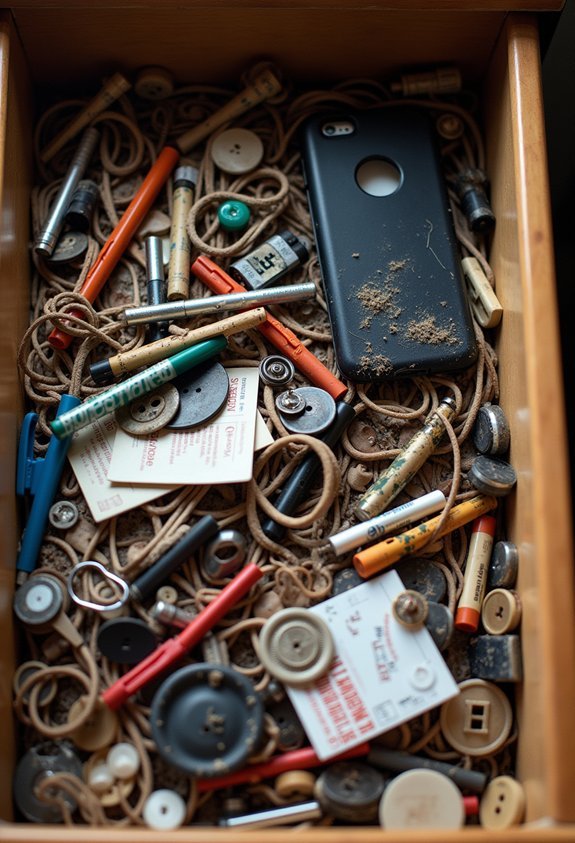
A junk drawer is basically the home’s “lost and found”—only nothing’s actually lost, it’s just…living its worst life. Clearing out this one tiny space is a quick way to plug the mental energy leaks that come from rummaging through clutter over and over.
You’re not alone; almost everyone has one, stuffed with “useful items” like dead pens, five tape measures, and mystery keys.
Start junk drawer organization by dumping everything out, then quickly sort keep / toss / elsewhere, and notice how much you’ve been digging through clutter to find one tiny thing.
Empty the whole drawer, speed-sort keep/toss/relocate, and see how much clutter you’ve been digging through
- Toss the fakes – dried glue, seized tape, busted flashlights, pens that gave up in 2019.
- Limit duplicates – keep one small tool set, one tape measure, a few working pens, a short stack of sticky notes.
- Create tiny zones – use little bins, label them, and give every survivor a clear home.
Old Cables, Chargers, and Tech Accessories
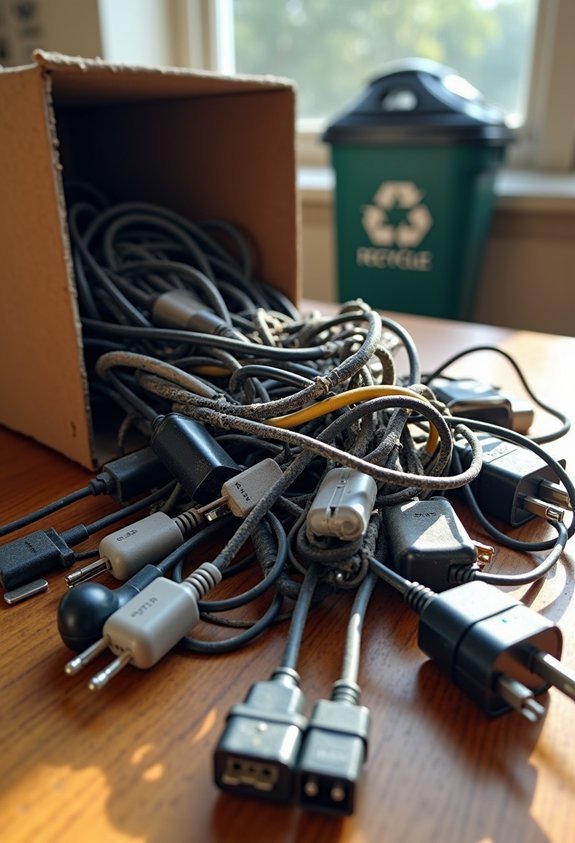
Pull everything out, then sort fast: keep only what matches devices you actually use right now—Lightning cables, your current laptop charger, that one HDMI you reach for weekly, maybe a solid 3.5mm lead if it still sees action. Clearing out this tangle of tech is a small way to cut clutter anxiety before it grows into something heavier. Everything else—mystery chargers, 30‑pin iPod cables, old VGA or Scart, frayed cords—goes in a “recycle” pile, not the trash.
Use local drop‑offs, council sites, or e waste recycling events, because these little cords hide toxic stuff, and proper recycling grabs the valuable metals back.
Socks, Underwear, and Worn Basics
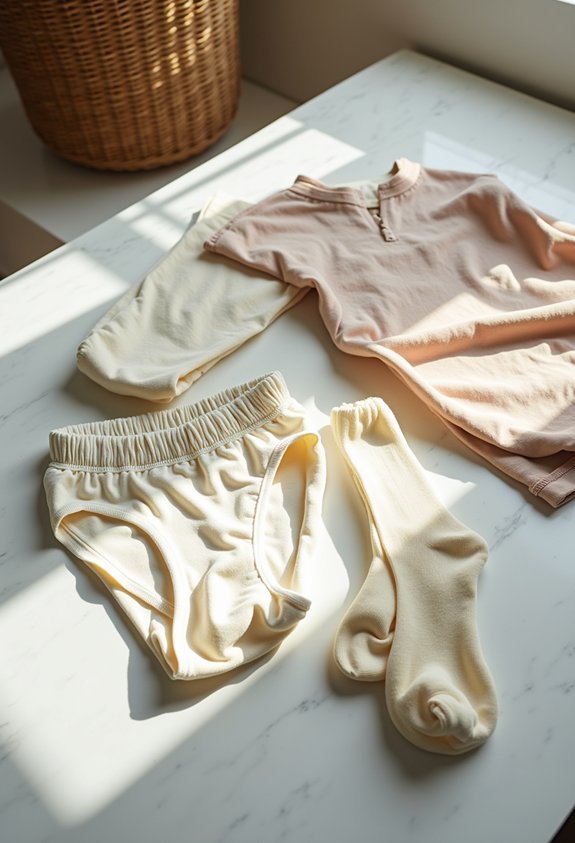
One tiny drawer can cause a huge amount of daily stress—and it’s usually the one with socks and underwear.
Open it, pull everything out, and face the chaos—single socks, faded pairs, mystery holes, all of it.
Toss anything with holes, sad elastic, stains, or fabric so thin it’s basically a suggestion, not clothing.
Keep only what you actually wear, what fits, and what gives real underwear comfort—not “I’ll suffer through it” energy. When you notice hesitation, remember that your drawer is simply giving you clutter as information about what you actually need and use right now.
Now build simple sock organization: fold pairs flat, stand them like files, and use small dividers or boxes.
- Let go of guilt – Old basics served you, they can go now.
- Decide your “enough” – Maybe 10–14 pairs each.
- Notice the ease – Faster mornings, calmer brain, happier laundry days.
Mismatched Food Containers and Lids
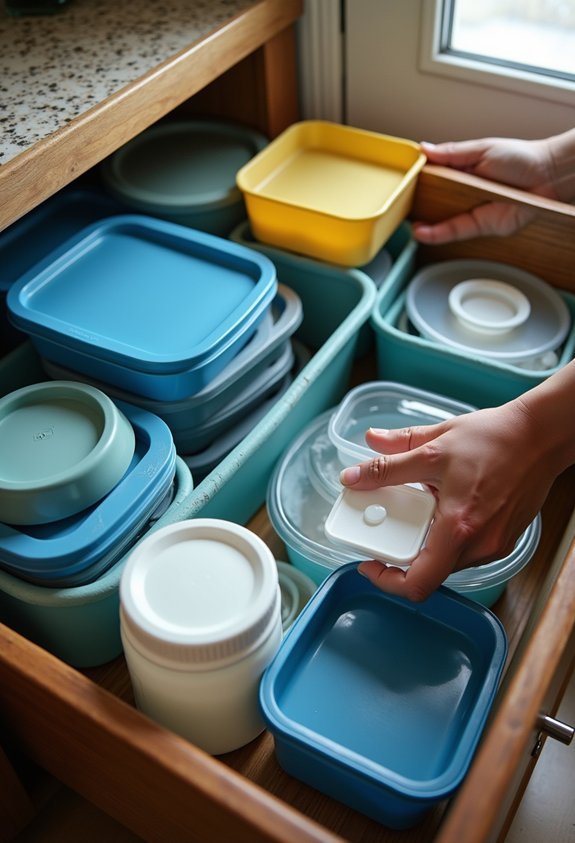
Your sock drawer isn’t the only tiny space causing big stress—the food container cabinet is ready to start a fight too. You open the door, a random lid smacks you in the face, and you still can’t find a match.
Start by dumping everything out—every tub, every lid, every mystery rectangle you swear you’ve never seen.
Then play “speed dating”: if a container doesn’t have a lid that seals well, it’s out, because bad seals mean faster spoilage and more wasted food.
For smarter container organization, keep only safe, crack‑free pieces and stack them by size, with lids stored upright in a small bin.
Just like with duplicate items in the rest of your home, keep only the best versions you’ll actually use and let the extras go.
Do lid replacement for good glass or stainless containers, using universal lids instead of buying whole new sets.
Towels, Linens, and Worn Bedding
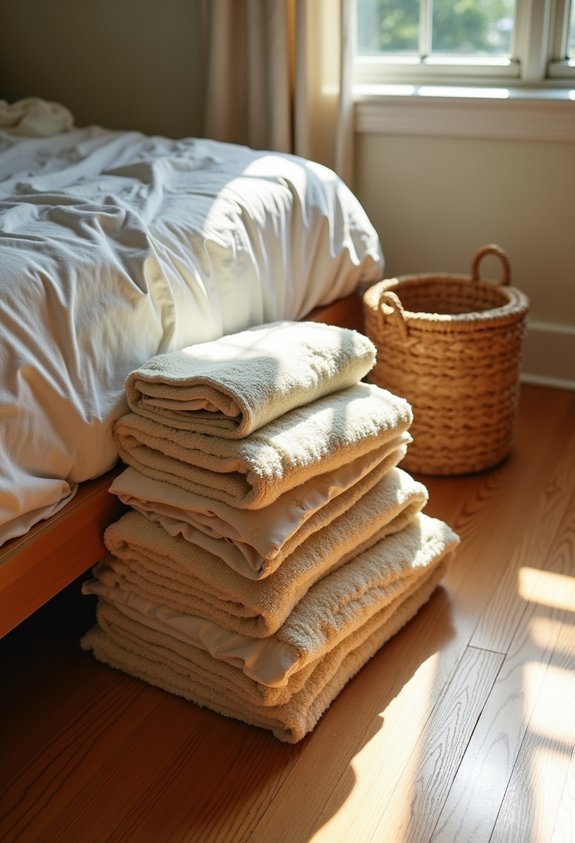
Let’s be honest—those towels and sheets are quietly taking over like they pay rent and do chores.
Open your closet, pull out the scratchy, stained, weirdly smelly ones, and admit it—they’re not “guest towels,” they’re clutter.
Keep the soft, absorbent, matching sets, and let the rest go, creating simple towel storage and easy bedding organization that doesn’t attack you when you open the door.
- Check condition honestly – If it’s torn, faded, or smells odd even after washing, it’s done—no “just in case.”
- Right-size your stash – Two sets of bedding per bed, two towels per person, plus a small guest backup.
- Let them do good elsewhere – Donate decent pieces to shelters, and send rough towels to animal rescues or textile recycling.
Magazines, Catalogs, and Loose Papers
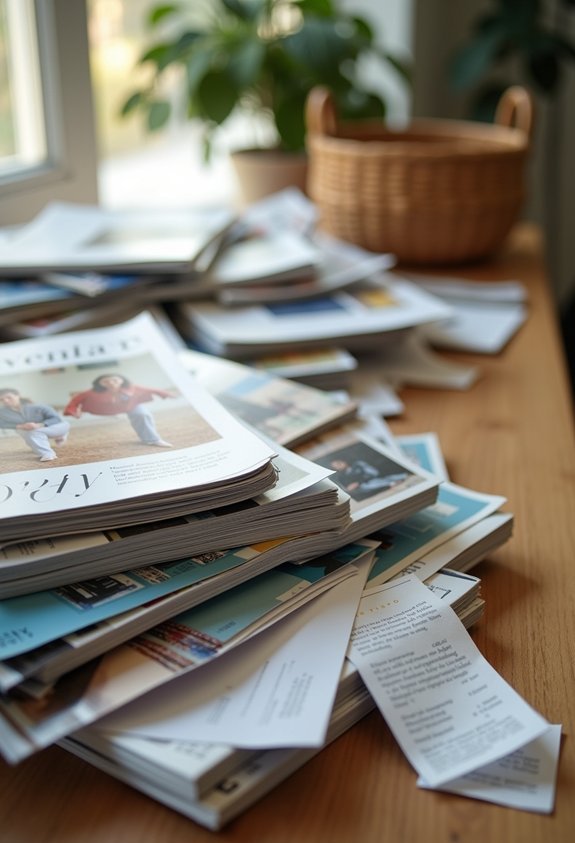
Three innocent little magazines can somehow turn into a wobbling tower of paper that judges you from the coffee table.
You glance over, feel guilty, then look away—again.
Start small. Pick up every magazine and catalog, sort by date and interest, and keep only what you truly enjoy or regularly use.
The rest? Recycle, no guilt, you already paid for the value of the time you *did* (or didn’t) spend.
Tackle loose papers next—school notices, old bills, random printouts—keeping only what you must reference.
Set up simple catalog organization, a tray or basket for current reads, and a bin for recycling.
Then, check your magazine subscriptions, switch some to digital, and cancel the ones you only “mean” to read.
Duplicates in Your Kitchen Drawers
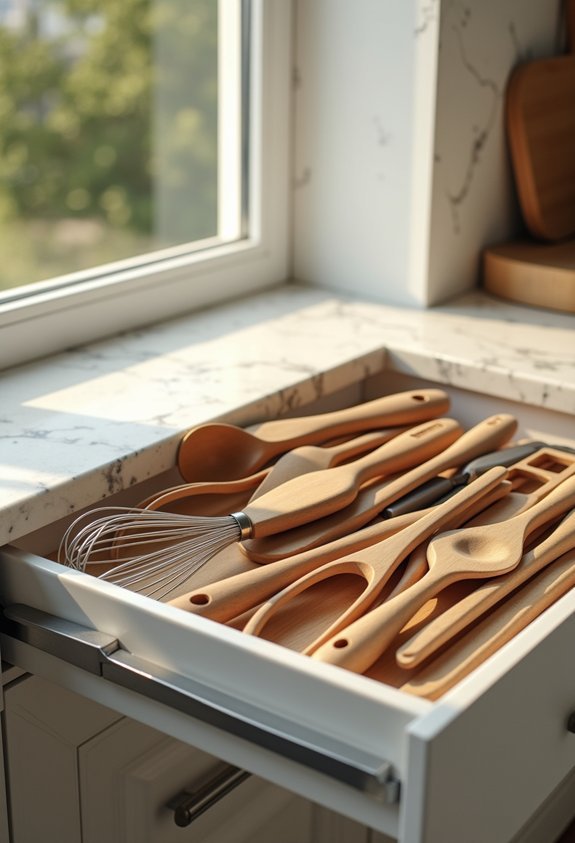
A kitchen drawer can quietly turn into a lost-and-found for duplicates—three pizza cutters, four can openers, six half-dead pens, and a tangle of phone chargers for phones you don’t even own anymore.
Dump everything out, group like with like, then notice what you actually use—those duplicate utensils and obsolete gadgets don’t deserve VIP space.
You may also like:
Now choose your “favorites”—one solid can opener, one pizza cutter, one working charger—then let extras go without guilt, because they’re just slowing you down and hiding the tools you truly need when dinner’s already late.
- Keep one best item per job.
- Donate or recycle clean duplicates.
- Use simple dividers so new duplicates can’t sneak back in.
In case you were wondering
How Do I Avoid Decluttering Items I Might Actually Need Later?
You avoid it by doing honest item assessment: define clear “keep” criteria, test‑box doubtful things, review real usage, and ask how they serve future needs. Decide firmly—no “maybe” piles—and use “one in, one out” afterward.
What’s the Best Way to Declutter When I Feel Emotionally Attached?
You declutter best when you pause, breathe, and notice; when you honor, thank, and release. Photograph sentimental items, journal the memory, keep a tiny “emotional support” box, and let the rest go in small, timed sessions.
How Do I Handle Gifts I Don’T Use Without Feeling Guilty?
You handle unused gifts by practicing gift gratitude, thanking the giver’s intention, then choosing guilt free giving—donate, regift, or exchange. You’re honoring the relationship, reducing waste, and letting the item fulfill its purpose elsewhere.
How Can I Maintain Decluttering Progress With a Busy Schedule?
You treat clutter like dust in sunlight—handled in tiny, consistent swirls. Use time management: daily 10‑minute sprints, weekly “power hour,” and evening resets for quick wins that quietly protect the progress you’ve already made.
What’s a Simple System to Prevent Clutter From Building up Again?
You prevent clutter by creating tiny organizing habits: set 5‑minute daily routines, keep “homes” for everything, and use one‑in, one‑out. Use checklists or reminders until the system feels automatic and easy.
Conclusion
So, think of today like cleaning out a little crowded village, where your bag, phone, and drawers all talk.
They’ve been yelling for ages—“Too many receipts, too many apps, too many ‘just in case’ things!”—but you’re the mayor, and you finally listened, gently.
You didn’t throw out your memories, you just cleared the roads, and now life can move again—less digging, less stress, more space for stuff that actually matters.