15 Ways to Bring More Calm Into Your Day
You can bring more calm into your day with tiny habits, not a full personality transplant. Start with slow morning breaths, stretch for 60 seconds between tasks, and take 3–5 minute “phone-down” meditation breaks. Do quick body scans at your desk, walk outside when you’re overloaded, and use gentle evening wind-downs—like progressive muscle relaxation, dim lights, and no doom-scrolling. If you’ve got a busy brain and zero time, the next ideas are made for you.
What you will leave with
- Start your day with 5–10 minutes of slow breath awareness to calm your nervous system and set a clear, steady mindset.
- Take 3–5 minute mindfulness breaks between tasks—pause, breathe deeply, and notice body sensations to release built-up tension.
- Use gentle movement like stretching or short, mindful walks to discharge stress and reset your mood throughout the day.
- Support emotional balance with steady, balanced meals and a consistent, screen-free wind-down routine before sleep.
- When overwhelmed, share your feelings with a trusted person or group to gain perspective, comfort, and a sense of connection.
Start Your Morning With Mindful Breathing

Mornings can feel like a surprise quiz you didn’t study for—your alarm’s blaring, your brain’s racing, and you’re already thinking about emails you haven’t even opened yet.
So, try this tiny switch in your morning routine—before scrolling or talking, just notice your breath awareness.
Feel air move in, slow and cool, then leave your body long and soft, like a quiet sigh you actually meant.
Let each breath arrive unhurried, then drift out in a soft, deliberate exhale your body finally believes
Breathe in for four, breathe out for six or eight, letting the longer exhale tell your nervous system, “We’re safe, it’s okay.”
In 5–10 minutes, you can lower blood pressure, calm stress hormones, and give your brain more oxygen—better mood, clearer focus, fewer “why am I like this?” moments.
This simple practice of slowing your breath is a form of deliberate rest that can reduce cortisol, sharpen your focus, and help you move through the day with less effort and more ease.
Use Short Meditation Breaks Throughout the Day

Even on the busiest days—when your brain feels like 47 tabs are open—you can still slip in tiny pockets of calm.
Short meditation techniques (think 3–5 minutes, tops) help your mind step away from work noise, so you return with more focus, better mood, and way less “I’m going to scream into a pillow” energy. A brief check‑in with your breath and body also helps calm an overloaded nervous system, so simple tasks feel more manageable instead of mentally scattered.
Try weaving mindful moments into breaks you already take:
- Pause before opening email, breathe slowly, notice your shoulders drop.
- Sit at your desk, close your eyes, count ten long breaths—nothing fancy.
- During bathroom or water breaks, feel your feet on the floor, inhale, exhale, reset.
- After tough tasks, do a mini check‑in—name your feeling, breathe around it, then move on.
Practice a Daily Body Scan for Tension Release

When your mind feels loud and your body’s acting like a bundle of tight wires, a daily body scan can be your reset button.
When everything feels loud and wired, a simple body scan can gently flip your inner reset switch.
You simply sit or lie down, close your eyes, and move your attention slowly from head to toe, noticing body sensations—warmth, tightness, tingling, even numb spots you usually ignore. This mindful awareness tells your nervous system, “Hey, it’s safe now,” and your body starts to shift from fight‑or‑flight into rest‑and‑digest, lowering stress and calming your breathing. As you scan, you’re also gently signaling the body to release stored stress from visual excess and emotional clutter, helping your nervous system feel more grounded and supported.
You might notice a clenched jaw, a knotted stomach, shoulders parked near your ears—then gently soften them, bit by bit.
Over time, this daily check‑in boosts emotional balance, eases tension, and gives you a simple, portable way to reset anywhere.
Try Progressive Muscle Relaxation in the Evening

Body scans are great for checking in during the day, but at night your body often needs something stronger—like the emotional equivalent of sweatpants.
Progressive Muscle Relaxation (PMR) gives you that cozy downgrade from “fight-or-flight” to “rest-and-digest,” gently easing muscle tension and racing thoughts.
You slowly tense a muscle group for five seconds, then release for 10–20, and your body starts to chill—heart rate drops, breathing slows, stress backs off (finally).
In 10–20 minutes, you’re basically telling your nervous system, “We’re done for today.” Practiced regularly, PMR can become a calming nightly ritual that supports emotional regulation and helps your brain recognize that it’s safe to power down.
- Tighten fists, then let them melt
- Shrug shoulders to your ears, then drop
- Scrunch face, then smooth it out
- Curl toes, then release and notice the warmth
Add Gentle Movement or Stretching Between Tasks

Let’s hit pause on the “sit and stare at screens forever” routine and sneak in tiny movement pit stops. Think 60–90 seconds of gentle stretching between tasks—neck rolls, shoulder circles, wrist twists, a slow forward fold by your chair. These tiny resets help workplace wellness more than another doom-scroll “break,” easing stiff necks, tight backs, and that weird claw your hand becomes after typing all day. You also give your brain a boost, because moving sends fresh blood and oxygen upstairs, cutting mental fog and stress. By pairing these brief movements with predictable cues, you reinforce your body’s sense of safety and calm and support more stable emotional regulation throughout the day. Try a quick routine every time you send an email, finish a meeting, or close a tab—micro‑rituals that say, “My body matters too,” while lifting mood, focus, and even how supported you feel at work.
Go for a Calming Walk to Reset Your Mind

Those tiny stretches are great pit stops—now it’s time for a bigger reset: walking.
Think of it as a “brain rinse” you can do almost anytime, no fancy gear required, just your feet and a bit of space.
Aim for 15–30 minutes, with mindful pacing, and let your body find a steady, easy rhythm that feels kind, not punishing.
- Step outside for quick nature immersion—a tree-lined block, a park loop, even a strip of grass.
- Notice sights, sounds, and smells, letting your mind rest from constant problem‑solving.
- Try a “worry walk,” where you’re allowed to think about stress—then stop when the walk ends.
- On busy days, break it up—two short walks can still lower tension, boost mood, and clear mental fog.
Walking can also gently quiet the nervous system overload that builds up from visual clutter and constant micro‑decisions throughout the day.
Create a Simple Yoga Routine for Stress Relief
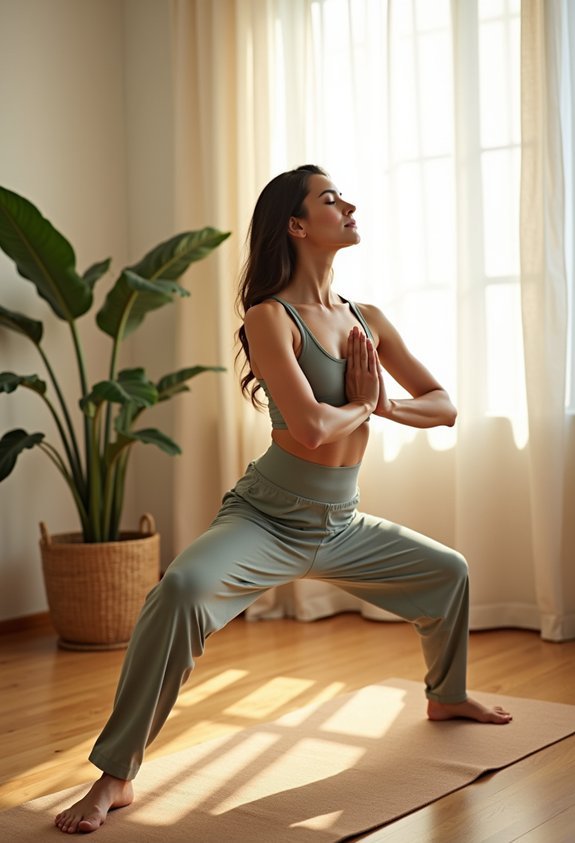
Even if yoga sounds a bit “too zen” for your real life, a simple at‑home routine can actually feel like hitting a reset button on your nervous system—no candles, fancy pants, or bendy skills required.
Start with five minutes of slow belly breathing, in through your nose, out through your mouth—notice your shoulders dropping, your jaw unclenching, your brain turning down the volume a notch.
Five slow belly breaths in, five out—feel your whole system quietly dial down the noise
Then move through Cat‑Cow, a gentle Forward Fold, a twist, and Child’s Pose, holding each for a few breaths, letting tight muscles and stuck feelings slowly unknot.
By pairing this simple sequence with intentional breathing, you’re strengthening your present‑moment awareness, which research links to reduced stress and a clearer, calmer mind.
Finish with a few minutes lying down in stillness—like a tiny nap you’re actually allowed to take—and let the yoga benefits quietly boost your stress management.
Reach Out to Someone You Trust When You Feel Overwhelmed

When your brain feels like a browser with 47 tabs open—and one of them is playing mystery music—it’s a sign you don’t have to do this alone.
Reach out to someone you trust—a friend, partner, sibling, even that cousin who actually listens—and let them in.
- Call a friend and say, “I don’t need fixing, just listening.”
- Send a voice note, sharing the top two things stressing you out.
- Ask, “Can we talk for ten minutes? My brain’s in panic mode.”
- End with, “Thanks, I feel lighter already,” to reinforce trusted conversations.
Letting someone in can gently pull you out of productivity autopilot and back into shared presence, where being heard matters more than getting things done.
Their emotional support isn’t “just talking”—it calms your heart, lowers stress hormones, and helps your thoughts feel less huge, less scary, and way more manageable.
Join a Class or Group for Shared Calm and Support

Some days, trying to calm down alone feels like trying to reboot Wi‑Fi by staring at the router harder.
Joining a class changes that—group dynamics make it easier to stay focused, breathe slower, and feel safe.
You get steady emotional support, real social connection, and people who nod like, “Yep, my brain won’t shut up either,” which feels amazing.
A group offers routine building and gentle accountability strategies, so you actually show up, even when sweatpants say otherwise.
You’ll also learn diverse techniques—breath work, guided imagery, simple mantras—while a teacher corrects small habits that secretly block meditation benefits.
Plus, there’s something powerful about collective intention, everyone quietly hoping for calm together.
By joining a group, you’re also protecting white space in your schedule so your brain has room to reset instead of running on constant overload.
You’re not “fixing yourself.” You’re practicing, with people.
Nourish Your Body With Steady, Balanced Meals

If your mood has been all over the place lately, your meals might be riding the same roller coaster. Calm starts in your kitchen, with nutrient diversity and steady meal timing—basically, food that doesn’t ghost your body halfway through the day. When your meals are predictable and balanced, you’re quietly building a small daily buffer against energy crashes and stress spikes, similar to how a financial cushion softens life’s surprises.
Think simple: lean protein, colorful veggies, fruit, whole grains, and some dairy, mixed through your day like tiny anchors that keep you steady and less hangry.
- High‑protein breakfast (eggs, yogurt, or cottage cheese + fruit)
- Mid‑morning snack (apple with peanut butter, or nuts and berries)
- Balanced lunch (chicken, beans, or tofu with rice and veggies)
- Lighter dinner (mostly vegetables, lean protein, healthy fats)
Plan a few meals ahead, use a grocery list, skip extra processed foods—and you’ll feel calmer, clearer, and more in control.
Protect Your Sleep With a Soothing Nighttime Ritual

Your calmer day doesn’t stop with steady meals—it also needs a gentle landing at night, not a crash‑and‑scroll at 1 a.m.
Think of bedtime rituals as a kind little script for your brain—signals that say, “Hey, it’s safe to power down now.” A warm shower, soft pajamas, dim lights, and putting your phone away 30–60 minutes before bed (yes, even that “one last reel”) all strengthen your sleep hygiene and help you fall asleep faster.
Add something soothing and low‑effort: light reading, slow breathing, gentle stretching, maybe herbal tea.
If you’ve got kids, a simple order—bath, massage or snuggles, story, lights out—can cut tantrums, night wakings, and rough mornings.
Stay consistent most nights. Your future, well‑rested self will seriously thank you.
Take Micro-Breaks to Step Away and Reset

Even on the busiest days, you’re not a machine—you’re more like a phone that forgets to charge itself.
That’s why tiny pauses—micro-breaks—matter so much, especially when your brain feels like mashed potatoes.
You step away for 2–3 minutes, stretch, walk to get water, or just look out a window, and your body quietly thanks you, because stress drops, your shoulders loosen, and you don’t end the day totally wiped out.
- Stand, roll your shoulders, and stretch your neck.
- Walk to the far bathroom (yep, the “good” one).
- Send a kind text to a friend or family member.
- Watch one short, silly video—just one.
When you increase break frequency, microbreak benefits stack up—better focus, steadier energy, calmer you.
Use Deep Breathing With Visualization During Stressful Moments

Some days, stress hits so fast it feels like your brain opened 47 tabs and forgot what it was doing.
When that happens, try this: inhale slowly through your nose for four, hold for four, exhale for six—repeat a few times while you picture a calm scene.
Add guided imagery to make it stronger. See a quiet beach, hear slow waves, feel warm sand under your feet, even smell the salty air—your brain starts believing you’re safe, so your body slowly turns down that fight‑or‑flight alarm.
If you like gadgets, use an app that gives visual feedback—maybe a glowing circle or soft sound that rises and falls with your breath, helping your heart rate settle while your mind gently unknots.
Reframe Negative Thoughts With Compassionate Self-Talk

When that inner voice turns into a full‑time bully, it doesn’t actually make you stronger—it just wears you down.
You don’t need a cheerleader in your head, but you do need someone kinder than a grumpy coach.
That’s where self compassion techniques come in—they help you notice harsh thoughts, then flip them into calmer, truer ones. Instead of “I’m such a mess,” you might say, “I’m having a hard day, but I’m learning,” which your brain actually handles better.
Try:
- Talking to yourself like you’d comfort a close friend
- Using positive affirmations that feel believable, not cheesy
- Questioning cruel thoughts (“Is this fully true—or just loud?”)
- Taking a short “self‑compassion break” when mistakes happen
Calmer thoughts. Softer tone. Still you—just less mean.
End Your Day by Noticing Three Things You’re Grateful For

How do you want to feel as your head finally hits the pillow—tight and tense, or a little more at peace?
Try this tiny habit tonight: during a quick evening reflection, name three things you’re grateful for—nothing fancy, just real life stuff. Maybe it’s hot water, a friend’s text, or the fact you didn’t scream during rush-hour traffic.
Pause tonight and name three ordinary things you’re grateful for—real life, not perfect life
You can say them out loud, or do short gratitude journaling, one line each, before you scroll yourself into insomnia. This simple practice lowers stress and blood pressure, boosts mood, and helps your brain shift from “everything’s awful” to “okay, maybe not everything.”
Over time, you’ll likely sleep deeper, feel less anxious, and treat yourself (and others) with more kindness.
You may also like:





Three things. One minute. Big payoff.
In case you were wondering
How Can I Stay Consistent With Calming Practices When My Schedule Is Unpredictable?
You stay consistent by building flexible routines around natural anchors, using quick techniques like 5‑minute breathing or stretching. Set tiny goals, adjust daily without guilt, use reminders, and keep a simple “calm toolkit” ready.
What Should I Do if Mindfulness Practices Make Me Feel More Anxious Initially?
If mindfulness makes you more anxious at first, don’t assume it’s harmful; you’re confronting mindfulness misconceptions and fresh anxiety triggers. Shorten sessions, use gentle guided practices, ground in your senses, and consult a skilled teacher or therapist.
How Long Before I Notice Real Changes in My Stress Levels?
You’ll usually notice stress reduction within days to a few weeks, with bigger shifts after 4–8 weeks. Commit to short, regular practice and supportive daily habits; lasting change depends on consistent use, not occasional sessions.
Can I Use Apps or Technology Without Them Becoming Another Source of Stress?
You can, if you treat technology like a structured tool. Choose evidence-based mindfulness apps, limit daily time, set clear goals, track how you feel, and integrate offline stress management habits so screens don’t dominate.
How Do I Create a Calm Environment if My Home Is Noisy or Crowded?
You turn your chaotic home into a whisper-quiet sanctuary by combining simple soundproof techniques—curtains, rugs, door seals, soft furniture—with calming colors, plants, and gentle sound-masking like white noise, creating pockets of peace even in crowded spaces.
Conclusion
You don’t need a perfect “zen life” to feel calmer—you just need a few tiny choices, repeated.
So start small: three slow breaths before you grab your phone, a two‑minute stretch between emails, maybe a body scan when you can’t sleep and your brain’s auditioning for a late‑night talk show.
Why not test one tool today—just one—and see how it feels, like a quiet little science experiment in your own life?