11 Ways to Declutter Without Feeling Wasteful
You want less clutter, but you hate the idea of wasting money, memories, or perfectly good stuff. That’s not a wrong instinct—it just needs structure. With a few intentional strategies, you can clear space without guilt: passing items to people who truly need them, repurposing what you can, and preventing new buildup. As you shift how you donate, sell, and even shop, your home changes—and so does how you feel about what stays and what goes.
Donate With Intention, Not Guilt

When you donate with intention instead of guilt, you turn decluttering into an act of purpose rather than punishment.
Start by defining what you want your items to support: families, shelters, schools, or creative reuse centers. This keeps your choices aligned with intentional giving.
Sort in stages. First, remove what’s clearly unusable and recycle or dispose responsibly.
Next, create a donation pile and ask, “Would someone gladly use this within the next year?” If not, release it another way.
Research local organizations so your mindful donations match real needs—current clothing styles, working electronics, complete household sets.
Label bags clearly and deliver them promptly, so your decision doesn’t linger and drain your energy.
Allow yourself gratitude for contributing value, not shame for letting things go.
Sell Select Items to Recoup Value
Selling select items lets you honor the money and energy you once spent, without turning decluttering into a part-time reselling job. Start by choosing categories that hold real value: quality clothing, electronics, furniture, unopened gifts.
Then set a simple rule: if it’s worth over a certain dollar amount and easy to ship or drop off, you’ll try selling; otherwise, you’ll donate.
Use online marketplaces for in-demand items you can photograph clearly and price competitively. Batch listings in one short session, then give them a firm deadline; if they don’t sell, they move on.
For pieces you’d rather not ship, explore local consignment shops. You gain some money back, reduce waste, and still keep the process emotionally manageable. That balance keeps your space feeling respectful.
Upcycle and Repurpose Creatively

Instead of seeing every extra item as “waste,” you can reframe some of them as raw materials for something useful or beautiful.
Start by sorting potential projects: textiles, containers, wood, and metal. Turn fabric scraps into cleaning cloths, quilted cushions, or simple art projects with kids.
Try small furniture flips—sanding, repainting, and changing hardware—to transform a tired piece you still need. Use jar storage for pantry staples, screws, craft supplies, or as minimalist vases.
Experiment with clothing remakes: shorten dresses, turn shirts into tote bags, or patch worn spots visibly. Convert sturdy containers into garden planters, drilling drainage holes where needed.
Set a time limit for each idea so unfinished projects don’t become new clutter. Review results monthly and release supplies you won’t use.
Host a Swap With Friends or Neighbors
After you’ve upcycled what truly inspires you, the next step is moving good items into hands that will use them. A simple way is to host a swap party. Start by choosing a clear theme—clothes, books, toys, or household extras—so guests know what to bring.
Set basic guidelines: only clean, functional items; a rough limit per person; and a “take what you’ll truly use” reminder. Arrange items by category so browsing feels like a small shop. You might use colored stickers or tickets to keep things fair.
Anything unclaimed at the end can be donated together, turning the event into a small community exchange that lightens your home, supports others, and keeps useful goods in circulation. You leave lighter, while good items stay valued.
Use “One In, One Out” to Prevent Re-Cluttering
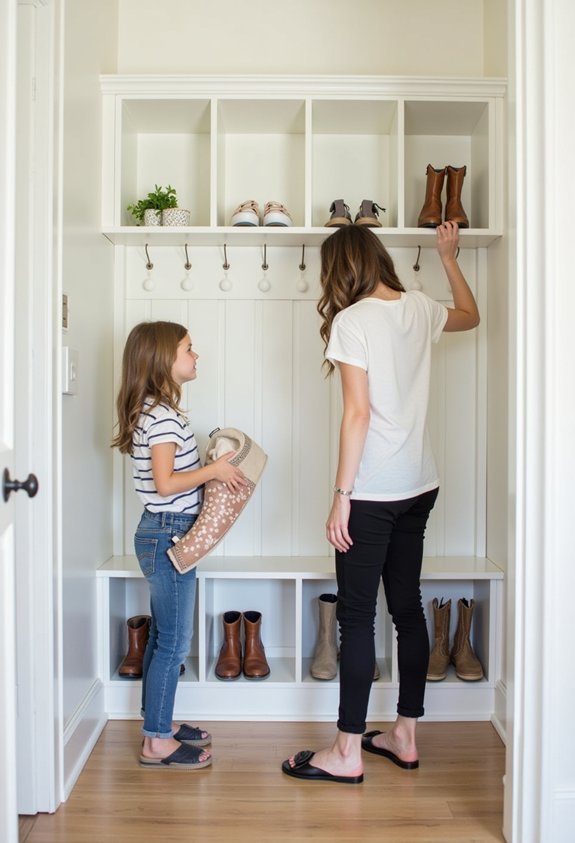
When you’re ready to keep clutter from creeping back, a simple “one in, one out” rule gives you a clear boundary.
Each time you bring home a new item, choose one similar item to sell, donate, or recycle. New mug in, old chipped mug out. New shirt in, unworn shirt out. You protect your space while still honoring a minimalist mindset.
To make it automatic, keep a small “outgoing” bin in a closet and place chosen items there immediately. Empty it weekly.
When shopping, pause and ask, “What will this replace?” If nothing comes to mind, reconsider buying.
Over time, this rule trains you toward mindful consumption and helps your earlier decluttering work actually last. You maintain control, not stuff, in your home daily.
Set Clear Boundaries for Sentimental Items
Although sentimental items can feel untouchable, you still need clear limits so they don’t quietly overrun your space.
Start by deciding how much physical room sentimental value gets. Maybe it’s one box per person or a single shelf. Then choose what truly represents your history, not every object attached to it. Ask yourself whether keeping this item actually supports memory preservation or just delays a hard choice.
Use simple rules:
- Keep only what you’d be heartbroken to lose.
- Limit duplicates—photograph extras, then let them go.
- Contain everything in clearly labeled, finite containers.
Revisit these boundaries yearly so your collection reflects who you’re now, not just who you were.
Create a “Not Sure Yet” Box With a Deadline
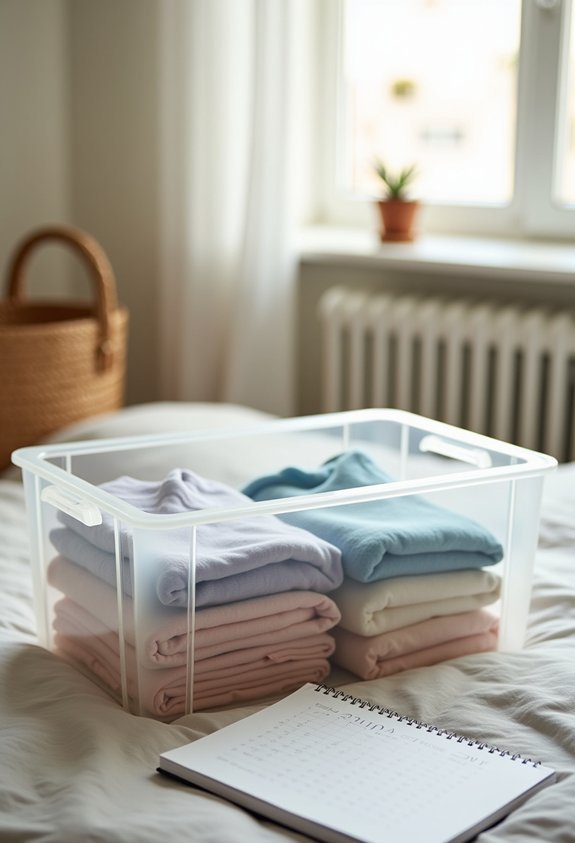
Once you’ve set boundaries for sentimental items, you still might get stuck on things that feel important but not quite “keep forever” worthy.
That’s where a “Not Sure Yet” box helps. Label one container for uncertain items and place it somewhere accessible but out of daily sight. When you hesitate, put the item in the box instead of back in a drawer.
Next, set a clear decision timeline, usually 30–90 days. Write the review date on the lid and in your calendar.
During the waiting period, notice whether you think about those things or need them. When the deadline arrives, reopen the box and make firm choices: keep, donate, or sell.
If you didn’t miss it, you’re ready to let go with less regret.
Recycle Responsibly to Reduce Environmental Impact
Even as you clear things out, you can honor your values by recycling as much as possible instead of sending everything straight to the trash.
Even while decluttering, stay aligned with your values by recycling thoughtfully, not defaulting to the trash
Start by learning what your local recycling programs actually accept; their website or app usually lists materials and preparation steps. Sort items into clearly labeled boxes so decisions stay simple and quick.
Focus on:
- Paper, cardboard, metal, and glass that your curbside service accepts, rinsed and flattened when needed.
- Electronics, batteries, and light bulbs taken to designated drop‑off sites so hazardous components stay out of landfills.
- Textiles, plastics, and packaging routed to store take‑back bins or specialty recyclers.
As you buy replacements, choose durable, eco friendly materials so future decluttering creates less waste for you overall.
Digitize Paper, Photos, and Mementos

When you’re torn between keeping everything and clearing space, digitizing lets you preserve the meaning without storing the bulk.
Start by sorting papers into “scan,” “shred,” and “keep for now” piles. Use a phone app or scanner for photo scanning and important documents. Name files clearly by date and topic so you can find them quickly.
Store everything in structured digital storage folders, then add tags for people, events, or locations. Use cloud organization with automatic digital backups to protect against loss.
You may also like:



When something feels too precious to toss, create virtual mementos with short notes about why it matters. You’ll still honor your history while opening physical space, and you can share these memories easily with family, wherever they live, and revisit them anytime.
Right-Size Collections Instead of Saving Everything
Collections can quietly swell until they stop feeling special and start feeling like clutter. To right-size them, first decide your collection priorities. What purpose does each group serve—beauty, memory, utility, or fun? Then choose a realistic limit based on space, not guilt.
Use this quick process:
- Gather one category in a single spot and remove obvious duplicates, broken items, and “someday” pieces.
- Pick favorites that truly spark affection or use; these are your meaningful keepsakes. Let the rest support donation, resale, or recycling goals.
- Contain what remains in a specific shelf, box, or display; if it doesn’t fit, edit again until everything feels intentional.
You’re not discarding your identity; you’re curating it. Each thoughtful choice reduces clutter while honoring what matters.
Build New Habits That Support a Lighter Home

Habits quietly decide whether clutter creeps back or stays away, so you’ll need simple routines that match real life, not an idealized version of it.
Start by linking tiny actions to things you already do: clear the kitchen counter after dinner, hang tomorrow’s outfit when you brush your teeth, return items to a “home” before you sit down at night.
Use habit tracking in a notebook or app so you see progress instead of perfection. To prevent new buildup, practice mindful purchases: pause, ask where the item will live, how often you’ll use it, and what it replaces.
Create one small “exit routine” too—keep a donation bag ready and drop something in whenever it no longer serves you. Review the bag weekly and celebrate.
Conclusion
When you declutter this way, you’re not just tossing things, you’re choosing where they go, how they’re used, and what they’ll mean next. You donate with intention, you sell with clarity, you upcycle with creativity, and you recycle with care. You digitize what matters, right-size what you keep, and build habits that stick. Step by step, you protect the planet, honor your values, and shape a home that truly supports you.