13 Ways to Declutter Without Throwing Things Away
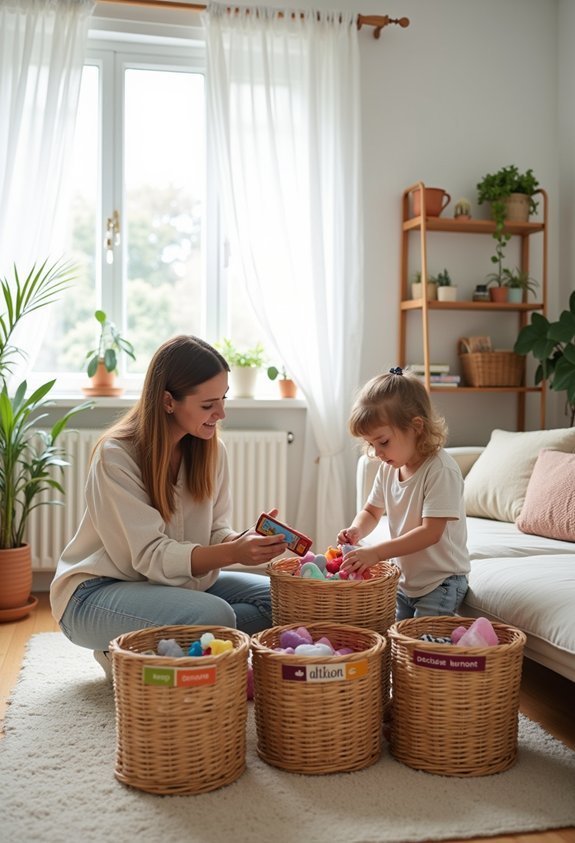
You don’t have to throw everything away to declutter—you’ve got options that’ll clear your space without the guilt. Donate items to local charities, sell unwanted stuff online, or organize a swap party with friends (because one person’s clutter is another’s treasure). Rotate seasonal items into storage, digitize old papers and photos, or repurpose things for new uses around your home. Vacuum-seal off-season clothing, redistribute belongings to rooms where they actually belong, and you’ll discover even more creative solutions ahead.
Key Takeaways
- Donate items to local charities or schedule pickup services to clear space while helping others in need.
- Sell unwanted belongings through online marketplaces or consignment shops to declutter and earn extra income.
- Organize swap parties with friends to exchange unused items without spending money while building community connections.
- Rotate seasonal items into storage using labeled bins and vacuum-sealed bags to maximize available space.
- Digitize sentimental papers and photos to preserve memories while reducing physical clutter in your home.
Donate Items to Local Charities and Organizations
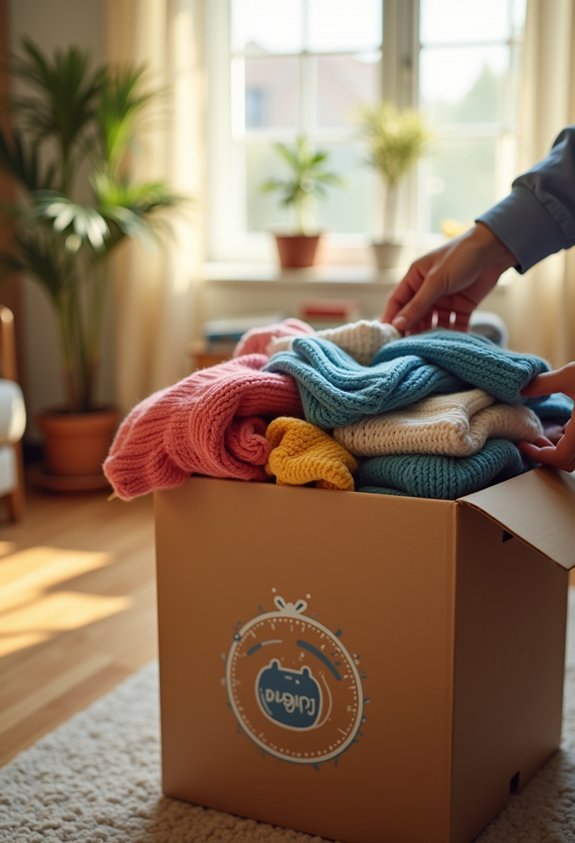
When you’re staring at a pile of stuff you don’t need anymore, donating feels like the ultimate win-win—you get your space back, and someone else gets something useful.
Look for local charities that’ll actually make it easy on you. Many organizations have charity partnerships with businesses, so drop-off locations are everywhere—grocery stores, community centers, even that strip mall you pass every day.
But here’s the real game-changer: item pickup services.
Seriously, some charities will come to your house and haul everything away. You just schedule it online (sometimes they even do same-day), leave your stuff on the porch, and—poof—it’s gone.
No loading your car, no awkward trunk Tetris, no excuses.
Your clutter becomes someone else’s treasure without touching a trash can. To make the process even smoother, label your donation bags clearly with their contents and deliver them promptly to avoid second-guessing your donation decisions.
Organize a Swap Party With Friends and Family
If you’ve ever watched your friend gush over something you’re about to toss, you already know the magic of a swap party—it’s basically decluttering meets social hour, and nobody has to spend a dime.
The swap party logistics are simpler than you’d think: pick a date, invite people, tell everyone to bring stuff they don’t want anymore. Done.
Want themed swap ideas? Try these:
- Clothing and accessories only (because everyone’s closet is bursting)
- Books and media swap (your forgotten thriller is someone’s next obsession)
- Kitchen gadgets exchange (that panini press deserves a second chance)
- Kids’ toys and games (they’ve outgrown everything anyway)
Set up tables, let people browse, and watch your clutter become someone else’s treasure. It’s weirdly satisfying.
Beyond just clearing space, swapping items fosters community connections while giving your stuff a second life with people who’ll actually use it.
Sell Unwanted Items Online or at Consignment Shops

Your clutter isn’t just stuff taking up space—some of it’s actually money sitting on shelves, shoved in closets, and gathering dust in your garage.
That dusty treadmill and those unworn designer jeans? They’re not clutter—they’re paychecks waiting to happen.
Turn those unused items into cash by exploring online marketplaces like Facebook Marketplace, eBay, or Poshmark. List that bread maker you’ve used exactly once (we’ve all been there), designer clothes that don’t fit, or electronics collecting cobwebs.
Consignment shops work great too—especially for furniture, clothes, and home décor—because they handle the selling while you just drop off and wait for your cut.
Smart consignment strategies? Take clear photos, price items fairly, and be honest about condition. Nobody wants surprises.
The best part? You’re decluttering, earning money, *and* giving your stuff a second life with someone who’ll actually use it.
On the flip side, shopping secondhand means you avoid retail markup that typically adds 20-30% to cover marketing and store displays.
Win-win-win.
Rotate Seasonal Items Into Storage
Because ski gear doesn’t need prime closet real estate in July, seasonal rotation is honestly one of the smartest decluttering tricks that doesn’t involve getting rid of anything.
You’re basically giving your space a wardrobe change every few months—and it works beautifully.
Pack away what you won’t use for months, then swap items when seasons shift. Your seasonal storage system can include:
- Clear bins labeled by season (winter coats, summer gear, holiday decorations)
- Under-bed storage for out-of-season clothes
- Garage or attic space for bulky items like fans and heaters
- Vacuum-sealed bags to maximize space
An organized rotation means you’ll always know where things are when you need them again.
Plus, you’re not staring at snow boots in August—which, let’s be honest, feels weird.
Storing off-season clothing elsewhere helps maintain prime space efficiency and keeps your everyday wardrobe manageable.
Redistribute Belongings to Rooms Where They’re Actually Used
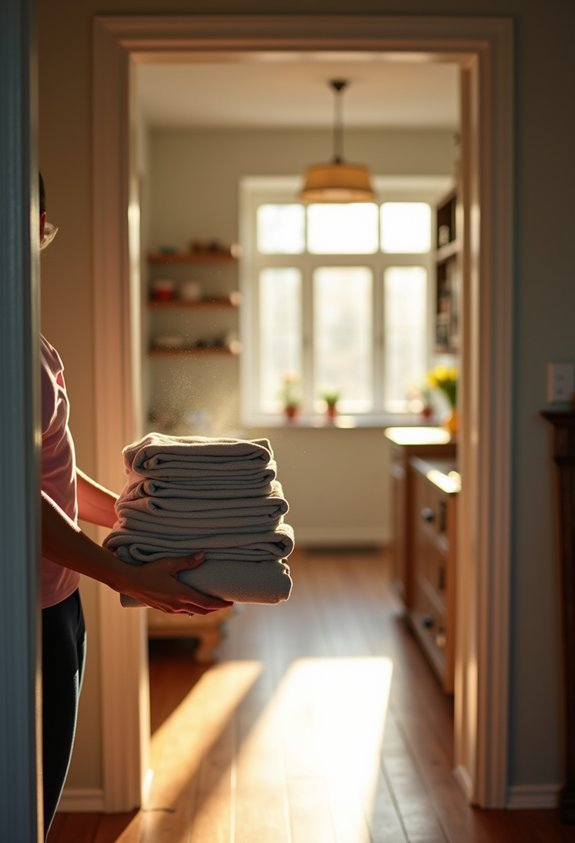
Sometimes the clutter problem isn’t about having too much stuff—it’s about having the right stuff in completely wrong places.
Your scissors live in the bedroom but you always wrap gifts at the kitchen table. Your phone charger’s upstairs when you scroll downstairs every evening (we all do it, no judgment).
This is where room specific organization becomes your best friend.
Walk through your home and notice where you actually do things—not where you think you should. Then move items accordingly for better functional space arrangement.
Put the nail polish by your favorite TV-watching spot. Relocate those books stacked by the couch to your actual reading chair.
When everything lives where you use it, surfaces clear themselves.
By assigning clear homes for items based on where you actually use them, you eliminate the mental energy of constantly searching and create a space that naturally supports your daily routines.
No throwing away required—just smarter placement that matches your real habits.
Gift Items to People Who Will Appreciate Them
That kitchen gadget gathering dust in your drawer could be someone else’s favorite new cooking tool.
You’re not being wasteful—you’re being thoughtful when you pass things along to people who’ll actually use them.
Passing along unused items isn’t wasteful—it’s thoughtful. You’re giving your things a second life with someone who’ll truly appreciate them.
Think about your sister who loves baking, your neighbor who just moved into their first apartment, or your friend who mentioned needing exactly what you’ve got tucked away.
Consider these thoughtful approaches:
- Organize informal gift exchanges with friends where everyone brings items they’re ready to pass along
- Include personalized notes explaining why you thought of them—it transforms clutter into a meaningful gesture
- Match items with people’s hobbies and interests
- Time your gifting around birthdays or housewarmings (but random “thinking of you” gifts work too)
Your stuff gets a second life, and someone gets something useful.
Letting go of items by gifting them to others who’ll appreciate them is a form of emotional release that honors both the object’s story and your own well-being.
Create a “Maybe Box” for Undecided Items
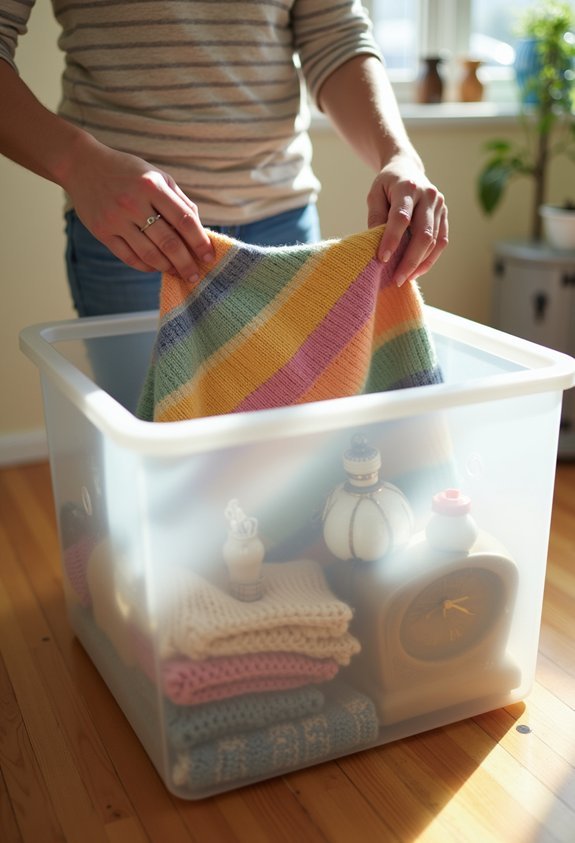
The middle ground between “keep it” and “toss it” doesn’t have to feel like relationship limbo—it can actually be your best decluttering strategy.
Grab a box (any box works—shoebox, storage bin, that Amazon delivery you haven’t recycled yet) and label it “Maybe.” This becomes one of your most effective decision making strategies when you’re stuck.
Here’s how it works: anything that makes you pause for more than ten seconds goes in. That scarf you haven’t worn in two years but might need for an ’80s party? Maybe Box. The gadget you forgot existed? In it goes.
Seal it up, write today’s date on top, and store it somewhere accessible—these temporary storage solutions give you breathing room.
This approach works as a low-stakes experiment that removes the pressure of making permanent decisions right now.
If you haven’t opened it in three months, you’ve got your answer.
Utilize Vertical Storage Solutions to Maximize Space
When you’re running out of floor space but your walls are doing absolutely nothing, you’re missing out on the easiest storage hack that doesn’t require throwing away a single thing.
Look up—seriously, right now—and you’ll see all that unused real estate just waiting to hold your stuff.
Your walls aren’t just decoration—they’re untapped storage space begging to solve your clutter problem without sacrificing square footage.
Wall mounted shelves can transform that awkward corner into a home for your book collection (the one that’s currently creating furniture on your floor).
Hanging organizers work magic in closets, bathrooms, and even behind doors you forgot existed.
Here’s what vertical storage can do:
- Install floating shelves above desks or doorways for items you need but rarely grab
- Hang pocket organizers on closet doors for accessories, craft supplies, or random chargers
- Mount hooks literally everywhere—coats, bags, keys all deserve a proper home
- Stack modular cubes upward instead of outward to keep everything visible
You’re not getting rid of anything—just giving it a better address.
The goal isn’t to own less necessarily, but to create space to breathe so that what you keep can actually serve you instead of creating mental clutter.
Consolidate Duplicate Items Throughout Your Home
Seven pairs of scissors scattered across your house—kitchen drawer, bedroom nightstand, junk drawer, office desk, bathroom counter, coat closet, and that mysterious one living in your car—means you’ve got about six more than you actually need in rotation.
Here’s the thing: duplicate kitchenware and similar books don’t make you wasteful—they just mean you’re operating multiple “stations” instead of one organized hub.
Round up those extras. Keep your favorites in their primary spots, then relocate backups to a single storage bin.
You’re not getting rid of anything (promise!), just making everything findable.
This works brilliantly for charging cables, pens, tape dispensers—basically anything you’ve bought multiple times because you couldn’t locate the original.
Your stuff stays. Your sanity returns.
Win-win.
By consolidating duplicates, you’ll reduce decision fatigue when looking for the right tool since you’ll know exactly where to find it.
Lend or Share Rarely Used Items With Neighbors
That leaf blower gathering dust in your garage? Your neighbor might need it this weekend—and they’ve got that pressure washer you’ve been wanting to try.
Item lending creates a win-win situation where everyone gets access to more tools without buying (or storing) them individually.
Neighbor sharing transforms your street into a resource-sharing community, cutting clutter while building friendships.
Consider organizing:
- Tool libraries where neighbors swap ladders, drills, and seasonal equipment
- Party supply exchanges for folding tables, chairs, and serving platters
- Baby gear rotations as kids outgrow swings, high chairs, and toys
- Camping equipment shares for tents and coolers used once yearly
You’ll free up space, save money, and actually know your neighbors’ names.
Revolutionary concept, right?
This approach helps you define enough stuff by focusing on what your family actually uses regularly rather than keeping items “just in case.”
Digitize Papers, Photos, and Sentimental Documents

Here’s your permission slip: scan everything.
Digital organization doesn’t mean forgetting memories, it means protecting them. Phone cameras work perfectly for most documents, though scanners catch finer details for sentimental preservation of important papers.
Create folders by year or category (whatever makes sense to your brain). Store copies in cloud services—because hard drives fail, and that’d be genuinely devastating.
The best part? You’ll actually look at digital photos instead of hoarding boxes you never open.
Keep truly irreplaceable originals in one small container. Everything else? Pixels are forever, and they don’t require closet space.
Repurpose Items for New Functions in Your Home
Before you donate that scratched serving tray or chipped mug, consider this: your “broken” stuff might just be perfect for something else entirely.
That old ladder gathering dust? It’s actually functional decor waiting to happen—lean it against your wall as a blanket holder or towel rack.
Think about creative storage opportunities you’re missing:
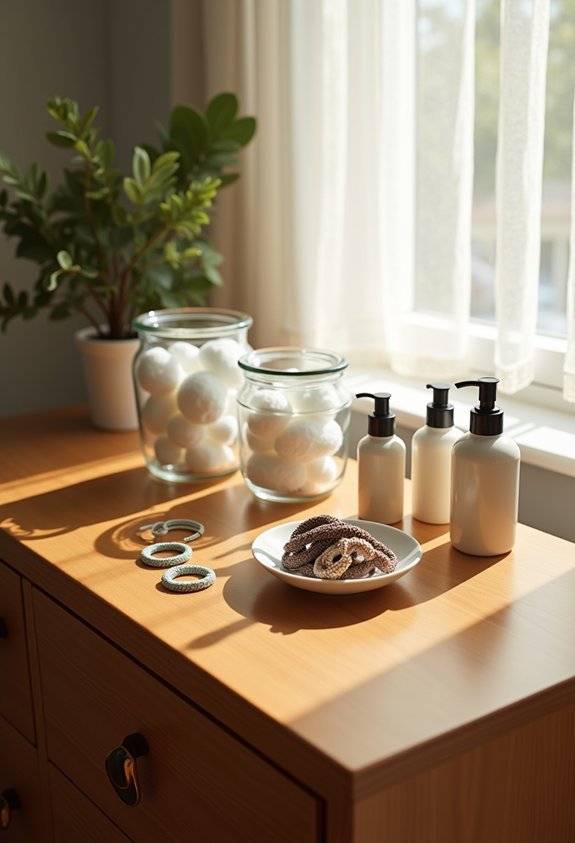
- Mason jars become bathroom organizers for cotton balls, Q-tips, or makeup brushes
- Vintage suitcases stack beautifully as quirky nightstands (with hidden storage inside)
- Muffin tins corral jewelry, office supplies, or craft materials in drawers
- Wine crates mount on walls as rustic shelving units
Your grandmother’s teacups can hold paper clips.
That chipped bowl? Perfect for your keys by the door.
You’re not hoarding—you’re innovating.
Store Off-Season Clothing in Vacuum-Sealed Bags

While you’re busy turning old ladders into towel racks, there’s a whole other clutter monster lurking in your closet—and it’s wearing last season’s wardrobe.
Here’s the thing: you don’t need your winter parka taking up prime real estate in July.
Vacuum sealing is your secret weapon here. Those bulky sweaters, coats, and boots can shrink down to practically nothing when you suck out all the air—it’s like magic, but it’s actually just physics.
Vacuum-sealed bags compress bulky seasonal items to a fraction of their size—pure physics creating instant closet space.
Grab some vacuum-sealed bags (they’re cheap!) and pack away everything you won’t touch for months. Your seasonal storage just got seriously efficient.
You may also like:





The best part? When fall rolls around again, your clothes emerge wrinkle-free and fresh.
More closet space now, zero guilt about tossing anything.
Win-win.
In case you were wondering
How Do I Emotionally Let Go of Items With Sentimental Value?
You can emotionally let go by using memory preservation techniques like photographing items before donating them. Create a sentimental storage box for truly meaningful pieces, keeping only what you’ll treasure most. You’re honoring memories, not abandoning them.
What if Family Members Resist Decluttering Shared Spaces?
Start family discussions about shared space goals and concerns. You’ll need compromise strategies like designating personal zones, rotating seasonal items, or trying one-month trials. Focus on everyone’s needs, not just decluttering—you’ll find collaborative solutions together.
How Often Should I Declutter to Maintain an Organized Home?
You’ll maintain organization best with a weekly schedule for quick tidying sessions and a monthly routine for deeper decluttering. This consistent approach prevents clutter buildup and keeps your home manageable without requiring marathon organizing sessions.
Can Decluttering Methods Work for Small Apartments or Studio Spaces?
Yes, you’ll find decluttering methods especially effective in small apartments. Focus on space saving solutions like vertical storage and invest in multifunctional furniture that serves dual purposes, maximizing every square foot you’ve got available.
What Should I Do With Broken Items I Can’t Donate or Sell?
You’ll want to explore repair options first—giving worn items a second chance. If they’re beyond saving, check out local recycling programs that’ll responsibly handle materials. Many communities offer specialized collection for electronics and household goods.
Conclusion
You don’t need to trash everything to reclaim your space—you’ve got options that’ll make you feel good about where your stuff ends up. Maybe you’ll be like Sarah, who swapped her old books with neighbors and suddenly had a whole new reading list without spending a dime. Start with one drawer today, pick your favorite method from this list, and watch how quickly decluttering becomes way less overwhelming (and honestly, kind of fun).