11 Ways to Make Minimalism Work in Real Life
You can make minimalism work by starting small—tackle one cluttered surface instead of your whole house, then build momentum with 15-minute decluttering sessions. Set boundaries for sentimental items (one memory box per person), practice the “one in, one out” rule to stop accumulation, and wait 24 hours before buying non-essentials. Digitize what you can, involve your family through games or rewards, and focus on experiences over possessions—because the good stuff sticks around better than things anyway.
Key Takeaways
- Start with 15-minute decluttering sessions in high-traffic areas to build momentum through small, consistent wins rather than overwhelming perfection.
- Implement the “One In, One Out” rule and 24-hour waiting periods for purchases to prevent accumulation and encourage intentional consumption.
- Set physical boundaries for categories like one drawer for cables or ten coffee mugs maximum to automate decisions and control clutter.
- Use “Maybe Boxes” for uncertain items and digitize papers to reduce decision pressure while minimizing physical storage needs.
- Transform decluttering into family games and prioritize experience gifts over material possessions to build lasting memories without clutter.
Start With One High-Traffic Area Instead of Your Entire Home
Look, I get it—you’re scrolling through those Pinterest-perfect minimalist homes and thinking you need to declutter your entire house this weekend.
(Spoiler alert: that’s a one-way ticket to burnout and regret.)
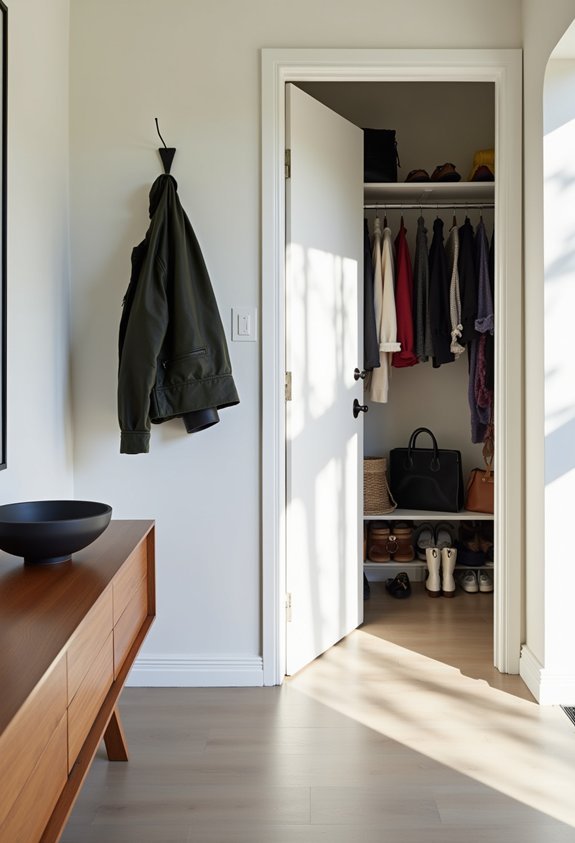
Here’s what actually works: pick one high-traffic area where clutter drives you the most bonkers—maybe it’s your kitchen counter that’s somehow become a mail graveyard, or that entryway where shoes multiply like rabbits.
Start with the one messy spot that makes you cringe every single day—that’s your clutter battleground.
Focus your energy there first.
Master your entryway organization or tackle that living room makeover—just one space where you’ll actually see the difference every single day.
When you walk past that one beautifully clear surface, you’ll feel motivated to keep going instead of overwhelmed by the seventeen other rooms screaming for attention.
Clearing just one daily-use surface can significantly impact your well-being by reducing the visual noise that keeps your brain on alert.
Small wins build momentum.
Trust me on this.
Apply the “One In, One Out” Rule to Stop Accumulation
This rule works because it forces you to actually think before you buy—you know, that radical concept of pausing at the checkout instead of impulse-adding everything to your cart.
When you want new jeans, an old pair leaves. New coffee mug? Say goodbye to that chipped one you’ve been hoarding since college.
It’s accumulation awareness in action.
The beauty here is how it transforms shopping from mindless to mindful consumption.
You’ll start asking yourself: “Do I want this badly enough to let something else go?” (Spoiler alert: usually you don’t.)
It’s not about deprivation—it’s about intentionality.
Sure, you’ll occasionally break this rule. That’s fine.
The goal isn’t perfection; it’s preventing that slow creep of stuff that somehow multiplies overnight.
The shift happens when you move from “Where can I store this?” to “What will this replace?”
Schedule Regular 15-Minute Decluttering Sessions
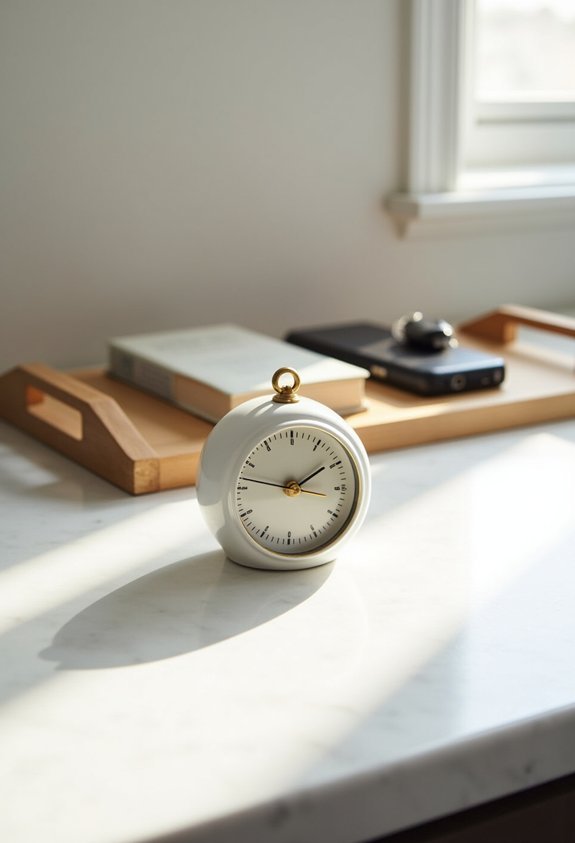
Fifteen minutes doesn’t sound like enough time to tackle clutter, but here’s the thing—it’s actually the perfect amount.
When you schedule these bite-sized sessions, you’re setting yourself up for quick wins instead of marathon cleaning sessions that make you want to hide under the covers. Pick one drawer, one shelf, or one corner—that’s it.
You’ll be amazed at what you can accomplish when the clock isn’t mocking you.
The beauty of this approach? It removes the overwhelm that usually sabotages your decluttering techniques before you even start.
Tuesday at 7 PM becomes “junk drawer day.” Sunday morning? That’s for the bathroom cabinet (you know the one with seventeen expired sunscreens).
During each session, make decisions within ten seconds to avoid decision fatigue and keep momentum going.
Small, consistent action beats occasional perfection every single time.
Create Clear Boundaries for Sentimental Items
Why does letting go of your grandmother’s chipped teacup feel harder than donating ten pairs of perfectly good jeans?
Because sentimental value trumps practicality every single time—and that’s actually okay.
The trick isn’t eliminating emotional attachment (you’re human, not a robot).
It’s setting boundaries that honor memories without drowning in stuff.
Try these guidelines:
- One memory box per person — when it’s full, something must go
- Take photos of bulky items before releasing them (the memory stays, the clutter doesn’t)
- Keep items you’ll actually use — wear grandma’s necklace instead of storing it
- Set a number limit for each category (five cards, three photos)
You’re not dishonoring anyone by living in less chaos.
Really.
When you name the specific emotions tied to each object—whether it’s guilt, nostalgia, or obligation—you can start separating feelings from items and make clearer decisions about what truly deserves space in your life.
Digitize Papers, Photos, and Documents to Reduce Physical Clutter

Paper clutter breeds faster than rabbits—one day you’ve got three documents, the next you’re drowning in insurance forms, birthday cards from 2009, and receipts for purchases you don’t even remember making.
Here’s your escape plan: go digital.
Snap photos of receipts, scan important documents, and upload everything to cloud storage (Google Drive, Dropbox—whatever works for you). Digital backups mean you’ll actually find things when you need them, unlike that filing cabinet where papers go to die.
For paper organization that sticks, create simple folders: taxes, medical, warranties. Don’t overthink it.
Old photos? Scan them or use a scanning app—your memories deserve better than a dusty shoebox.
You’ll breathe easier when countertops aren’t buried under paper avalanches. If you’re stuck deciding what to keep, try decision-making rules like “If I haven’t referenced this document in a year, I digitize and delete the physical copy.”
Build a Capsule Wardrobe That Reflects Your Actual Lifestyle
The problem isn’t that you need more stuff. It’s that your wardrobe essentials don’t match what you actually do all day—and that’s why getting dressed feels impossible.
Start by tracking your real week (not your aspirational one). Notice what you’re constantly reaching for, and build from there.
Your capsule should include:
- Clothes for your actual job — not the corner office fantasy, but what you wear Tuesday morning
- Weekend staples you genuinely enjoy — yoga pants count if that’s your reality
- Two nice outfits — because events happen, even to minimalists
- Shoes that don’t hurt — life’s too short for blisters
Lifestyle alignment means your closet reflects who you’re now, not who Instagram thinks you should be. That’s the whole point.
Once you’ve built your capsule, adopt a one-in-one-out rule for any new clothing purchases to maintain the simplicity you’ve created.
Establish a “Maybe Box” for Items You’re Unsure About
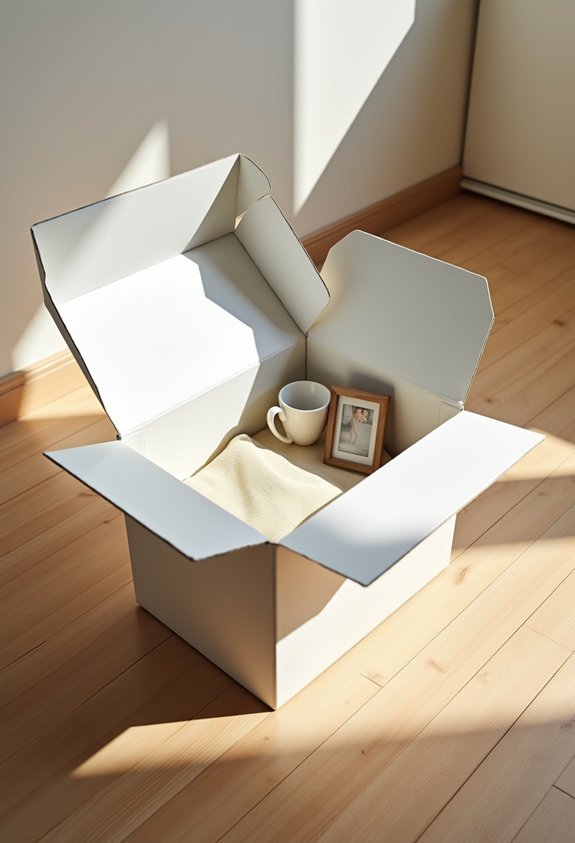
grab a cardboard box.
Toss in anything that makes you hesitate. The maybe box benefits are real—you’re not making permanent decisions under pressure, which removes about ninety percent of the stress.
Set a calendar reminder for three months out. When it goes off, look inside. If you forgot what’s there, you’ve completed your items evaluation.
This approach works especially well for duplicate items you’ve discovered in different rooms but aren’t sure which version to keep.
Donate it all.
Set Limits on Categories That Tend to Multiply
Without self-imposed boundaries, certain items breed like rabbits in your home—coffee mugs, throw pillows, craft supplies, charging cables that don’t fit anything you own anymore.
Category limits give you clutter control that actually sticks.
Here’s how to set boundaries that work:
- Keep only what fits in designated spaces (one drawer for cables, one basket for scarves)
- Apply the “one in, one out” rule when you acquire something new in problem categories
- Choose a specific number (like ten coffee mugs max—even if that unicorn mug is adorable)
- Review these limits seasonally to stay honest with yourself
The beauty of category limits? They make decisions automatic.
No more “just one more” justifications. You’ll know exactly when you’ve hit your threshold, and that clarity feels surprisingly freeing. Regularly checking in with personal needs helps you maintain focus on what truly matters and prevents category limits from feeling restrictive.
Practice Mindful Shopping With a 24-Hour Waiting Period
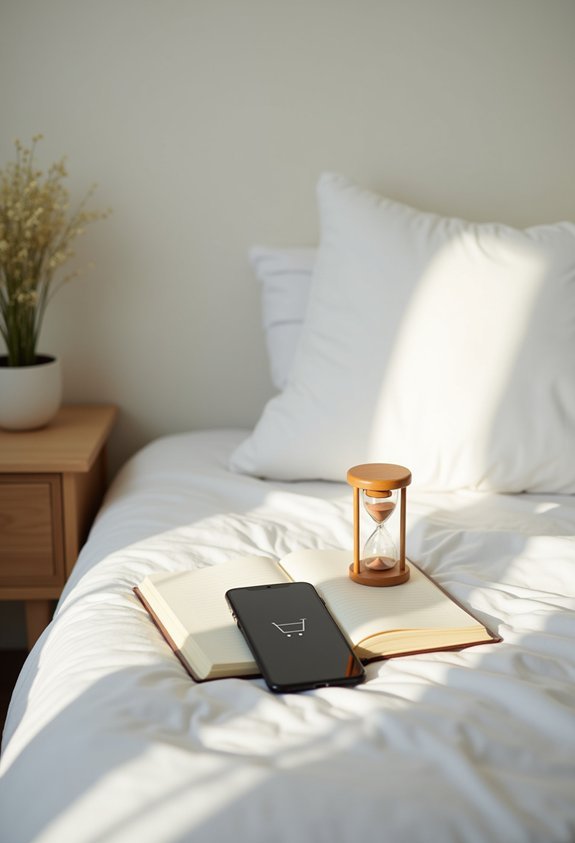
When your thumb hovers over that “Buy Now” button at 11 PM, your brain isn’t exactly operating at peak decision-making capacity—it’s running on impulse, wishful thinking, and the seductive glow of your phone screen.
Here’s your new rule: wait 24 hours before buying anything non-essential.
Screenshot it, bookmark it, add it to your cart—whatever helps you remember. Then walk away and let your impulse control actually do its job.
You’ll be shocked how many “must-haves” suddenly feel like “meh, never mind” after a good night’s sleep. This waiting period builds financial awareness because you’ll start noticing patterns (hello, midnight shopping sprees) and questioning whether you actually need that thing or just wanted the dopamine hit.
The delay allows your rational brain to catch up with the emotional impulse that initially drove the desire to purchase.
Most purchases? They fail the 24-hour test spectacularly.
Involve Your Family in Age-Appropriate Decluttering Activities
Minimalism can’t just be your solo project if you’re living with other humans who keep dragging home Happy Meal toys and random rocks from the playground.
Family involvement makes everything easier—and yes, actually possible.
Your minimalism journey will crash and burn if everyone else in your house is working against you.
Turn decluttering into decluttering games that don’t feel like chores. Kids respond way better to “Can you find five toys to donate?” than lectures about consumerism.
Try these age-appropriate approaches:
- Toddlers (2-4): Make it a race—who can put toys in the donation box fastest?
- Elementary kids (5-10): Let them earn screen time for each bag they fill.
- Tweens (11-13): Challenge them to create a capsule wardrobe they’ll actually wear.
- Teens: Offer cash for selling their old stuff online.
Make it collaborative, not dictatorial. Nobody likes being told their treasures are trash.
When family members resist, get curious about why certain items matter to them—each object often represents deeper emotional connections or memories worth acknowledging before you move forward.
Focus on Experiences Over Possessions When Making Purchases

Your kid will forget about that $50 toy within a week, but they’ll talk about the trampoline park visit for months. That’s the magic of experience gifts—they stick around in memory long after plastic junk breaks or gets buried in the toy box.
Start practicing mindful spending by asking yourself: will this purchase create a lasting memory or just clutter?
Instead of buying more stuff for birthdays, consider zoo memberships, cooking classes together, or tickets to see their favorite band. These moments build connection and joy without adding to your overflowing closets.
And here’s the best part—you’re not just reducing clutter, you’re teaching your kids that happiness doesn’t come from Amazon boxes.
It comes from doing things together.
You may also like:


In case you were wondering
How Do I Handle Gifts From Family That Don’t Fit My Minimalist Lifestyle?
Communicate your preferences through honest family conversations before gift-giving occasions. Practice gracious gift acceptance in the moment, then donate or rehome items that don’t align with your lifestyle. You’re honoring both relationships and your minimalist values.
What Should I Do When My Partner Isn’t Interested in Minimalism?
Ironically, minimalism’s about less stuff but requires *more* conversation. You’ll need strong communication strategies with your partner to find compromise solutions—like keeping shared spaces minimal while respecting their personal areas. Don’t force your lifestyle choices.
How Can I Maintain Minimalism After Moving to a Larger Home?
Designate specific purposes for each room to avoid filling empty spaces unnecessarily. Practice mindful purchasing by questioning every potential acquisition. Implement space organization systems immediately, and resist the temptation to buy more just because you’ve got extra room.
Is Minimalism Compatible With Having Hobbies That Require Lots of Equipment?
Yes, you can maintain a minimalist mindset while owning hobby equipment. You’ll focus on quality over quantity, keep only what you actively use, and ensure your possessions serve genuine purposes rather than collecting dust unused.
How Do I Deal With Guilt About Getting Rid of Expensive Items?
Focus on value assessment of the item’s current usefulness rather than past cost. Acknowledge your emotional attachment, then remind yourself you’re not discarding money—it’s already spent. You’re choosing mental clarity over guilt.
Conclusion
You don’t need to transform your home overnight—or ever achieve that stark, all-white Instagram aesthetic (who actually lives like that, anyway?).
Start small. Keep what matters. Let go of what doesn’t.
Because here’s the thing: minimalism isn’t about having less stuff. It’s about making more room for what you actually love.
And that? That’s something you can start doing right now, one drawer at a time.