15 Ways to Stop Buying Things You Don’t Need
You probably buy more than you realize—surveys show over 60% of people make impulse purchases every month—often driven by stress, boredom, or clever marketing. The good news: you can interrupt that cycle with specific tactics, not just “more willpower.” From identifying your spending triggers to using cooling-off rules, simple tech tweaks, and better reward systems, you can cut unnecessary spending without feeling deprived—but only if you’re willing to change a few key habits.
Recognize Your Spending Triggers

When you look at your bank statement, can you pinpoint what actually triggered each non‑essential purchase?
Start by tagging every transaction from the past 30 days with a simple label: need, want, or impulse.
Then add a trigger tag: boredom, stress, sales email, social media, in‑store display, or peer pressure.
You’ll quickly see patterns. Research shows emotional spending spikes when you’re stressed, tired, or scrolling late at night, so note time of day and mood for each impulse buy this week.
Screenshot carts you almost check out and record what you felt in that moment.
Review your notes every Sunday.
Circle your top three triggers and write one concrete way you’ll interrupt each before money leaves your account next time you reach for anything.
Set Clear Financial Priorities and Goals
Instead of vaguely wanting to “save more” or “spend less,” you need hard numbers and deadlines that give every dollar a job.
Start with your financial values: list what truly matters (security, travel, debt freedom, education) and rank them.
Then use goal setting: assign target amounts and dates, like “build a $1,000 starter emergency fund in 90 days” or “pay $3,000 off my highest-interest card this year.”
Research shows people are 42% more likely to achieve written goals, so write them down and post them near your spending touchpoints—wallet, computer, phone.
Break each goal into monthly and weekly numbers.
When you see a potential purchase, ask, “Does this move me toward my top three priorities?” If not, you skip it and protect your plan.
Practice the 24-Hour (or 30-Day) Rule
Although impulse buys feel harmless in the moment, data shows they add up—Americans admit to spending hundreds per month on unplanned purchases. The 24-hour or 30-day rule builds impulse control by inserting a cooling-off period between desire and decision.
Pause between wanting and buying—those “harmless” impulse splurges quietly drain hundreds from your budget.
When you want something nonessential, write it down with the date and price, then wait.
- For items under $50, give yourself at least 24 hours.
- For larger wants, use a 30-day waiting list.
During the wait, compare prices, read reviews, and check your budget.
Most people find that after the delay, 7–8 out of 10 “must-haves” don’t feel urgent or appealing. You’ve practiced delayed gratification, protected your goals, and trained your brain to question automatic spending.
Over time, this rule becomes your default filter for.
Unsubscribe From Tempting Emails and Alerts
Because your environment quietly shapes your spending, one of the fastest ways to curb unnecessary purchases is to cut off the constant flow of marketing triggers in your inbox and on your phone.
Research shows that simply seeing a promotion increases purchase likelihood by up to 20%, even when you weren’t looking to buy.
Start with a weekly 10-minute audit: search “sale,” “deal,” and brand names, then hit promotional unsubscribe on every nonessential sender.
Next, create email filters that auto-archive newsletters, flash sales, and influencer drops so you never see them.
Turn off app push notifications for retailers and deal sites.
You’re not missing bargains; you’re removing cues that push you to convert wants into “needs.”
That space makes intentional spending easier every day.
Delete Saved Cards and One-Click Checkout

How much harder would it be to impulse shop if every purchase forced you to get up, find your wallet, and type in your card details?
Convenience drives spending; studies show frictionless checkout can raise order volume by 20–40%. You can flip that effect.
Delete stored cards from major retailers, browsers, and your digital wallet. Disable one‑click or express checkout wherever possible. This adds a pause, boosting your payment method awareness and giving your brain time to ask, “Do I really need this?”
- Remove saved cards from retailer accounts
- Turn off one‑click or express checkout options
- Audit digital wallet security and permissions monthly
Review statements for surprise purchases. If entering card data feels annoying, it’s working; that barrier protects your money.
Make and Stick to a Realistic Spending Plan
Three things make a spending plan work: it’s grounded in your real numbers, it accounts for your actual habits, and it’s simple enough to follow on a bad day.
Start by tracking 30–60 days of spending using your bank data. Group transactions into needs, wants, and goals.
Then choose budgeting techniques like the 50/30/20 rule or zero-based budgeting to assign every dollar a job. Set monthly spending limits for each nonessential category, based on your real baseline.
Automate transfers to savings first; research shows people save more when they never see the money.
Finally, review your plan weekly: compare actual vs. planned spending, adjust limits that are too tight or too loose, and recommit to next week’s targets. Track progress with a note app.
Shop With a List—And a Limit

A spending plan only works if you enforce it where money actually leaves your account: at the store and online checkout. Before you shop, translate your budget planning into a digital list and a hard spending cap for that trip.
Research shows lists cut impulse buys by anchoring you to pre-decided needs. Treat your list as a contract: if it’s not on the list, it doesn’t go in the cart. Use these shopping strategies:
- Group items by store section to shorten decision time and reduce exposure to tempting aisles.
- Estimate prices beside each item, then total them; adjust the cart before you reach the register.
- Set a trip limit (for example, $60); track your running total on your phone’s notes app.
Use Cash or Debit for Discretionary Purchases
Switching discretionary spending from credit to cash or debit immediately lowers impulsive purchases by making each transaction feel tangible and finite.
Studies show people spend 10–20% less when they physically hand over money instead of swiping a credit card. Decide a fixed weekly amount for dining out, clothes, or hobbies, withdraw it, and store it in a labeled cash envelope.
When the envelope’s empty, you stop spending in that category. If you prefer digital tools, use similar budgeting techniques: set debit-card caps for each category and track them daily.
Turn off stored credit-card details in apps so every purchase requires a deliberate action with cash or debit. You’ll feel friction that curbs mindless, unnecessary buys.
Over months, those skipped splurges add up to savings.
Compare Time Cost, Not Just Price

Before you buy something, translate its price into hours of your life so you see the real cost. If you net $20 an hour and want a $60 item, that’s three hours of work, after taxes and commuting.
Research shows people spend less when they frame purchases in time instead of dollars because the tradeoff feels concrete.
Do quick value assessments using this question: “Is this worth X hours of my life?” Consider opportunity costs too: every hour you spend earning for this item can’t fund debt payoff, savings, or experiences you actually value.
- Calculate your real hourly rate, including taxes and unpaid time.
- Write the “hours cost” next to big purchases.
- Skip anything that fails your hours-for-value test today consistently.
Create a Wishlist Instead of Buying Immediately
Instead of buying as soon as you feel a pull, park every non-essential item on a 24–72 hour wishlist and let time filter out impulse.
Research on delay discounting shows short waiting periods dramatically reduce emotional spending. Track how many items you never purchase after the pause; that’s a measurable wishlist benefit.
A 24–72 hour pause slashes emotional spending and reveals how many “must-haves” quietly disappear
Create one list in your notes app with columns: item, price, “why I want it,” and purchase date. Revisit weekly and rank everything to prioritize desires against your real goals: savings, debt payoff, or travel.
If something still matters after several reviews, set a budget and hunt for the best price. If it doesn’t, delete it and log the money and hours you kept.
Over time, this system rewires your default choices.
Declutter Regularly to See What You Already Own

When you declutter on a schedule—not just during rare “spring cleaning” bursts—you expose how much you already own and cut the urge to buy duplicates. Research shows people underestimate possessions by up to 30%, so you likely already have what you’re tempted to purchase.
Set a recurring monthly session for one category: clothes, toiletries, tech, or pantry. During each session, you:
- Group similar items together so you physically see quantities.
- Toss expired or broken items and donate workable extras.
- Note gaps on a small list instead of shopping from memory.
These habits create an organized space, faster daily routines, and lower spending. Track what you discard and donate; over time, the numbers will prove your decluttering benefits in reduced impulse buying.
Avoid “Browsing” as Entertainment
Although it feels harmless, treating online shops, malls, and “just looking” trips as entertainment trains your brain to crave spending opportunities.
Research shows that exposure to retail imagery increases impulse purchases and lowers satisfaction with what you own.
So schedule specific, short windows for intentional shopping and avoid random scrolling. Use a 24-hour rule before opening retail apps unless you have a planned need.
Track how often “browsing” leads to unplanned buys; even noting this in a simple log increases mindful purchasing.
Build micro digital detox habits: delete shopping bookmarks, keep your phone out of reach during TV, and replace browsing with a competing behavior—like reading, walking, or tackling a small task—so your default downtime doesn’t revolve around consumption and supports calmer, intentional choices.
Set Up Barriers for Your Weak Spots
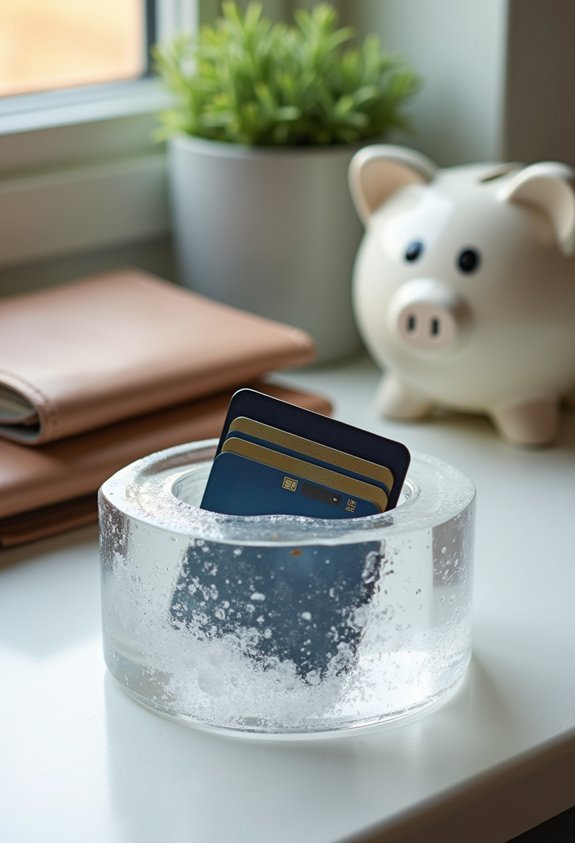
Most people overspend in just a few predictable situations, so your goal is to make those specific moments harder and slower to act on.
Identify where your impulse control breaks down: late-night scrolling, payday, stress, or boredom. Then add friction so buying isn’t automatic.
- Remove saved cards from shopping sites and digital wallets; research shows even a 30-second delay sharply reduces unplanned purchases.
- Use app limits or site blockers during your highest-risk hours; track how much emotional spending you avoid each week.
- Stick to one payment method, preferably a debit card, and keep only a modest balance in that account.
You’re not banning spending; you’re engineering your environment so spending requires thought, time, and a conscious decision instead of reacting to every fleeting urge.
Find Non-Shopping Ways to Reward Yourself
Instead of treating shopping as your default “I deserve this” reward, deliberately build a list of alternatives that hit the same psychological needs: relief, novelty, status, or comfort.
Schedule specific self care activities—baths, early bedtimes, phone-free evenings—after stressful days.
You may also like:





Use hobby exploration to scratch the novelty itch: learn an instrument, try simple recipes, or experiment with digital design.
Add brief mindfulness practices, like five-minute breathing or guided meditations, to downshift your stress response.
Replace “shopping trips” with planned social experiences: coffee walks, game nights, or coworking sessions.
Channel your need for expression into creative outlets such as drawing, writing, or DIY repairs.
For dopamine and confidence, use fitness challenges, volunteering opportunities, or nature walks as your go-to rewards.
Track which ones genuinely refresh you.
Track Your Wins and Celebrate Progress

A simple tracking system turns vague “I should stop shopping” wishes into measurable behavior change you can actually sustain. When you log decisions, you make progress visible and cravings less powerful. Use progress journaling to record each time you avoid an unnecessary purchase, how much you saved, and what triggered the urge.
- Track daily “no-buy” wins, total money preserved, and time spent on alternative activities.
- Review weekly patterns, then set one concrete improvement target for the next seven days.
- Celebrate milestones with non-spending rewards like extra rest, a nature walk, or using something you already own.
Research shows written tracking can double goal success rates. You’re training your brain to associate restraint with accomplishment, not deprivation. Over time, that identity shift makes overspending unlikely.
Conclusion
You don’t need superhuman discipline to stop buying things you don’t need—just a few dull, repeatable systems. Identify your triggers, add friction, track the numbers. Ironically, the less you “treat yourself” with impulse buys, the more money, time, and mental space you get. Future you isn’t begging for another flash sale; they’re relying on today’s boring decisions. Set one boundary today, then measure the difference at month’s end. Your bank account will quietly thank you.