Why I Declutter My Car Every Week
When you step into your car, you’re stepping into a mobile workspace, living room, and emergency kit all in one—and clutter quietly works against all three. Every extra item steals attention, adds stress, and slows you down when you need something fast. That’s why a simple weekly reset isn’t just about tidiness; it’s about control, safety, and peace of mind. Once you see how streamlined your drives can feel, you’ll start to notice something else too…
The Hidden Stress of a Cluttered Car

Although you may barely notice the growing pile of receipts, bottles, and random gear, a cluttered car quietly increases your stress every time you get in.
Every stray receipt and bottle silently drains your focus before you even turn the key
Visual noise competes for your attention, creating hidden anxiety you can’t fully explain. You waste energy tracking lost items, pushing stuff aside, and feeling behind before you even start driving.
To break this cycle, treat clutter as a signal, not a nuisance. First, scan every surface and identify what doesn’t belong: trash, dishes, extra clothes, unused gear.
Next, remove it immediately, not “later.” Then assign simple homes: a small trash bag, a document folder, a trunk bin.
How a Clean Car Improves Safety on the Road
When you clear your car of excess items, you immediately reduce real safety risks, not just visual chaos. Loose objects become dangerous projectiles in sudden stops, so you remove them from seats and the dash.
You keep floors clear to prevent pedals from jamming and your feet from slipping. You empty the rear window deck to protect road visibility and eliminate blind spots.
You store only essential gear in the trunk, organized for quick access. That improves emergency preparedness; you can reach a first-aid kit, jumper cables, or warning triangles without digging.
You also maintain clean windows and mirrors, wiping away smears that distort headlights at night. A decluttered cabin supports faster reactions and calmer decisions.
You simply give yourself more margin for error.
Treating Your Vehicle Like an Extension of Your Home
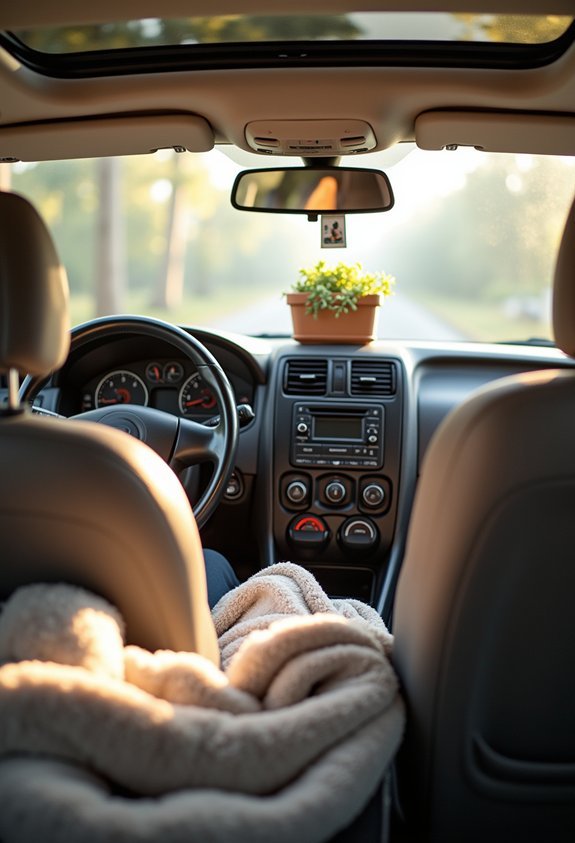
A safer, uncluttered car does more than protect you on the road; it also works better as a small, mobile version of your home. When you treat your vehicle like another room, you give every item a clear purpose and place. You keep only what supports driving, comfort, and emergencies.
Start by defining “zones”: driver essentials, passenger comfort, kids’ gear, work items, and emergency supplies. Use simple car organization tools—seat-back pockets, trunk bins, and console dividers—to contain each zone. This reduces visual noise and time spent hunting for things.
Link cleanliness to vehicle maintenance. When surfaces stay clear, you notice warning lights, leaks, odd smells, or worn materials sooner, so you can schedule repairs early and protect your investment.
Your car truly supports you.
My Simple Weekly Decluttering Routine
Even with a busy schedule, you can keep your car under control by running a quick, repeatable routine once a week.
Start with a five‑minute sweep: grab a small bag, move from front to back, and remove every loose item from seats, floor, and cup holders.
Next, open the doors and shake out floor mats, then brush crumbs toward a handheld vacuum or dustpan.
Use simple decluttering methods: group items by category, then return only what you’ve actually used that week.
Finally, follow a written weekly checklist: empty trash compartment, clear door pockets, wipe steering wheel and console, restock tissues, and align anything that shifted.
When you finish, take thirty seconds to schedule next week’s reset.
This rhythm keeps clutter manageable and driving calm.
What Stays in the Car and What Has to Go
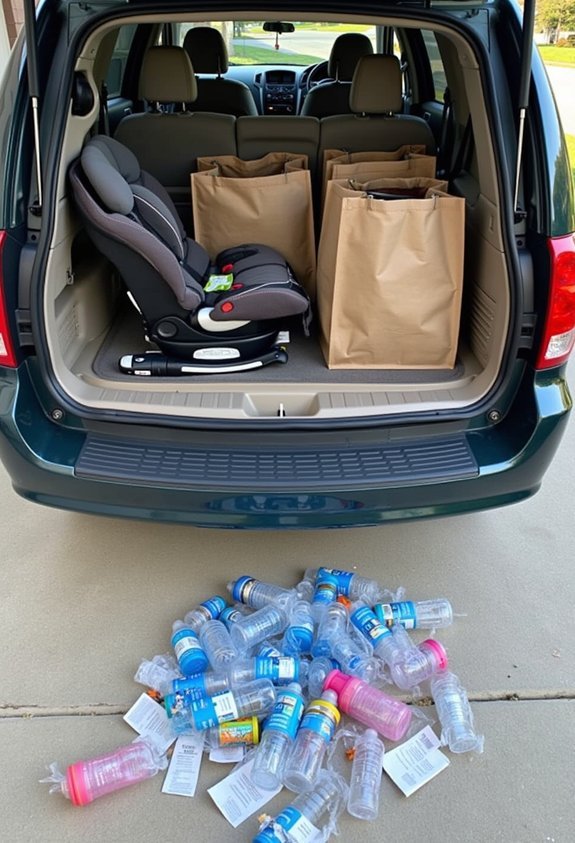
After setting up your weekly reset, you need clear rules about what earns a permanent spot in your car and what doesn’t.
Start by listing essential items: registration, insurance, manual, a basic first-aid kit, and simple tools. These stay because they solve real problems.
Next, define what’s to go: trash, duplicate snacks, extra shoes, forgotten jackets. If it doesn’t serve safety, maintenance, or daily function, label it unnecessary clutter.
Use quick questions: Did I use this last week? Will I actually need it in an emergency or regular commute? If not, remove it today, not “later.”
Keep one small bag for rotating items like gym gear or returns; everything else either serves a purpose now or belongs back in your home after errands.
Smart Storage Solutions That Actually Work
Once you’ve decided what deserves space in your car, you can design simple storage zones that keep those items contained and easy to reach.
Start with the trunk: install a collapsible bin for groceries, a slim crate for emergency gear, and a small pouch for cleaning supplies.
Use smart storage on seat backs—clear pockets for maps, chargers, and snacks, one category per pocket.
Add a lidded console caddy for daily essentials so they don’t sprawl everywhere.
Corral loose cables with clips and a tiny zip bag.
Keep paperwork in a labeled envelope in the glove box.
Test your setup for a week, then remove any unused organizational tools and adjust placement until grabbing what you need feels automatic.
Clear zones keep clutter from creeping.
Turning Cleanup Into a Mindful Ritual

Your new storage zones work best when you pair them with a simple, consistent cleanup routine that you actually stick to.
Start by choosing a weekly trigger: Sunday fueling, school pickup, or your favorite podcast. When it hits, you move seat to trunk in the same order: collect trash, return items to their zones, remove anything that belongs in the house.
Treat it as five minutes of mindful moments, not a chore. Notice your breathing, the sound of items snapping into place, the feeling of clearing visual noise. You’re not just tidying; you’re resetting an intentional space.
Finish by scanning each zone, asking, “Does this earn its spot here this week?” If not, carry it out immediately.
Repeat weekly until the rhythm feels automatic.
You may also like:





The Ripple Effects on Productivity and Mood
Even though it seems small, a decluttered car creates a clear mental lane that boosts how you think, plan, and feel throughout the day.
When you open the door and see order, your brain skips the micro‑stress of visual noise and frees energy for focused work. You drive with fewer distractions, react faster, and arrive prepared instead of frazzled—a direct productivity boost.
Clear seats and organized compartments also reduce decision fatigue; you’re not hunting for chargers, papers, or badges at the last minute. That calm sense of control carries into meetings, errands, and conversations, creating steady mood enhancement.
You start associating your car with readiness, not chaos, which reinforces confident choices and more intentional use of your time every single day in quiet ways.
Tips for Staying Consistent Week After Week
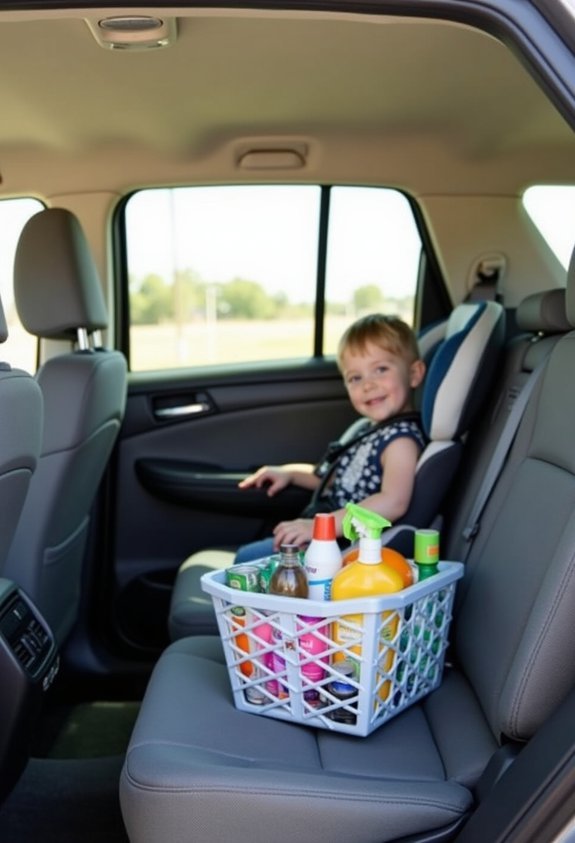
Although a deep clean feels satisfying, consistency comes from building small, repeatable habits into your week. Start by anchoring car decluttering to an existing routine, like your Sunday fuel stop or post-grocery parking lot pause.
Define a five-minute checklist: toss trash, gather items that belong inside, shake mats, quick wipe of high-touch areas. For habit formation, keep a small bin and cleaning wipes in the trunk so you remove friction.
Use motivation strategies, such as a visible dashboard note or a recurring phone reminder, to cue action. Track streaks on a calendar and reward every four completed weeks.
When you miss a day, reset immediately; don’t wait for “someday.” Protect the routine, even if the clean isn’t perfect. Small wins compound into tidier commutes.
Conclusion
It’s no coincidence that when you declutter your car, your mind feels clearer too. By treating your vehicle like an organized mini-home, you create order, boost safety, and cut hidden stress. Each week, you scan, sort, and reset: trash out, essentials in, systems checked. Over time, this simple ritual strengthens your focus, mood, and productivity. Start this week, repeat next week, and let your clean car become your quiet, reliable reset button on wheels.