Why I Delete Shopping Apps From My Phone Every Month
You don’t have to be a “shopaholic” to have your phone quietly emptying your bank account. Each notification, flash sale, and “only 3 left” banner is designed to trigger a cue-craving-purchase loop you barely notice. When you delete shopping apps on a regular schedule, you interrupt that loop, change your default behavior, and create just enough friction to think. What actually happens to your spending and stress when you do this might surprise you.
The Moment I Realized My Phone Was Secretly Draining My Wallet

When you catch yourself ordering a pair of “must‑have” shoes at midnight that you’d forgotten about by morning, you’re seeing how quietly your phone can drain your wallet. That’s usually when spending awareness kicks in.
You notice how effortlessly you tap, swipe, and confirm. Behavioral researchers call this “frictionless spending” — your brain treats digital money as less real, so you spend more.
You also start spotting emotional triggers: boredom, stress, or rewarding yourself after a long day. Each push notification or “only 3 left” banner nudges you into tiny purchases that don’t feel like decisions.
Later, when you review your bank statement, you see a pattern, not accidents. Your phone isn’t neutral; it’s engineered to keep you buying. Recognizing this quietly changes everything.
How Deleting Shopping Apps Became a Monthly Ritual
Eventually, you stop treating “I’ll just delete the app” as a one‑time reset and turn it into a scheduled habit, the same way you’d review a budget or clear your inbox.
You may also like:





You choose a date, maybe the last Sunday of the month, and call it your digital detox for shopping. You’re not punishing yourself; you’re running an experiment on your shopping habits.
- You scan your phone and notice which icons you instinctively tap when you’re bored or anxious.
- You uninstall each shopping app and watch the screen literally empty.
- You write down what you planned to buy, turning urges into a short, intentional list.
- You review your bank app instead of a store app, reinforcing progress, not temptation each month.
What Vanished With the Apps: Impulse Buys, Stress, and Clutter

Although your home screen looks quieter, the bigger change is internal: without shopping apps firing constant cues, your impulse buys, baseline stress, and physical clutter all start to drop in measurable ways.
Each tap you remove breaks a cue–craving–purchase loop that behavioral psychologists describe as habit circuitry. You’re not resisting temptation; you’re preventing it. That’s the core of impulse management: you redesign the environment instead of relying on willpower.
Real control isn’t saying no; it’s never getting the notification in the first place.
As the digital detox settles in, you notice fewer “limited-time” alerts raising your heart rate. Your nervous system gets longer stretches without micro-surges of dopamine followed by guilt.
Packages stop arriving “just because.” Drawers close easily again; surfaces stay clearer. You haven’t become a minimalist overnight—you’ve simply stopped outsourcing your desires to algorithms entirely now.
The Surprising Benefits: Time, Focus, and Financial Breathing Room
What disappears from your screen quietly reappears in your schedule, attention span, and bank account. When you remove shopping apps, you don’t just reduce noise; you reclaim cognitive bandwidth.
Research on distraction shows every glance at a flash sale can derail focus for several minutes. A simple digital detox shifts that energy toward projects, rest, and relationships.
- You open your phone and see a book, not a banner, so your brain anticipates learning instead of buying.
- Your commute becomes time for podcasts, not price comparisons.
- Evenings feel calmer because you’re not “just browsing” until midnight.
- At month’s end, your statements reflect mindful spending, not micro-charges you barely remember.
Those quiet wins compound, giving you margin for goals retailers never prioritize.
My Simple System for a Monthly Digital Declutter
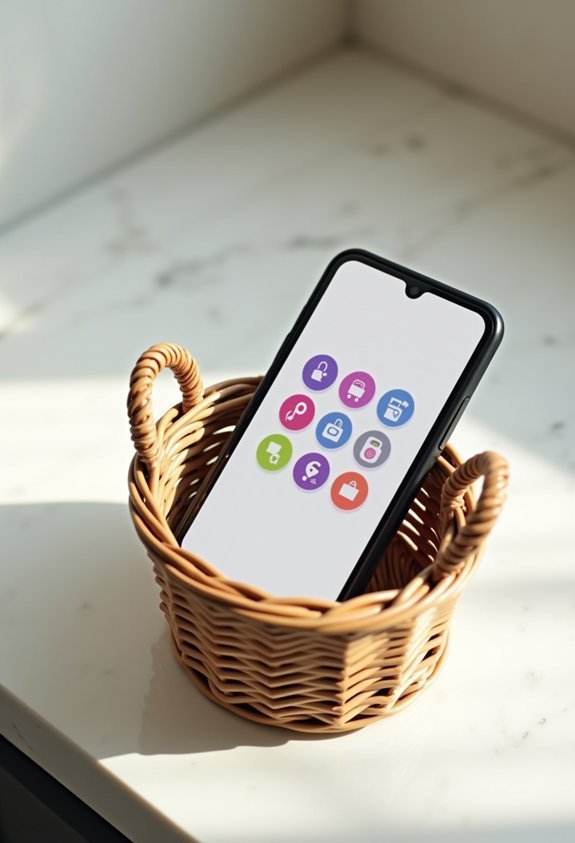
Instead of waiting for clutter to pile up, you can run a simple monthly reset that keeps your digital life lean with almost no willpower required.
On the same day each month, open your phone, sort apps by “Last Used,” and scrutinize the bottom third. Research shows friction matters, so delete every shopping app you haven’t used in the last 30 days.
You’ll still remember store names; you just won’t have instant gateways to impulse buys. This is digital minimalism in practice: you design the environment, not your future self’s willpower.
Each reset also reinforces mindful consumption by forcing you to ask, “Do I really need constant access to this?” Over time, the habit sticks, cravings fade, and your phone feels lighter and calmer.
How You Can Try This Reset Without Going Cold Turkey
If deleting every shopping app feels drastic, you can run this reset as a controlled experiment rather than a permanent lifestyle change. Give yourself 14 days. You’re not banning shopping; you’re studying your triggers and testing mindful spending.
Treat this as a 14-day experiment, not a ban—observe your spending triggers with curiosity, not judgment
- Choose one high-temptation app to delete and move the rest into a single folder labeled “Pause.” Research shows friction slows impulsive buying.
- Set a simple rule: you only purchase from desktop, never from your phone. This tiny digital detox shifts you from reflex to intention.
- Keep a notes app log: what you almost bought, time of day, emotion. You’ll start seeing patterns instead of random urges.
- At the end, review savings and notes. Decide which apps genuinely help and which ones tax your attention—and uninstall accordingly.
Conclusion
When you delete those shopping apps each month, you’re not just clearing icons, you’re rewiring habits. Behavioral research shows fewer cues mean fewer cravings and fewer “how did I buy that?” regrets. By creating friction—an extra step to shop—you give your rational brain time to speak up. Try this monthly reset, track what you don’t spend, and watch your phone shift from digital mall to mindful tool, one intentional tap at a time.